
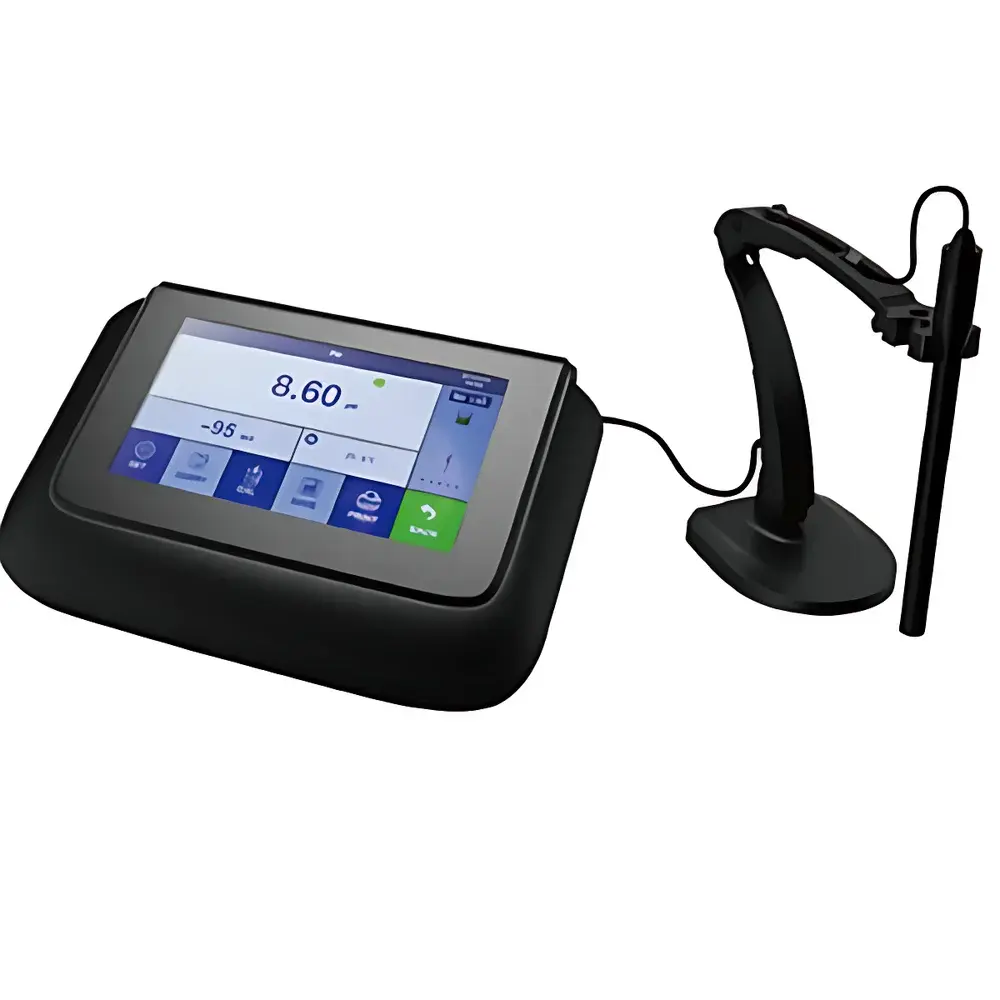
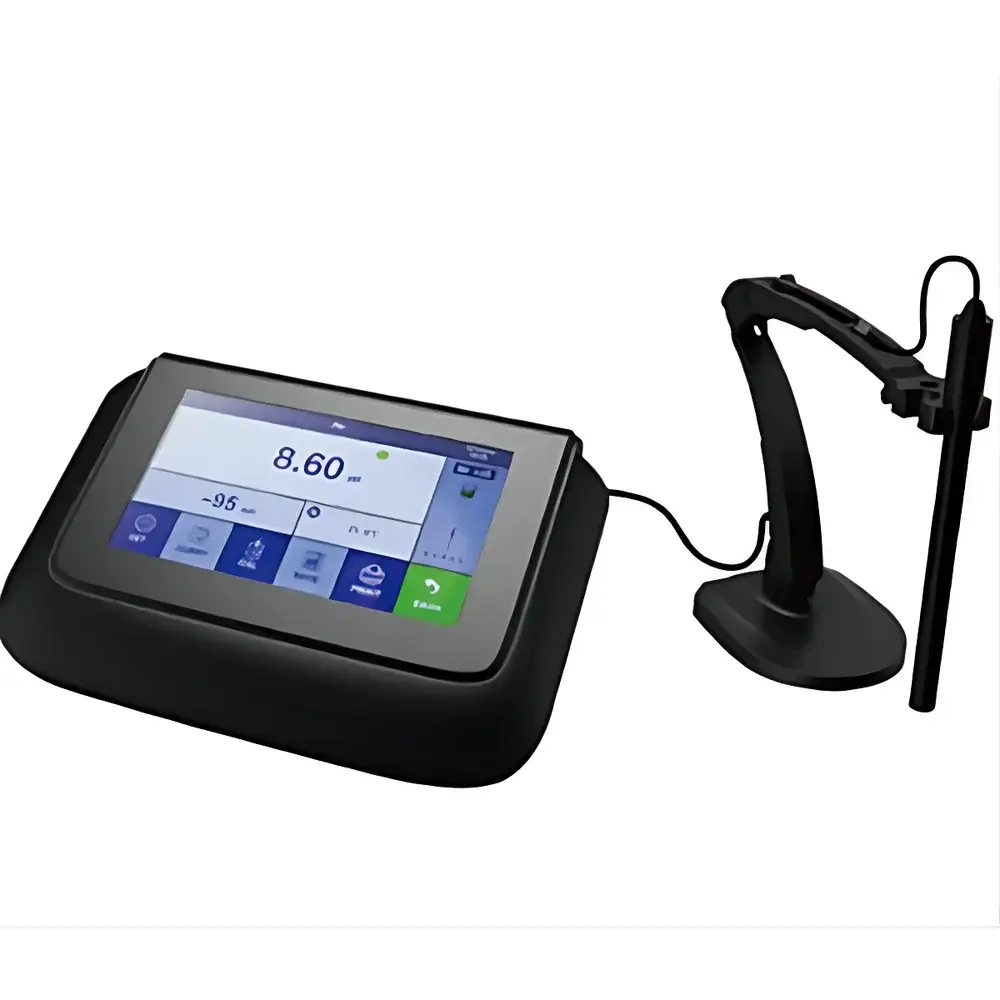
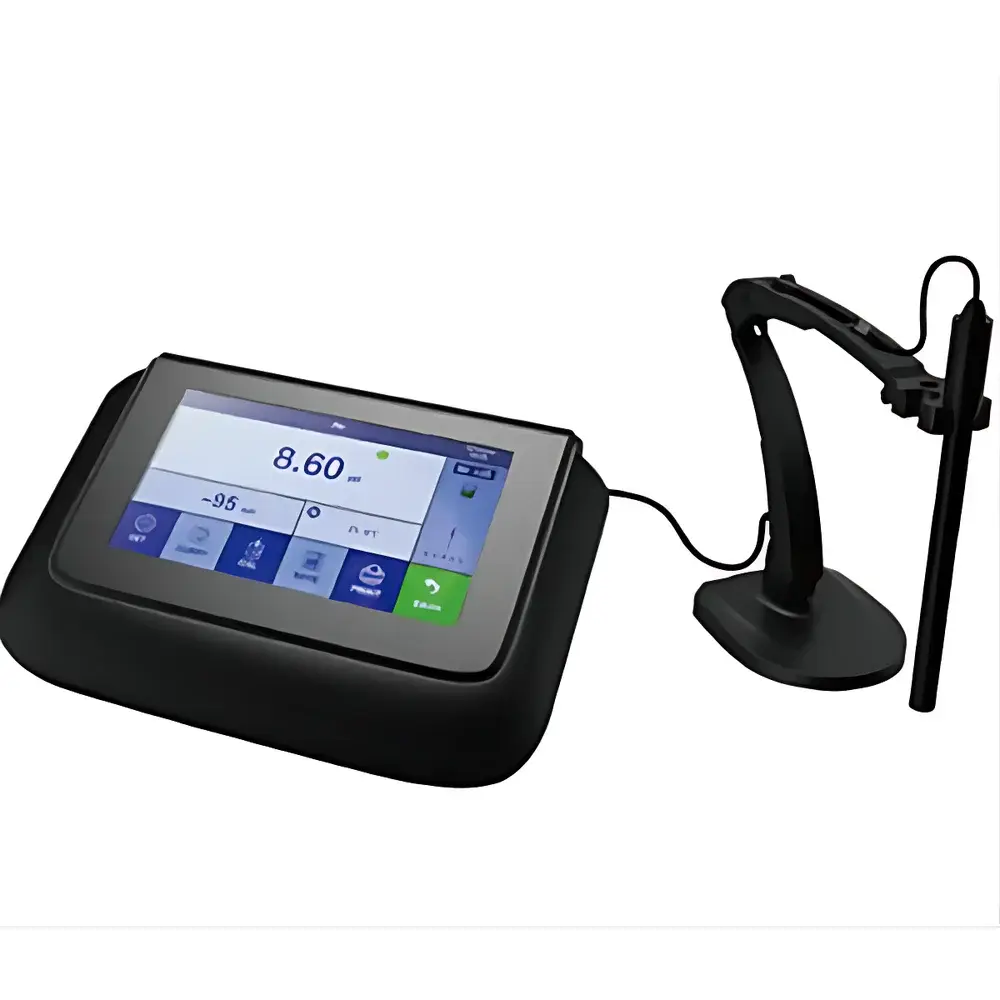
Yoke L-503 Multi-Parameter Water Quality Analyzer
| Brand | Yoke |
|---|---|
| Origin | Shanghai, China |
| Model | L-503 |
| Instrument Type | Benchtop Laboratory Analyzer |
| Measurement Principles | pH (glass electrode), Conductivity (4-electrode AC conductivity), Dissolved Oxygen (fluorescence quenching), Temperature (Pt1000 RTD) |
| pH Range | 0.00–14.00 |
| pH Accuracy | ±0.01 pH |
| pH Repeatability | ≤±0.01 pH |
| Conductivity Range | 0.000 µS/cm–2000 mS/cm |
| Conductivity Accuracy | ±0.5% FS |
| Conductivity Detection Limit | 0.01 µS/cm |
| DO Range | 0.00–99.00 mg/L |
| DO Accuracy | ±0.2 mg/L |
| DO Repeatability | ≤±0.1 mg/L |
| DO Detection Limit | 0.01 mg/L |
| Temperature Range | –5.0 to 55.0 °C |
| Temperature Accuracy | ±0.2 °C |
| Display | 7-inch capacitive color touchscreen (1024×600) |
| IP Rating | IP54 |
| Data Storage | Internal memory for ≥2000 datasets with timestamp, operator ID, and audit trail metadata |
| Compliance | Supports GLP/GMP data integrity requirements including user-defined access levels, electronic signature readiness, and calibration history logging |
Overview
The Yoke L-503 Multi-Parameter Water Quality Analyzer is a benchtop laboratory instrument engineered for simultaneous, high-reliability measurement of pH, oxidation-reduction potential (mV), conductivity, resistivity, total dissolved solids (TDS), salinity, dissolved oxygen (DO) concentration and saturation, and temperature. It integrates three independent electrochemical sensor modules—pH glass electrode, 4-electrode AC conductivity cell, and solid-state fluorescence-based DO sensor—within a single calibrated platform. The fluorescence quenching principle used for DO detection eliminates oxygen consumption, membrane fouling, and electrolyte depletion associated with Clark-type amperometric sensors, ensuring long-term stability and minimal maintenance in routine water quality testing. Designed for compliance-critical environments, the L-503 supports traceable calibration workflows, automatic electrode diagnostics, and real-time temperature compensation across all parameters using an integrated Pt1000 resistance temperature detector.
Key Features
- 7-inch high-resolution capacitive touchscreen (1024×600) with glove-compatible operation, UV-resistant surface, and auto-dimming function for ergonomic lab use
- Modular sensor architecture enabling independent calibration and validation of pH, conductivity, and DO modules per ISO/IEC 17025 and ASTM D1129 guidelines
- Three-tier pH resolution selection (0.001 / 0.01 / 0.1 pH) and mV resolution options (0.01 / 0.1 / 1 mV) to match application-specific precision requirements
- Automated 1–3 point pH calibration with built-in recognition of 15 standard buffer solutions (including NIST-traceable and Chinese national standards), plus support for user-defined buffers
- Conductivity module preloaded with eight internationally recognized calibration standards (e.g., KCl 0.01 mol/L, 0.1 mol/L, 1.0 mol/L; NaCl 500 mg/L, 1000 mg/L) and configurable cell constant (0.01, 0.1, or 1.0 cm⁻¹)
- Fluorescence-based DO sensor with integrated temperature measurement, eliminating need for separate thermistor probes and reducing thermal lag errors
- Comprehensive data management suite: statistical analysis (mean, SD, CV%), searchable dataset archive, timestamped calibration logs, and export-ready CSV output via USB port
Sample Compatibility & Compliance
The L-503 is validated for use with aqueous samples across environmental monitoring, municipal wastewater treatment, drinking water distribution, aquaculture, and pharmaceutical process water applications. Its pH module accommodates samples with turbidity up to 500 NTU and suspended solids ≤100 mg/L; conductivity measurements remain stable in solutions with up to 5% non-ionic organic content; the fluorescence DO sensor demonstrates immunity to H₂S, CO₂, and chlorine interference—critical for wastewater influent and effluent profiling. The instrument meets IP54 ingress protection requirements for dust and splash resistance. All firmware and software operations adhere to ALCOA+ principles (Attributable, Legible, Contemporaneous, Original, Accurate, Complete, Consistent, Enduring, Available) and support 21 CFR Part 11 readiness through optional password-protected user roles, electronic signature prompts, and immutable audit trails.
Software & Data Management
Internal firmware provides full GLP-compliant data handling: each measurement record includes sample ID, operator ID, date/time stamp, sensor serial numbers, calibration status flags, and environmental conditions (ambient temperature/humidity if externally logged). Statistical functions include batch averaging, outlier detection (Grubbs’ test), and trend visualization over time. Data export supports USB mass storage mode for direct transfer to LIMS or Excel without proprietary software dependencies. Firmware updates are performed via signed binary files to prevent unauthorized modification. Calibration history retains at least 50 entries per parameter with pass/fail verification against defined acceptance criteria (e.g., slope 95–105% for pH, R² ≥0.999 for conductivity linearity).
Applications
- Regulatory compliance testing per EPA Method 150.1 (conductivity), EPA Method 360.1 (pH), and ASTM D888-22 (dissolved oxygen)
- Process control in drinking water treatment plants (coagulation, disinfection, filtration stages)
- Validation of purified water (PW) and water-for-injection (WFI) systems under USP and EU Annex 1
- Ecotoxicological studies requiring concurrent DO saturation and pH stability monitoring in static renewal bioassays
- Educational laboratories performing multi-parameter water characterization in environmental science curricula
FAQ
Does the L-503 support automatic temperature compensation for all measured parameters?
Yes—each module applies real-time, sensor-specific temperature compensation using the integrated Pt1000 RTD. Users may override with manual input for method-specific protocols.
Can the fluorescence DO sensor be used in seawater or high-salinity brines?
Yes—the sensor’s optical design and salinity compensation algorithm (based on conductivity-derived ionic strength) maintain accuracy across 0–50 g/kg salinity, validated per ASTM D511-20.
Is calibration traceability documented per ISO/IEC 17025 requirements?
Calibration records include reference standard IDs, uncertainty budgets, environmental conditions, and technician signatures—all exportable as PDF reports.
What is the maximum data retention capacity and how is data integrity ensured?
The device stores ≥2000 datasets with cyclic overwrite protection. Each entry contains cryptographic hash verification to detect tampering during export or archival.
Are third-party electrodes compatible with the L-503 interface?
Only Yoke-certified electrodes with digital handshake protocol are supported to ensure metrological traceability and automatic parameter recognition.







