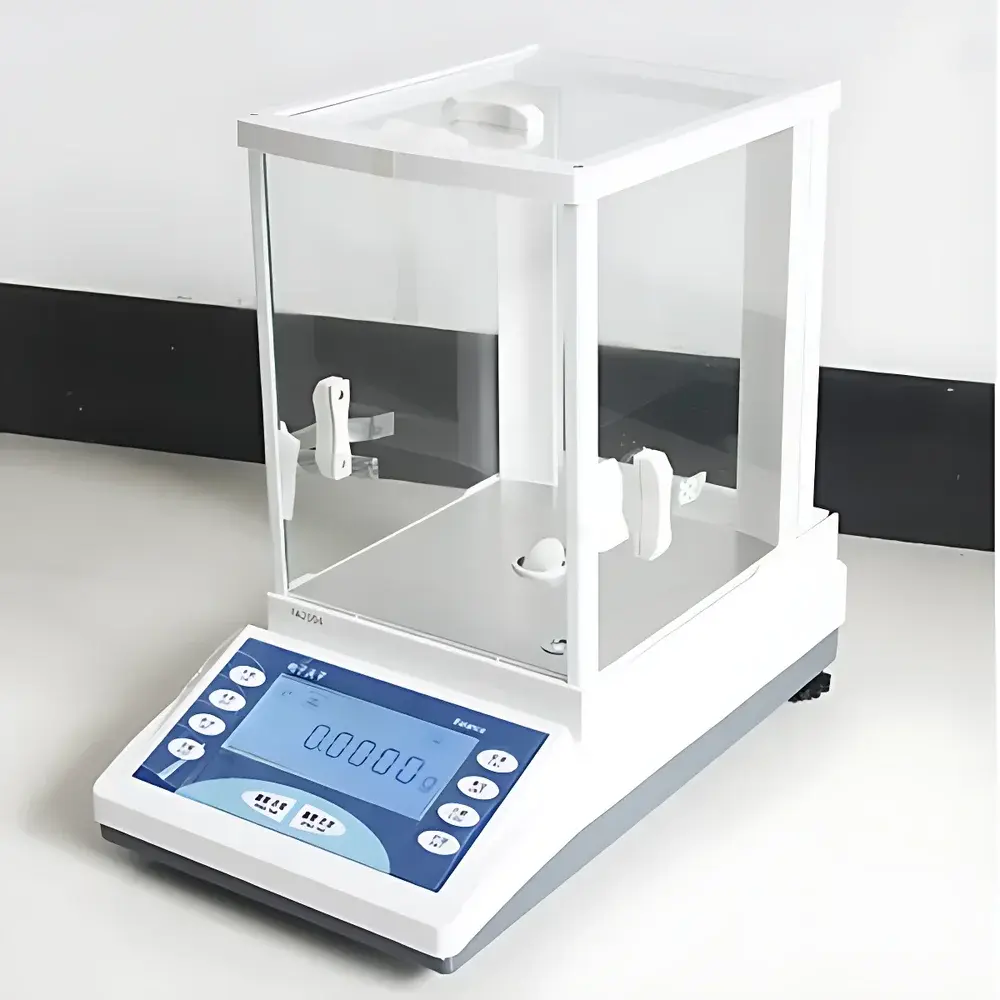
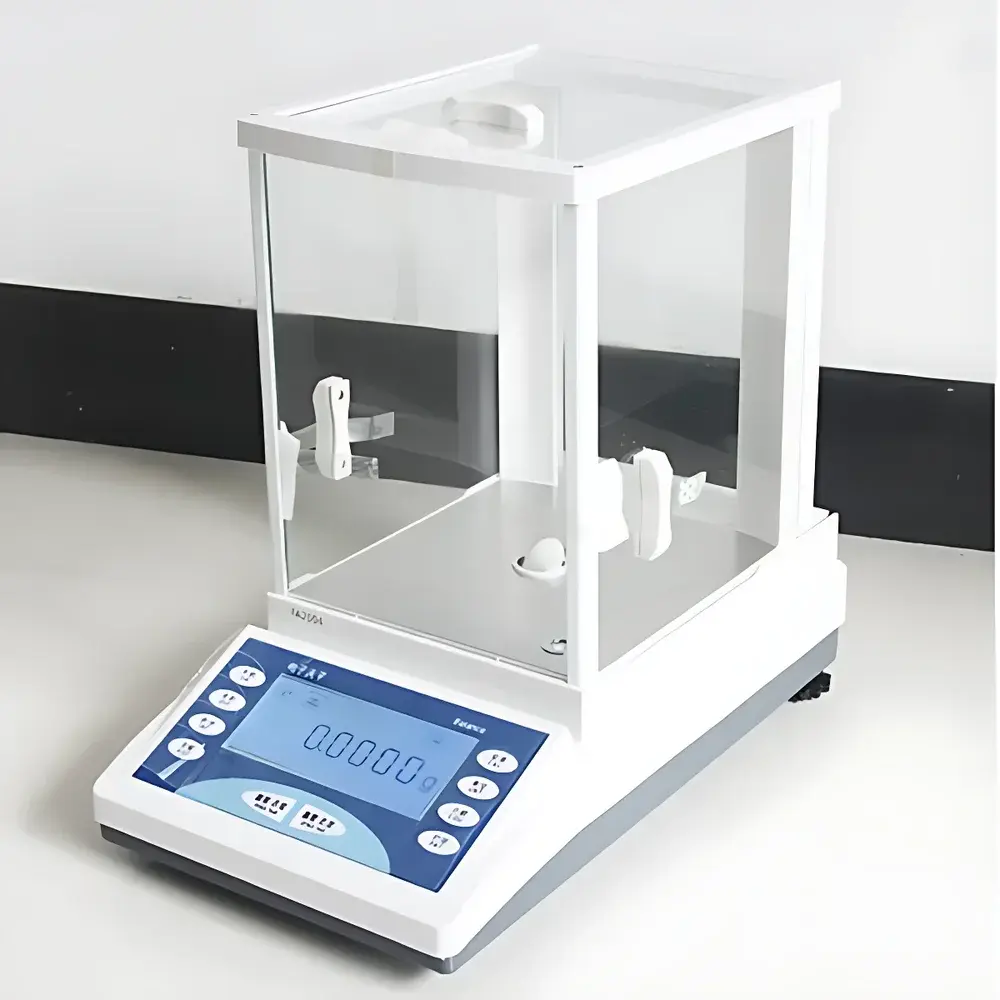
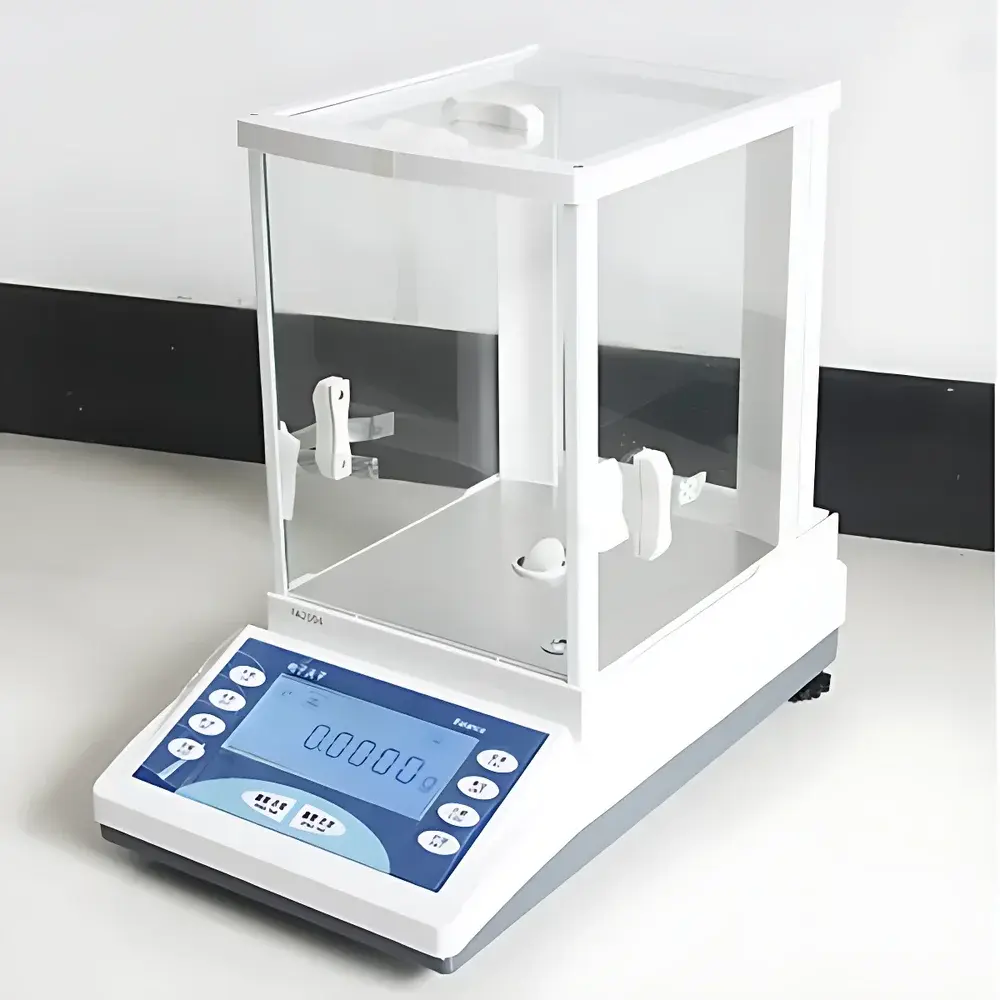
Yoke JA1203N Precision Analytical Balance
| Brand | Yoke |
|---|---|
| Origin | Shanghai, China |
| Manufacturer Type | Authorized Distributor |
| Country of Origin | China |
| Model | JA1203N |
| Instrument Type | Precision Analytical Balance |
| Maximum Capacity | 120 g |
| Readability | 1 mg |
| Repeatability | ≤ ±1 mg |
| Calibration | Internal Automatic Calibration |
| Weighing Pan Diameter | 80 mm |
| Working Height Under Draft Shield | 240 mm |
| Dimensions (W×D×H) | 350 × 215 × 340 mm |
| Net Weight | 7.5 kg |
| Power Supply | 220 V AC, 50 Hz |
| Display | Backlit LCD (120 × 55 mm) |
| Connectivity | RS232 Standard Interface |
| Unit Conversion | g, oz, ct |
| Draft Shield | Four-Sided Anti-Static Coated Glass |
| Sensor Technology | Electromagnetic Force Compensation with Multi-Point Linearization Algorithm |
Overview
The Yoke JA1203N Precision Analytical Balance is an electromagnetically compensated laboratory balance engineered for high reproducibility and long-term stability in routine quantitative analysis, quality control, and research-grade sample weighing. Operating on the principle of electromagnetic force restoration—where the downward gravitational force of a sample is precisely counterbalanced by an opposing electromagnetic force—the JA1203N delivers consistent 1 mg readability across its full 0–120 g measurement range. Its design incorporates multi-point linearization algorithms derived from sensor software protocols developed in collaboration with German metrology research institutes, enabling improved linearity correction across the entire weighing span. The balance meets essential performance criteria aligned with ISO 9001-certified laboratory workflows and supports GLP-compliant documentation when integrated with validated data acquisition systems.
Key Features
- Electromagnetic force compensation sensor architecture with built-in temperature drift compensation and dynamic damping control.
- Internal automatic calibration system activated via front-panel key or scheduled interval—eliminating manual intervention while maintaining traceable accuracy.
- Four-sided anti-static coated glass draft shield with optimized optical clarity and ergonomic access, minimizing electrostatic interference and airflow turbulence during micro-weighing.
- Backlit monochrome LCD display (120 × 55 mm) supporting simultaneous readout of net weight, tare value, unit identifier, and status indicators—including calibration mode, overload warning, and stabilization signal.
- RS232 serial interface compliant with EIA/TIA-232-F standards, enabling bidirectional communication with PCs, label printers, and LIMS platforms without proprietary drivers.
- Multi-unit weighing capability: seamless switching between grams (g), ounces (oz), and carats (ct) with user-selectable decimal places (0–3 digits).
- Advanced weighing functions including full-range tare, piece counting (with sample count ≥10), percent weighing, density determination (when used with optional density kit), and dynamic averaging for unstable samples.
Sample Compatibility & Compliance
The JA1203N accommodates standard laboratory containers—including weighing boats, crucibles, vials, and filter papers—within its 80 mm diameter stainless-steel weighing pan and 240 mm vertical clearance under the draft shield. Its robust mechanical design complies with IEC 61000-4 electromagnetic compatibility standards and conforms to national metrological verification regulations for Class II precision balances (JJG 1036–2008). While not certified to OIML R76 or NIST Handbook 44 out-of-the-box, the balance supports external verification using accredited test weights (Class M2 or better) and is suitable for applications requiring adherence to ISO/IEC 17025 internal calibration procedures. Routine use in pharmaceutical QC labs, academic chemistry departments, and materials testing facilities aligns with foundational requirements of USP , EP 2.1.6, and ASTM E898–18 for analytical balance qualification.
Software & Data Management
Data output via RS232 follows ASCII-based protocol with configurable baud rate (9600 default), parity, and stop bits. When connected to a host computer, the balance transmits stabilized weight values in real time, prefixed with timestamp (if enabled via external software) and suffixed with carriage return/line feed. Compatible with open-source tools such as RealTerm or manufacturer-agnostic LabArchives templates, it also integrates into commercial LIMS environments that support generic serial device ingestion. Audit trail generation requires external software logging; the instrument itself does not store historical records or enforce FDA 21 CFR Part 11 electronic signature controls. However, its deterministic output format enables reproducible CSV export and traceable batch record compilation under documented SOPs.
Applications
- Quantitative preparation of reagents and standards in analytical chemistry laboratories.
- Weighing of active pharmaceutical ingredients (APIs) and excipients during formulation development.
- Gravimetric moisture content analysis per ASTM D2231 and ISO 1189.
- Piece counting for small components in electronics manufacturing and quality assurance.
- Density measurement of solids and powders using Archimedean displacement method (requires optional sinker kit).
- Calibration of pipettes and volumetric glassware via water weighing (in accordance with ISO 8655).
- Teaching laboratories where reliability, intuitive operation, and compliance with undergraduate curriculum standards are prioritized.
FAQ
What is the recommended calibration frequency for the JA1203N in a regulated environment?
Daily calibration is advised before first use and after significant environmental changes; full internal calibration should be performed at least once per shift in GMP-aligned settings.
Does the balance support external calibration with traceable weights?
Yes—external calibration mode allows manual initiation using certified reference weights, with results logged externally per ISO/IEC 17025 requirements.
Can the RS232 interface transmit tare or unit-change events?
No—only stabilized net weight values are transmitted; auxiliary states require polling or custom firmware extensions.
Is the draft shield removable for cleaning or large-sample loading?
Yes—the four-panel glass shield is tool-free detachable and reassembles without recalibration.
What power supply specifications must be observed for stable operation?
A grounded 220 V ±10 %, 50 Hz AC supply with surge protection is required; operation on uninterruptible power supplies (UPS) is recommended in areas with grid instability.