
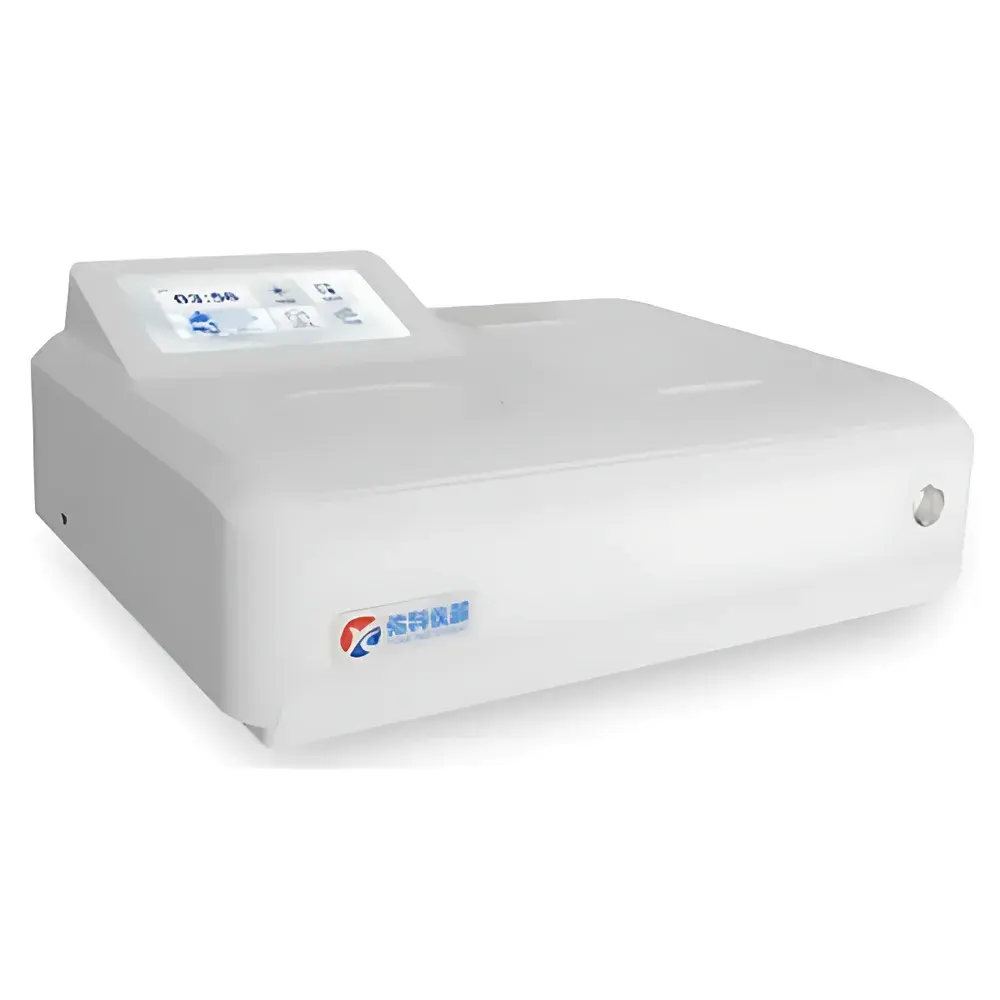
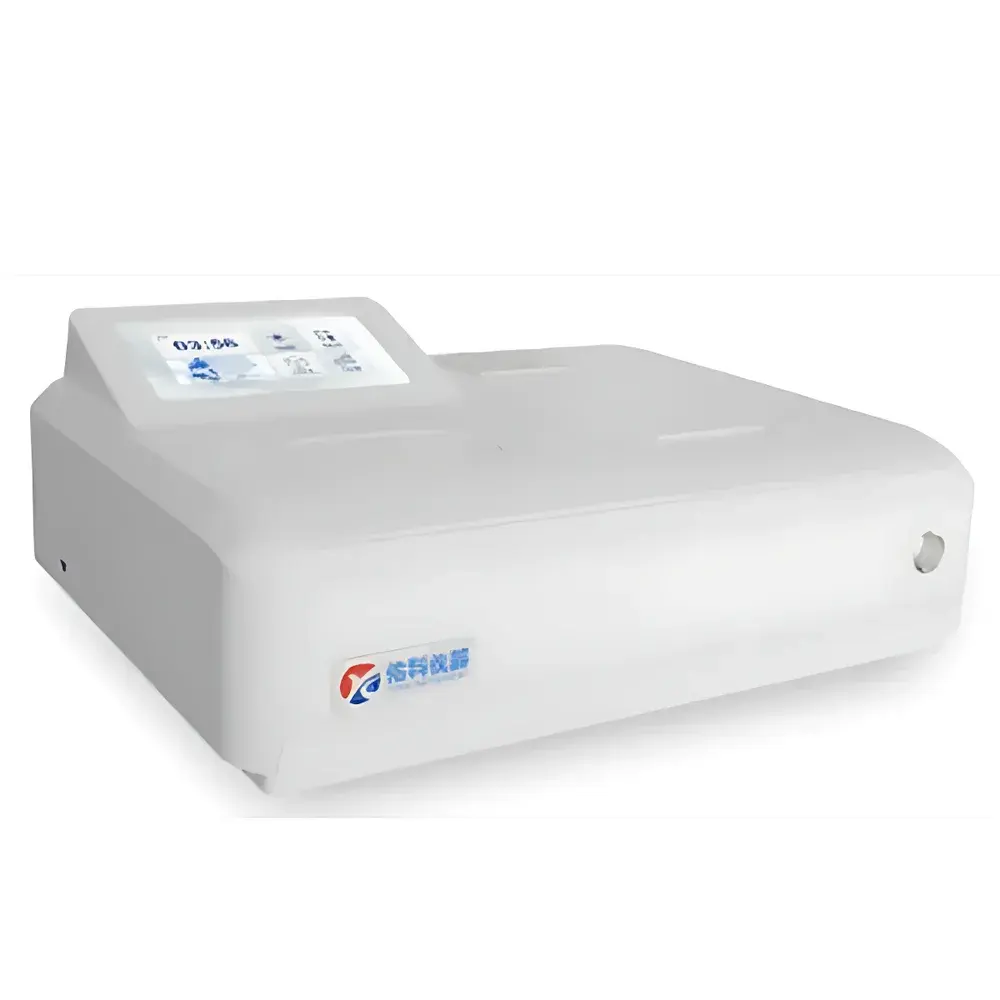
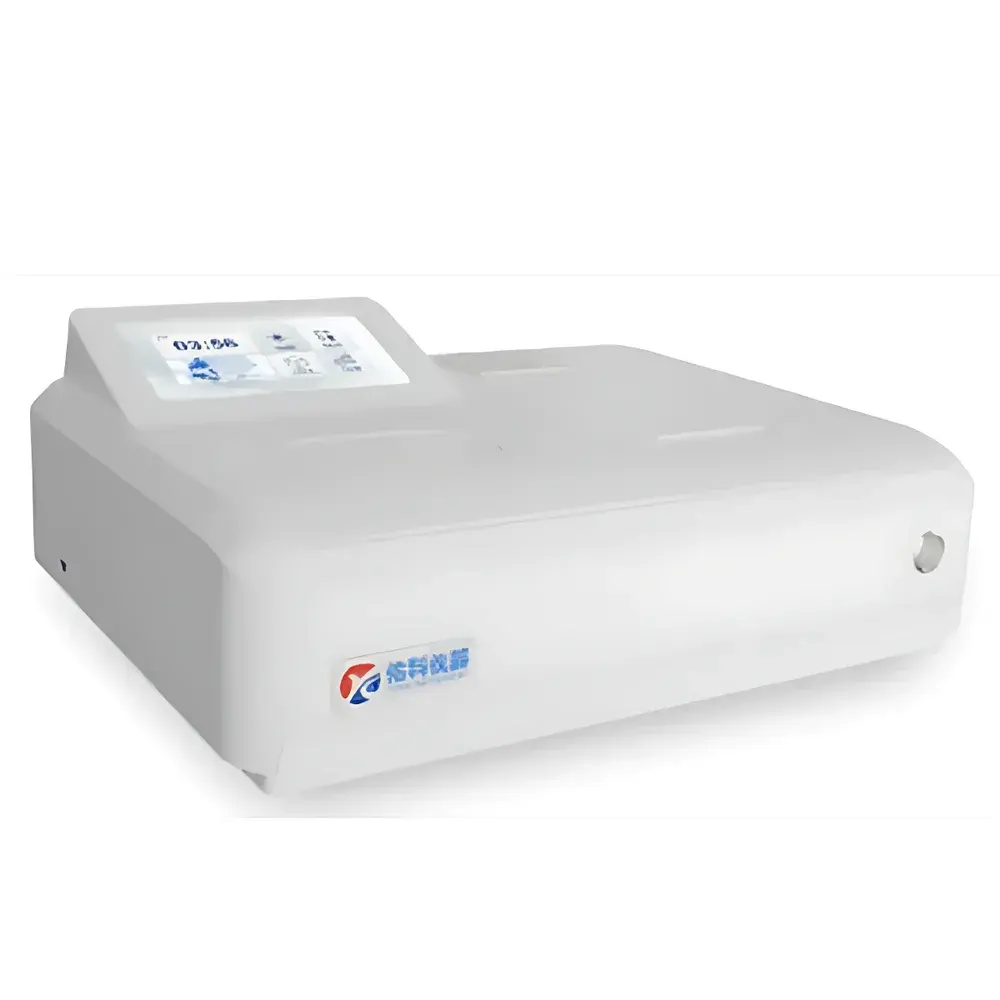
Yoke L4 IoT-Enabled UV-Vis Spectrophotometer
| Brand | Yoke |
|---|---|
| Origin | Shanghai, China |
| Model | L4 |
| Optical System | Single-beam |
| Detector | Photodiode Array (PDA) |
| Wavelength Range | 190–1100 nm |
| Wavelength Accuracy | ±1 nm |
| Wavelength Repeatability | ±0.5 nm |
| Spectral Bandwidth | 4 nm (2 nm optional) |
| Stray Light | ≤0.1% T |
| Display | 7-inch color TFT LCD (1024 × 768) |
| Data Storage | 2000 spectra + 96 calibration curves |
| Scan Speed | up to 3000 nm/min |
| Connectivity | USB 2.0, Wi-Fi 802.11 b/g/n, Bluetooth 4.2 |
| Software Compatibility | Yokelab PC Suite (optional), cloud-integrated via YOKE@Cloud Data app |
Overview
The Yoke L4 IoT-Enabled UV-Vis Spectrophotometer is a single-beam, microprocessor-controlled analytical instrument engineered for routine and research-grade quantitative and qualitative analysis in chemistry, biochemistry, pharmaceutical quality control, and environmental testing laboratories. It operates on the principle of Beer–Lambert law-based absorbance measurement across a broad spectral range (190–1100 nm), utilizing a Czerny–Turner monochromator equipped with a holographic blazed grating to ensure high optical efficiency and resolution. The photodiode array (PDA) detector enables rapid spectral acquisition without mechanical scanning of the detector, contributing to enhanced signal stability and reduced thermal drift. Designed for reproducibility in regulated environments, the L4 delivers wavelength accuracy of ±1 nm and repeatability of ±0.5 nm—performance metrics aligned with ASTM E275 and ISO 6223 standards for spectrophotometric validation.
Key Features
- 7-inch high-resolution color TFT touchscreen (1024 × 768) with intuitive icon-driven interface—no keyboard or mouse required; supports multi-touch gestures for zoom, pan, and parameter adjustment.
- Integrated IoT architecture: native support for YOKE@Cloud Data platform—scanning QR codes via WeChat or standard mobile browsers enables secure, encrypted upload of spectra, method files, and calibration records to cloud storage with role-based access control.
- Holographic blazed grating monochromator with 4 nm nominal spectral bandwidth (2 nm optional)—optimized for low stray light (<0.1% T at 220 nm and 340 nm), critical for high-absorbance measurements per USP and EP 2.2.25 requirements.
- 24-bit analog-to-digital conversion (AD) using Analog Devices precision ICs ensures baseline stability of ±0.002 A over 4 hours (at 500 nm, 0% T), supporting long-duration kinetic assays and low-concentration quantitation.
- Dual-lamp system (deuterium and tungsten-halogen) with automatic lamp switching at user-defined crossover points (e.g., 350 nm); lamp usage hours tracked and logged for maintenance scheduling and GLP compliance.
- Onboard data management: stores up to 2000 full-spectrum scans and 96 independent calibration curves (including linear, quadratic, and 3-point non-linear models) with timestamp, operator ID, and instrument serial number embedded in each record.
Sample Compatibility & Compliance
The L4 accommodates standard 10 mm pathlength quartz, glass, or plastic cuvettes (including disposable and ultra-micro variants down to 50 µL volume). Optional accessories include a 4-cell auto-changer, temperature-controlled cuvette holder (±0.1 °C), and fiber-optic probe interface for remote or in-line measurements. All firmware and data handling modules comply with ALCOA+ principles (Attributable, Legible, Contemporaneous, Original, Accurate, Complete, Consistent, Enduring, Available) as defined in FDA 21 CFR Part 11 Annex 11 guidance. Audit trails are enabled by default—recording every method modification, calibration event, and data export action with user ID, timestamp, and IP address (for cloud-connected sessions).
Software & Data Management
The optional Yokelab PC Suite provides full spectral processing capabilities—including derivative spectroscopy, spectral overlay, peak integration, kinetics modeling (zero-, first-, second-order), nucleic acid/protein quantification (A260/A280 ratio, extinction coefficient input), and custom equation-based concentration calculation. Export formats include CSV, TXT, and native .YOK files; all CSV exports are Excel-compatible with header metadata (wavelength, absorbance, date, method name). Wi-Fi and Bluetooth modules support direct printing to compatible thermal or inkjet printers without driver installation. USB mass storage mode allows drag-and-drop transfer of spectra to any Windows/macOS/Linux workstation—no proprietary software required for basic review or archiving.
Applications
- Pharmaceutical QC: assay of active pharmaceutical ingredients (APIs) per USP monographs, dissolution testing, excipient compatibility screening.
- Environmental analysis: nitrate, phosphate, COD, and heavy metal (e.g., Cr(VI), Fe²⁺) quantification in water per EPA Methods 353.2, 365.1, and ISO 6878.
- Life sciences: DNA/RNA purity assessment (A260/A280, A260/A230), Bradford/Lowry/BCA protein assays, enzyme kinetics (e.g., LDH, ALP).
- Academic teaching labs: verification of Lambert–Beer linearity, solvent polarity effects, conjugated system absorption trends.
- Industrial R&D: pigment concentration in coatings, dye stability under UV exposure, catalyst degradation monitoring.
FAQ
Does the L4 meet regulatory requirements for GMP/GLP laboratories?
Yes—the instrument supports full audit trail logging, electronic signatures (via Yokelab Suite), and 21 CFR Part 11–compliant data integrity controls when used with validated configurations and documented SOPs.
Can the L4 perform time-resolved kinetic measurements?
Yes—scan speeds up to 3000 nm/min and programmable interval timing (100 ms to 999 s) enable robust kinetic profiling of fast reactions, including enzymatic turnover and photochemical processes.
Is spectral bandwidth adjustable during operation?
The nominal bandwidth is fixed at 4 nm; however, a factory-installed 2 nm slit option is available at time of purchase—no field modification is supported.
How is cloud data security ensured?
YOKE@Cloud Data uses TLS 1.2+ encryption for data-in-transit and AES-256 encryption for data-at-rest; all accounts require two-factor authentication, and institutional administrators can define retention policies and export permissions.
What validation documentation is provided?
Each unit ships with a Factory Acceptance Test (FAT) report, wavelength and photometric accuracy verification certificates traceable to NIM (China National Institute of Metrology), and IQ/OQ templates compliant with ISO/IEC 17025 and ASTM E2919.





