
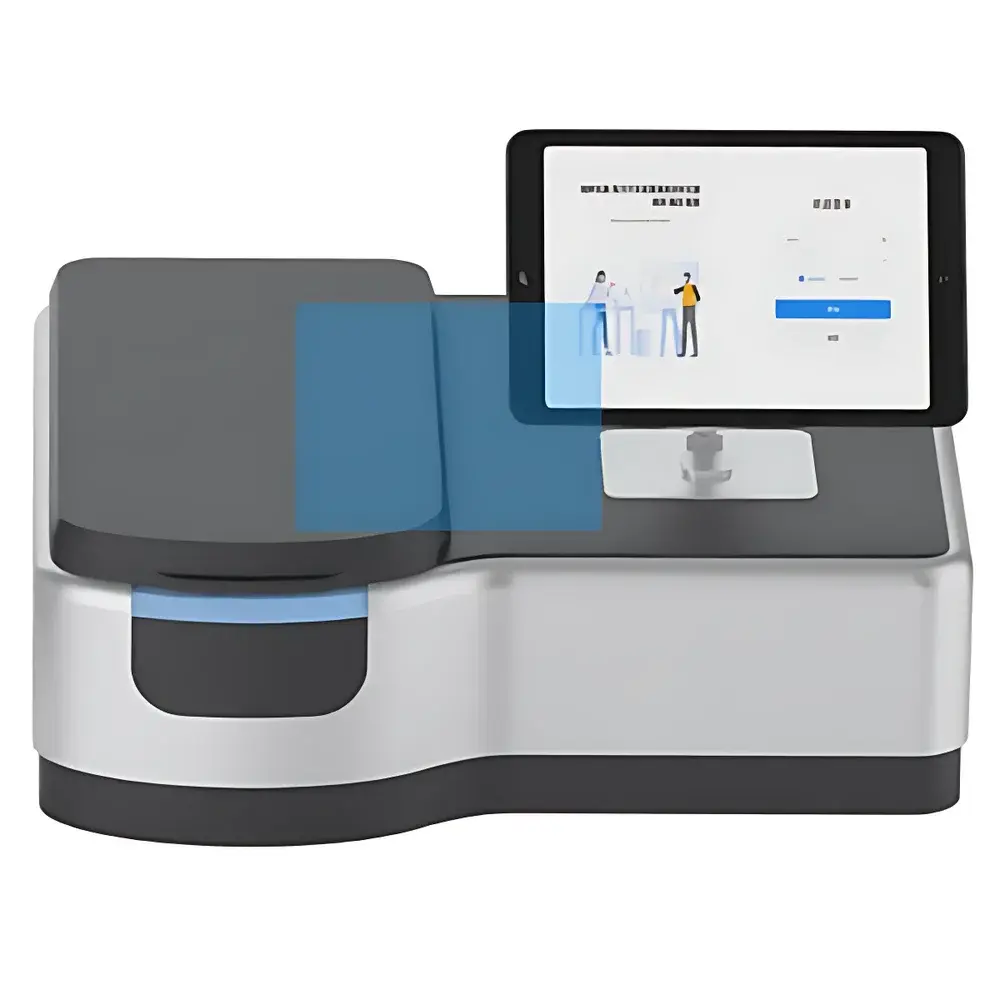
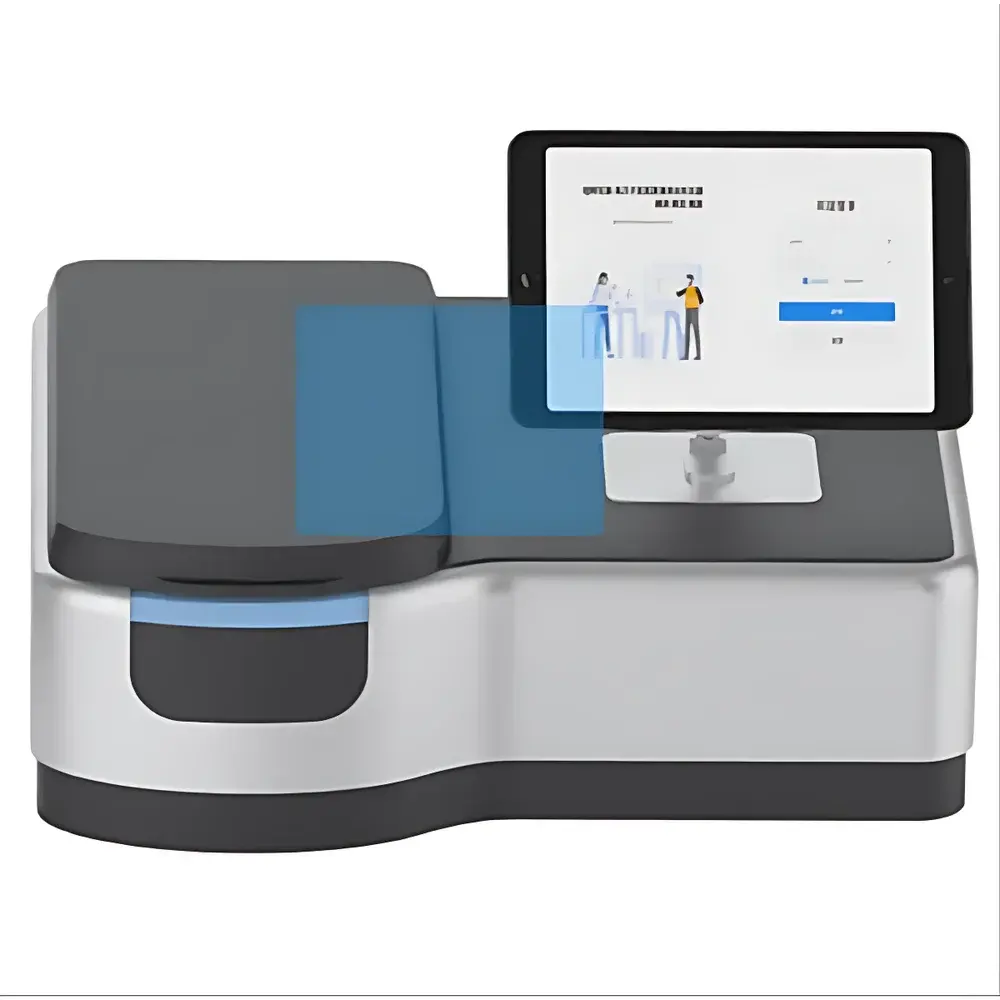
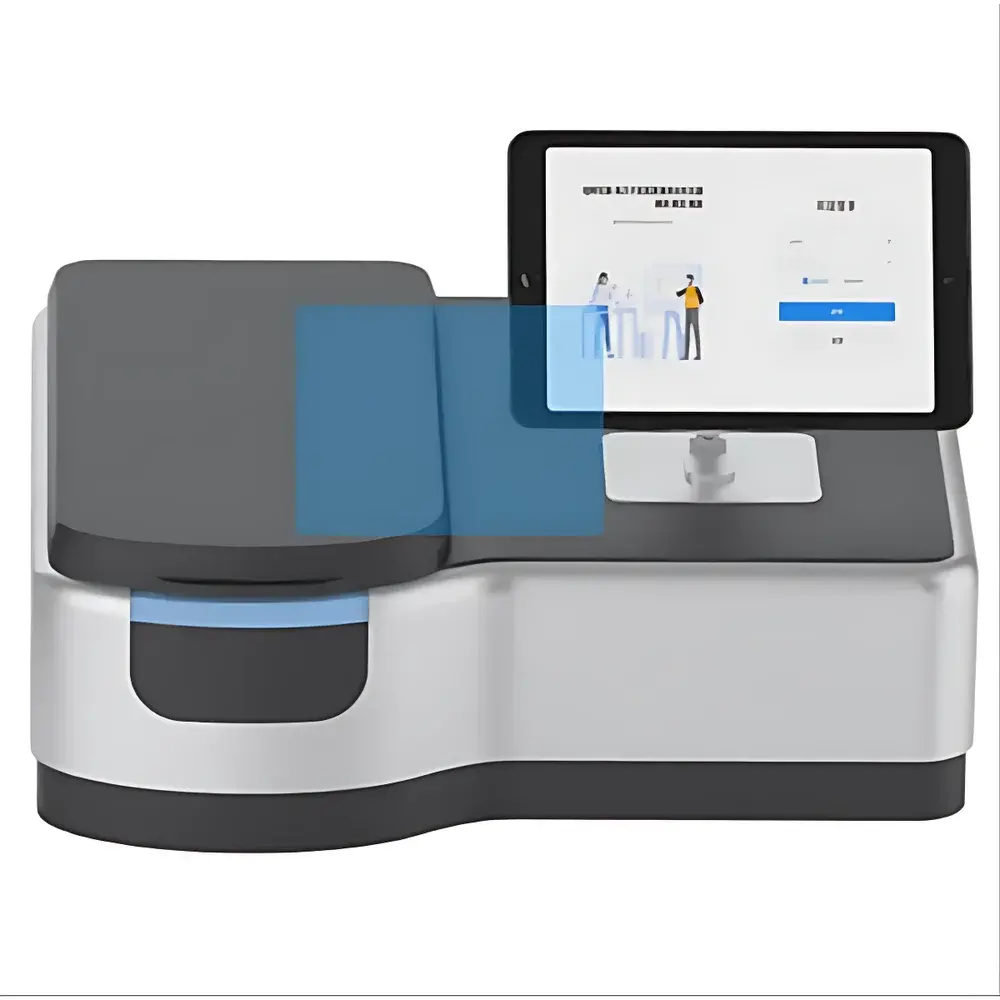
Yoke M600 Dual-Beam Ultraviolet-Visible Spectrophotometer
| Brand | Yoke |
|---|---|
| Origin | Shanghai, China |
| Model | M600 |
| Optical System | Dual-beam |
| Detector | Photomultiplier Tube (PMT) |
| Wavelength Range | 190–1100 nm |
| Wavelength Accuracy | ±0.3 nm |
| Wavelength Repeatability | ≤0.1 nm |
| Spectral Bandwidth | 1 nm |
| Stray Light | ≤0.03% (at 220 nm, using NaI) |
| Absorbance Resolution | 0.00001 Abs |
| Photometric Range | –4 to +4 Abs |
| Light Sources | Deuterium lamp (UV), Tungsten-halogen lamp (Vis) |
Overview
The Yoke M600 Dual-Beam Ultraviolet-Visible Spectrophotometer is an engineered analytical instrument designed for high-fidelity absorbance and transmittance measurements across the ultraviolet and visible spectral regions (190–1100 nm). Based on a true dual-beam optical architecture, the M600 continuously compares sample and reference beam intensities in real time, effectively compensating for source drift, detector instability, and environmental fluctuations—thereby delivering superior baseline stability and measurement reproducibility over extended acquisition periods. Its optical path integrates a precision monochromator with a 1 nm nominal spectral bandwidth and utilizes a high-gain photomultiplier tube (PMT) detector optimized for low-light sensitivity and rapid signal response. The system employs interchangeable deuterium (UV) and tungsten-halogen (Vis) light sources, each independently controllable to minimize unnecessary lamp aging and maximize operational lifetime.
Key Features
- Integrated 11-inch 2.8K resolution tablet interface with intuitive multi-language support (auto-switching between English and Chinese), Bluetooth-enabled wireless connectivity, and responsive touch-based navigation.
- Dual-beam optical design ensures real-time background correction, reducing baseline drift and enhancing long-term photometric stability.
- High-resolution absorbance detection capability down to 0.00001 Abs, enabling trace-level quantitation and high-sensitivity kinetic studies.
- Comprehensive measurement modes: photometric analysis, quantitative determination (including single/multi-point calibration and equation-based methods), wavelength scanning, time-based kinetics, 3D spectral mapping, multi-wavelength analysis, and dedicated nucleic acid/protein assay protocols (e.g., A260/A280 ratio calculation).
- Intelligent diagnostics and remote alerting: system faults or anomalous measurement results trigger automated notifications via email or SMS, supporting proactive maintenance and uninterrupted laboratory workflow.
- User access control with multi-tier permission levels (administrator, operator, viewer) ensures data integrity, audit readiness, and compliance with internal SOPs.
Sample Compatibility & Compliance
The M600 accommodates a broad range of sample formats through its modular accessory ecosystem—including automatic 8-position cuvette changers, film holders, micro-volume capillary cells, thermostatted cell holders (for temperature-controlled assays), integrating spheres (for diffuse reflectance/transmittance), variable-pathlength cells (0.1–100 mm), and adjustable-angle solid-sample stages. All optical components meet ISO 9001 manufacturing standards, and the instrument’s photometric performance adheres to ASTM E275 and ISO 6223 specifications for UV-Vis spectrophotometers. Data handling supports GLP-compliant operation with timestamped audit trails, electronic signatures (via optional software module), and export formats compatible with LIMS integration (CSV, XML, PDF).
Software & Data Management
The embedded software platform provides full local control and data processing without requiring external PCs. It features built-in spectral subtraction, peak identification, derivative spectroscopy, and customizable report templates. Raw and processed data are stored with immutable metadata (operator ID, date/time, instrument serial number, method parameters). Export functions include encrypted USB transfer and network-based upload to secure cloud repositories. For regulated environments, optional 21 CFR Part 11-compliant software add-ons provide electronic record authentication, role-based access logging, and tamper-evident audit trails—fully aligned with FDA, EMA, and WHO GMP expectations.
Applications
The M600 serves routine and research-grade applications across pharmaceutical QC (active ingredient assay, dissolution testing), environmental monitoring (nitrate, phosphate, COD analysis), food safety (colorant quantification, antioxidant capacity), academic teaching laboratories (Beer-Lambert law validation, enzyme kinetics), and biotechnology (DNA/RNA purity assessment, protein concentration via Bradford/Lowry/Biuret assays). Its robustness, repeatability, and regulatory-ready architecture make it suitable for ISO/IEC 17025-accredited testing facilities.
FAQ
What is the difference between single-beam and dual-beam optical configurations in UV-Vis spectrophotometry?
Dual-beam systems split the light source into reference and sample beams, measuring both simultaneously to correct for lamp intensity drift and electronic noise—resulting in improved baseline stability and reduced need for frequent zeroing.
Does the M600 support compliance with pharmacopeial methods such as USP or EP 2.2.25?
Yes—the instrument meets the essential photometric accuracy, wavelength calibration, and stray light requirements outlined in these monographs; method validation documentation and IQ/OQ/PQ protocols are available upon request.
Can the M600 be integrated into a laboratory information management system (LIMS)?
Yes—via standard CSV/XML export or optional OPC UA/REST API interfaces, enabling bidirectional data exchange with major LIMS platforms.
Is the PMT detector replaceable by the end user?
Detector replacement requires factory recalibration and alignment; Yoke recommends qualified service personnel perform this procedure to maintain optical fidelity and warranty coverage.
What is the expected lifetime of the deuterium lamp under typical usage conditions?
With intelligent lamp scheduling (auto-shutdown after idle periods), the deuterium lamp typically achieves >2,000 hours of operational life—consistent with ICH Q5C guidance on component longevity in analytical instrumentation.





