
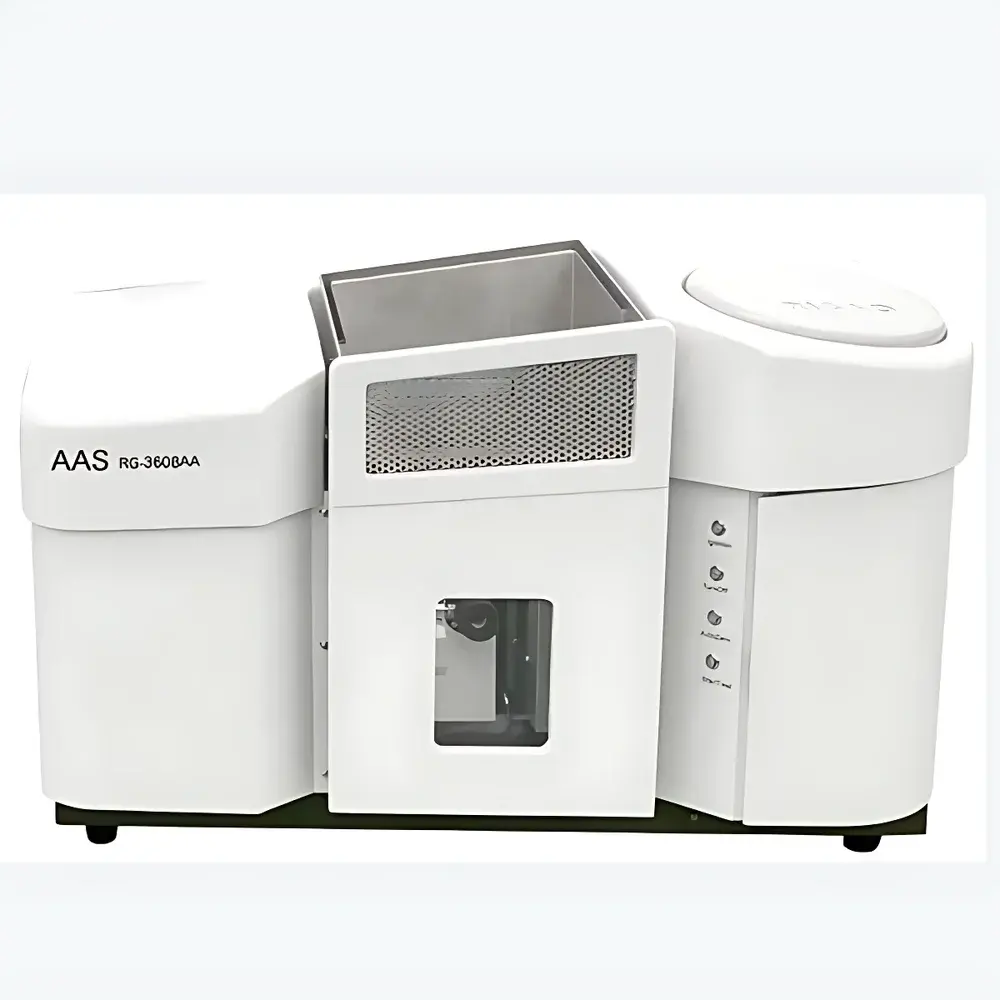
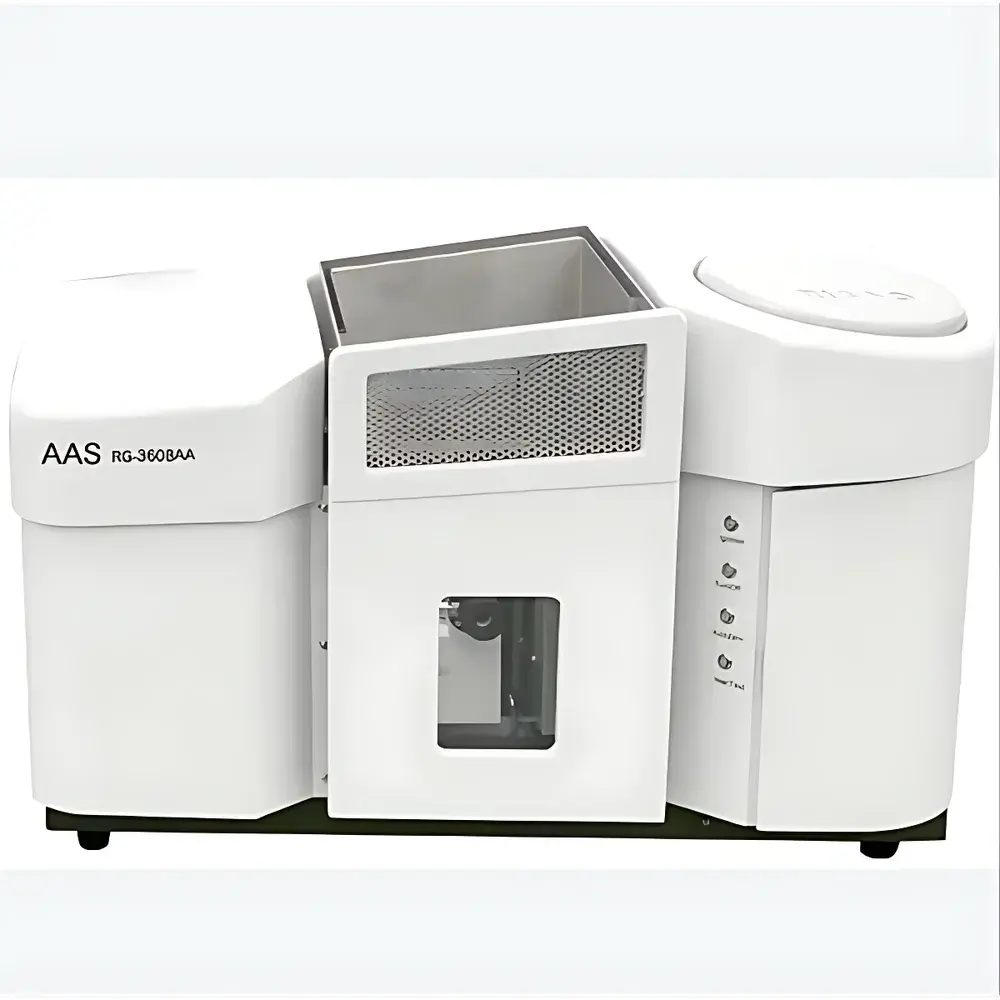
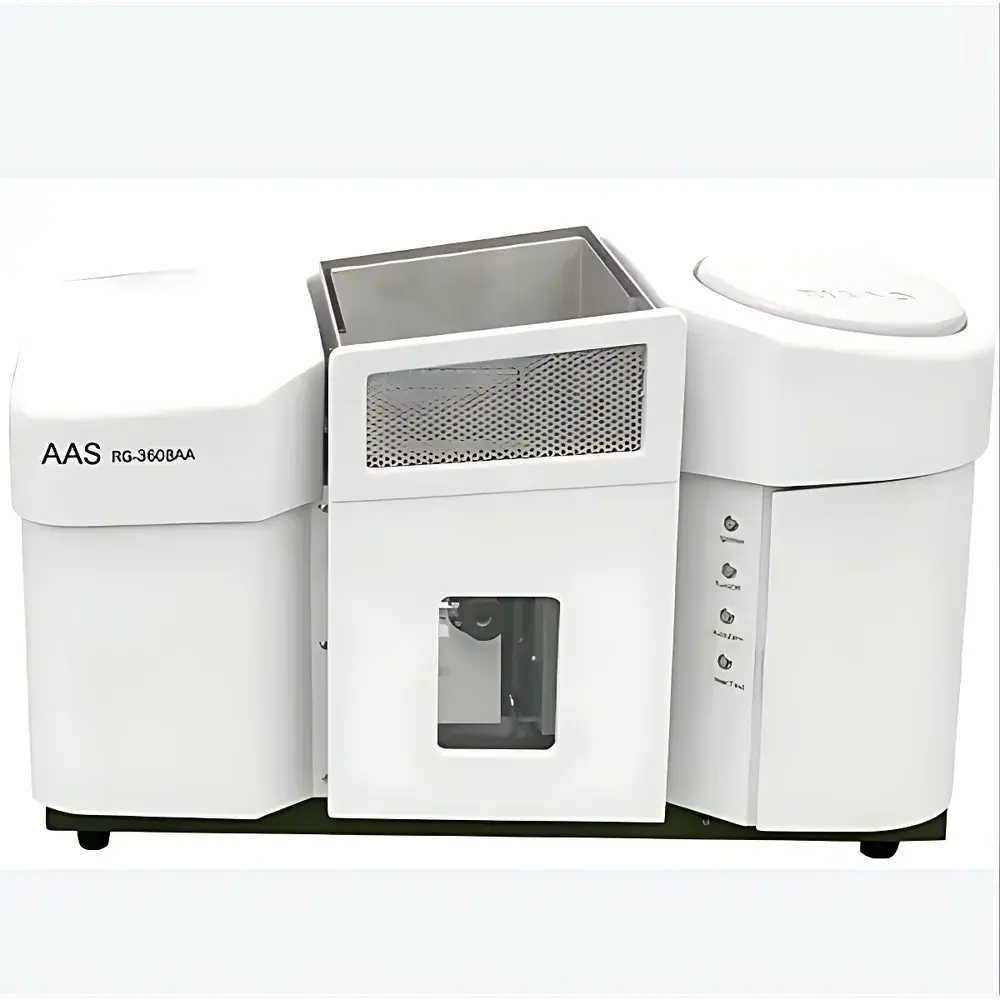
Yoke RG-3624AA Atomic Absorption Spectrophotometer (Graphite Furnace)
| Brand | Yoke |
|---|---|
| Origin | Shanghai, China |
| Model | RG-3624AA |
| Wavelength Range | 190–900 nm |
| Wavelength Repeatability | ≤0.05 nm |
| Wavelength Accuracy | ±0.1 nm |
| Photometric Range | 0–2.0 A (Absorbance) |
| Optical System | Single-beam |
| Lamp Positions | 4 |
| Background Correction | D₂ Lamp + Self-Reversal Full-Spectrum Correction |
| Atomizer Type | Electrothermal Graphite Furnace |
Overview
The Yoke RG-3624AA Atomic Absorption Spectrophotometer is a dedicated graphite furnace atomic absorption spectrometer engineered for trace elemental analysis in demanding laboratory environments. Based on the fundamental principle of atomic absorption spectroscopy—where ground-state free atoms in the gaseous phase absorb characteristic wavelengths of light—the RG-3624AA employs electrothermal atomization to volatilize and atomize analyte species from liquid or solid samples with high thermal control and minimal matrix interference. Its optical architecture utilizes a single-beam design with a fully reflective optical path, minimizing light loss and maximizing signal-to-noise ratio for low-concentration detection. The instrument operates across a broad spectral range (190–900 nm), enabling quantification of over 70 metallic and semi-metallic elements—including Cd, Pb, As, Cr, Ni, Cu, Zn, Mn, Fe, and Se—at sub-ppt to low-ppt levels in environmental, clinical, food safety, and geochemical matrices.
Key Features
- High-stability monochromator with <0.05 nm wavelength repeatability and ±0.1 nm absolute accuracy—ensuring long-term calibration integrity and inter-laboratory comparability.
- Integrated intelligent gas control module regulating argon flow during drying, pyrolysis, and atomization stages—preventing premature oxidation and optimizing atom cloud formation.
- Dual-mode background correction: simultaneous deuterium lamp (D₂) continuum correction across the full UV-Vis range (190–350 nm) and self-reversal (SR) correction for resonance line-specific interference—enhancing specificity in complex sample matrices.
- Four-position automatic hollow cathode lamp turret with 360° rotational alignment—enabling precise optical coupling and rapid multi-element method switching without manual realignment.
- Electrothermal graphite furnace atomizer featuring programmable temperature ramping, integrated furnace viewing window, and motorized vertical lift mechanism for reproducible sample introduction and reduced carryover.
- RG-WinAAS workstation software running natively under Microsoft Windows OS—supporting method development, sequence programming, real-time furnace temperature profiling, peak area/height integration, and linear/non-linear calibration curve fitting.
Sample Compatibility & Compliance
The RG-3624AA accommodates aqueous solutions, acid-digested biological tissues, filtered environmental extracts (e.g., soil leachates, wastewater), and diluted food digests. Sample volumes range from 5–50 µL, compatible with standard autosampler vials or manual micro-syringe injection. The system meets foundational performance criteria outlined in ASTM D3919 (Standard Test Method for Determination of Lead in Water by Graphite Furnace Atomic Absorption Spectrometry) and ISO 11170 (Water Quality — Determination of Metals by Graphite Furnace AAS). While not pre-certified for regulatory submission, its hardware architecture and software logging capabilities support implementation under GLP and GMP frameworks—particularly when paired with audit-trail-enabled data management extensions and electronic signature modules compliant with FDA 21 CFR Part 11 requirements.
Software & Data Management
RG-WinAAS provides a modular, intuitive interface for instrument control, data acquisition, and reporting. It supports method templates compliant with USP , EPA Method 200.9, and ISO 11170 workflows. Raw absorbance-time profiles are stored with full metadata (lamp current, slit width, furnace program steps, gas flow rates, integration parameters). Data export options include CSV, TXT, and XML formats; spectral overlays and calibration reports can be generated directly. The software maintains a local database with user-defined access controls, session logs, and versioned method archives—facilitating internal validation and re-audit readiness.
Applications
- Environmental monitoring: Quantification of heavy metals (Pb, Cd, As) in drinking water, surface water, and sediment pore water per EPA 200.9 protocols.
- Clinical toxicology: Measurement of blood lead levels (BLL) and urinary cadmium in occupational health screening programs.
- Food safety testing: Detection of arsenic in rice products and mercury in seafood extracts following AOAC 999.10 guidelines.
- Pharmaceutical quality control: Residual catalyst metal analysis (e.g., Pd, Pt, Rh) in active pharmaceutical ingredients (APIs) per ICH Q2(R2) validation principles.
- Geological research: Trace element profiling in rock digests and mineral concentrates using HF/HNO₃ microwave-assisted digestion.
FAQ
What atomization technology does the RG-3624AA employ?
It uses an electrothermal graphite furnace for discrete sample atomization—providing superior sensitivity and lower detection limits compared to flame-based AAS systems.
Is the instrument compatible with third-party autosamplers?
Yes—its RS-232 and USB interfaces support integration with industry-standard XYZ autosamplers via standardized command protocols.
Does RG-WinAAS support multi-point calibration with forced zero?
Yes—users may define up to 12 calibration standards with optional blank subtraction and forced origin (0,0) constraint for strict linearity assessment.
Can background correction be disabled for method development?
Yes—both D₂ and SR correction modes are independently toggleable in real time during measurement setup.
What maintenance intervals are recommended for the graphite tube?
Typical lifetime is 200–500 firings depending on matrix complexity; routine cleaning with 1% HNO₃ rinse and visual inspection for pitting or cracking is advised after every 50 analyses.



