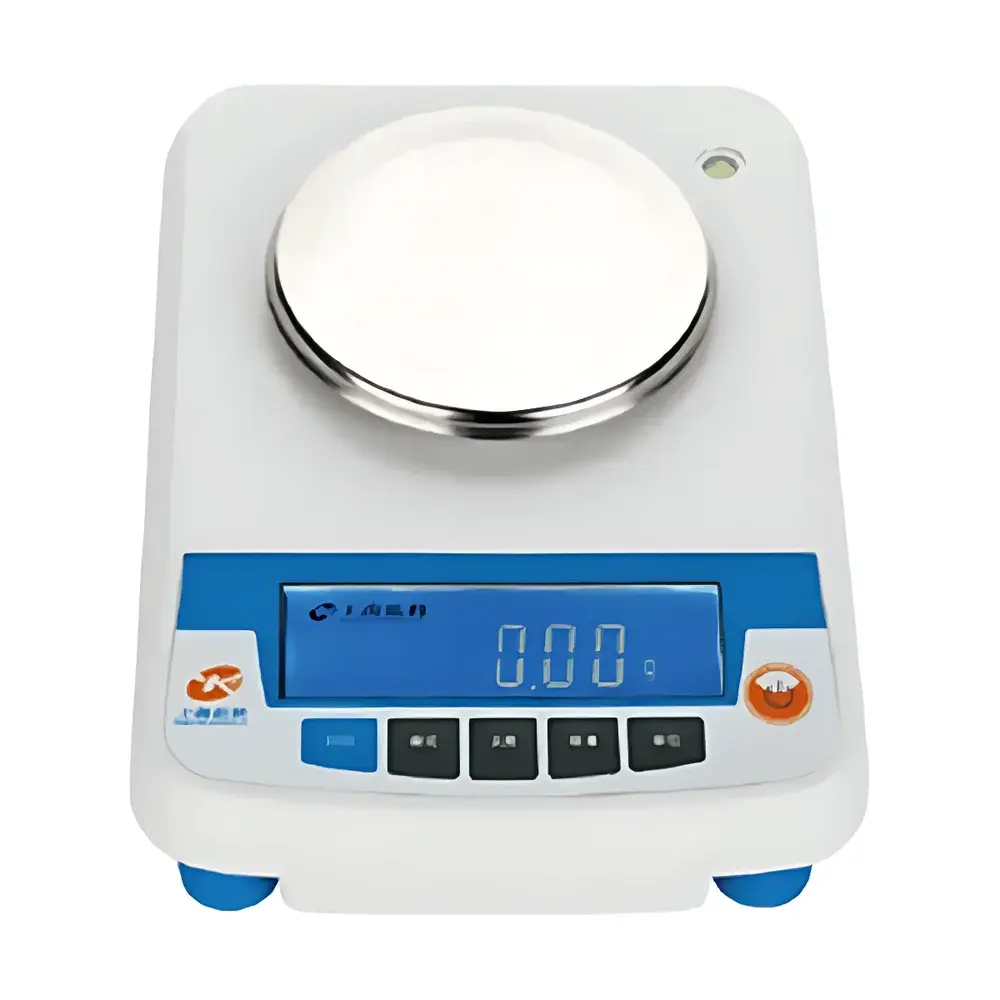
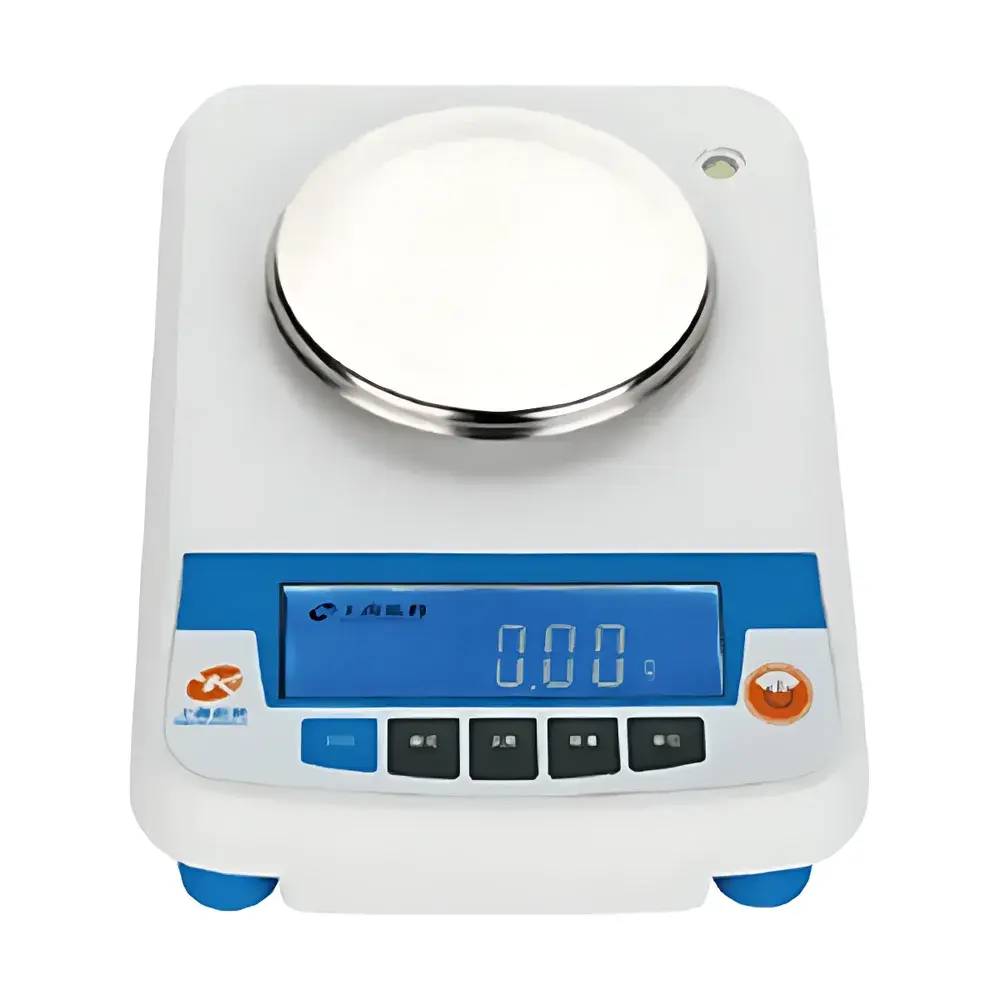
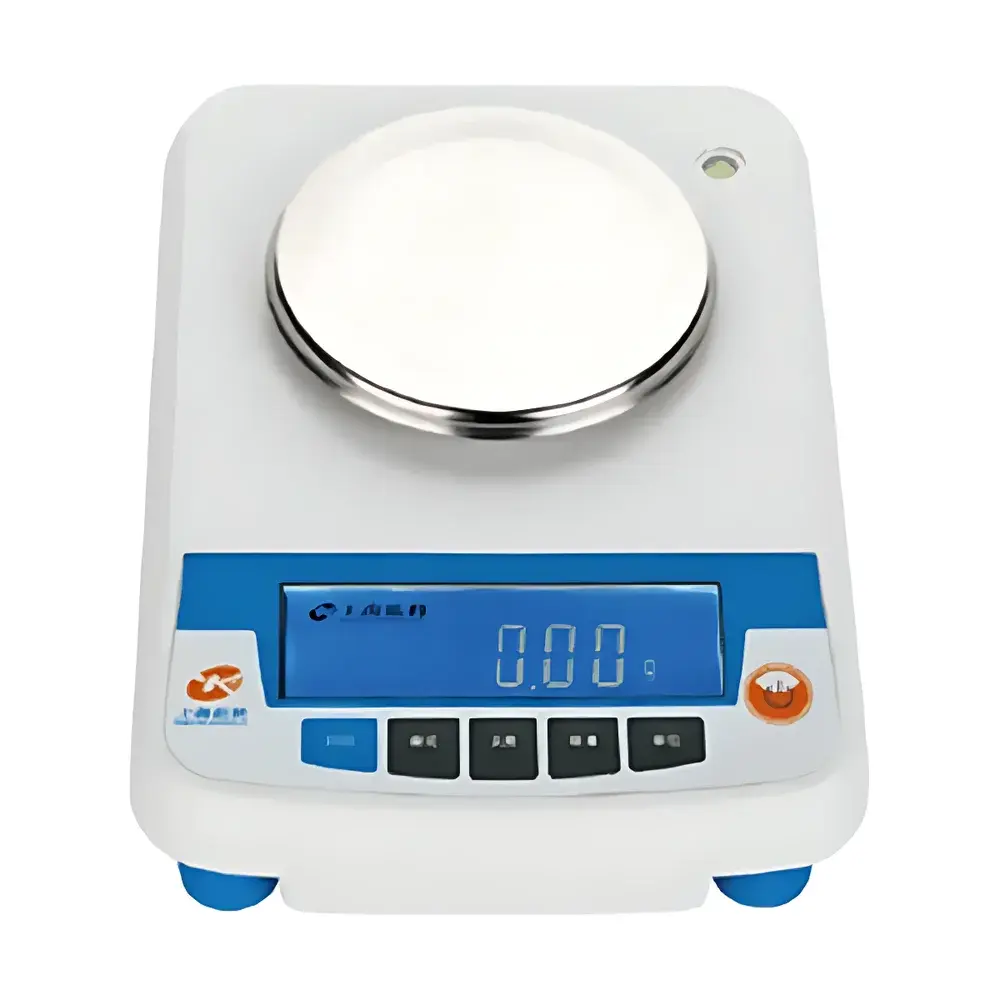
Yoke YP1002 Precision Balance
| Brand | Yoke |
|---|---|
| Origin | Shanghai, China |
| Manufacturer Type | Authorized Distributor |
| Product Category | Domestic (China-made) |
| Model | YP1002 |
| Instrument Type | Precision Balance |
| Capacity | 0–100 g |
| Readability | 0.01 g |
| Repeatability | ≤ ±0.01 g |
| Linearity Error | ≤ ±0.02 g |
| Stabilization Time | < 2 s |
| Weighing Units | g, oz, ct, dwt, grain, %, pcs |
| Interface | RS-232 (optional printer/PC connectivity) |
| Calibration | Internal or external (100 g calibration weight recommended) |
| Power Supply | AC adapter (100–240 V, 50/60 Hz) or 4×AA batteries |
Overview
The Yoke YP1002 Precision Balance is an entry-level analytical-grade weighing instrument engineered for routine laboratory, educational, and quality control applications requiring reliable mass measurement at 0.01 g readability. Based on electromagnetic force compensation (EMFC) transduction technology, the YP1002 delivers stable, drift-resistant performance under standard ambient conditions (20 ± 5 °C, RH < 80 % non-condensing). Its compact footprint and low-profile design integrate seamlessly into benchtop workflows where space efficiency and operational simplicity are prioritized. Unlike high-resolution analytical balances with sub-milligram resolution, the YP1002 is optimized for robustness and repeatability within the 20–100 g working range—making it particularly suitable for sample preparation, formulation checks, reagent dispensing, and teaching laboratories where ISO/IEC 17025-compliant traceability is not mandated but consistent metrological behavior is essential.
Key Features
- Electromagnetic force compensation sensor architecture ensures long-term stability and minimal thermal drift across daily operation cycles.
- Stainless steel weighing pan (120 mm diameter) and reinforced metal base structure enhance mechanical rigidity and resistance to vibration and air currents.
- Intuitive 5-key membrane keypad with backlight LCD display (128 × 64 pixels) supports real-time weight readout, unit conversion, and function navigation without menu nesting.
- Multi-function weighing modes: standard mass, piece counting (with user-defined reference weight), percentage weighing (relative to preset tare), and unit conversion among grams, ounces, carats, pennyweights, and grains.
- RS-232 serial interface enables direct data transmission to printers (e.g., Epson TM-U220) or Windows-based PCs running terminal emulation software (e.g., Tera Term) or custom LIMS integrations—supporting GLP-compliant manual data recording.
- Auto-zero tracking and automatic internal stabilization detection minimize operator dependency during dynamic weighing sequences.
Sample Compatibility & Compliance
The YP1002 accommodates solid, granular, and powdered samples up to 100 g total load. Its open-top design permits easy placement of beakers, crucibles, weighing boats, and small containers (max height: 180 mm below display housing). The balance meets JJG 1036–2008 (Chinese National Verification Regulation for Electronic Balances) and conforms to general requirements outlined in ISO 9001:2015 clause 7.6 for monitoring and measuring equipment control. While not certified to OIML R76 or NIST Handbook 44 for legal-for-trade use, its performance parameters align with ASTM E1222–22 Annex A1 guidance for non-regulated precision balances used in method validation and routine QC testing. No hazardous material restrictions apply; however, corrosive, volatile, or magnetic samples require appropriate containment per institutional safety protocols.
Software & Data Management
The YP1002 operates as a standalone instrument with no embedded firmware-based data logging. All data export relies on real-time RS-232 output formatted as ASCII strings (e.g., “+12.3456 grn”), compatible with spreadsheet import, CSV parsing, or integration into validated laboratory informatics systems. Optional Yoke-provided utility software (v2.1, Windows-only) allows basic timestamped capture, batch export, and simple statistical summary (mean, SD, CV%). For environments governed by FDA 21 CFR Part 11 or EU Annex 11, users must implement independent audit-trail mechanisms—such as time-stamped screen captures or third-party electronic lab notebook (ELN) ingestion—since the device lacks user authentication, electronic signatures, or secure data storage capabilities.
Applications
- Educational laboratories: Demonstrating mass conservation, stoichiometric calculations, and calibration fundamentals in undergraduate chemistry and physics courses.
- Pharmaceutical QA/QC: Weighing excipients, active ingredients, and packaging components during tablet formulation development and batch release testing (non-GMP stages).
- Food science labs: Measuring ingredient proportions in recipe scaling, moisture content determination via gravimetric loss-on-drying (LOD), and portion control verification.
- Environmental testing: Preparing standard solutions for ICP-OES or UV-Vis analysis, weighing filter papers pre/post particulate collection.
- Materials research: Quantifying catalyst loading, polymer additive dosing, and composite matrix-to-filler ratios in prototyping workflows.
FAQ
What is the recommended calibration frequency for the YP1002?
Calibration should occur before first use, after relocation, following significant ambient temperature shifts (>5 °C), and at least once per shift in high-throughput settings. External calibration using a Class M2 or better 100 g weight is advised per ISO/IEC 17025 Clause 6.5.
Can the YP1002 be used in a fume hood?
Yes—provided airflow velocity remains below 0.2 m/s at the pan surface and the unit is leveled prior to operation. Avoid placing near exhaust slits or turbulent draft zones.
Does the balance support automatic internal calibration?
No. The YP1002 requires manual external calibration; it does not feature motorized internal calibration weights or auto-calibration routines.
Is battery operation suitable for continuous use?
Four AA alkaline batteries provide ~40 hours of typical usage. For uninterrupted operation in production or teaching labs, the AC adapter is strongly recommended to prevent mid-session power loss and zero-point instability.
How is traceability maintained when exporting data to Excel?
Users must manually record instrument ID, calibration date, operator name, and environmental conditions alongside exported values. For regulated environments, this workflow requires documented SOPs and secondary review per ALCOA+ principles.