
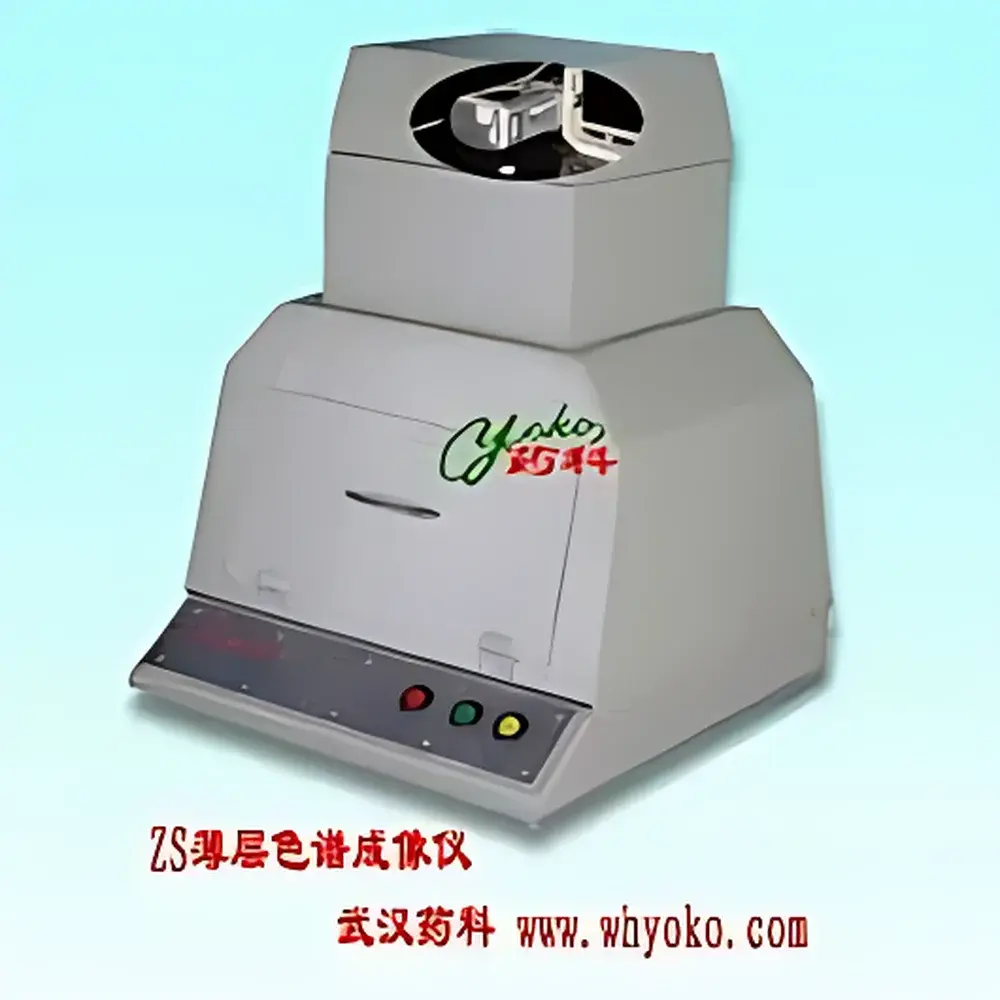
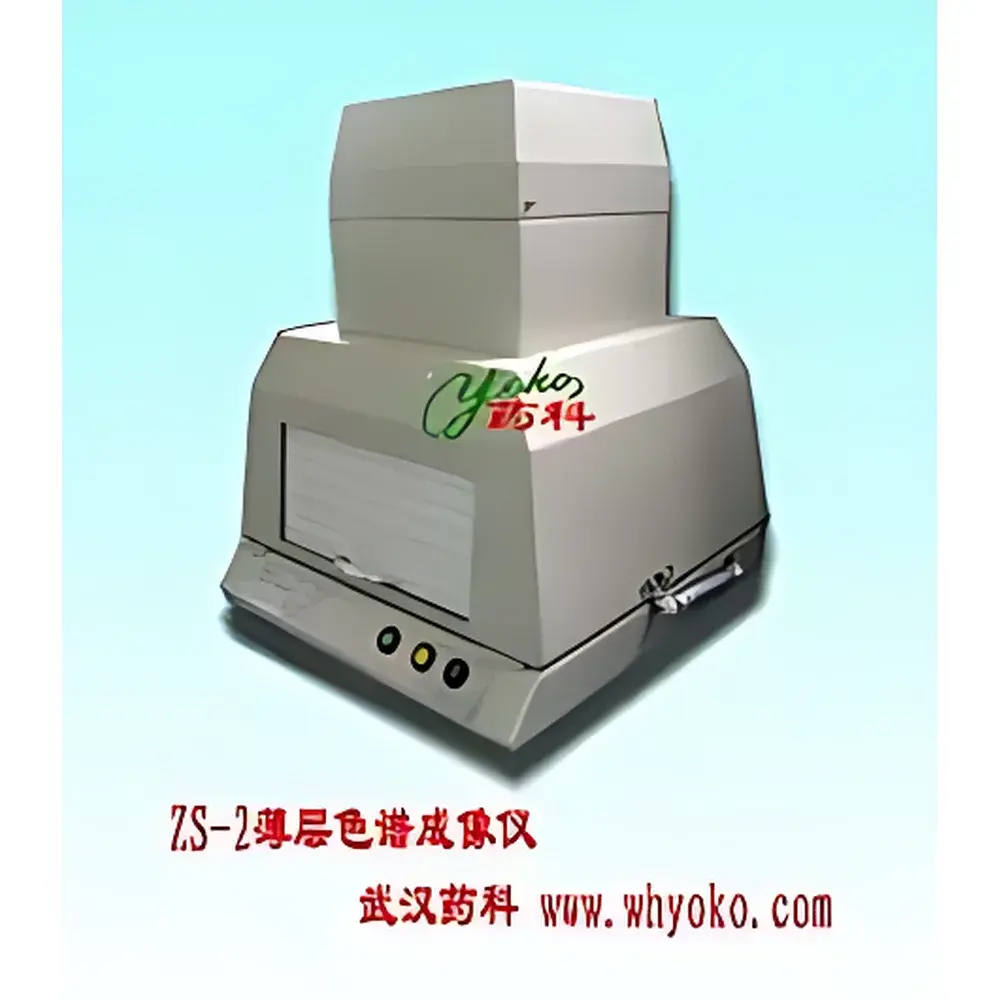
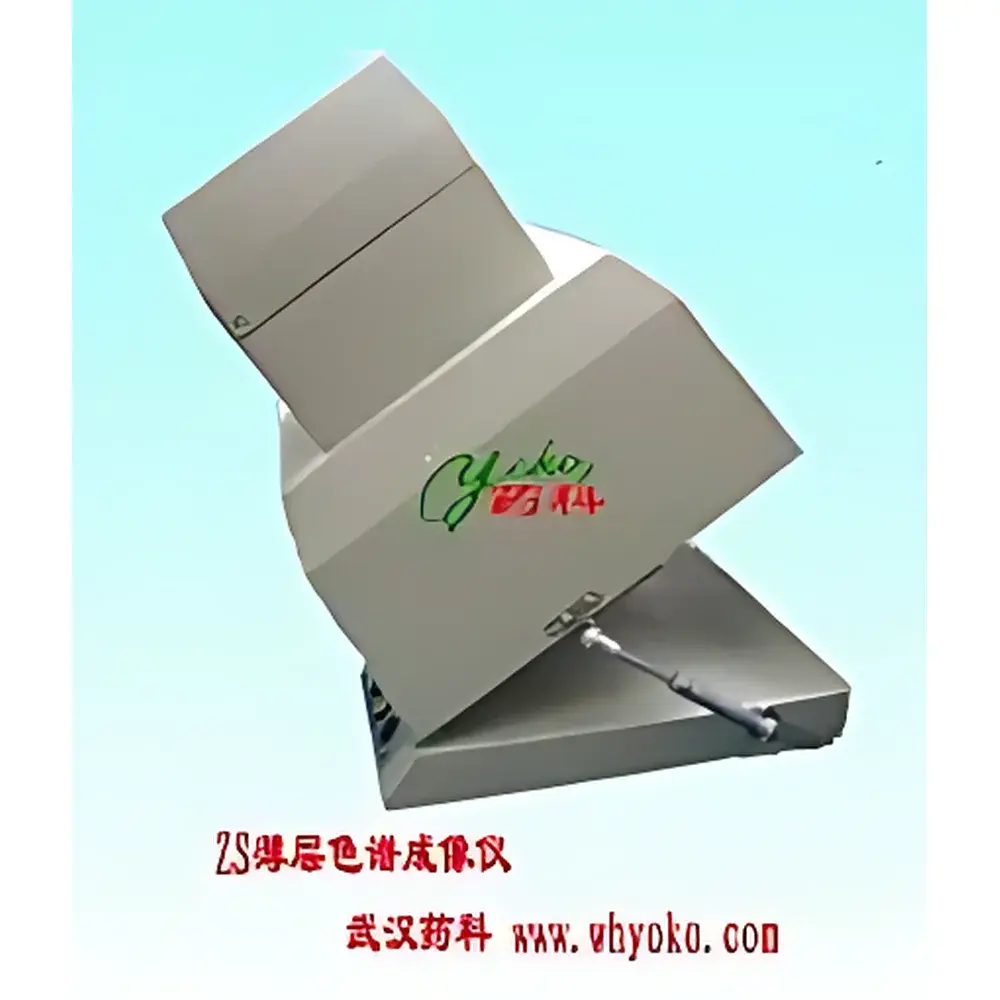
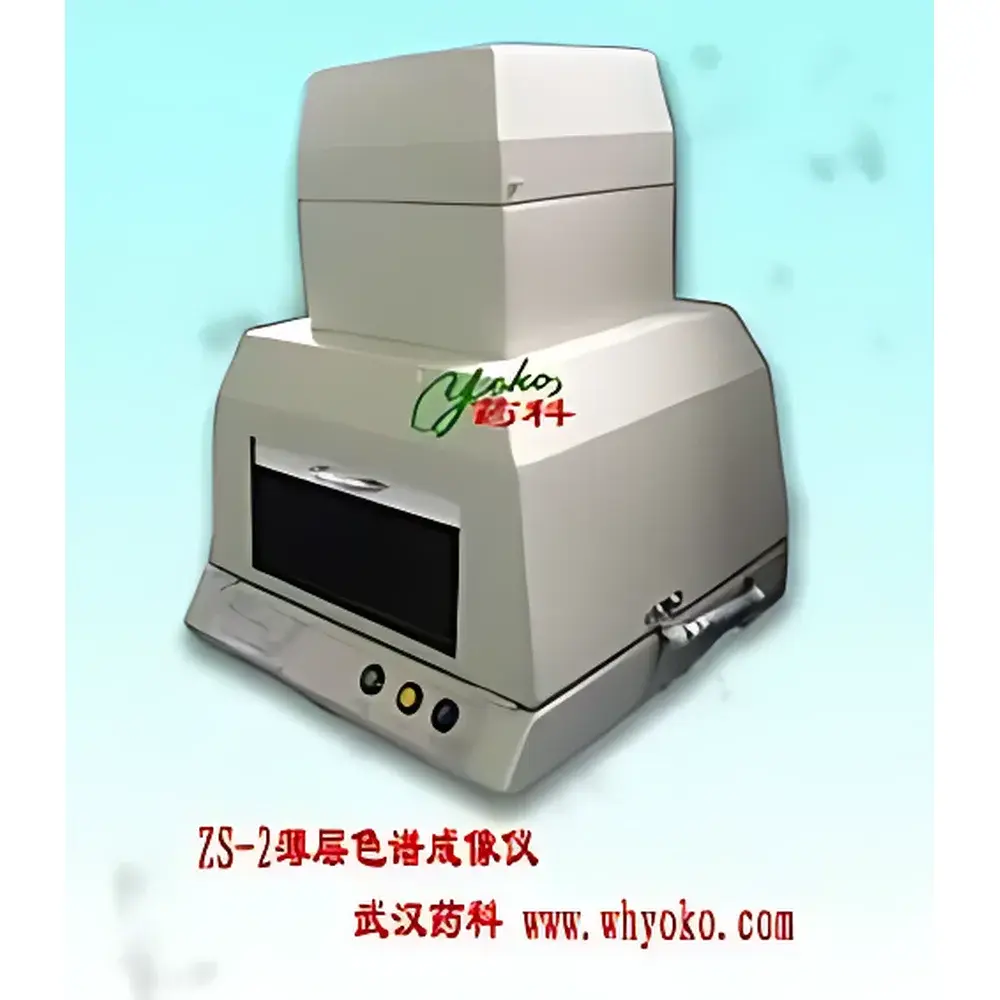
YOKO-CS UV Transmitted/Reflected Light TLC Imaging System
| Brand | YOKO |
|---|---|
| Origin | Hubei, China |
| Manufacturer Type | Authorized Distributor |
| Product Category | Domestic |
| Model | YOKO-CS |
| Instrument Type | TLC Imaging System |
| Operation Mode | Manual |
| UV Lamps | 254 nm (2 × 12 W), 365 nm (2 × 12 W), 312 nm (5 × 20 W), All at 220 V / 50 Hz |
| Visible Light | GB-standard daylight lamps (2 × 12 W) |
| UV Transmission Filters | Two 50 × 200 mm filters (for reflected UV), One 150 × 200 mm filter (for transmitted UV) |
| Power Supply | 220 V AC, 50 Hz |
| Ballast | High-efficiency electronic ballast (instant start) |
Overview
The YOKO-CS UV Transmitted/Reflected Light TLC Imaging System is a purpose-built, integrated darkroom imaging platform engineered for high-fidelity documentation of thin-layer chromatography (TLC) plates and bioanalytical gels under multiple ultraviolet and visible excitation wavelengths. Unlike standalone UV transilluminators or generic document cameras, the YOKO-CS employs a monolithic optical enclosure architecture—combining precisely aligned UV illumination sources, calibrated transmission/reflection filter sets, and a fixed-focus imaging plane—to minimize stray light, ensure consistent exposure geometry, and maximize signal-to-noise ratio in fluorescence and quenching detection modes. Its dual-path optical design supports both top-illuminated reflection (e.g., for UV-absorbing compounds visualized by fluorescence quenching on silica plates) and bottom-illuminated transmission (e.g., for ethidium bromide–stained nucleic acids in polyacrylamide or agarose gels). The system operates on standardized 220 V / 50 Hz mains power and incorporates instant-start electronic ballasts to eliminate warm-up delay and lamp flicker—critical for reproducible image acquisition across sequential runs.
Key Features
- Triple-wavelength UV illumination: Independent 254 nm (2 × 12 W), 365 nm (2 × 12 W), and 312 nm (5 × 20 W) lamp arrays enable selective excitation of diverse fluorophores and UV-active analytes—supporting applications from pesticide residue screening (254 nm) to coumarin-based derivatization detection (365 nm).
- Optimized filter configuration: Includes two 50 × 200 mm high-transmission reflective UV filters (≥68% @ 254 nm; ≥86% @ 365 nm) and one 150 × 200 mm transmissive UV filter, all mounted in precision-aligned filter holders to maintain collimation and prevent vignetting.
- Integrated darkroom enclosure: Rigid, light-tight housing eliminates ambient interference and provides stable thermal and mechanical conditions—essential for long-exposure gel documentation and quantitative densitometry workflows.
- Modular imaging interface: Standard C-mount thread enables direct coupling with industrial-grade monochrome or color CCD/CMOS cameras (e.g., Sony IMX series sensors), supporting both real-time preview and high-resolution static capture.
- Dual-use versatility: Functions as a dedicated TLC documentation station, UV gel imager, archival document copier (with white-light illumination), and benchtop UV inspection tool—reducing lab footprint and cross-instrument calibration overhead.
Sample Compatibility & Compliance
The YOKO-CS accommodates standard TLC plates (up to 20 × 20 cm), preparative plates (up to 20 × 20 cm), and slab gels (up to 15 × 20 cm). It supports silica gel, aluminum oxide, cellulose, and reversed-phase (C18) stationary phases, as well as polyacrylamide, agarose, and SDS-PAGE matrices. All UV lamp assemblies comply with IEC 62471 Photobiological Safety Standards for UV radiation emission. The electronic ballast meets EN 61000-3-2 harmonic current limits and EN 61000-4-3 immunity requirements. While not certified to GLP or 21 CFR Part 11 out-of-the-box, the system is compatible with third-party audit-ready software platforms that provide electronic signatures, audit trails, and data integrity controls per FDA and ISO/IEC 17025 guidelines.
Software & Data Management
The YOKO-CS does not include proprietary acquisition software but is fully interoperable with industry-standard imaging suites—including ImageLab (Bio-Rad), Quantity One (Bio-Rad legacy), GelAnalyzer, and open-source tools such as Fiji/ImageJ—via standard USB 2.0 or GigE Vision interfaces. When paired with compliant camera hardware, users can implement full traceability workflows: timestamped image metadata (exposure time, wavelength, filter ID), DICOM-compliant export, batch processing pipelines, and integration into LIMS via HL7 or RESTful APIs. Raw TIFF output preserves 12-bit or 16-bit dynamic range for post-acquisition linear densitometry and Rf value calculation.
Applications
- Qualitative and semi-quantitative analysis of pharmaceutical intermediates, natural products, and synthetic organic compounds via TLC visualization under multiple UV bands.
- Documentation and comparative analysis of electrophoretic separations—including DNA ladder sizing, protein purity assessment, and Western blot signal verification.
- UV-based forensic document examination (e.g., ink differentiation, security feature verification) and archival material digitization under controlled illumination.
- Teaching laboratory use: Real-time projection of developing chromatograms during undergraduate analytical chemistry instruction.
- QC/QA release testing in contract manufacturing organizations (CMOs) where cost-effective, non-GxP-dedicated imaging is required for routine identity and purity checks.
FAQ
Can the YOKO-CS be used for quantitative densitometry?
Yes—when coupled with a calibrated camera and validated software (e.g., ImageJ with OD calibration standards), it supports relative quantification of spot/gel band intensity within ±5% CV under controlled exposure conditions.
Is the 312 nm wavelength suitable for SYBR Safe or GelRed staining?
Yes—312 nm provides optimal excitation efficiency for these dyes while minimizing DNA damage compared to 254 nm, extending gel shelf life prior to downstream extraction.
Does the system support motorized filter wheel integration?
Not natively—but the optical path includes standardized M42 mounting points and TTL trigger inputs, enabling OEM-level integration of automated filter changers via external controllers.
What is the recommended maintenance interval for UV lamps?
Lamp output degrades gradually; we recommend radiometric verification every 200 operational hours and replacement after 1,000 hours or when transmittance falls below 90% of initial specification.
Can the YOKO-CS be operated inside a fume hood?
No—its electronic ballast and power supply are not rated for corrosive or solvent-saturated environments; use only in dry, ventilated laboratory spaces.




