
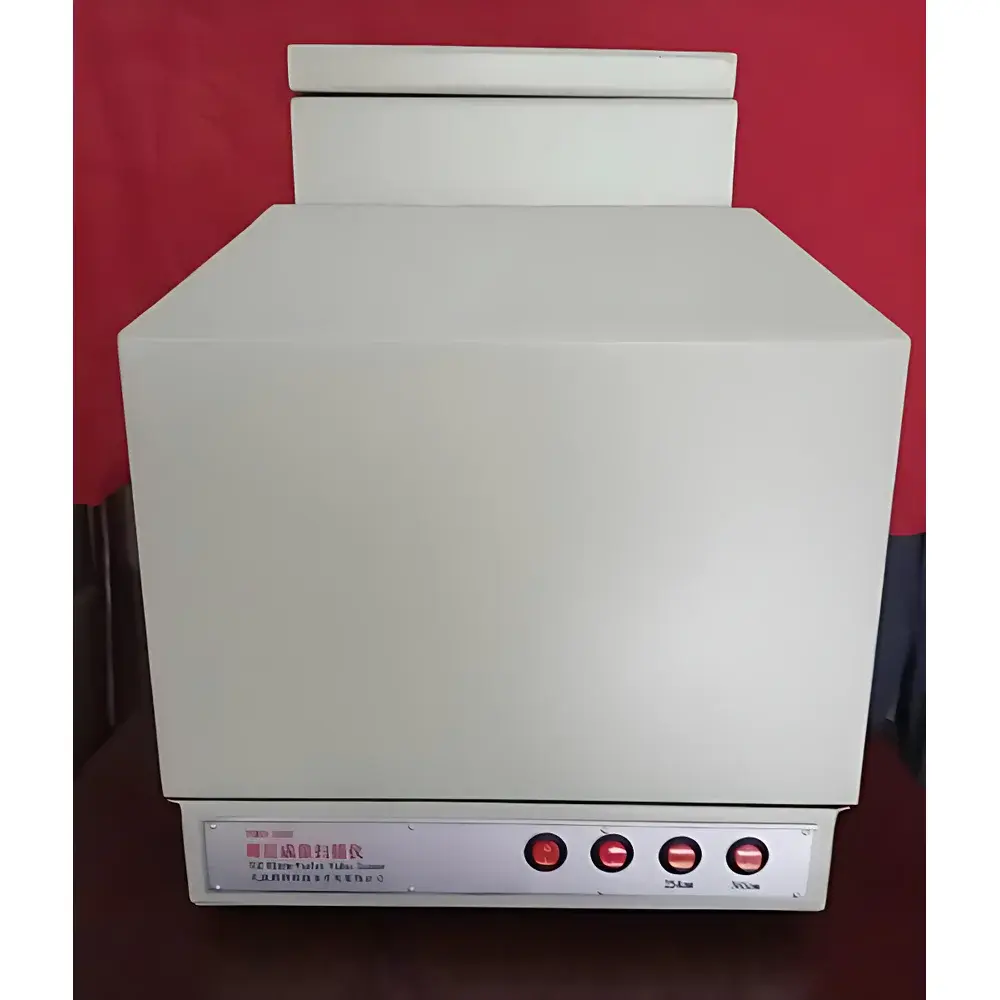
YOKO YOKO-2000 Thin-Layer Chromatography (TLC) Imaging Scanner
| Brand | YOKO |
|---|---|
| Model | YOKO-2000 |
| Origin | Hubei, China |
| Instrument Type | TLC Scanner |
| Operation Mode | Automatic |
| Measurement Modes | Reflectance, Fluorescence |
| Wavelength Range | 200–700 nm |
| Light Source | UV Lamp |
| Wavelength Accuracy | ±1 nm |
| Minimum Resolution | 10 µm |
| Imaging Wavelengths | 254 nm, 365 nm |
| Sample Stage | 100 mm × 200 mm Pre-coated TLC Plates |
Overview
The YOKO YOKO-2000 Thin-Layer Chromatography (TLC) Imaging Scanner is a dedicated analytical instrument engineered for high-fidelity digital acquisition and quantitative densitometric analysis of chromatographic plates. It operates on the principle of reflectance and fluorescence densitometry—measuring light absorption or emission intensity from analyte bands immobilized on planar stationary phases (e.g., silica gel G, GF254, aluminum-backed, or polyester-backed plates). Designed in alignment with the requirements of Chinese Pharmacopoeia (ChP) 2005 Edition, Volume I, Appendix VIB “Thin-Layer Chromatography”, the system supports regulatory-compliant method development, validation, and routine QC testing in pharmaceutical, herbal medicine, and natural product laboratories. Its optical architecture integrates a stabilized dual-wavelength UV source (254 nm and 365 nm), precision linear scanning mechanics, and a high-sensitivity photodetector array calibrated to deliver reproducible signal response across the 200–700 nm spectral range.
Key Features
- Automated linear scanning with selectable scan modes: single-wavelength, dual-wavelength (e.g., 254/365 nm), and multi-channel sequential acquisition
- Optical resolution of ≤10 µm—enabling precise spatial discrimination of closely eluted spots and accurate Rf value determination
- Dual detection capability: reflectance mode for UV-absorbing compounds; fluorescence mode for native or derivatized fluorophores
- Integrated wavelength accuracy of ±1 nm—critical for method transfer and inter-laboratory comparability
- Modular plate stage accommodating standard 100 mm × 200 mm pre-coated TLC plates (silica gel G, GF254, H, HF254, aluminum oxide, or polyester-supported variants)
- Low-noise optical path design and optimized signal-to-noise ratio—ensuring linearity over three orders of magnitude in peak area response
Sample Compatibility & Compliance
The YOKO-2000 is validated for use with commercially available pre-coated TLC plates—including silica gel G, GF254, H, and HF254; aluminum-backed G and GF254; and polyester-supported G and GF254 plates (10 cm × 20 cm format). It meets the instrumental performance criteria specified in ChP 2005 Appendix VIB for TLC scanning systems, including spot localization accuracy, Rf reproducibility (<±0.02), and quantitative linearity (r ≥ 0.999 for calibration curves). While not certified to ISO/IEC 17025 or FDA 21 CFR Part 11 out-of-the-box, the system supports audit-ready documentation when deployed with controlled software configurations and laboratory SOPs. Data integrity is reinforced via timestamped image capture, operator ID logging, and immutable raw data file generation (.tif/.raw).
Software & Data Management
The YOKO TLC Workstation 2000 software (Windows XP/2000/NT compatible) provides full instrument control, image acquisition, and quantitative analysis. It implements pharmacopoeial-compliant quantification algorithms: normalization, internal standardization, and external calibration using both single-point linear and two-point quadratic regression. The interface supports real-time image rotation, brightness/contrast/saturation adjustment, baseline correction, and automatic band edge detection. All processed chromatograms, Rf tables, peak areas, and concentration reports are exportable in CSV, PDF, and XML formats. The workstation includes an embedded tutorial module with annotated workflow diagrams and troubleshooting guides—designed to reduce training time for new users. Unlimited spectral database management enables longitudinal comparison of historical plate images under identical acquisition parameters.
Applications
- Quantitative assay of active pharmaceutical ingredients (APIs) and marker compounds in traditional Chinese medicines (TCMs)
- Identity confirmation and purity assessment per ChP monographs requiring TLC identification tests
- Stability-indicating method development for degradation product profiling
- Method validation support for specificity, linearity, LOD/LOQ, and intermediate precision per ICH Q2(R2)
- Educational use in undergraduate and graduate chromatography laboratories for hands-on densitometry training
- Batch release testing in GMP-compliant herbal manufacturing facilities—particularly where cost-effective, validated alternatives to HPLC are required
FAQ
Does the YOKO-2000 comply with current GMP requirements for analytical instrumentation?
Yes—when operated within documented SOPs, with periodic verification of wavelength accuracy, resolution, and linearity, the system fulfills the general equipment suitability criteria outlined in EU GMP Annex 11 and USP for chromatographic imaging tools.
Can the software generate 21 CFR Part 11-compliant audit trails?
The base software does not include electronic signature or role-based access control modules. However, raw image files and analysis logs can be archived in secure, version-controlled repositories to meet ALCOA+ data integrity principles when paired with institutional IT governance policies.
Is calibration traceable to NIST or other national standards?
Wavelength calibration is performed using certified holmium oxide or didymium filters (optional accessory); resolution verification employs NIST-traceable USAF 1951 target slides. Certificate of Conformance is provided upon request.
What plate formats beyond 10×20 cm are supported?
The mechanical stage is fixed at 100 mm × 200 mm. Custom plate holders for larger formats (e.g., 20×20 cm) are not available; users must cut oversized plates to fit the defined scan area.
How frequently should system suitability testing be performed?
Per ChP Appendix VIB, system suitability—assessed via resolution of adjacent reference spots and Rf repeatability—must be verified prior to each analytical batch and after any hardware maintenance or software update.
Related Products





