
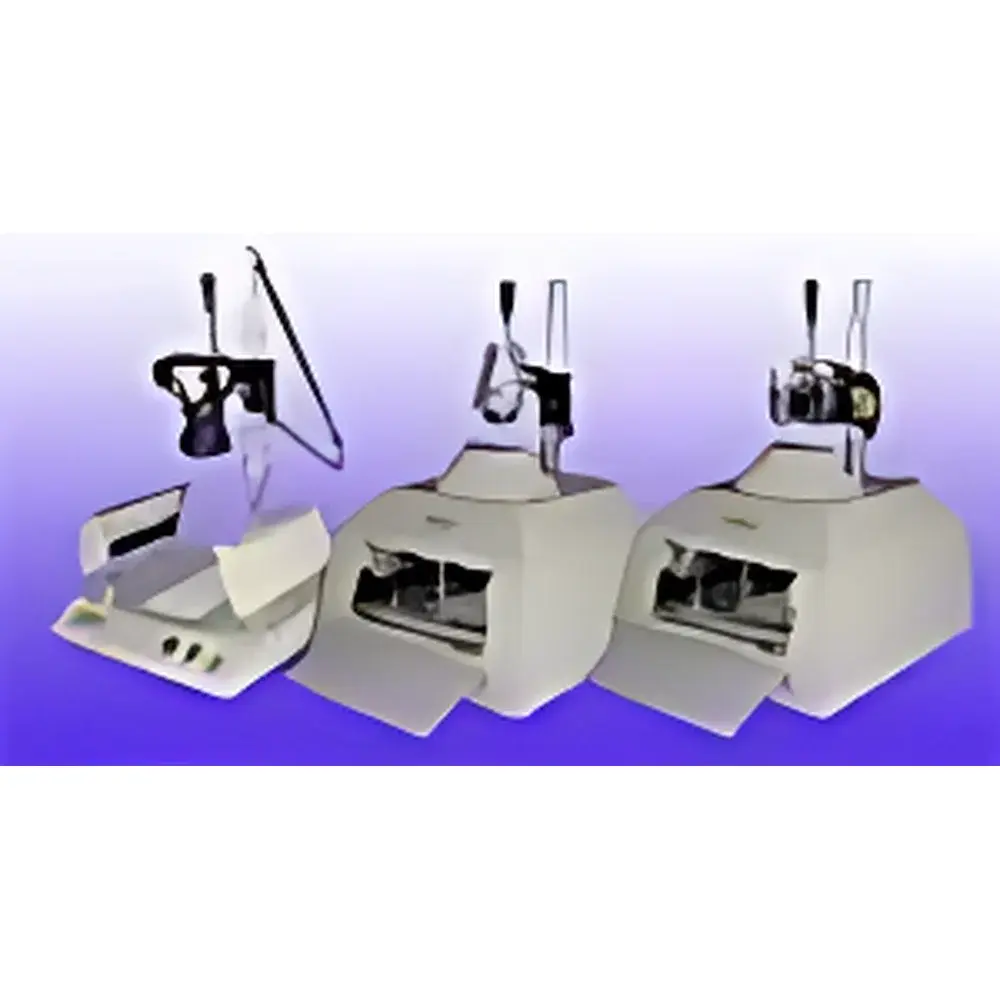
YOKO ZS1 Thin-Layer UV Imaging and Documentation System
| Brand | YOKO |
|---|---|
| Origin | Hubei, China |
| Manufacturer Type | Authorized Distributor |
| Instrument Type | Preparative Thin-Layer Chromatography (TLC) Imaging System |
| Operation Mode | Manual |
| UV Wavelengths | 254 nm, 365 nm |
| Visible Light Source | Standard White Light (6 W, GB-compliant) |
| UV Lamp Configuration | Dual 254 nm (6 W each), Dual 365 nm (6 W each), Dual White Light (6 W each) |
| UV Transmittance | ≥68% at 254 nm, ≥86% at 365 nm |
| Filter Dimensions | 50 × 200 mm (2 pcs) |
| Power Supply | 220 V ±10%, 50–60 Hz |
| Total Power Consumption | 36 W |
| Dimensions (L×W×H) | 400 × 390 × 290 mm |
| Weight | Not specified |
Overview
The YOKO ZS1 Thin-Layer UV Imaging and Documentation System is a dedicated benchtop instrument engineered for high-fidelity visualization, documentation, and qualitative analysis of thin-layer chromatography (TLC) plates under controlled ultraviolet and visible illumination. It operates on the principle of fluorescence excitation and quenching—where analytes containing conjugated π-systems or aromatic moieties absorb UV radiation at 254 nm or 365 nm and re-emit visible light (fluorescence), while others absorb UV energy and appear as dark zones against a fluorescent background (fluorescence quenching). This dual-wavelength capability enables differential detection of compounds with varying chromophoric properties, supporting method development, Rf value determination, and spot localization in both analytical and preparative TLC workflows. Designed for laboratory environments requiring regulatory traceability and reproducible imaging conditions, the ZS1 provides stable, uniform irradiation without warm-up delay—enabled by high-efficiency electronic ballasts—and maintains consistent spectral output over extended operational cycles.
Key Features
- Triple-band illumination system: Independently switchable 254 nm (high-energy UV), 365 nm (long-wave UV), and standard white light sources—each configured with two 6 W lamps for homogeneous field coverage across standard TLC plates (up to 20 × 20 cm).
- Optimized optical path: Precision-ground UV-transmitting filters (50 × 200 mm) with certified transmittance ≥68% at 254 nm and ≥86% at 365 nm ensure maximal signal-to-noise ratio during fluorescence capture.
- Compact, ergonomic chassis: All-in-one aluminum-alloy housing (400 × 390 × 290 mm) minimizes footprint while accommodating standard TLC plates vertically or horizontally; integrated lamp shielding reduces ambient UV exposure.
- Zero warm-up operation: Solid-state electronic ballasts deliver instant full-intensity output—critical for time-sensitive documentation and routine QC checks.
- Dual-use versatility: Functions as a standalone UV inspection station for gel documentation, forensic ink analysis, or document verification; also serves as a reflective/direct-light copy stand for archival digitization of printed materials and lab notebooks.
Sample Compatibility & Compliance
The ZS1 accommodates all commercially available silica gel, alumina, cellulose, and reversed-phase TLC plates—including precoated, fluorescent indicator (F254/F365), and non-fluorescent variants. Its fixed-height sample stage ensures repeatable positioning for comparative imaging across multiple runs. While not an automated scanning densitometer, the system supports GLP-aligned manual documentation when paired with calibrated digital cameras or industrial-grade color CMOS sensors. All electrical components comply with GB/T 14048.1–2012 (low-voltage switchgear standards) and meet CE-equivalent safety requirements for Class II equipment. UV emission profiles conform to IEC 62471:2006 photobiological safety guidelines for UV-A and UV-C exposure limits in occupational settings.
Software & Data Management
The ZS1 is a hardware-only platform with no embedded firmware or proprietary software. It interfaces seamlessly with third-party imaging solutions—including NIH ImageJ (open-source), Adobe Photoshop (for annotation and contrast enhancement), and commercial laboratory image management systems compliant with FDA 21 CFR Part 11 (e.g., LabArchives, Thermo Fisher SampleManager LIMS). When connected via USB or HDMI to a Windows/macOS workstation, users may apply standardized acquisition protocols (e.g., fixed exposure time, ISO, white balance) to ensure inter-day reproducibility. Audit trails, metadata tagging (date/time, operator ID, plate ID), and secure export to PDF/A or TIFF formats are fully supported through host-system configurations—enabling alignment with ISO/IEC 17025 documentation requirements for testing laboratories.
Applications
- Routine TLC plate documentation in pharmaceutical QC labs for identity testing per USP <201> and EP 2.2.27.
- Fluorescence-based detection of polycyclic aromatic hydrocarbons (PAHs), alkaloids, flavonoids, and mycotoxins in food safety and environmental testing.
- Educational use in undergraduate organic chemistry labs for real-time demonstration of separation mechanisms and Rf calculation exercises.
- Forensic document examination—detection of erased inks, security features, and latent fingerprints using UV-induced fluorescence.
- Preparative TLC fraction tracking prior to column chromatography or crystallization steps.
FAQ
Can the ZS1 be used with CCD or CMOS cameras for quantitative densitometry?
No—the ZS1 provides only illumination and mechanical support; it does not include built-in camera hardware, motorized stage, or calibration standards required for quantitative densitometric analysis per ASTM D7213 or ISO 13877.
Is the 254 nm UV source suitable for DNA visualization on silica plates?
Yes, provided the TLC plate contains a UV-active binder (e.g., silica gel F254); however, direct 254 nm exposure may cause photodegradation of sensitive biomolecules—365 nm is preferred for longer-duration observation.
Does the unit include a darkroom hood or light-blocking enclosure?
No—ambient light control must be achieved externally (e.g., dimmed room, black cloth drape) to optimize fluorescence contrast during imaging.
Are replacement UV lamps and filters available as consumables?
Yes—YOKO supplies OEM-compatible 6 W G13-base low-pressure mercury lamps (254 nm and 365 nm variants) and certified interference filters with documented transmittance certificates.
What is the expected service life of the electronic ballasts under continuous operation?
Rated for ≥10,000 hours at 25 °C ambient temperature, with thermal cutoff protection preventing overload failure during extended use.




