
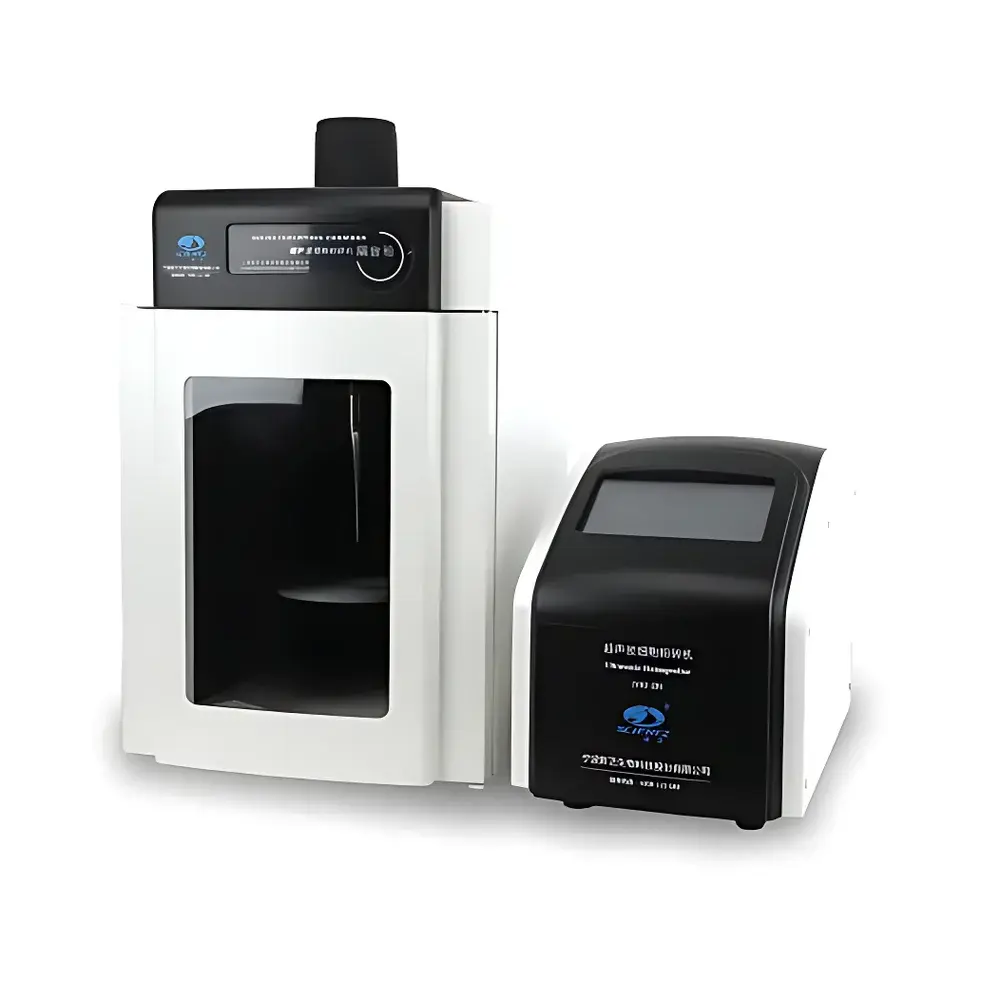
Yolitec JY92-IIDN Ultrasonic Cell Disruptor
| Origin | Zhejiang, China |
|---|---|
| Manufacturer Type | Authorized Distributor |
| Country of Origin | PRC |
| Model | JY92-IIDN |
| Instrument Type | Ultrasonic Homogenizer |
| Sample Compatibility | Soft biological tissues & suspensions |
| Output Particle Size | 0.01–0.5 mm |
| Maximum Feed Particle Size | <15 mm |
| Sieve Cut-Off | 40 mesh |
| Batch Processing Volume | 0.5–600 mL |
| Operating Frequency | 20–25 kHz |
| Display | Backlit LCD |
| Power Output | 900 W (adjustable in 1% increments) |
| Standard Probe Diameter | 6 mm |
| Optional Probe Diameters | 2, 3, 10, 12, 15 mm |
| Duty Cycle | 0.1–99.9% |
| Temperature Alarm Range | 0–99 °C |
| Timing Resolution | 0.1 s (ultrasonication time, interval time, total time) |
| Input Voltage | 220 V / 110 V AC, 50 Hz / 60 Hz |
| Dimensions (H×W×D) | 40×28×22 cm |
| Net Weight (main unit + transducer) | 14.2 kg |
| Packaging Dimensions | 534×295×435 mm |
Overview
The Yolitec JY92-IIDN Ultrasonic Cell Disruptor is a benchtop ultrasonic homogenizer engineered for precise, reproducible cell lysis and sample disruption across life science and pharmaceutical laboratories. It operates on the principle of high-intensity ultrasonic cavitation—where rapid pressure fluctuations in a liquid medium generate transient microbubbles that collapse violently, producing localized shear forces, microstreaming, and thermal effects sufficient to disrupt membranes, fragment organelles, and disperse aggregates. Unlike mechanical grinders or bead mills, this system delivers non-thermal, scalable energy input without introducing contamination from grinding media. Its 20–25 kHz frequency range is optimized for efficient energy transfer into aqueous and low-viscosity suspensions, making it particularly suitable for soft-tissue homogenization, bacterial lysis, viral envelope disruption, and nanoparticle dispersion where structural integrity of biomolecules must be preserved.
Key Features
- Microprocessor-controlled operation with backlit LCD interface enabling real-time monitoring of power output, elapsed time, temperature status, and duty cycle.
- Continuous and pulse-mode operation with independently programmable sonication duration, pause interval, and total cycle count—all adjustable in 0.1-second increments for protocol reproducibility.
- 900 W nominal output power, digitally regulated and continuously adjustable from 1% to 99% in 1% steps, ensuring fine-grained control over energy delivery per sample volume.
- Integrated temperature monitoring with user-settable alarm threshold (0–99 °C); automatic shutdown triggered upon exceeding preset limit to prevent thermal denaturation of heat-labile analytes.
- Modular probe configuration: standard 6 mm titanium alloy probe included; optional probes (2, 3, 10, 12, 15 mm diameters) support scalability—from microliter-scale lysates to 600 mL batch processing.
- Robust transducer design with impedance-matched coupling ensures stable acoustic output over extended operational cycles and minimizes harmonic distortion.
Sample Compatibility & Compliance
The JY92-IIDN is validated for use with soft biological matrices including mammalian cell cultures, plant leaf homogenates, bacterial pellets (E. coli, Bacillus spp.), yeast suspensions, tissue explants, and viral preparations. It accommodates samples with initial particle sizes up to 15 mm and delivers final dispersions conforming to 40-mesh sieve specifications (≤425 µm), with typical submicron distributions achievable under optimized pulse parameters. While not certified to ISO/IEC 17025 or FDA 21 CFR Part 11 out-of-the-box, its programmable logging capability supports GLP-compliant documentation when integrated with external audit-trail software. The instrument meets CE safety standards (EN 61000-6-2, EN 61000-6-4) and complies with IEC 61000-4 electromagnetic compatibility requirements.
Software & Data Management
The embedded firmware enables full parameter logging—including date/time stamp, power setting, total active sonication time, cumulative cycles, and temperature alerts—to internal memory. Data export is supported via USB interface (device class: CDC ACM) for integration with laboratory information management systems (LIMS) or custom Python/MATLAB scripts. No proprietary software installation is required; raw logs are saved as UTF-8–encoded CSV files compatible with Excel, GraphPad Prism, or statistical analysis platforms. For regulated environments, users may implement third-party electronic lab notebook (ELN) solutions with digital signature and version-control features to satisfy ALCOA+ data integrity principles.
Applications
- Cell lysis for protein extraction and Western blot sample preparation.
- Nucleic acid isolation (genomic DNA, plasmid, RNA) with minimized shearing.
- Preparation of subcellular fractions (mitochondria, nuclei, microsomes) via differential disruption.
- Nanomaterial synthesis and stabilization—including graphene oxide dispersion, liposome formation, and polymeric nanoparticle homogenization.
- Accelerated solvent extraction of phytochemicals (e.g., flavonoids, alkaloids) from plant matrices.
- Emulsification of oil-in-water formulations for topical drug delivery studies.
- Disaggregation of amyloid fibrils and protein aggregates in neurodegenerative disease research.
FAQ
What types of samples are incompatible with the JY92-IIDN?
Highly viscous fluids (e.g., >10,000 cP polymer melts), abrasive slurries containing >10% silica or metal particulates, and samples requiring inert-atmosphere processing (e.g., oxygen-sensitive organometallics) are not recommended due to transducer wear and cavitation inefficiency.
Can the JY92-IIDN be used for continuous-flow processing?
No—it is designed exclusively for batch-mode operation. For flow-through applications, consider dedicated ultrasonic flow cells rated for >1 L/min throughput and equipped with temperature-controlled jackets.
Is calibration traceable to NIST or other national standards?
Acoustic power calibration is performed using calorimetric methods per ASTM E2810-11 guidelines at point-of-manufacture; full traceability documentation is available upon request for IQ/OQ validation protocols.
How often should the titanium probe be inspected or replaced?
Visual inspection for pitting or tip erosion is advised after every 200 hours of cumulative use; replacement is recommended when tip diameter reduction exceeds 5% or surface roughness (Ra) exceeds 1.6 µm per ISO 4287.
Does the instrument support remote operation via Ethernet or Wi-Fi?
No native network interface is provided; however, RS-232-to-Ethernet gateways or USB-to-serial adapters enable integration into centralized lab automation networks using Modbus RTU or SCPI command sets.



