
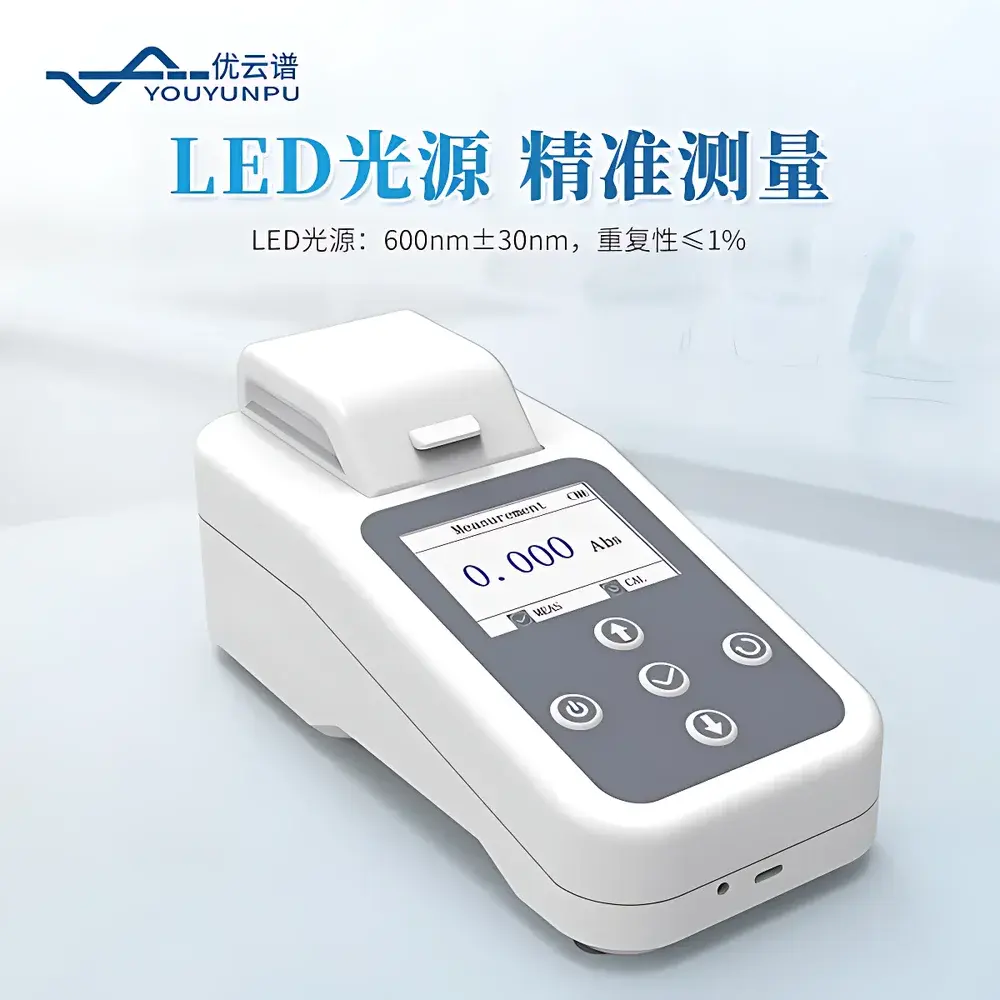
Youyunpu OD600 Portable Turbidimeter for Microbial Cell Density Measurement
| Brand | Youyunpu |
|---|---|
| Model | OD600 |
| Instrument Type | Portable Turbidimeter |
| Measurement Range | 0–4 Abs |
| Accuracy @1A | ≤0.05 Abs |
| Repeatability | ≤1% |
| Resolution | 0.001 Abs |
| Light Source | LED @ 600 nm ±30 nm |
| Detector | Silicon Photodiode |
| Sample Volume | ≥1.0 mL (recommended ≥1.5 mL) |
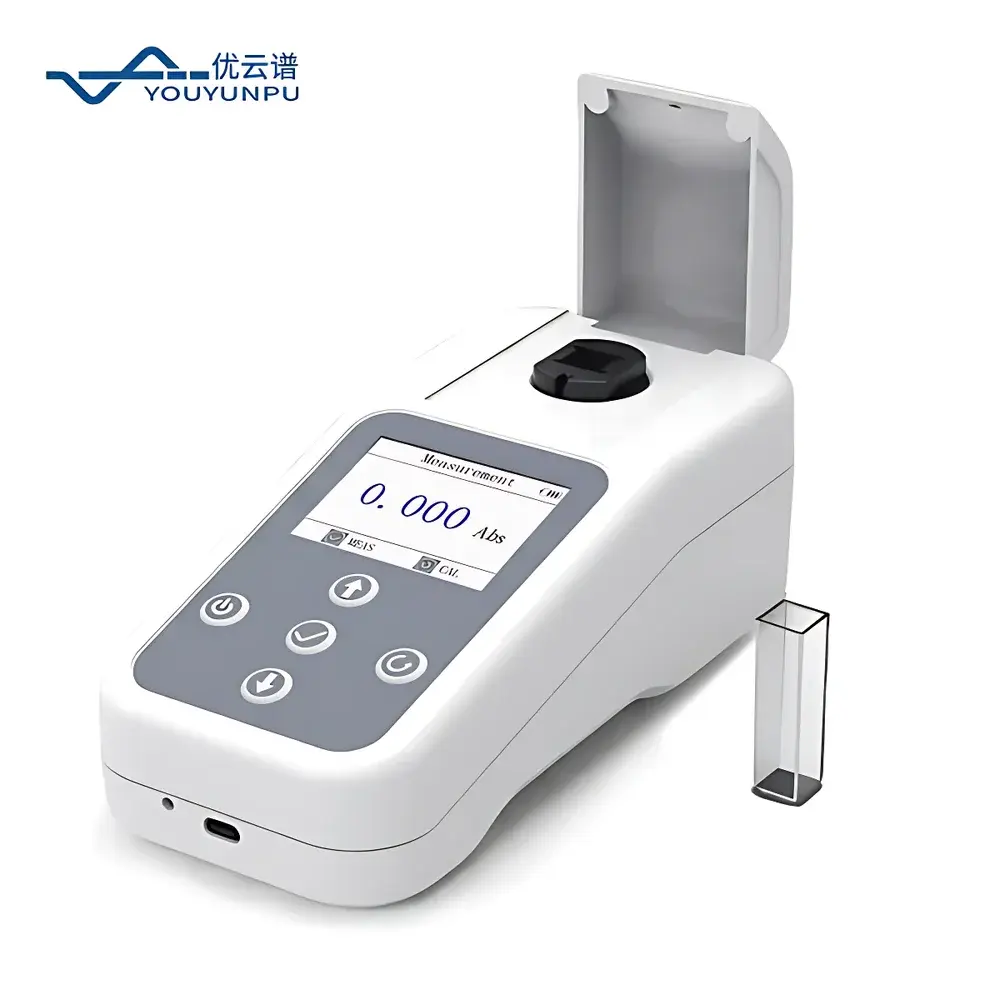
| Cuvette | 4.5 mL PMMA cuvette (11 × 11 × 43 mm, four-sided optical path) |
| Operating Temperature | 15–30 °C |
| Relative Humidity | <75% RH |
| Power Supply | 4 × AA alkaline batteries |
| Dimensions | 150 × 80 × 85.5 mm |
| Weight | 0.5 kg |
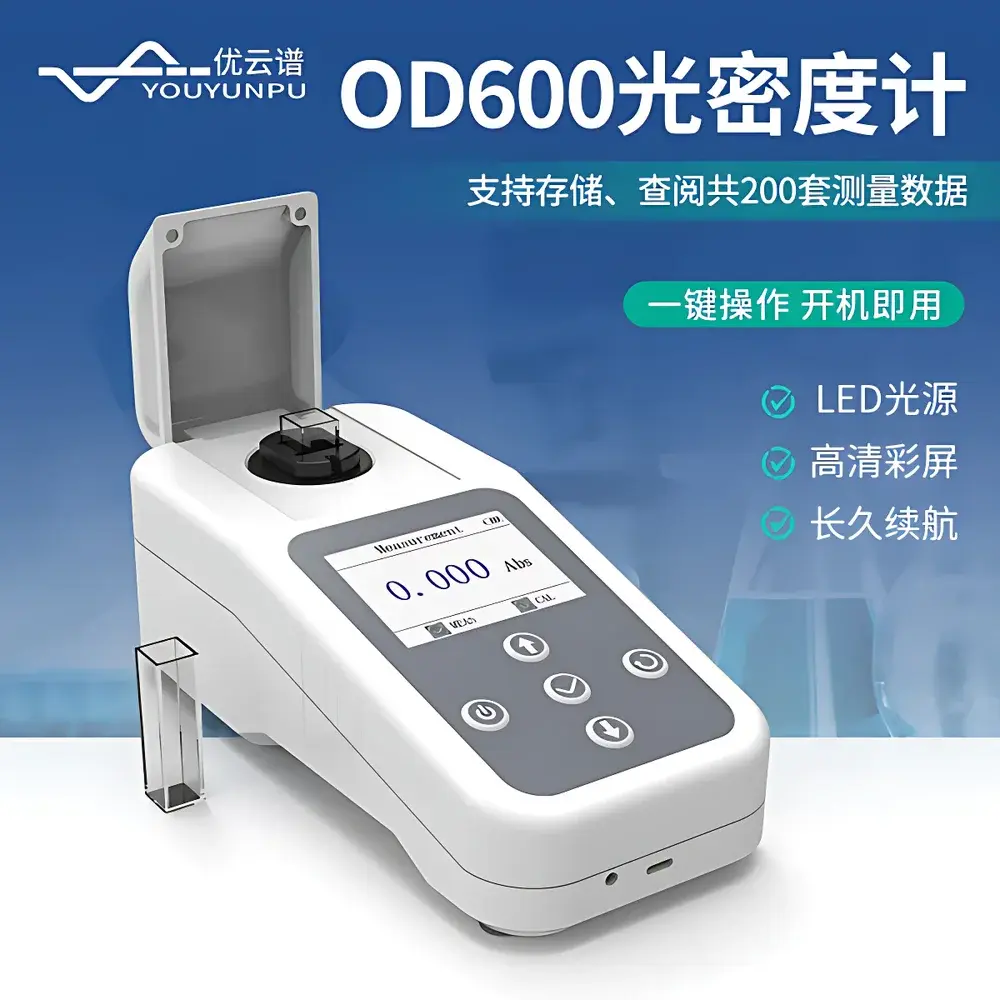
| Data Storage | 200 measurement records |
| Auto-off | After 5 min inactivity |
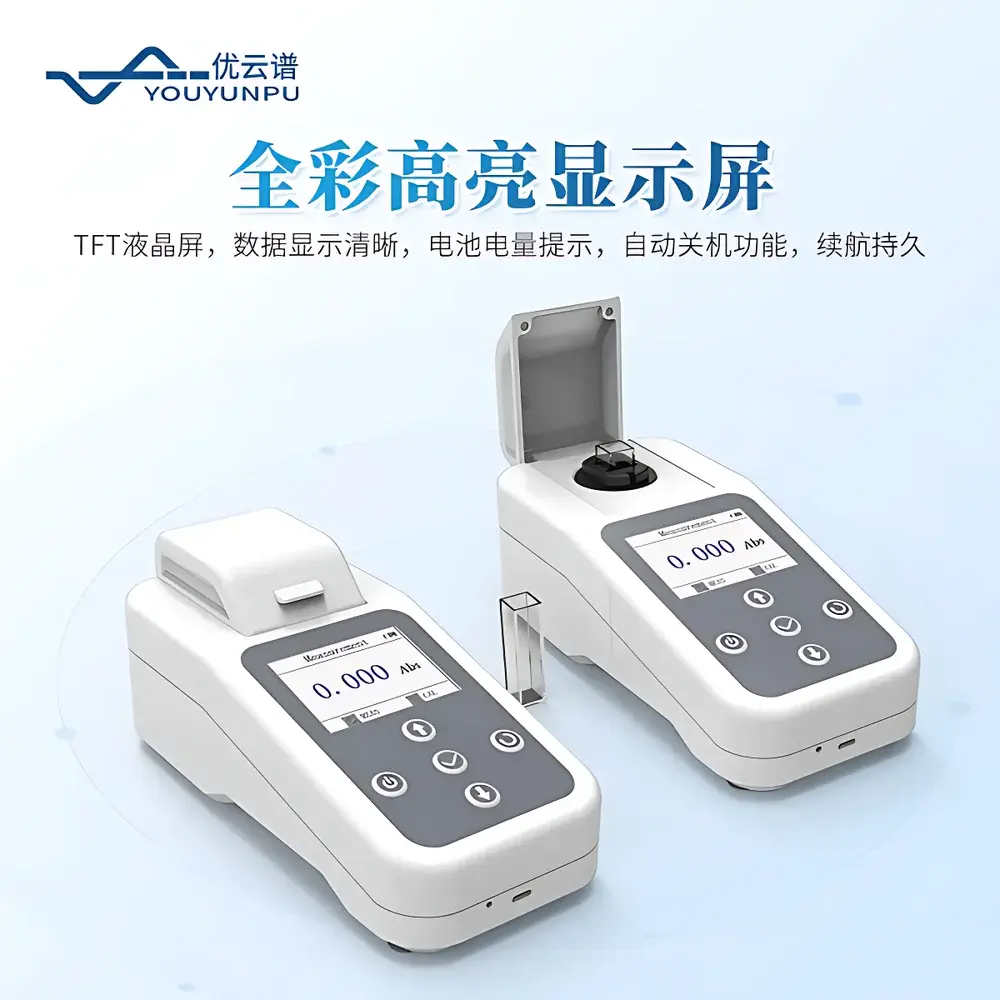
| Display | Full-color TFT LCD |
Overview
The Youyunpu OD600 Portable Turbidimeter is a dedicated photometric instrument engineered for rapid, reproducible quantification of microbial cell density in liquid cultures via optical density (OD) measurement at 600 nm. It operates on the fundamental principle of light scattering—rather than true absorbance—as defined by the Lambert-Beer law approximation for turbid suspensions. At 600 nm, bacterial and yeast cells scatter incident light with minimal interference from common culture media components (e.g., nutrients, metabolites, or pH indicators), enabling robust correlation between measured OD values and viable cell concentration (typically expressed as CFU/mL or cells/mL). This wavelength is standardized across microbiology laboratories for routine growth monitoring, inoculum standardization, and fermentation process control. The OD600 is not a spectrophotometer but a purpose-built turbidimeter optimized for high-throughput, field-deployable, or benchtop use in resource-constrained environments—without requiring optical calibration standards beyond air or blank medium.
Key Features
- Stable, narrow-band LED light source centered at 600 nm ±30 nm ensures consistent spectral excitation and eliminates drift associated with halogen or tungsten lamps.
- High-sensitivity silicon photodiode detector with linear response across 0–4 Abs enables accurate quantification across logarithmic growth phases—from early lag to late stationary phase.
- Dedicated 4.5 mL PMMA cuvette (11 × 11 × 43 mm, optically clear on all four faces) provides uniform light path geometry and minimizes wall-scattering artifacts; designed specifically for this instrument to ensure metrological traceability.
- Onboard data logging stores up to 200 timestamped measurements with OD value, date/time stamp, and user-defined sample ID—supporting basic GLP-compliant recordkeeping without external software.
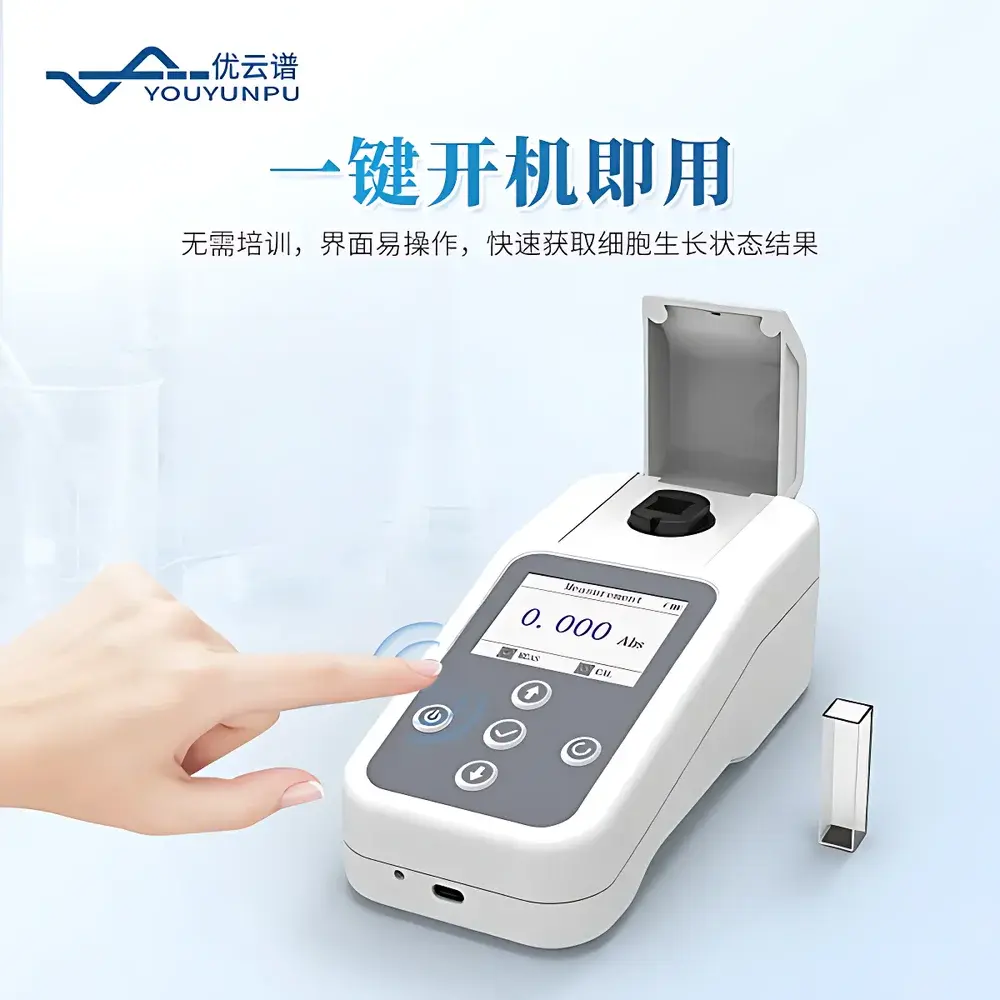
- Intuitive full-color TFT LCD interface displays real-time OD readings, battery status, and system prompts; operation requires no training—power-on, blank calibration, insert sample, press “Read”.
- Energy-efficient design powered by four standard AA alkaline batteries; automatic shutdown after 5 minutes of inactivity extends operational life to >100 hours under typical lab usage.
Sample Compatibility & Compliance
The OD600 is validated for use with common microbial suspensions including Escherichia coli, Bacillus subtilis, Saccharomyces cerevisiae, and Pseudomonas aeruginosa in standard liquid media (LB, TB, YPD, M9). It accommodates samples with moderate particulate load (<5% v/v) and low-to-moderate viscosity (≤10 cP). While not intended for highly pigmented or fluorescent cultures (e.g., some cyanobacteria or engineered strains expressing chromophores), its 600 nm bandpass effectively suppresses background interference. The instrument meets general requirements for ISO/IEC 17025-compliant laboratories when used within specified environmental conditions (15–30 °C, <75% RH, non-condensing). Blank calibration using sterile, particle-free medium is required before each measurement session to compensate for media absorbance and cuvette variability.
Software & Data Management
The OD600 operates as a standalone instrument with no proprietary PC software or USB connectivity. All data are stored internally and can be reviewed directly on-device via scrollable history mode. Each record includes OD value (to three decimal places), acquisition timestamp, and optional alphanumeric sample identifier (entered via on-screen keypad). Export functionality is not supported; however, users may manually transcribe or photograph results for integration into LIMS, ELN, or spreadsheet-based QC workflows. For regulated environments, the device supports audit-ready documentation when paired with controlled blank calibration logs and operator sign-off procedures—aligning with FDA 21 CFR Part 11 principles for electronic records where handwritten transcription is permitted.
Applications
- Routine monitoring of bacterial and yeast growth kinetics during shake-flask or bioreactor cultivations.
- Standardization of inoculum density prior to transformation, protein expression induction, or fermentation scale-up.
- Quality control of starter cultures in food microbiology, probiotic manufacturing, and dairy applications.
- Educational labs for teaching microbial physiology, serial dilution techniques, and quantitative culture methods.
- Field-deployable assessment of waterborne or environmental isolates where portability and battery operation are critical.
- Supporting USP & EP microbiological testing protocols requiring turbidity-based viability estimation.
FAQ
What does “OD600” actually measure—absorbance or turbidity?
It measures optical density at 600 nm, which in practice reflects light scattering by suspended cells—not molecular absorption. This metric correlates empirically with cell concentration and is widely accepted as a turbidity proxy in microbiology.
Can I use standard 1-cm quartz or glass cuvettes?
No. The OD600 is calibrated exclusively for its proprietary 4.5 mL PMMA cuvette (11 × 11 × 43 mm, four-sided transmission). Substitution will invalidate accuracy and repeatability specifications.
Is temperature compensation built into the instrument?
No. Measurements must be performed within 15–30 °C ambient range. Sample temperature equilibration is required prior to reading to avoid refractive index drift and scattering artifacts.
How often should I perform blank calibration?
A fresh blank calibration using filtered, particle-free culture medium is mandatory before each batch of measurements—and whenever ambient temperature or cuvette lot changes.
Does the device comply with ISO 846 or ASTM D1193 standards?
It is not certified to those specific material or water purity standards; however, its photometric performance aligns with ISO 7027 (turbidimetry) principles for low-range microbial suspensions when operated per manufacturer instructions.



