
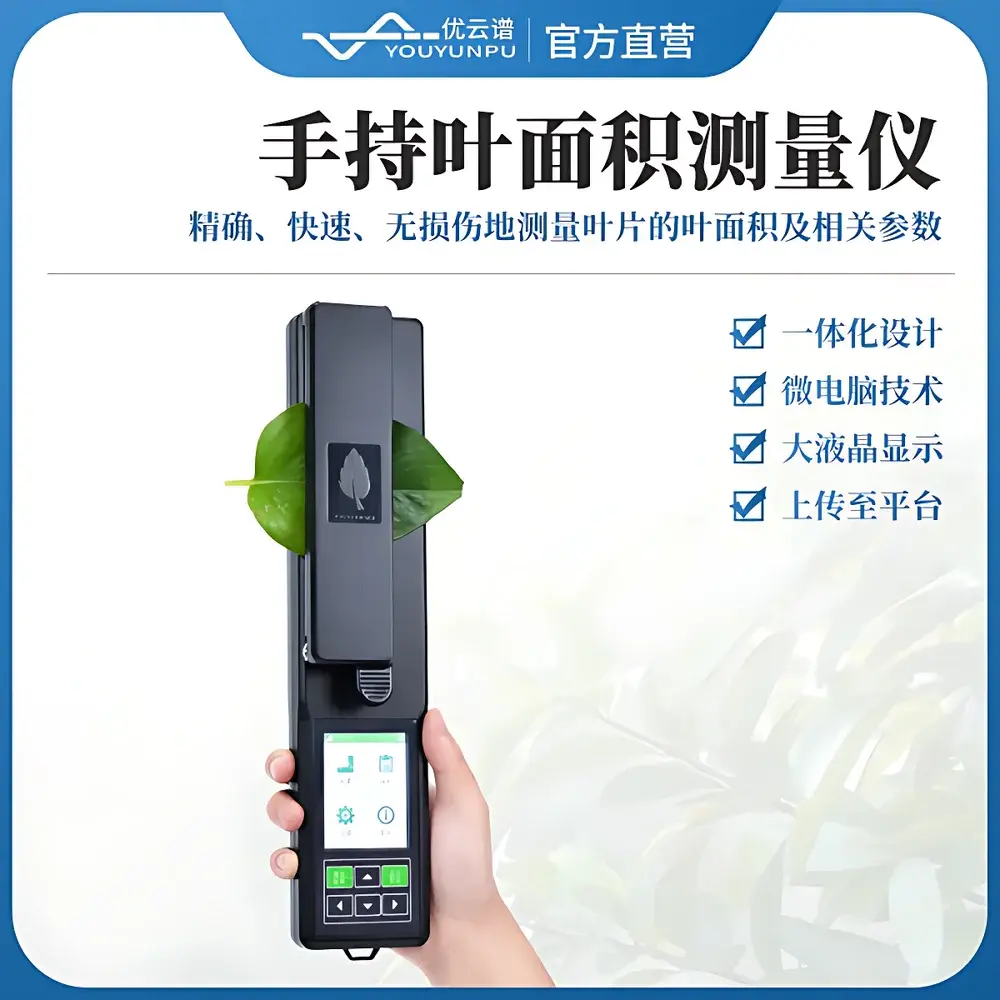
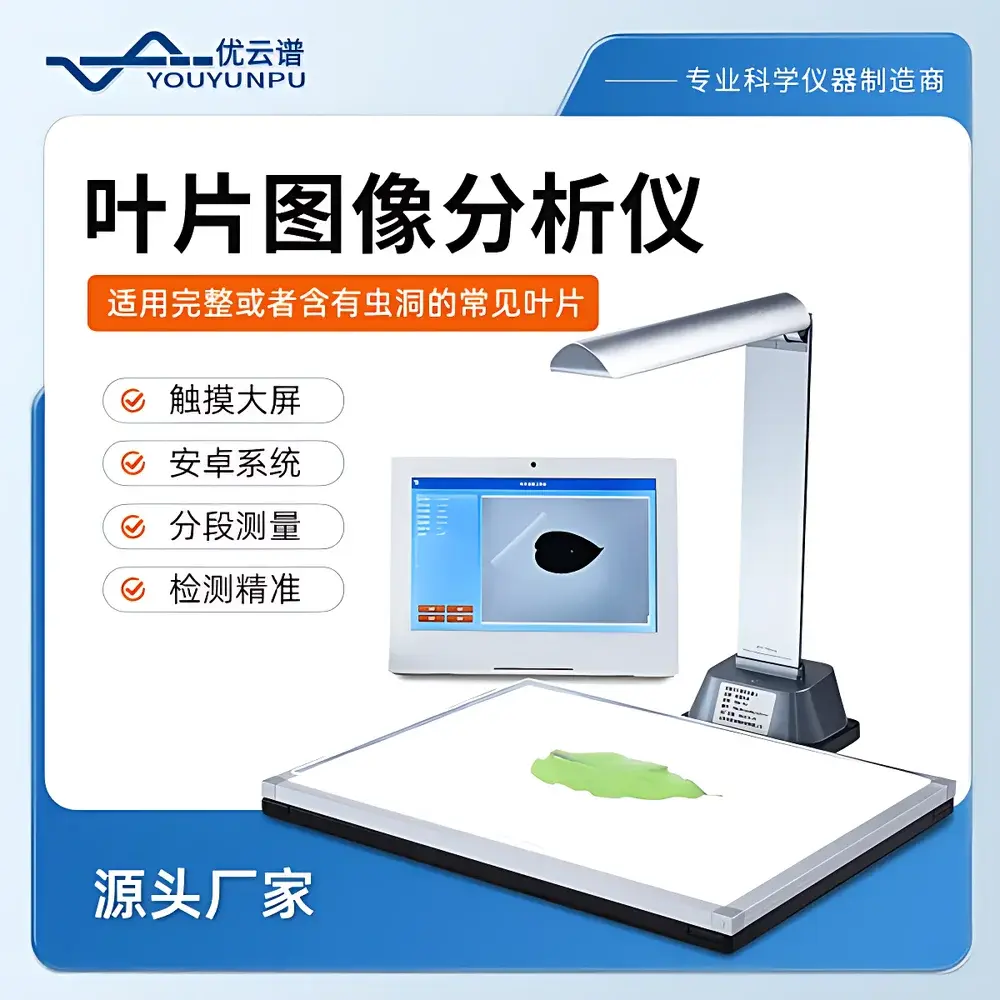
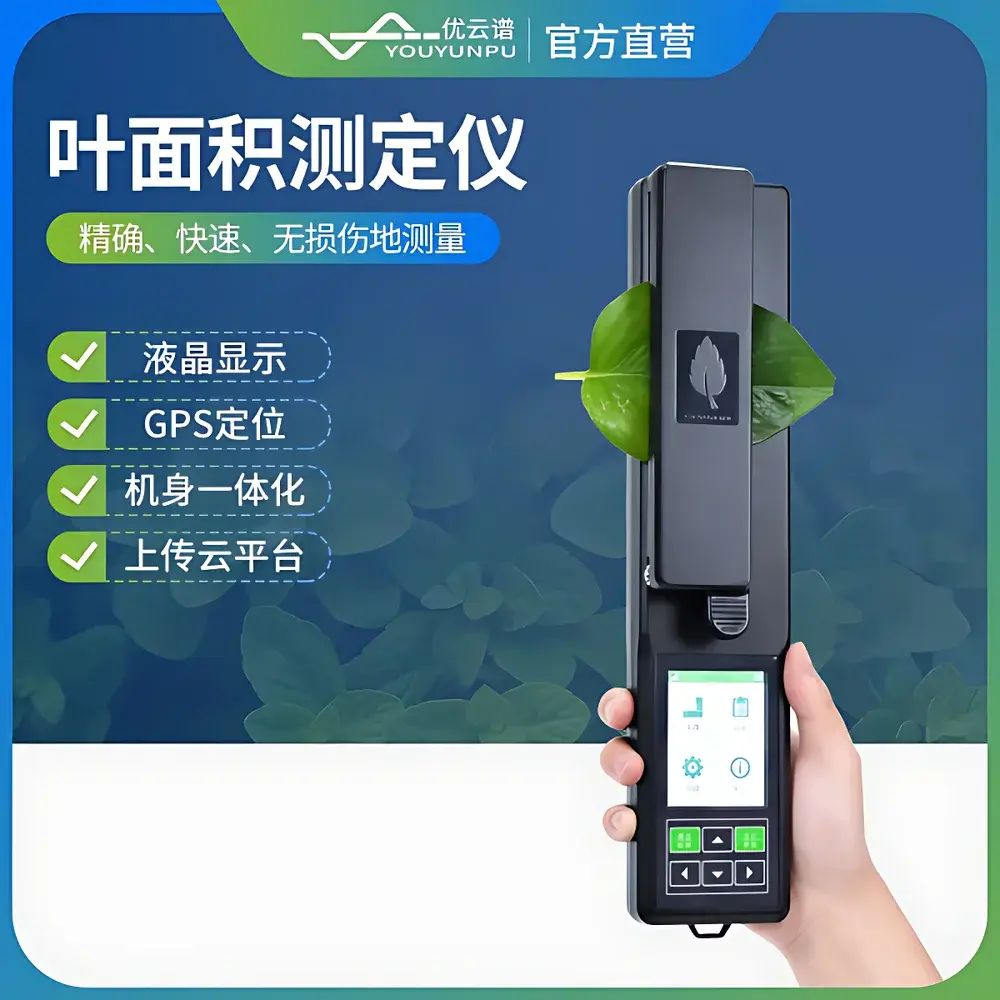
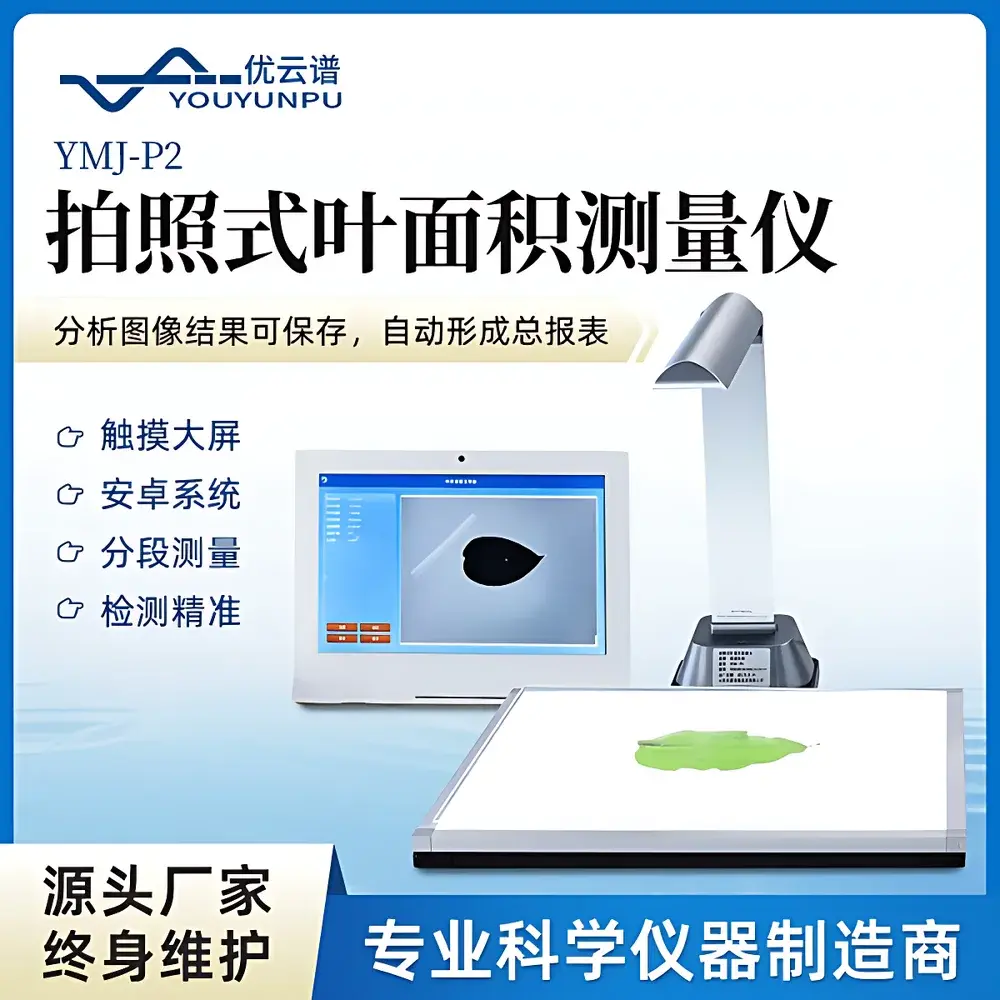
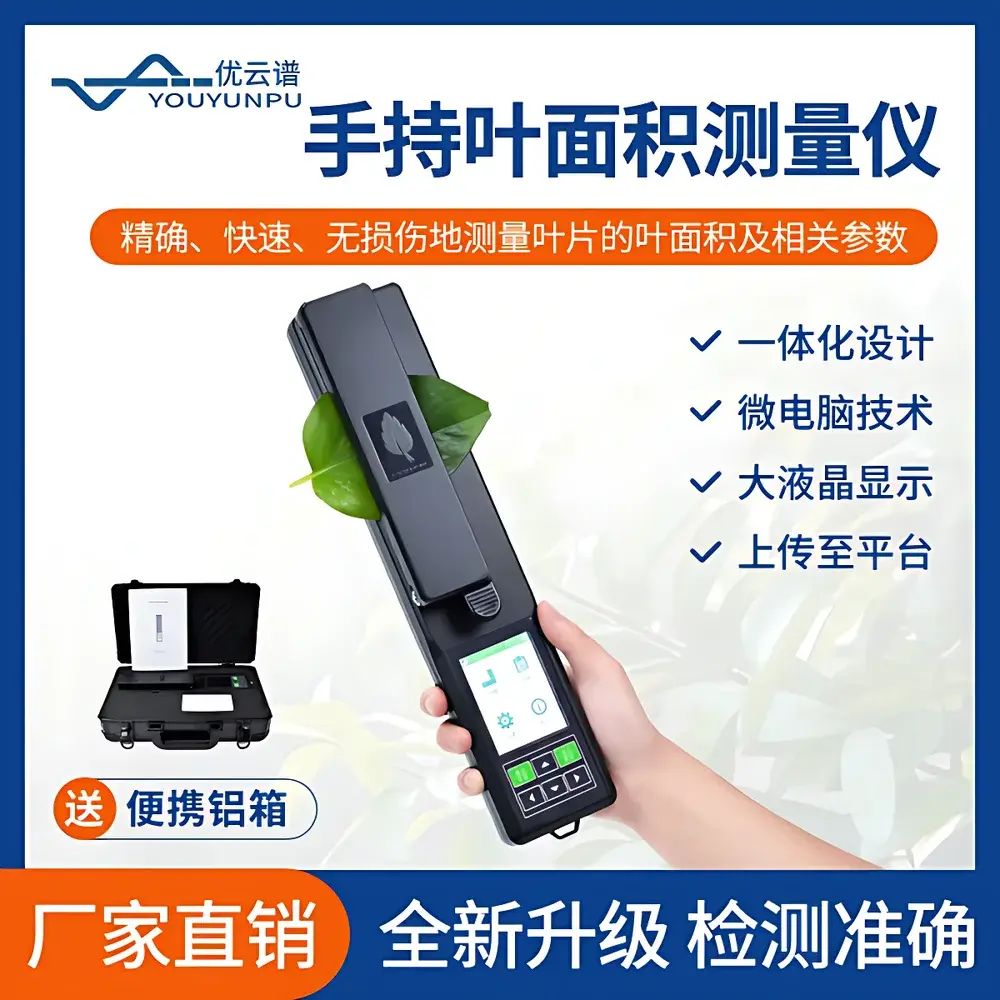
Youyunpu YMJ-S Leaf Area Analyzer
| Brand | Youyunpu |
|---|---|
| Origin | Shandong, China |
| Manufacturer Type | Direct Manufacturer |
| Region of Origin | Domestic (China) |
| Model | YMJ-S |
| Price | USD 860 (approx., based on ¥6200 at 1 USD ≈ ¥7.2) |
| Imaging Area | 220 × 300 mm |
| Optical Resolution | 4800 dpi |
| Power Supply | USB-powered via laptop |
| Measurement Range | Leaves ≤ 220 × 300 mm (broadleaf format) |
| Area Resolution | 0.001 cm² |
| Length/Width Resolution | 0.01 cm |
| Software | Leaf-1000 Image Analysis Suite |
Overview
The Youyunpu YMJ-S Leaf Area Analyzer is a dedicated digital image-based instrument engineered for high-fidelity morphometric quantification of plant foliage. It operates on the principle of calibrated optical capture and pixel-based geometric segmentation—leveraging standardized illumination, fixed-focus imaging geometry, and sub-millimeter spatial registration to ensure traceable, repeatable leaf area measurements. Unlike destructive gravimetric or manual tracing methods, the YMJ-S provides non-invasive, rapid, and operator-independent quantification of leaf morphology parameters essential for phenotypic screening, stress response assessment, and growth dynamics modeling. Designed for both field-deployable and laboratory-controlled environments, its modular architecture supports consistent data acquisition across heterogeneous experimental setups—from greenhouse trials to long-term ecological monitoring stations.
Key Features
- Open-system architecture enabling configuration as either a portable field unit (with integrated battery-powered tablet or laptop interface) or a benchtop laboratory analyzer;
- Factory-calibrated flatbed imaging system with uniform LED backlighting and 4800 dpi optical resolution, ensuring precise edge detection and minimal parallax distortion;
- Dedicated Leaf-1000 software platform with automated thresholding algorithms, ROI masking, and batch-processing capability for multi-sample analysis;
- Sub-millimeter measurement fidelity: area resolution of 0.001 cm² and linear dimension resolution of 0.01 cm, validated against NIST-traceable reference templates;
- No external calibration required under standard operating conditions; built-in spatial reference grid enables post-acquisition scaling verification;
- USB-powered operation compatible with Windows-based laptops—no external power supply or AC adapter needed in remote or mobile deployments.
Sample Compatibility & Compliance
The YMJ-S accommodates fresh, pressed, or dried broadleaf specimens up to 220 × 300 mm—covering common model species including Arabidopsis thaliana, maize (Zea mays), soybean (Glycine max), rice (Oryza sativa), and woody dicot leaves such as poplar and apple. Specimens must be placed flat on the scanning surface without overlap or curling to maintain geometric integrity. While not certified to ISO/IEC 17025 for accredited testing laboratories, the system adheres to principles outlined in ASTM E122-23 (standard practice for calculating sample size) and supports GLP-compliant documentation workflows when paired with timestamped image archives and audit-ready export logs. Data outputs comply with FAIR principles (Findable, Accessible, Interoperable, Reusable) through CSV, TIFF, and PDF report generation.
Software & Data Management
The Leaf-1000 software suite provides a structured analytical environment supporting both real-time preview and offline batch processing. Key modules include: (1) Auto-edge detection with adjustable contrast/saturation thresholds; (2) Manual correction tools for partial occlusion or venation interference; (3) Parameter extraction engine computing 12+ morphological metrics—including total area, length, maximum width, average width, perimeter, aspect ratio (length/width), shape factor (4π·area/perimeter²), petiole length, custom-defined region-of-interest (ROI) areas, and user-specified linear dimensions; (4) Export functionality supporting tabular data (CSV), annotated images (TIFF/PNG), and formatted reports (PDF) with embedded metadata (date, operator ID, device serial, exposure settings). All measurement sessions are logged with timestamps and version-stamped software build identifiers, facilitating retrospective traceability in longitudinal studies.
Applications
- Phenotyping pipelines for drought, heat, or nutrient-stress tolerance screening in crop breeding programs;
- Quantitative leaf trait analysis in functional ecology—e.g., specific leaf area (SLA), leaf mass per area (LMA), and allometric scaling relationships;
- Pathogen-induced lesion area quantification in plant pathology studies (e.g., fungal necrosis, bacterial blight progression);
- Longitudinal growth curve modeling in controlled-environment agriculture and vertical farming R&D;
- Validation of hyperspectral or drone-based canopy area estimation models using ground-truth leaf-level benchmarks;
- Curriculum-integrated teaching labs in plant physiology, botany, and agroecology courses requiring reproducible, low-cost morphometric instrumentation.
FAQ
Is the YMJ-S suitable for narrow or needle-like leaves (e.g., conifers)?
The system is optimized for broadleaf morphology. Needle-like or highly dissected leaves require manual ROI definition and may yield reduced accuracy due to edge ambiguity at 4800 dpi resolution.
Can measurement data be integrated into LIMS or ELN platforms?
Yes—CSV exports are natively compatible with major laboratory informatics systems. Custom API integration is supported upon request for enterprise-scale deployments.
Does the Leaf-1000 software support multi-language interfaces?
The current release includes English and simplified Chinese UI layers. Additional language packs can be deployed via firmware update.
What maintenance is required for long-term calibration stability?
No routine recalibration is necessary. Periodic verification using the supplied 10 cm × 10 cm reference grid template (included) is recommended every 6 months or after transport-induced mechanical shock.
Is FDA 21 CFR Part 11 compliance available?
While the base configuration does not include electronic signature or audit trail modules, a validated GxP-compliant version with role-based access control, electronic signatures, and full audit logging is available under separate quotation for regulated research environments.





