
Youyunpu YMJ-S Leaf Image Analyzer
| Brand | Youyunpu |
|---|---|
| Origin | Shandong, China |
| Manufacturer Type | Direct Manufacturer |
| Region of Origin | Domestic (China) |
| Model | YMJ-S |
| Scanner Type | Flatbed Scanner |
| Scanning Area | 220 × 300 mm |
| Optical Resolution | 4800 dpi |
| Power Supply | USB-powered via Laptop |
| Measurement Range | Up to 220 × 300 mm (broadleaf specimens) |
| Area Resolution | 0.001 cm² |
| Length/Width Resolution | 0.01 mm |
| Software | Leaf-1000 Leaf Image Analysis Suite |
Overview
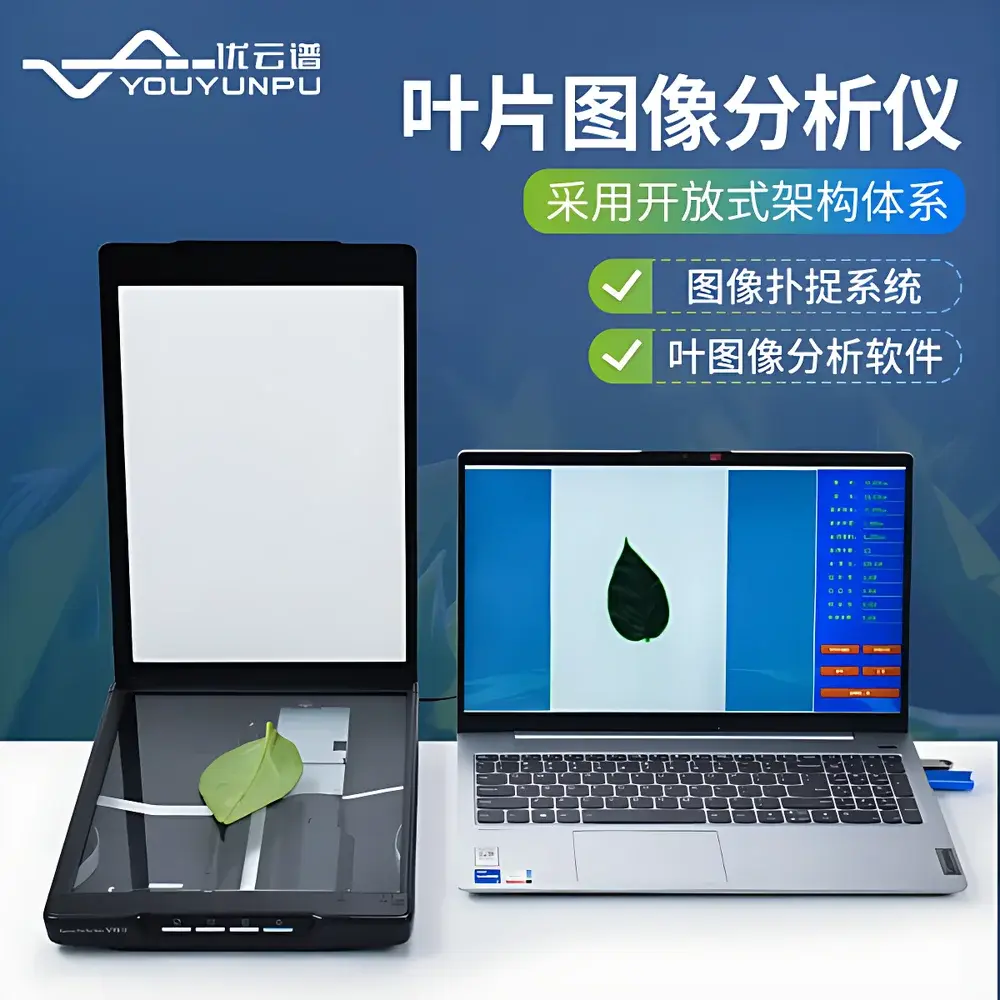
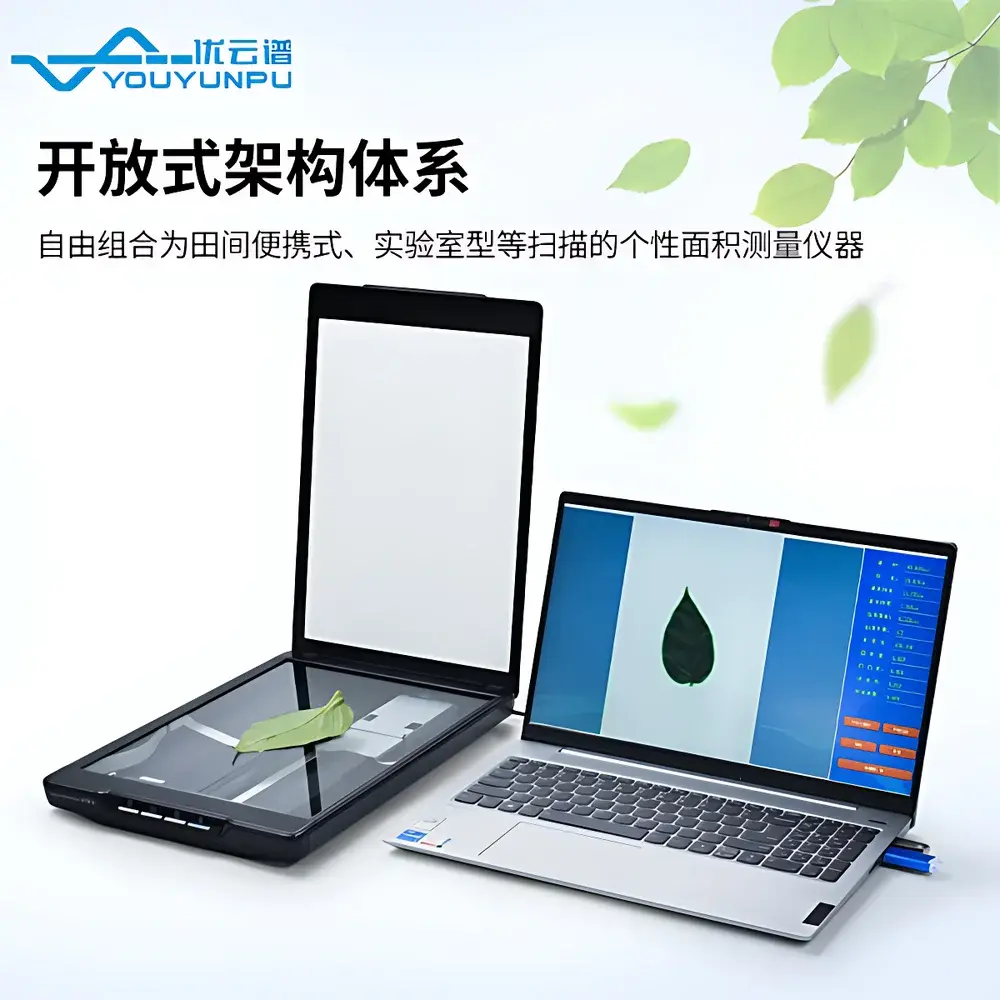
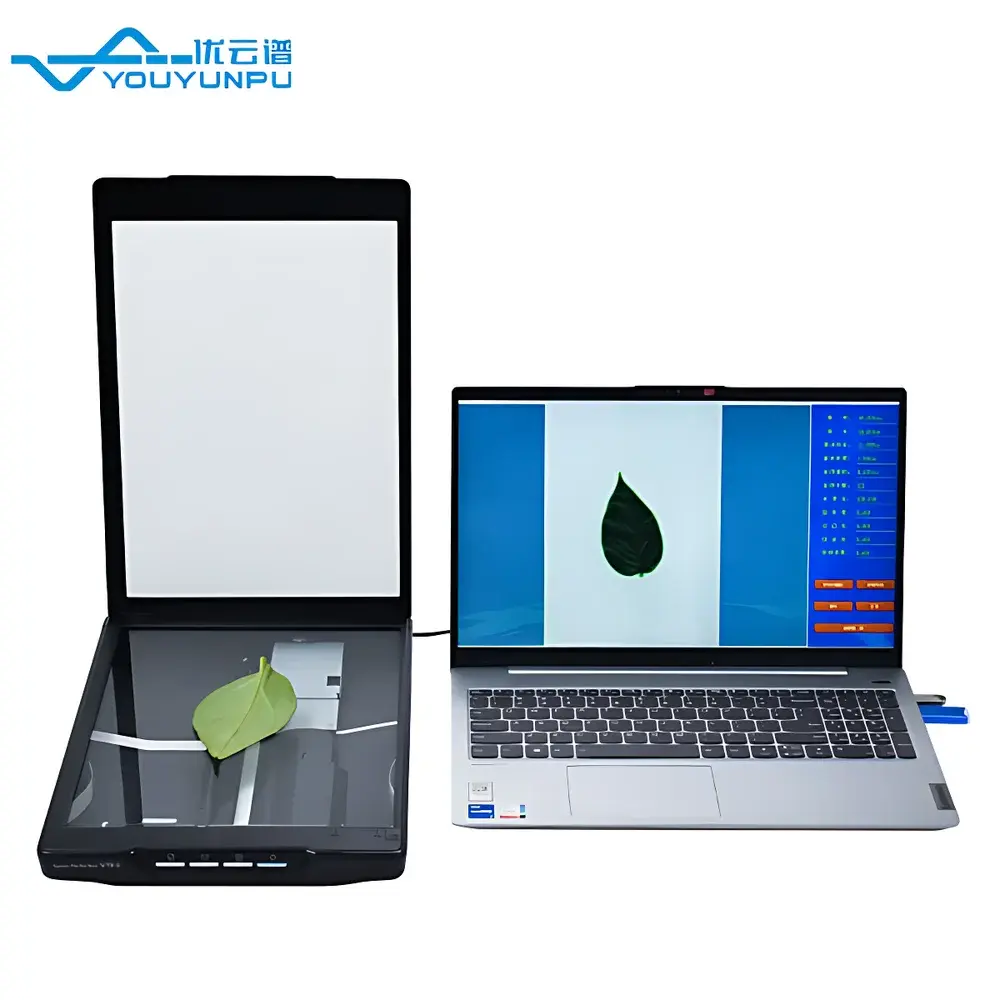
The Youyunpu YMJ-S Leaf Image Analyzer is a dedicated, high-resolution flatbed imaging system engineered for quantitative morphological analysis of plant leaves under laboratory or field-deployable conditions. It operates on the principle of digital image acquisition followed by pixel-based geometric segmentation and calibration-driven metric computation. The instrument integrates a factory-calibrated 4800 dpi optical scanning module with a rigid, portable flatbed platform—designed to accommodate intact, flattened leaf specimens up to 220 × 300 mm without distortion or parallax error. Unlike contactless optical methods (e.g., stereoscopic imaging or laser triangulation), the YMJ-S relies on controlled reflective illumination and consistent focal plane geometry to ensure sub-millimeter spatial fidelity across the entire scan area. This architecture enables traceable, repeatable measurements compliant with standard plant phenotyping workflows in academic research, crop breeding programs, and ecological monitoring initiatives.
Key Features
- Portable flatbed design powered via USB from standard laptop computers—enabling rapid deployment in greenhouse, field station, or core lab environments.
- Factory-aligned optical path and uniform LED backlighting to minimize vignetting, chromatic aberration, and shadow artifacts during leaf digitization.
- Calibration-integrated software workflow: automatic pixel-to-metric conversion using user-defined reference standards (e.g., ruler-based or known-area calibration targets).
- Non-destructive measurement protocol: preserves specimen integrity for downstream analyses such as chlorophyll fluorescence, stable isotope assays, or histological sectioning.
- Dual-mode operation support: single-leaf mode for detailed trait extraction and multi-leaf batch mode for throughput-oriented screening of segregating populations.
Sample Compatibility & Compliance
The YMJ-S accommodates fresh, pressed, or dried broadleaf specimens—including monocot and dicot species—with minimal preparation. Specimens must be physically flattened and placed within the 220 × 300 mm active scan zone; translucent or highly glossy surfaces may require matte backing to reduce specular reflection. While not certified to ISO/IEC 17025 or ASTM E2925 (as it functions as a measurement aid rather than a primary metrology standard), its output metrics align with widely adopted plant phenotyping conventions described in Plant Physiology (2018), the International Plant Phenotyping Network (IPPN) metadata guidelines, and FAO Crop Assessment Protocols. Data export formats (CSV, TIFF, PNG) support interoperability with R packages (e.g., leafarea, plantcv), Python-based computer vision pipelines, and LIMS platforms configured for GLP-compliant botanical studies.
Software & Data Management
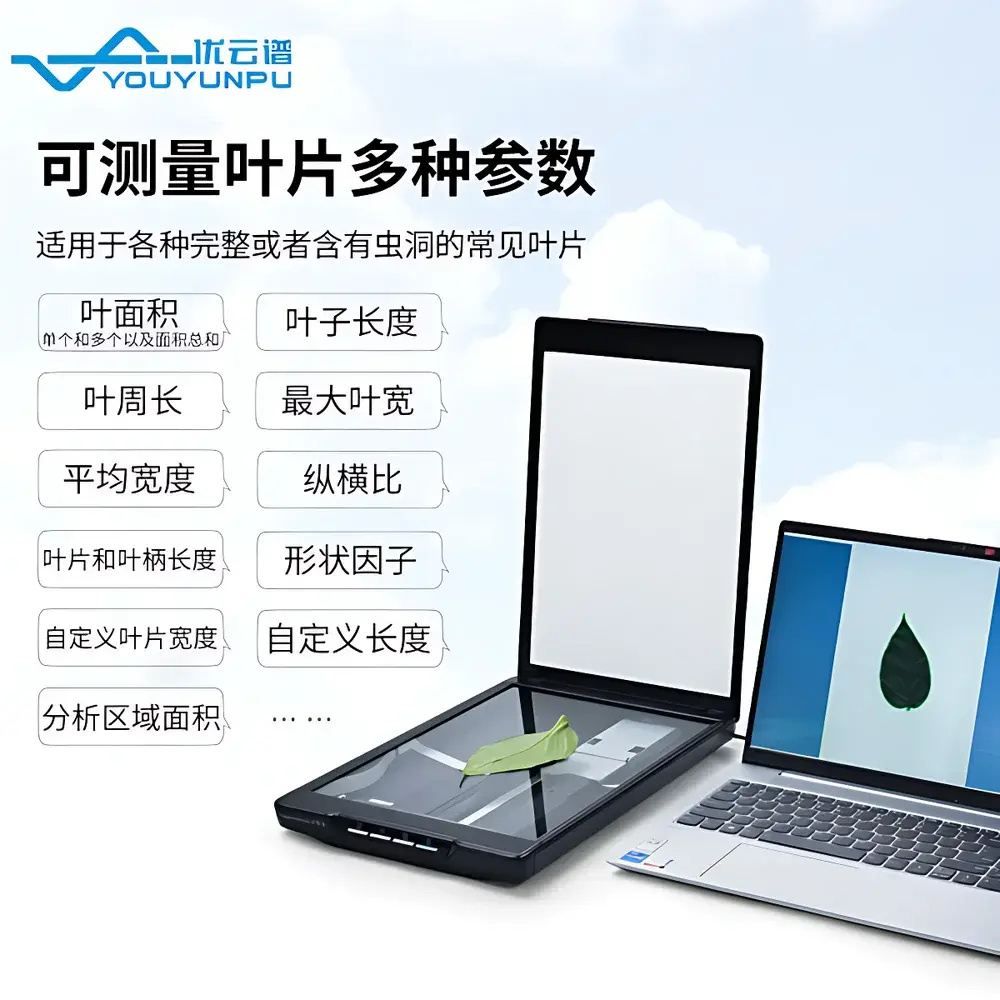
The Leaf-1000 analysis software provides a deterministic, script-free GUI environment optimized for reproducible leaf trait quantification. It implements Otsu’s thresholding algorithm with manual refinement tools for edge detection, followed by connected-component labeling to isolate individual leaves in multi-specimen scans. Measured parameters include total projected area (cm²), maximum length (mm), perimeter (mm), maximum width (mm), mean width (mm), aspect ratio (length/width), shape factor (4π·area/perimeter²), petiole length (user-defined baseline), and custom region-of-interest (ROI) area. All calculations are logged with timestamp, operator ID (if enabled), and scan metadata (DPI, brightness, contrast). Export options include tabular CSV with column headers compliant with MIAPPE v1.1, annotated TIFF overlays, and summary PDF reports. Audit trails are maintained locally; integration with networked storage or electronic lab notebooks requires third-party synchronization protocols.
Applications
- Quantitative leaf ontogeny studies tracking expansion dynamics across developmental stages.
- Phenotypic screening of abiotic stress responses (drought, salinity, heat) through longitudinal area reduction metrics.
- Comparative morphology in taxonomic botany and evolutionary ecology investigations.
- Leaf area index (LAI) proxy derivation for canopy modeling in agroecosystem simulation frameworks.
- Validation benchmarking for non-contact 3D leaf reconstruction algorithms using ground-truth 2D area data.
- Curriculum-based teaching modules in plant science education requiring accessible, low-cost instrumentation.
FAQ
Is the YMJ-S suitable for needle-like or compound leaves?
Yes—when fully flattened and positioned orthogonally to the scanner surface. Compound leaves require manual separation of leaflets prior to scanning for accurate individual area assignment.
Does the system support automated batch processing of scanned images?
Leaf-1000 supports sequential import of multi-page TIFF or folder-based JPEG/PNG stacks, but full automation (e.g., unattended ROI detection) requires pre-configuration of threshold and masking parameters per species group.
Can measurement data be exported directly to statistical analysis software?
Yes—CSV exports contain machine-readable headers compatible with JMP, SPSS, SAS, R, and Python pandas; no proprietary binary formats are used.
What maintenance is required for long-term accuracy?
Annual verification using NIST-traceable calibration targets (e.g., 10 mm pitch grid) is recommended; cleaning of the scanner glass with isopropyl alcohol and lint-free cloth maintains optical fidelity.
Is FDA 21 CFR Part 11 compliance supported?
No—the Leaf-1000 software does not implement electronic signature, audit trail encryption, or role-based access control required for regulated GxP environments.




