
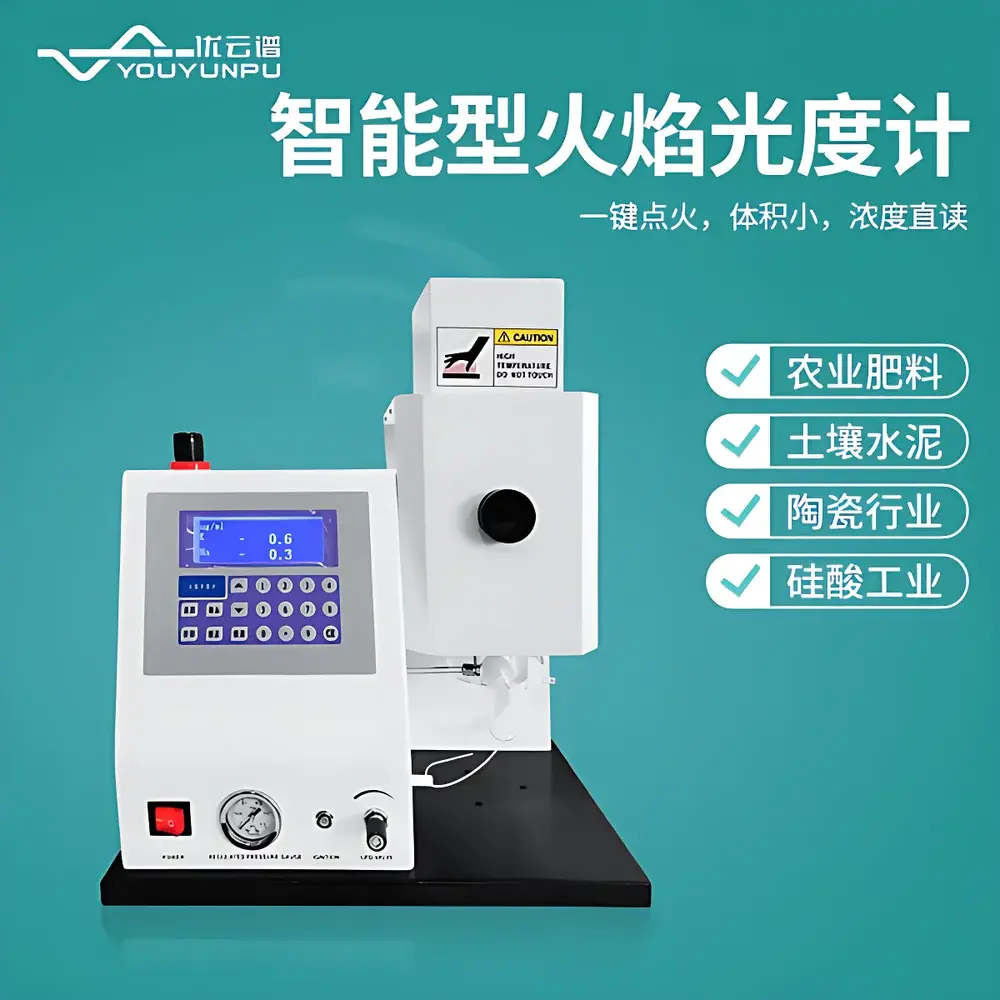
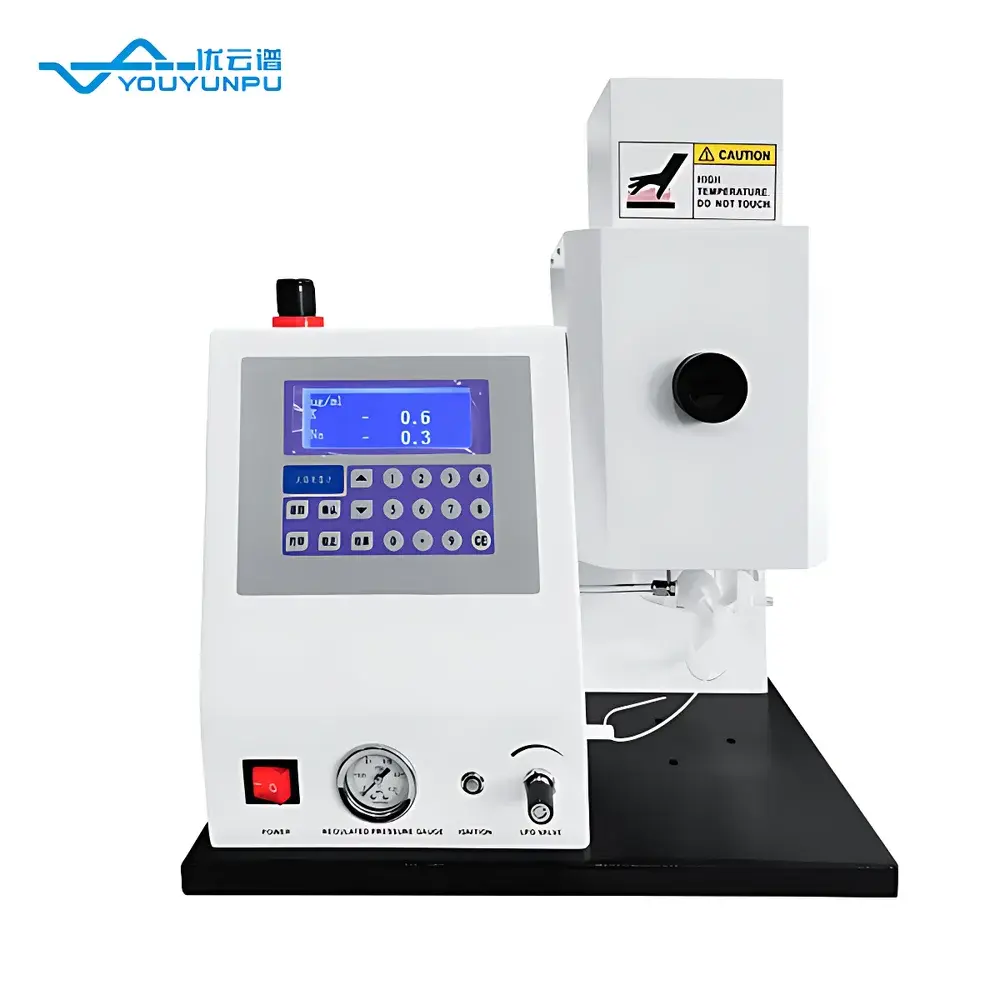
Youyunpu YP-32 Advanced Flame Photometer
| Brand | Youyunpu |
|---|---|
| Origin | Shandong, China |
| Manufacturer Type | Original Equipment Manufacturer (OEM) |
| Product Category | Domestic Flame Photometer |
| Model | YP-32 |
| Price | USD 1,450 (FOB Qingdao) |
Overview
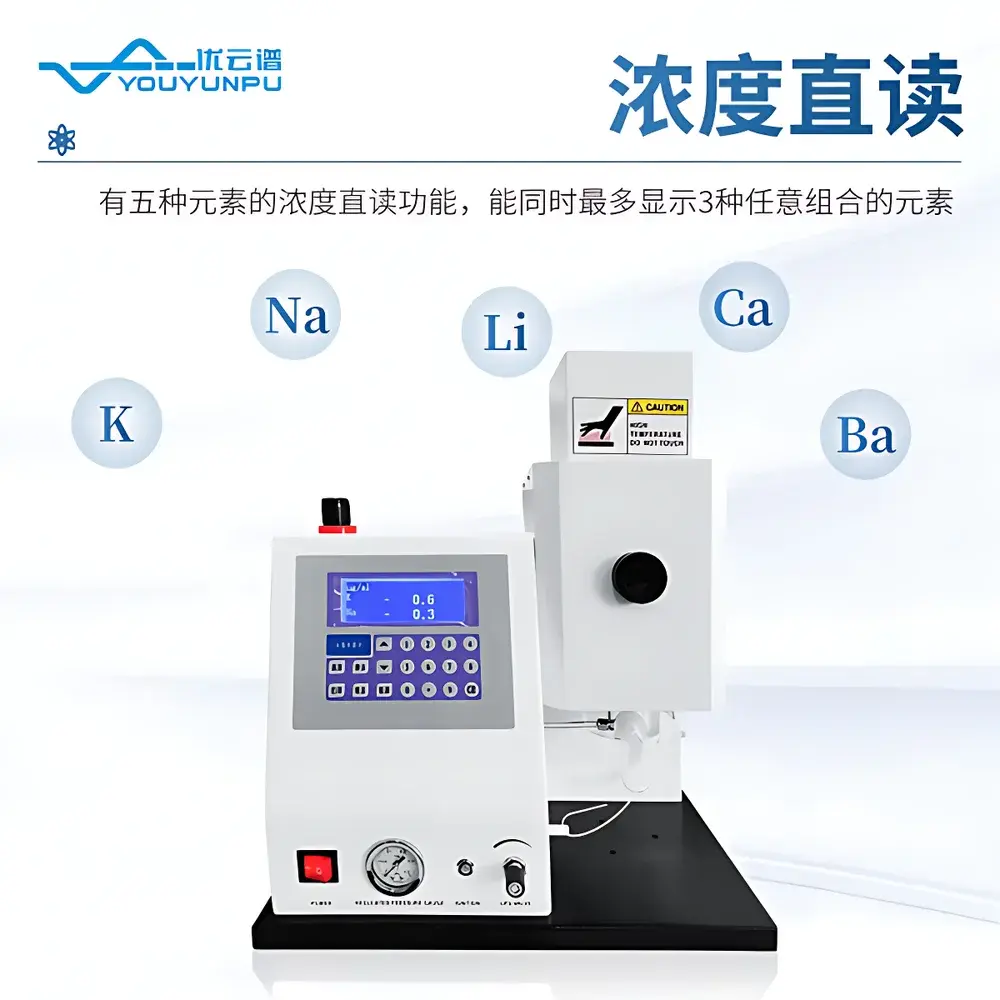
The Youyunpu YP-32 Advanced Flame Photometer is a benchtop atomic emission spectrometer engineered for quantitative analysis of alkali and alkaline earth metals—including potassium (K), sodium (Na), lithium (Li), calcium (Ca), and barium (Ba)—in aqueous solution samples. Based on the principle of flame atomic emission spectroscopy (FAES), the instrument atomizes and excites sample ions in a controlled laminar flame (LPG/air premixed burner), where element-specific emission intensities at characteristic wavelengths (e.g., K: 766.5 nm, Na: 589.0 nm, Ca: 422.7 nm) are detected by a high-stability photomultiplier tube (PMT) or silicon photodiode. Signal intensity is linearly correlated with analyte concentration over defined dynamic ranges, enabling direct concentration readout without manual calibration curve interpolation. Designed for routine laboratory environments, the YP-32 delivers high reproducibility (<2% RSD for repeated measurements) and robust architecture suitable for continuous operation in QC labs, agricultural testing centers, and industrial process control settings.
Key Features
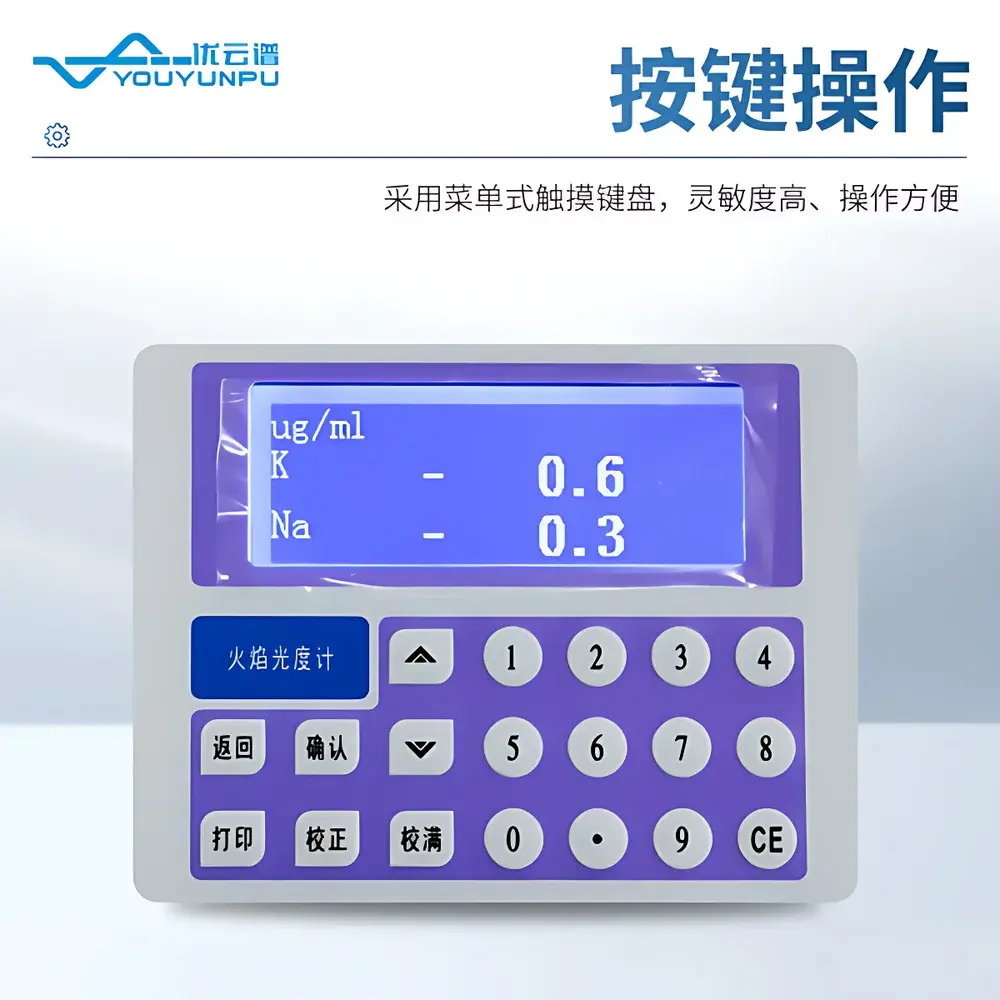
- Multi-element simultaneous display: Real-time concentration readout for up to three user-selectable elements (K, Na, Li, Ca, Ba) on a single LCD interface
- Menu-driven keypad operation: Intuitive navigation without external software dependency; all functions accessible via front-panel controls
- Automated correlation coefficient calculation: Built-in linear regression engine computes r² for each calibration curve during standardization
- Preset flame optimization: Predefined air-to-fuel ratios ensure stable, low-noise emission profiles across analytical runs
- Integrated flame failure safety system: Automatic gas cutoff and audible alarm triggered by flame-out detection via thermocouple feedback
- Single-point calibration mode: Rapid recalibration using one reference standard—ideal for daily verification or batch analysis
- Non-volatile calibration curve storage: Up to 10 user-defined calibration sets retained in EEPROM memory after power-down
- RS-232C serial interface: Enables bidirectional communication with PCs for data export, remote control, and printer output (ASCII format)
- Condensate separation module: Integrated moisture trap prevents water vapor interference and protects optical path integrity during high-humidity sample introduction
Sample Compatibility & Compliance
The YP-32 accepts clarified, filtered aqueous solutions with total dissolved solids (TDS) ≤ 0.5% w/v. Samples must be acidified (typically with dilute HNO₃) to prevent precipitation and ensure nebulizer compatibility. It complies with fundamental performance criteria outlined in ISO 6955:2000 (Flame photometric determination of alkali and alkaline earth metals) and supports method validation under GLP and GMP frameworks. While not certified for FDA 21 CFR Part 11 compliance out-of-the-box, audit-ready data logs (timestamped concentration values, calibration history, operator ID input field) can be exported for regulatory review. The instrument meets CE marking requirements for electromagnetic compatibility (EN 61326-1) and low-voltage safety (EN 61010-1).
Software & Data Management
No proprietary software installation is required for basic operation. However, the RS-232 interface supports integration with third-party laboratory information management systems (LIMS) or custom Excel-based templates via standard terminal emulation (e.g., Tera Term). Raw emission intensity values, concentration outputs, calibration parameters, and system diagnostics are timestamped and logged in CSV-compatible format. All stored calibration curves retain metadata including date/time, standard concentrations, slope/intercept, and correlation coefficient—enabling full traceability per ISO/IEC 17025 clause 7.7.
Applications
- Agricultural science: Quantification of K⁺ and Na⁺ in soil extracts, fertilizer formulations, and plant tissue digests per AOAC Official Method 976.02
- Cement and ceramic manufacturing: Determination of alkali content (Na₂O, K₂O) in raw materials and clinker to assess alkali-silica reaction (ASR) potential
- Clinical pathology: Measurement of serum/plasma electrolytes (Na⁺, K⁺, Ca²⁺) in research-grade studies—note: not intended for IVD diagnostic use
- Silicate industry: Monitoring of fluxing agents (e.g., Li₂O in glass batches) and impurity profiling in refractory raw materials
- Environmental testing: Analysis of cation leachates from landfill leachate or wastewater effluents per EPA Method 200.7 (modified)
FAQ
What gases are compatible with the YP-32?
The instrument is configured for liquefied petroleum gas (LPG) as fuel, mixed with compressed air. Propane or butane may be substituted if pressure regulators and flow meters are reconfigured accordingly.
Is the YP-32 suitable for trace-level analysis?
Detection limits range from 0.05–0.2 mg/L depending on element and matrix; it is optimized for major and minor constituent analysis rather than ultratrace work.
Can the YP-32 measure magnesium or iron?
No. The optical filter set and emission sensitivity are factory-tuned exclusively for K, Na, Li, Ca, and Ba. Mg and Fe require UV-enhanced optics and higher-temperature flames (e.g., acetylene-air), beyond this instrument’s design scope.
How often does the nebulizer require cleaning?
Under normal use with filtered, low-TDS samples, cleaning every 40–60 hours of operation is recommended using 5% nitric acid followed by deionized water rinse.
Does the YP-32 support multi-point calibration?
Yes—up to five-point calibration is supported manually; however, the instrument automatically calculates and stores only the best-fit linear regression for each element.




