
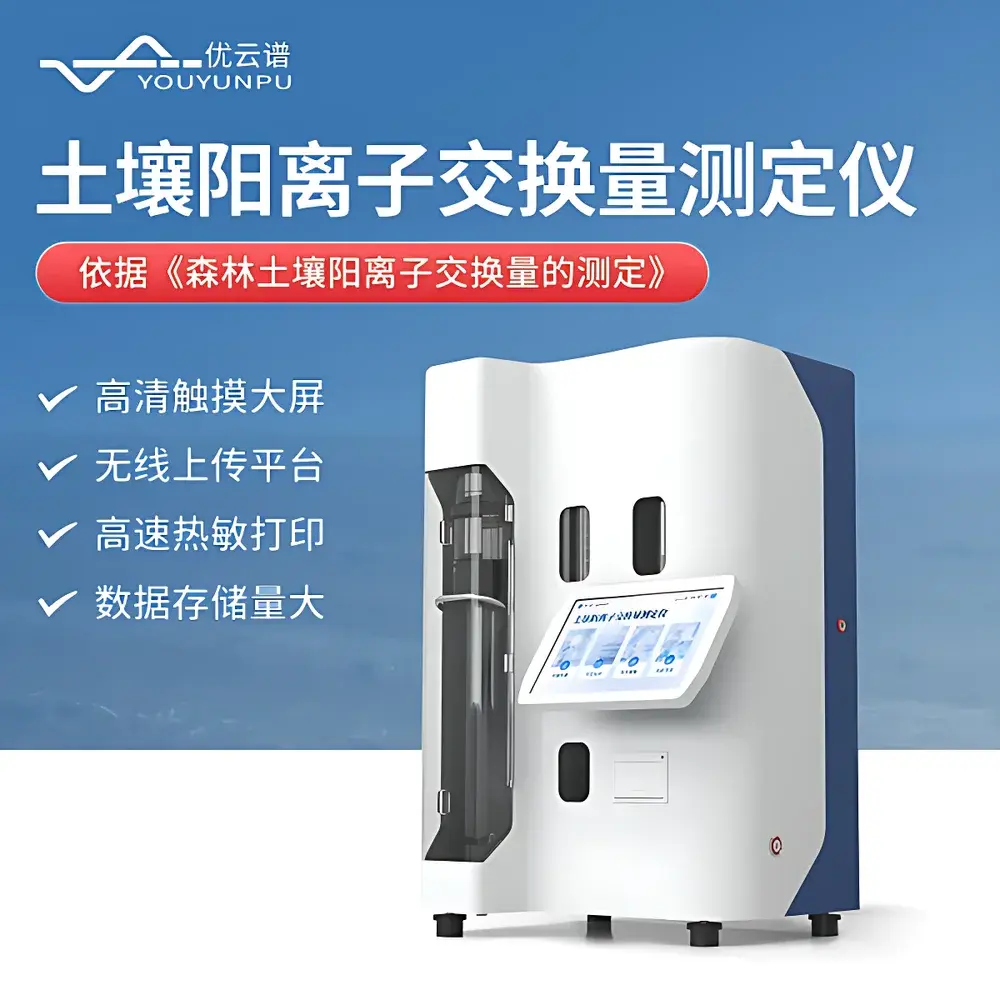
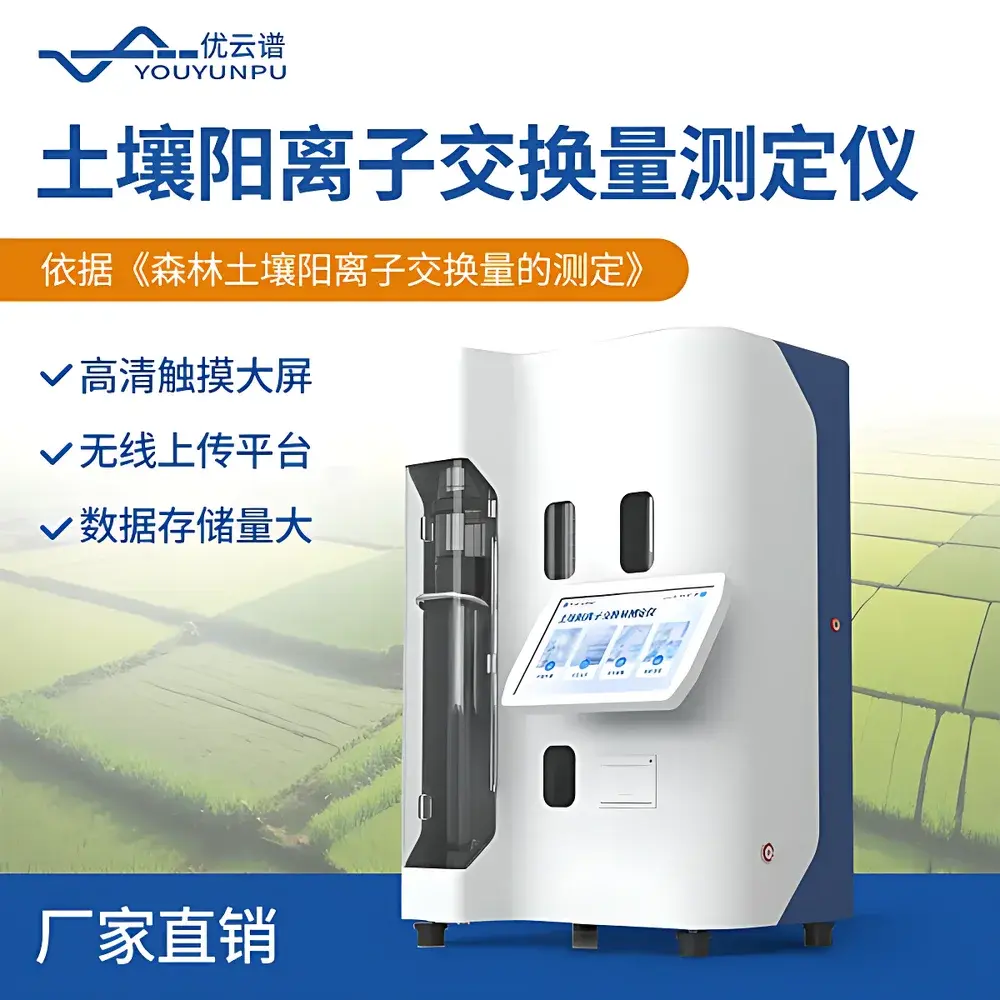
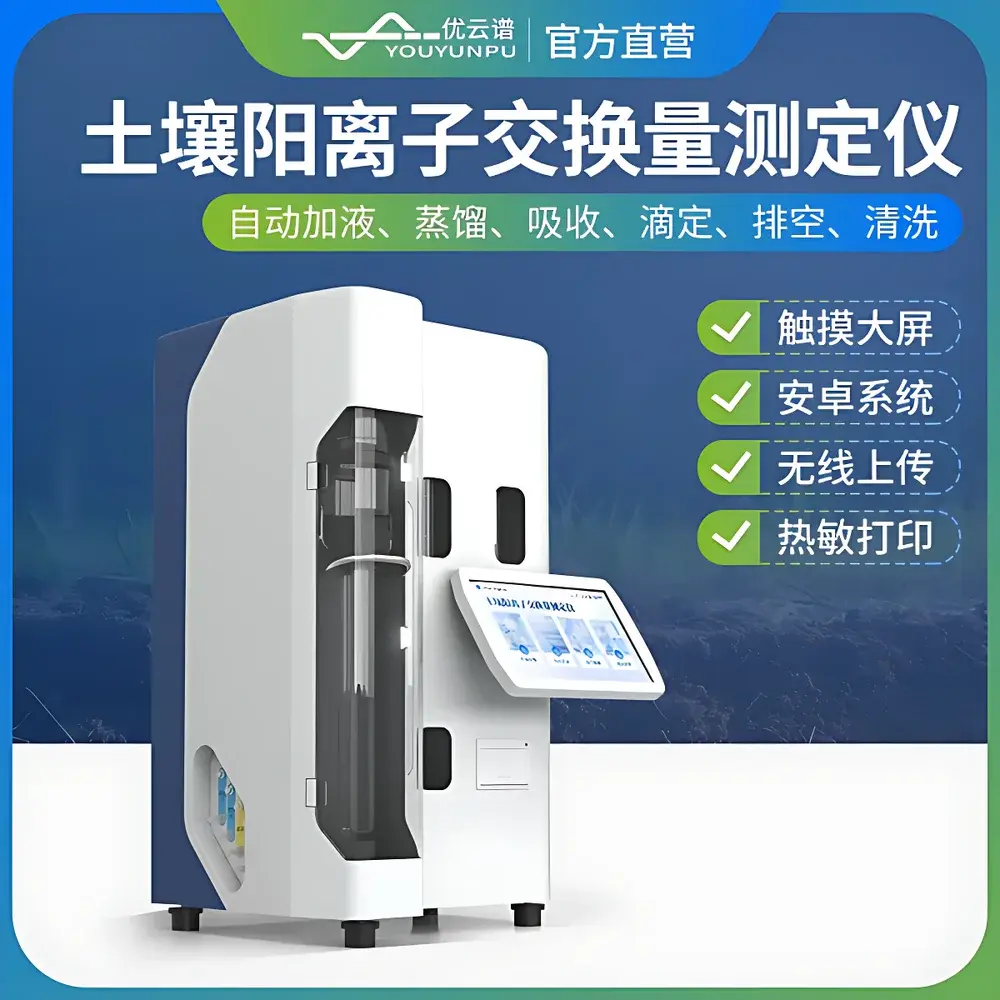
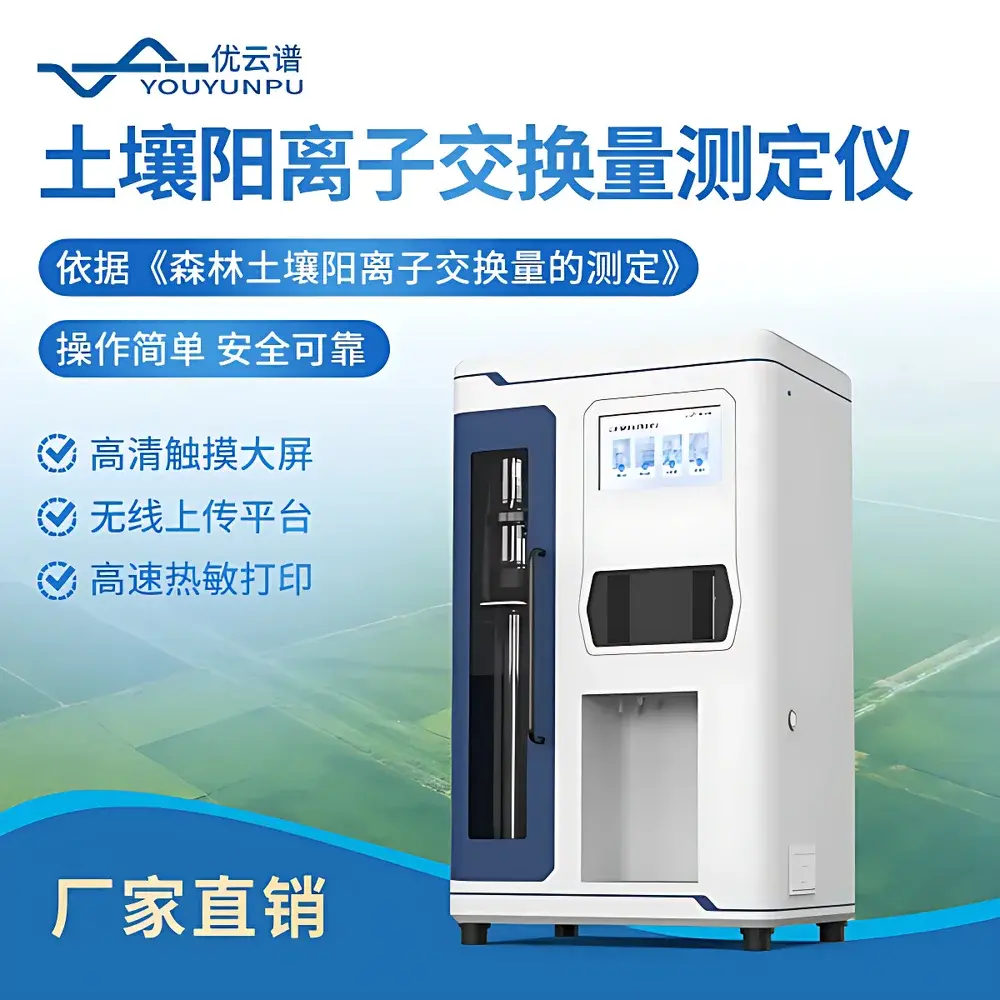
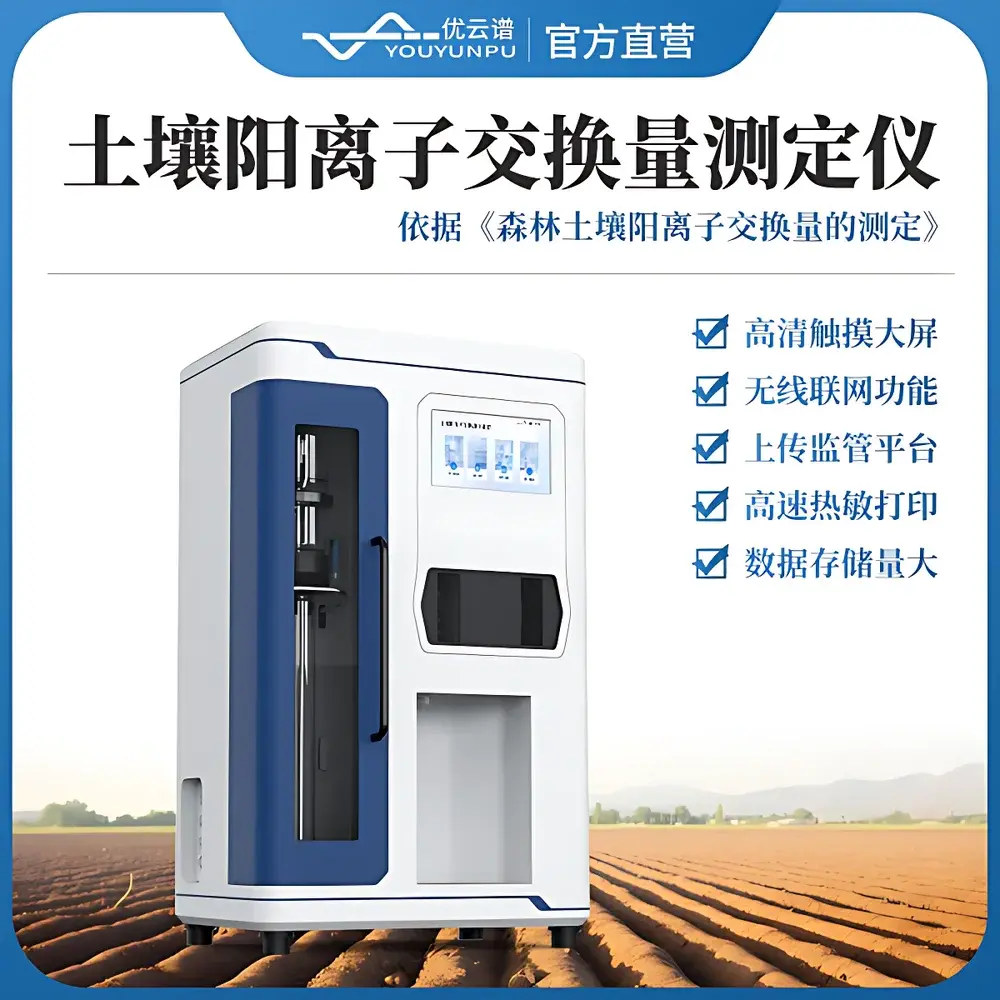
Youyunpu YP-DNT Automated Soil Cation Exchange Capacity (CEC) Analyzer with Kjeldahl Nitrogen Determination Capability
| Brand | Youyunpu |
|---|---|
| Origin | Shandong, China |
| Manufacturer Type | Direct Manufacturer |
| Country of Origin | China |
| Model | YP-DNT |
| Price Range | USD 2,700 – 17,000 |
| Display | 7-inch color touchscreen microcontroller interface |
| Sample Form | Solid ≤5 g or liquid ≤15 mL |
| CEC Measurement Range | 0.07–14 cmol<sub>c</sub>/kg |
| Nitrogen Measurement Range | 0.06–240 mg N |
| Sample Weight for CEC | 0.5–30 g (soil) |
| Digestion/Exchange Vessel Capacity | 650 mL and 300 mL standardized digestion tubes |
| Reagent Delivery | Pressureless metering peristaltic pumps for HCl, NaOH, boric acid, and distilled water |
| Safety Protection | Dry-run prevention in distillation chamber |
| Cooling Water Requirement | ≥0.15 MPa pressure, <2 L/min consumption at ≤20°C |
| Distillation Power | ≥1500 W |
| Distillation Time | Programmable, 3–9 min/sample |
| Steam Flow Rate | 0–30 mL/min adjustable |
| Delay Function | 0–3600 s |
| Recovery Rate | >99.5% |
| Precision | RSD ≤0.5% |
| Housing Material | ABS engineering plastic, acid- and alkali-resistant, electrically insulated |
| Internal Tubing | High-temp, chemically inert fluoropolymer-reinforced tubing (≥3-year service life) |
| Data Management | Onboard programmable method storage, real-time condition monitoring, voice-guided operation, paperless workflow, remote firmware update capability |
| Compliance Readiness | Designed to support GLP/GMP documentation workflows |
Overview
The Youyunpu YP-DNT Automated Soil Cation Exchange Capacity (CEC) Analyzer is a dual-function laboratory instrument engineered for precise, reproducible quantification of cation exchange capacity in soil and related solid matrices—while simultaneously supporting standardized Kjeldahl nitrogen determination. Unlike generic nitrogen analyzers, the YP-DNT integrates a dedicated ion-exchange conditioning module with a fully automated Kjeldahl distillation system, enabling sequential or parallel execution of ammonium displacement, leaching, titration-ready distillate collection, and nitrogen recovery measurement—all within a single platform. Its operational principle relies on ammonium acetate (pH 7.0) buffer displacement followed by steam distillation of exchanged NH4+ into boric acid, with subsequent titrimetric or colorimetric quantification. This aligns with internationally accepted protocols including ISO 11260:1994 (Soil quality — Determination of cation exchange capacity — Extraction with ammonium acetate at pH 7), ASTM D4358-22 (Standard Test Method for Cation Exchange Capacity of Soils), and USDA-NRCS Method 10-112. The instrument is not a standalone titrator or spectrophotometer; rather, it delivers standardized distillate volumes under controlled thermal, hydraulic, and reagent-dosing conditions—ensuring metrological traceability across heterogeneous soil types (clay-rich, organic, saline, or calcareous).
Key Features
- Integrated dual-mode automation: Independent control loops for CEC-specific exchange kinetics (pH-stabilized leaching, timed washing, eluate collection) and Kjeldahl distillation (steam generation, condensate cooling, reagent metering).
- 7-inch capacitive touchscreen HMI with embedded microcontroller—supporting multi-user method profiles, real-time status overlays (temperature, pressure, pump actuation, steam flow), and audible feedback for critical transitions (e.g., distillation start/end, low coolant alert).
- Chemically inert fluid path architecture: All wetted components—including peristaltic pump tubing, valve manifolds, and distillation chamber seals—are fabricated from fluoropolymer-reinforced elastomers rated for continuous exposure to 6 M HCl, 40% NaOH, and saturated boric acid solutions.
- Fail-safe thermal management: Patented dry-run detection in the distillation block prevents heater element damage during incomplete sample loading or tube misalignment; automatic power cutoff triggers if steam temperature exceeds 125°C for >5 s.
- Modular reagent delivery: Three independent pressureless metering pumps deliver HCl (for soil acidification), NaOH (for NH3 liberation), and boric acid (for NH3 trapping)—each calibrated to ±0.5% volumetric accuracy across 1–50 mL ranges.
- Energy-optimized condensation: Closed-loop cooling system maintains condenser inlet water temperature ≤20°C with <2 L/min flow, reducing thermal load and minimizing vapor carryover during high-throughput runs (up to 12 samples/shift).
Sample Compatibility & Compliance
The YP-DNT accommodates a broad spectrum of soil matrices without pre-drying or grinding exceptions: mineral soils (sand, silt, clay), organic soils (peat, compost), amended substrates (biochar-blended, limed, or fertilized), and contaminated industrial soils (heavy metal–laden, hydrocarbon-impacted). Sample mass is programmably constrained between 0.5 g and 30 g—enabling both regulatory-tier screening (e.g., EPA Method 9081B adaptation) and research-grade characterization. All hardware and software design elements adhere to IEC 61010-1:2010 safety standards for laboratory equipment. While the instrument itself does not bear CE or UKCA marking, its architecture supports audit-ready data integrity per FDA 21 CFR Part 11 (electronic signatures, audit trails, method locking) when deployed with validated LIMS integration. Routine operation satisfies QA/QC requirements outlined in ISO/IEC 17025:2017 Clause 7.2.2 (method validation) and ASTM D6913 (standard practice for particle-size analysis of soils), particularly when paired with certified reference materials (CRMs) such as NIST SRM 2710a or ISE Soil CRM-1.
Software & Data Management
Firmware v3.2+ provides native CSV export of raw sensor logs (temperature ramp profiles, pump cycle counts, steam pressure transients), method parameters (exchange time, distillation wattage, delay intervals), and final calculated CEC values (cmolc/kg) with propagated uncertainty estimates. No proprietary binary formats are used—data files open directly in Excel, Python (pandas), or R without conversion utilities. Audit trail functionality records all user actions (login/logout, method edits, calibration events) with timestamps, IP addresses (for network-enabled units), and operator IDs. Remote diagnostics and over-the-air firmware updates are enabled via TLS 1.2–secured Ethernet or Wi-Fi (802.11n), eliminating need for physical USB access. For regulated environments, optional 21 CFR Part 11 compliance packages include electronic signature capture, role-based access control (RBAC), and immutable log archiving to external NAS or cloud storage (AWS S3 or Azure Blob).
Applications
- Regulatory soil testing laboratories performing routine CEC analysis for agricultural land classification (USDA Soil Taxonomy), landfill cover design (EPA 40 CFR Part 258), or remediation endpoint verification.
- University soil science departments conducting comparative studies on CEC modulation via biochar amendment, clay mineral transformation, or organic matter depletion.
- Fertilizer development labs correlating CEC with nutrient retention efficiency (e.g., NH4+, K+, Ca2+ sorption isotherms) under controlled pH and ionic strength gradients.
- Environmental consulting firms executing Phase I/II site assessments where CEC serves as proxy for contaminant mobility risk (e.g., heavy metal leaching potential in acidic soils).
- ISO 17025-accredited facilities requiring documented method equivalence between YP-DNT outputs and classical hand-titrated CEC results (validation reports available upon request).
FAQ
Does the YP-DNT comply with ISO 11260 for CEC determination?
Yes—the instrument implements the core procedural requirements of ISO 11260:1994, including ammonium acetate (1 M, pH 7.0) extraction, centrifugal separation, and steam distillation of displaced NH4+. Full conformance requires lab-specific validation against CRMs and documented uncertainty budgets.
Can the YP-DNT analyze non-soil matrices such as sediments or sludges?
It can process digested or homogenized sediments and anaerobically digested biosolids, provided suspended solids are <10% w/w and free chloride is removed prior to exchange. Sludge-specific method adaptations (e.g., extended washing cycles) are programmable.
Is third-party calibration certification included with purchase?
Factory calibration certificates traceable to NIST standards are supplied for all critical subsystems (temperature sensors, volumetric pumps, pressure transducers). ISO/IEC 17025 calibration by an accredited body is available as an optional service.
What maintenance intervals are recommended for long-term reliability?
Peristaltic pump tubing should be inspected every 500 cycles and replaced every 1,200 cycles or annually—whichever occurs first. Distillation chamber descaling is advised quarterly using 5% citric acid solution. Full preventive maintenance (valve actuation testing, seal integrity check) is scheduled biannually.
How is data integrity ensured during power interruption?
The onboard supercapacitor retains volatile memory for ≥120 seconds, allowing graceful shutdown and resumption from last completed step. Critical method parameters and intermediate results are written to non-volatile flash memory after each discrete operation (e.g., post-leach, post-distillation).
Related Products







