
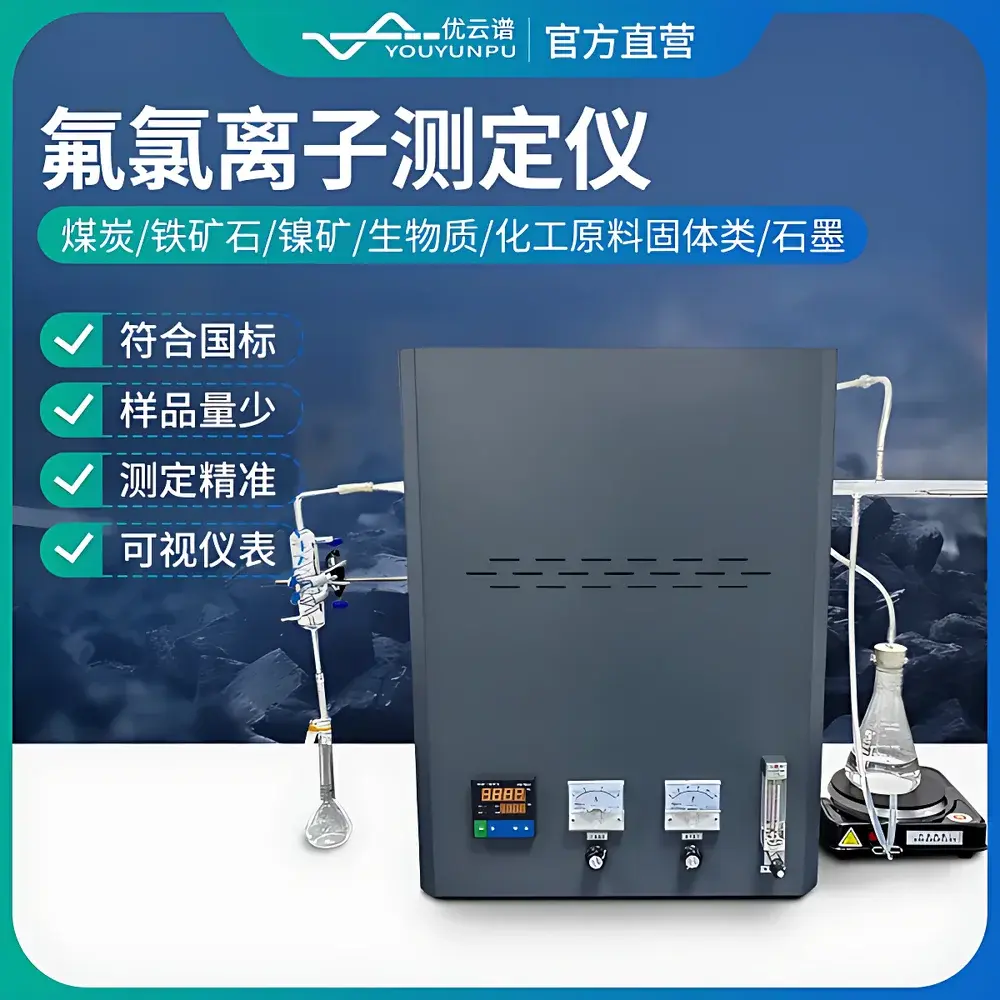
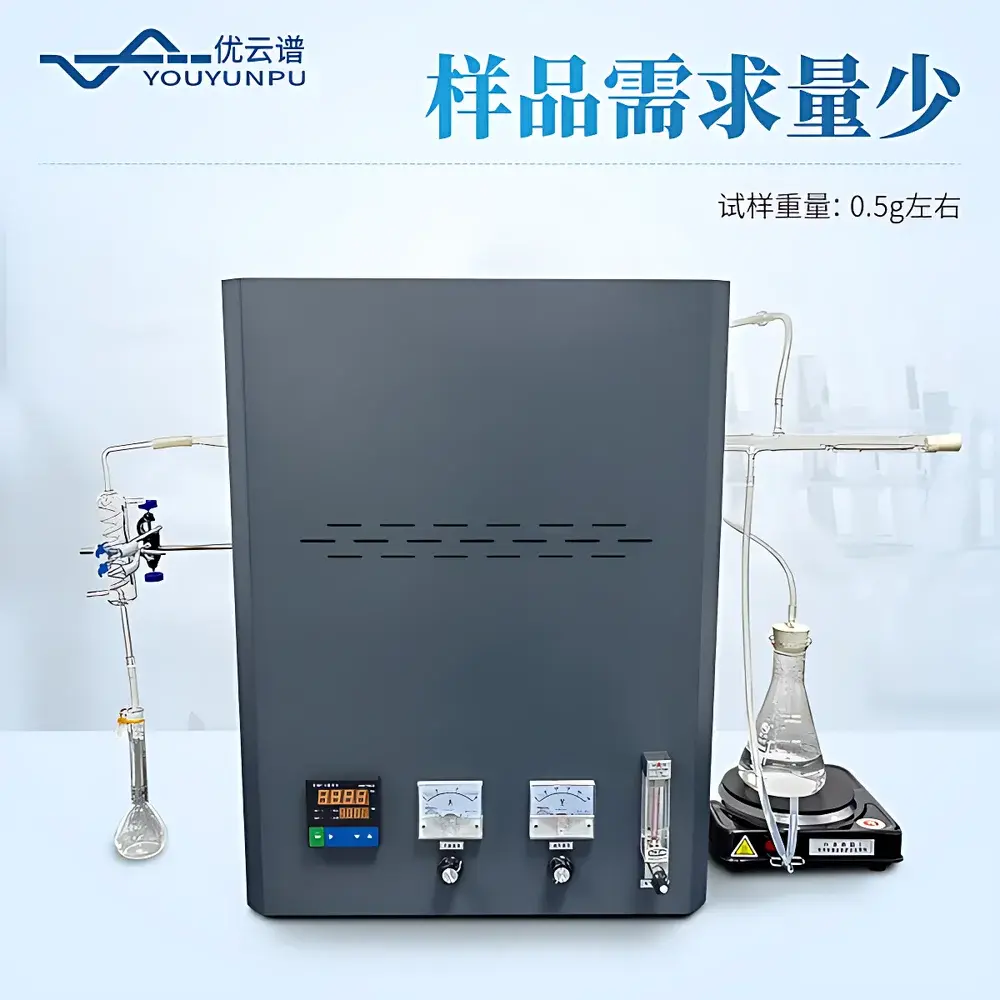
Youyunpu YP-FLC Fluoride and Chloride Ion Analyzer
| Brand | Youyunpu |
|---|---|
| Origin | Shandong, China |
| Manufacturer Type | Direct Manufacturer |
| Country of Origin | China |
| Model | YP-FLC |
| Price | USD 3,750 (approx.) |
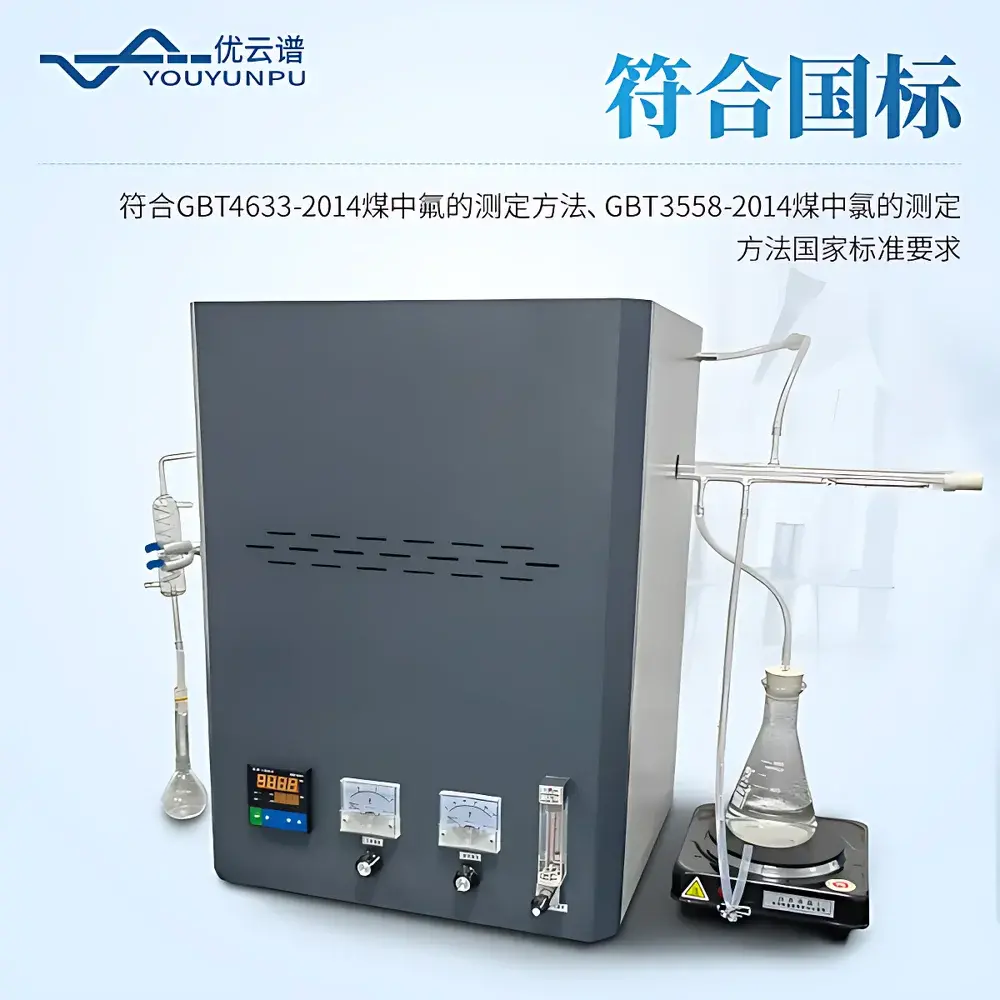
| Compliance | GB/T 4633–2014, GB/T 3558–2014 |
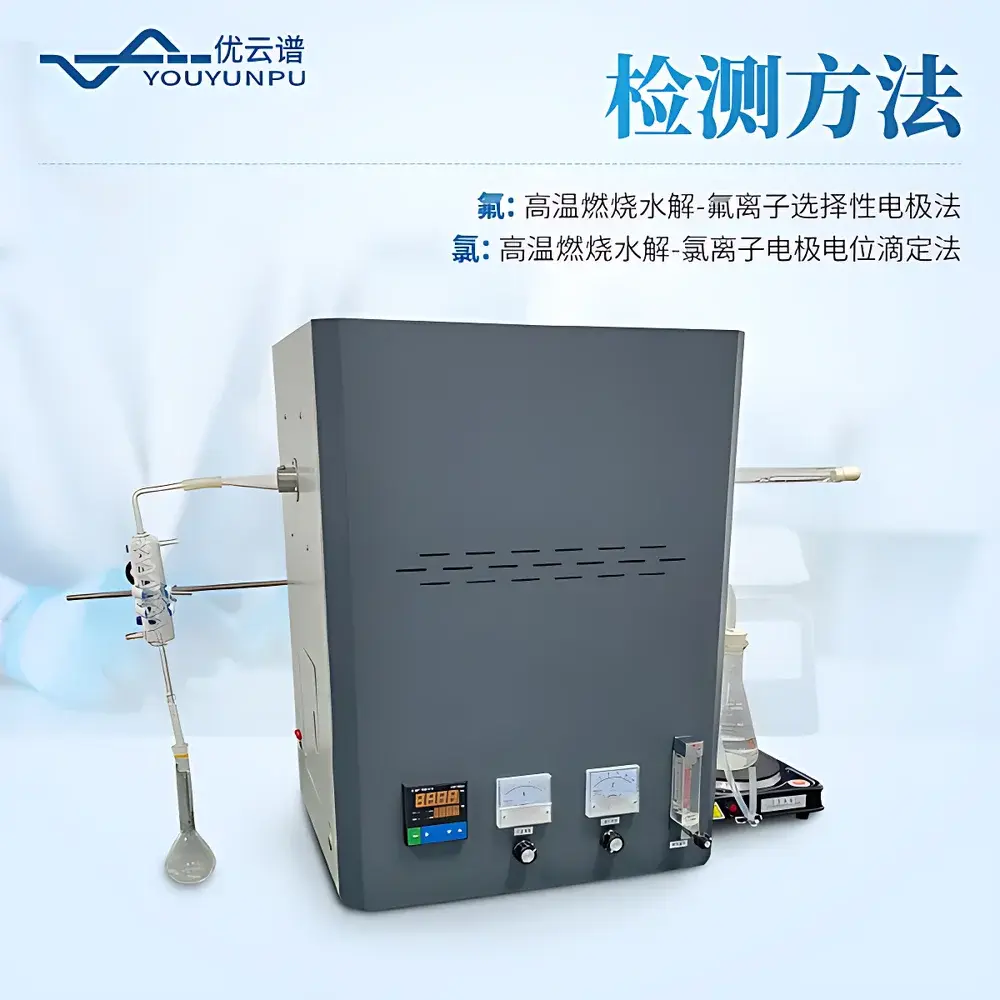
| Detection Principle | High-Temperature Combustion Hydrolysis coupled with Ion-Selective Electrode (F⁻) and Potentiometric Titration (Cl⁻) |
| Sample Mass | ~0.5 g |
| Oxygen Requirement | Oil-free, moisture-free, ≥99.5% purity |
| Decomposition Time | 30 min |
| Analysis Time | 20 min |
| Furnace Temperature Control Accuracy | 1100 ± 1 °C |
| Total Power Consumption | 4 kW |
| Input Power | AC 220 V ±10%, 50 Hz, 20 A |
Overview
The Youyunpu YP-FLC Fluoride and Chloride Ion Analyzer is a dedicated benchtop analytical system engineered for the quantitative determination of total fluorine and chlorine in solid heterogeneous matrices—including coal, iron ore, nickel ore, biomass, graphite, and industrial chemical feedstocks. It implements a standardized two-stage analytical workflow: high-temperature combustion hydrolysis (at 1100 ± 1 °C) to quantitatively convert organically bound and inorganic halogen species into soluble fluoride (F⁻) and chloride (Cl⁻) ions, followed by selective electrochemical detection. Fluoride concentration is measured via a solid-state lanthanum fluoride (LaF₃) ion-selective electrode under potentiometric conditions, while chloride is determined by potentiometric titration using silver nitrate (AgNO₃) with a double-junction reference electrode and silver indicator electrode. This methodology ensures full compliance with Chinese national standards GB/T 4633–2014 (Determination of Fluorine in Coal) and GB/T 3558–2014 (Determination of Chlorine in Coal), making the YP-FLC suitable for routine quality control and regulatory testing in coal-fired power plants, metallurgical laboratories, geological survey institutes, and third-party environmental testing facilities.
Key Features
- Integrated high-temperature furnace with PID-controlled heating zone, maintaining stable operation at 1100 ± 1 °C for complete oxidative hydrolysis of refractory halogen compounds
- Dual-detection module: calibrated fluoride ion-selective electrode (F⁻-ISE) and automated potentiometric titration system for chloride (Cl⁻), minimizing cross-sensitivity and operator intervention
- Optimized gas delivery subsystem supporting oil-free, dry oxygen supply (≥99.5% purity) to ensure reproducible combustion efficiency and prevent electrode fouling
- Pre-programmed method templates aligned with GB/T 4633–2014 and GB/T 3558–2014, including automatic blank correction, standard addition calibration, and recovery validation protocols
- Robust thermal insulation design and ceramic reaction tube assembly enabling >10,000 cycle durability under continuous 30-min decomposition cycles
- Front-panel touchscreen interface with real-time temperature profiling, titration curve visualization, and audit-ready result logging
Sample Compatibility & Compliance
The YP-FLC accepts solid samples weighing approximately 0.5 g—sufficient for representative analysis of heterogeneous materials such as crushed coal (particle size ≤0.2 mm), milled ores, and homogenized biomass pellets. It accommodates both low-halogen (<10 ppm F/Cl) and high-halogen (>500 ppm) matrices without dilution or pre-concentration. All measurement procedures adhere strictly to the procedural rigor defined in GB/T 4633–2014 and GB/T 3558–2014, including mandatory use of certified reference materials (CRMs) for accuracy verification. While not validated against ISO 11725 or ASTM D6317, the system’s performance characteristics—including repeatability (RSD <3.5% for CRM analysis) and spike recovery (95–102%)—meet GLP-aligned laboratory requirements for in-house method validation. Data output conforms to minimum reporting standards for trace halogen content (expressed as µg/g or ppm on dry basis).
Software & Data Management
The embedded firmware supports method storage, user-defined calibration curves, and automatic calculation of corrected concentrations based on blank subtraction and sample mass normalization. Raw electrode potential (mV) and titration volume (mL) data are timestamped and exportable via USB to CSV format. The system logs operator ID, sample ID, date/time, furnace profile, and final result—supporting basic traceability per internal QA protocols. Though not compliant with FDA 21 CFR Part 11 (lacking electronic signature and audit trail encryption), the YP-FLC provides sufficient metadata for ISO/IEC 17025-accredited labs performing method-verified analyses under documented SOPs.
Applications
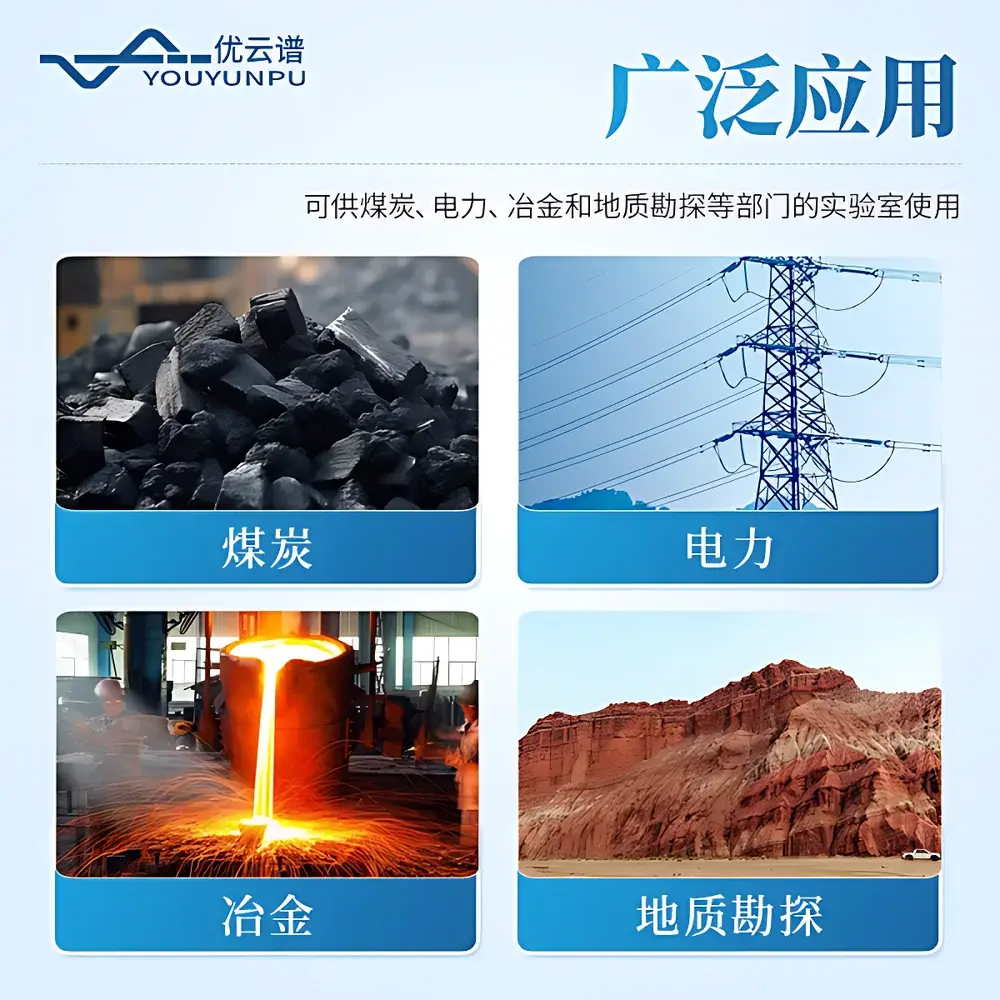
- Coal quality assessment: Monitoring fluorine-induced corrosion risk in boiler tubes and chlorine-driven high-temperature corrosion in superheaters
- Metallurgical feedstock screening: Quantifying halogen impurities in iron/nickel ores that affect sintering behavior and slag chemistry
- Biomass co-firing evaluation: Assessing Cl-related fouling potential in utility-scale biomass combustion systems
- Geological resource characterization: Mapping halogen distribution in carbonaceous shales and mineralized zones
- Industrial raw material certification: Verifying fluorine/chlorine limits in graphite anodes for lithium-ion battery production
FAQ
What sample preparation is required prior to analysis?
Crushed and homogenized solids must be dried at 105 °C for 2 h and sieved to ≤0.2 mm particle size. No acid digestion or solvent extraction is needed.
Can the YP-FLC analyze liquid or slurry samples?
No—it is designed exclusively for solid-phase matrices. Liquids require prior evaporation and residue ashing under controlled conditions, which is outside the validated scope.
Is calibration traceable to NIST or other international standards?
Calibration uses aqueous NaF and NaCl standard solutions prepared gravimetrically; traceability to national metrology institutes (e.g., NIM China) is achievable through certified stock solutions, though the instrument itself does not include built-in NIST-traceable reference electrodes.
What maintenance intervals are recommended for the combustion tube and electrodes?
The quartz combustion tube should be inspected after every 200 runs; electrodes require daily rinsing with deionized water and monthly reconditioning per manufacturer guidelines.
Does the system support remote diagnostics or network connectivity?
No Ethernet or Wi-Fi interface is provided. Data transfer is limited to USB flash drive export.



