
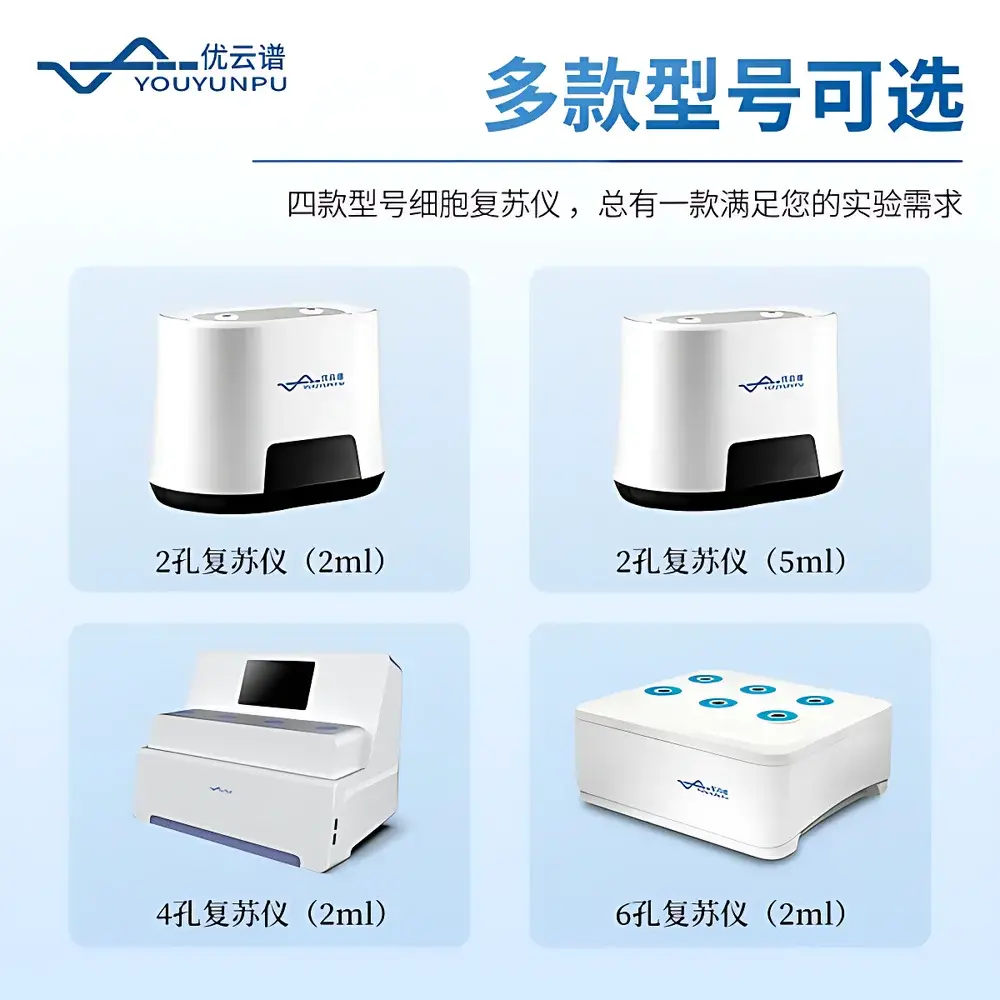
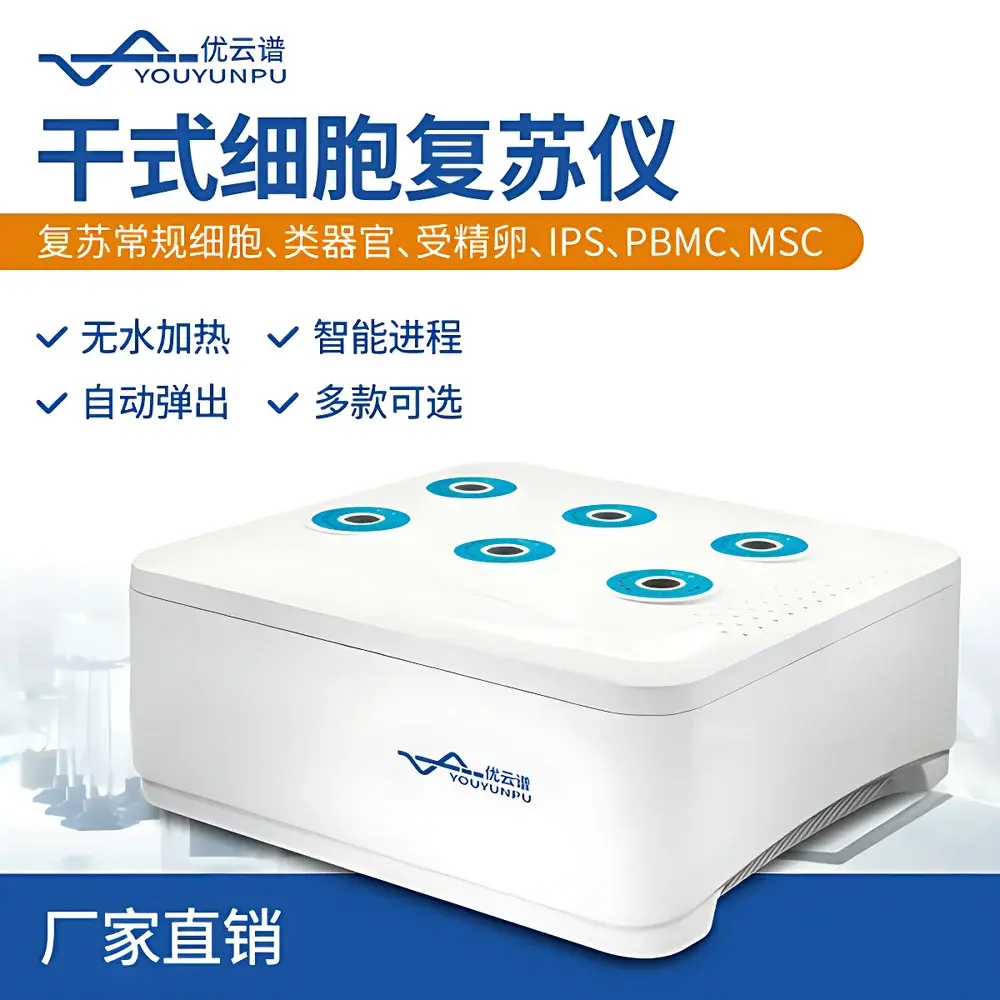
Youyunpu YP-FS06 Dry-Block Cell Thawing Instrument
| Brand | Youyunpu |
|---|---|
| Origin | Shandong, China |
| Manufacturer Type | Direct Manufacturer |
| Instrument Category | Dry-Block Thawing |
| Model | YP-FS06 |
| Temperature Control | Adjustable |
| Temperature Accuracy | High |
| Heating/Cooling Rate | Stable |
| Sample Capacity | Multi-dose Compatible |
| Regulatory Suitability | GMP-Compatible Environment Use |
| Sample Types | Mammalian Cells, Organoids, Oocytes, iPSCs, PBMCs, MSCs |
Overview
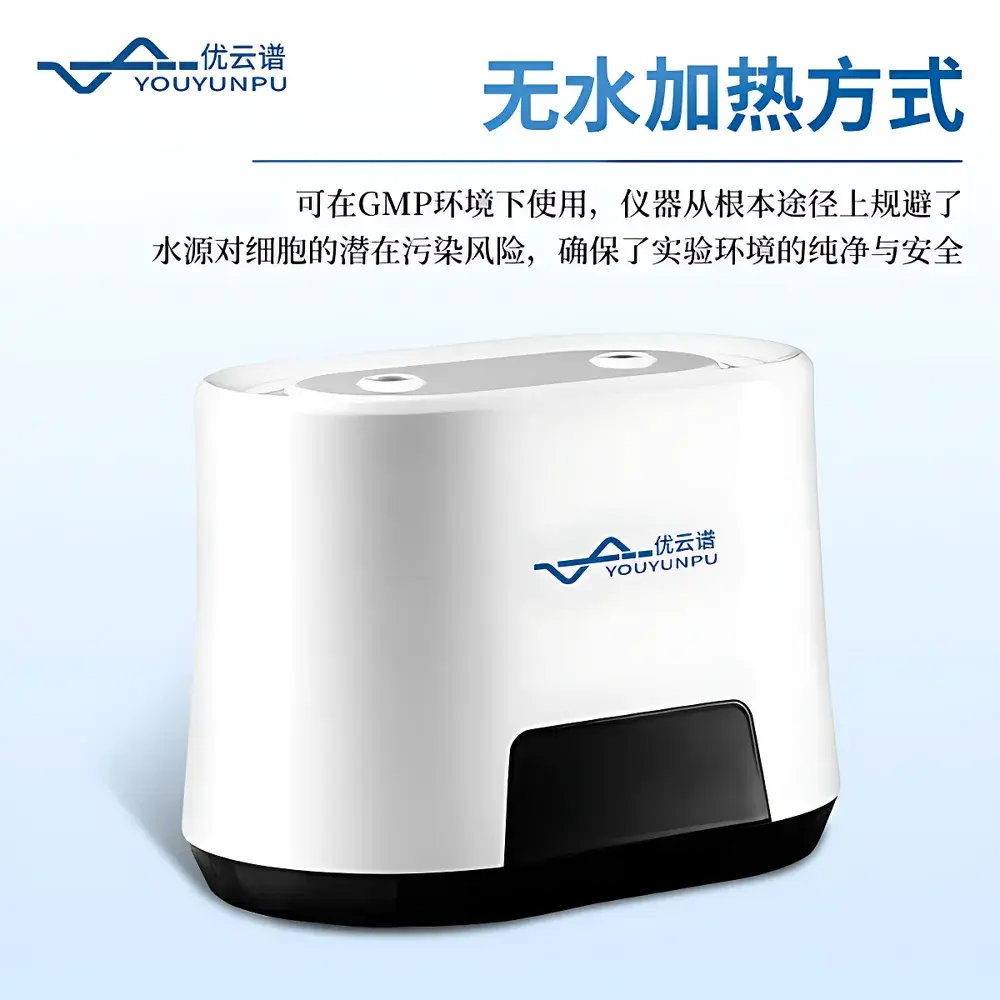
The Youyunpu YP-FS06 Dry-Block Cell Thawing Instrument is an engineered solution for standardized, contamination-minimized cell recovery in regulated life science laboratories. Unlike conventional water bath thawing—where temperature gradients, microbial ingress, and operator-dependent timing introduce variability—the YP-FS06 employs a precisely calibrated dry-block heating architecture based on Peltier-driven thermal plates and integrated high-fidelity RTD (Resistance Temperature Detector) sensors. This design eliminates direct liquid contact, thereby removing the risk of cross-contamination between samples and ensuring compliance with cleanroom and GMP-grade operational requirements. The instrument operates on the principle of controlled conductive heat transfer: frozen vials are seated into thermally matched aluminum wells, where uniform thermal energy is delivered across the entire vial surface. This promotes homogeneous ice crystal dissolution and minimizes thermal shock to sensitive biological constructs—including fragile pluripotent stem cells and 3D organoid aggregates—without compromising membrane integrity or post-thaw viability.
Key Features
- Dry-block thermal platform: Eliminates reliance on water baths, reducing bio-burden risk and enabling use in ISO Class 5–7 environments.
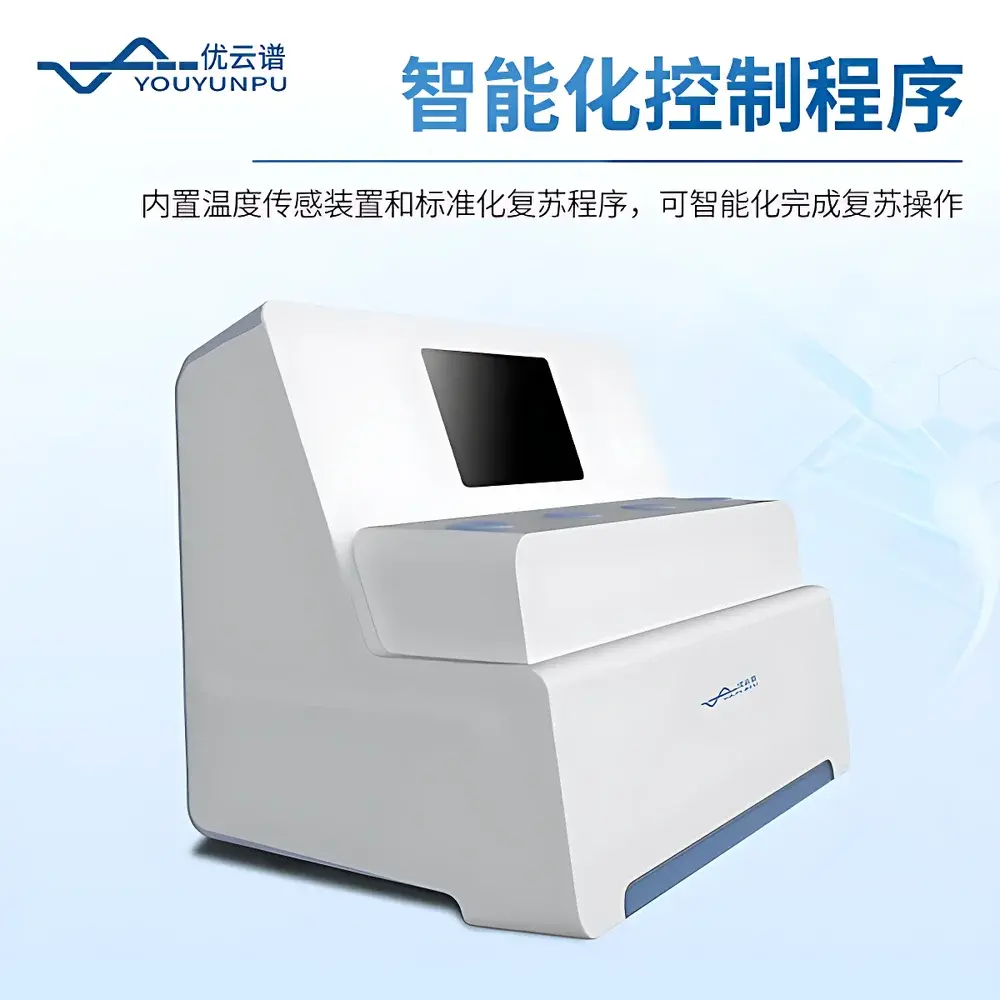
- Programmable temperature profile: Supports user-defined ramp rates and hold temperatures, optimized for diverse cryopreservation media formulations (e.g., DMSO-based, serum-free, or trehalose-containing solutions).
- Automated mechanical ejection: Vials are gently released upon completion of the thaw cycle, minimizing manual handling and preserving sample traceability.
- High-accuracy closed-loop control: Real-time feedback from dual-point RTD sensors ensures ±0.3 °C temperature stability across all wells during active thawing.
- GMP-aligned hardware design: Smooth, non-porous stainless-steel housing; no exposed wiring or crevices; compatible with routine ethanol/isopropanol disinfection protocols.
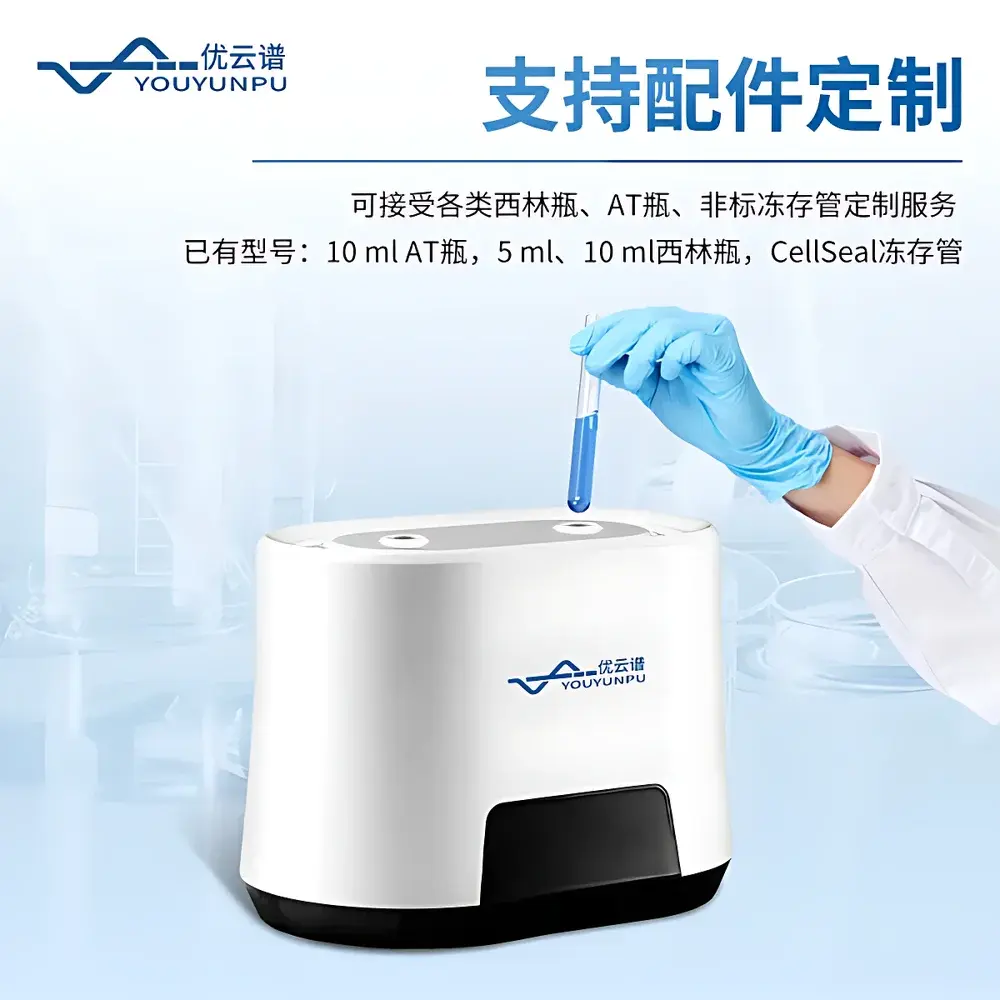
- Multi-format compatibility: Accommodates standard 0.5 mL, 1.0 mL, and 1.8 mL cryovials (internal thread or external thread), including externally labeled tubes without interference.
Sample Compatibility & Compliance
The YP-FS06 is validated for consistent recovery of primary and immortalized mammalian cells, including but not limited to peripheral blood mononuclear cells (PBMCs), mesenchymal stromal cells (MSCs), induced pluripotent stem cells (iPSCs), oocytes, and complex 3D structures such as intestinal and cerebral organoids. Its thermal profile has been benchmarked against ASTM F2659–22 (Standard Guide for Assessing the Performance of Cryopreserved Cell Thawing Devices) and aligns with best practices outlined in ISCT (International Society for Cell & Gene Therapy) Position Statements on thawing standardization. While not certified under FDA 21 CFR Part 11 out-of-the-box, the device supports audit-ready operation when integrated into laboratory information management systems (LIMS) that enforce electronic record retention, user authentication, and change control—meeting GLP/GMP documentation expectations for clinical-grade cell processing workflows.
Software & Data Management
The YP-FS06 operates via an embedded microcontroller interface with tactile keypad navigation and OLED status display. All active cycles are timestamped and logged internally (up to 1,000 cycles), recording start time, target temperature, actual block temperature at 5-second intervals, and end confirmation. Logs are exportable via USB-C port in CSV format for integration into QC databases or electronic batch records. Optional firmware upgrade enables RS-485 Modbus RTU communication for centralized monitoring in facility-wide equipment networks. No cloud connectivity or proprietary software installation is required—ensuring data sovereignty and compatibility with air-gapped infrastructure common in biomanufacturing and academic core facilities.
Applications
- Standardized thawing of clinical-grade CAR-T and TCR-T cell products prior to infusion or functional assay.
- Recovery of cryopreserved iPSC lines for directed differentiation pipelines requiring low apoptosis thresholds.
- Thawing of PBMCs for flow cytometry, ELISpot, or single-cell RNA-seq without loss of surface epitope expression.
- Organoid revival in drug screening platforms where structural integrity post-thaw directly impacts assay reproducibility.
- Quality control thawing in biobanking operations adhering to ISO 20387:2018 (Biobanking—General Requirements for Biobanking).
FAQ
Is the YP-FS06 suitable for Good Manufacturing Practice (GMP) environments?
Yes—the dry-block design, stainless-steel construction, and absence of liquid reservoirs meet baseline environmental control requirements for Grade C and D cleanrooms per EU GMP Annex 1.
Can the instrument be calibrated and re-verified in-house?
Yes—calibration is performed using NIST-traceable dry-well calibrators; users may execute periodic verification using reference thermistors placed inside representative vials.
Does it support validation documentation packages (IQ/OQ/PQ)?
The manufacturer provides a foundational OQ protocol template; full PQ must be executed by the end user under their specific SOPs and sample matrix conditions.
What is the maximum number of vials processed simultaneously?
The YP-FS06 accommodates up to six 1.8 mL cryovials per cycle, with independent thermal uniformity verified per well (±0.5 °C max deviation at setpoint).
How does thawing performance compare to traditional 37 °C water bath methods?
Benchmark studies show equivalent time-to-complete-thaw (defined as residual ice volume ≤2 mm³), with significantly reduced inter-vial CV% (<3.2% vs. 8.7% in water bath) and higher post-thaw viability (≥92% vs. 84–89%) for MSCs and iPSCs.





