
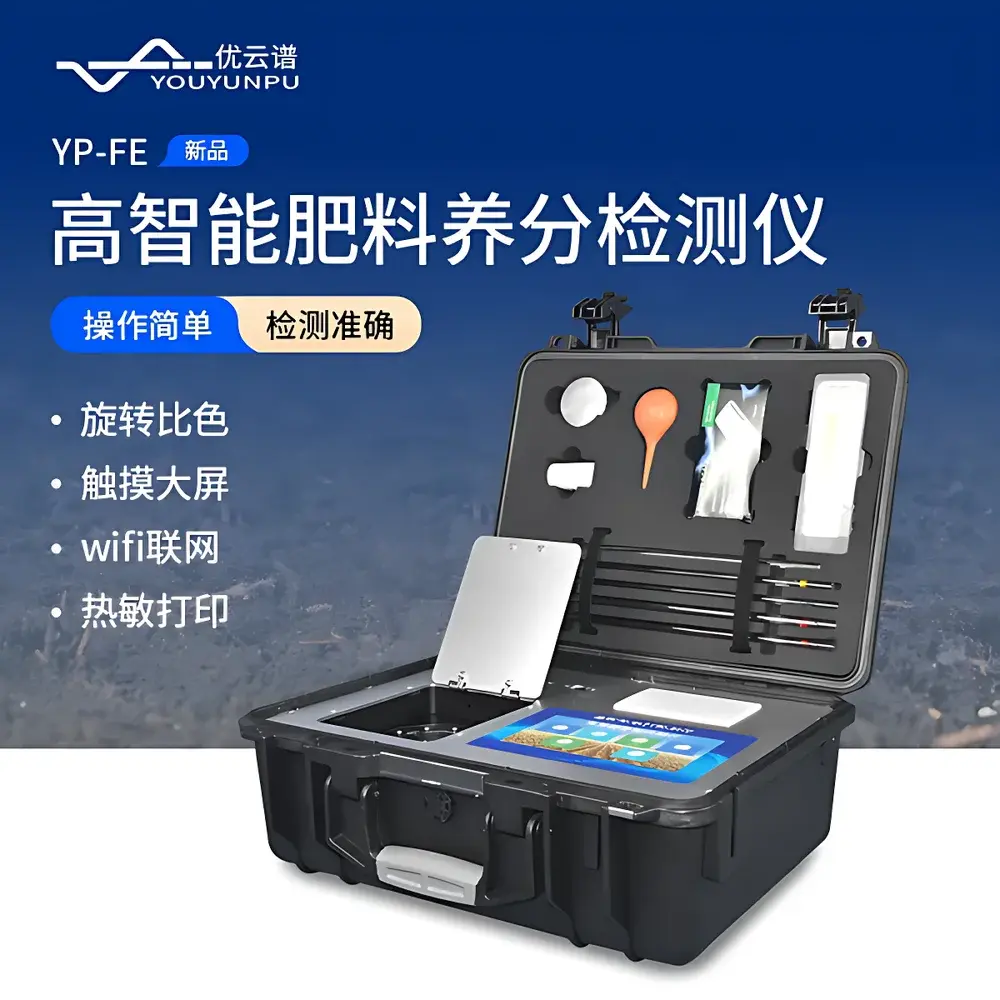
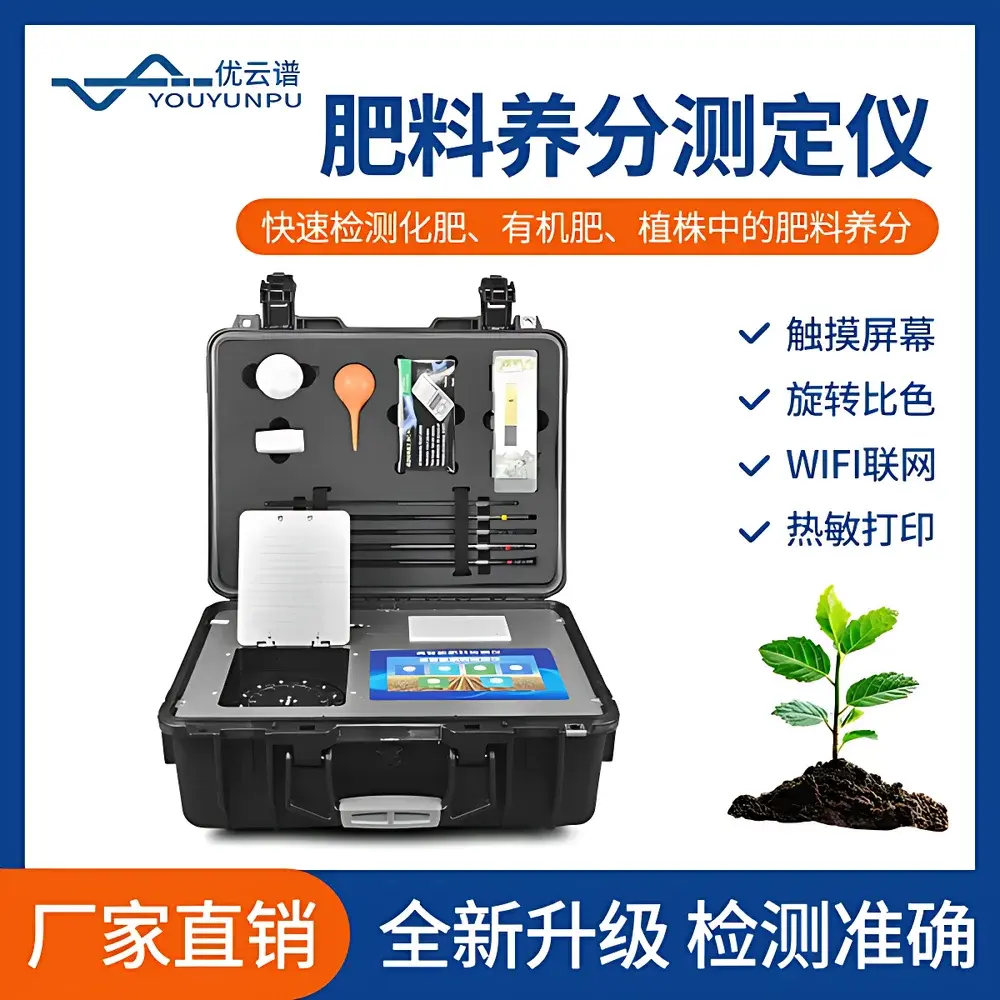
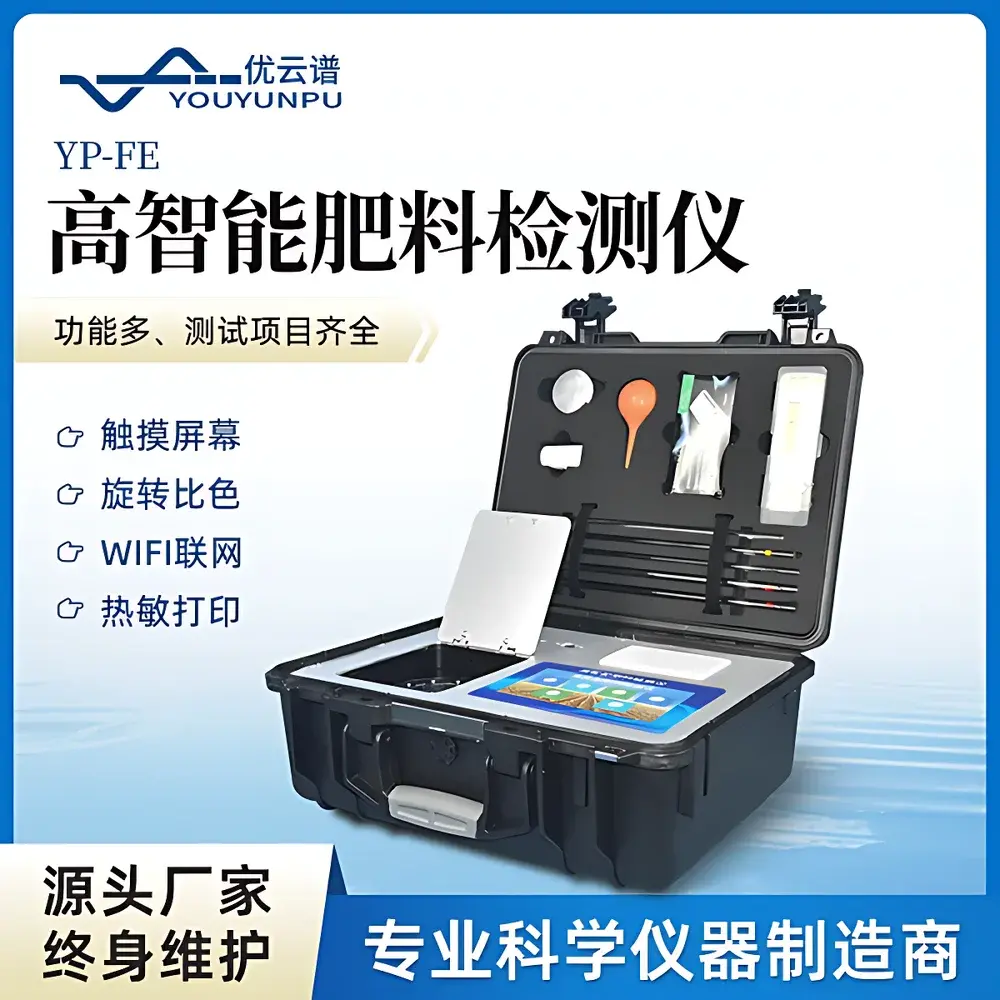
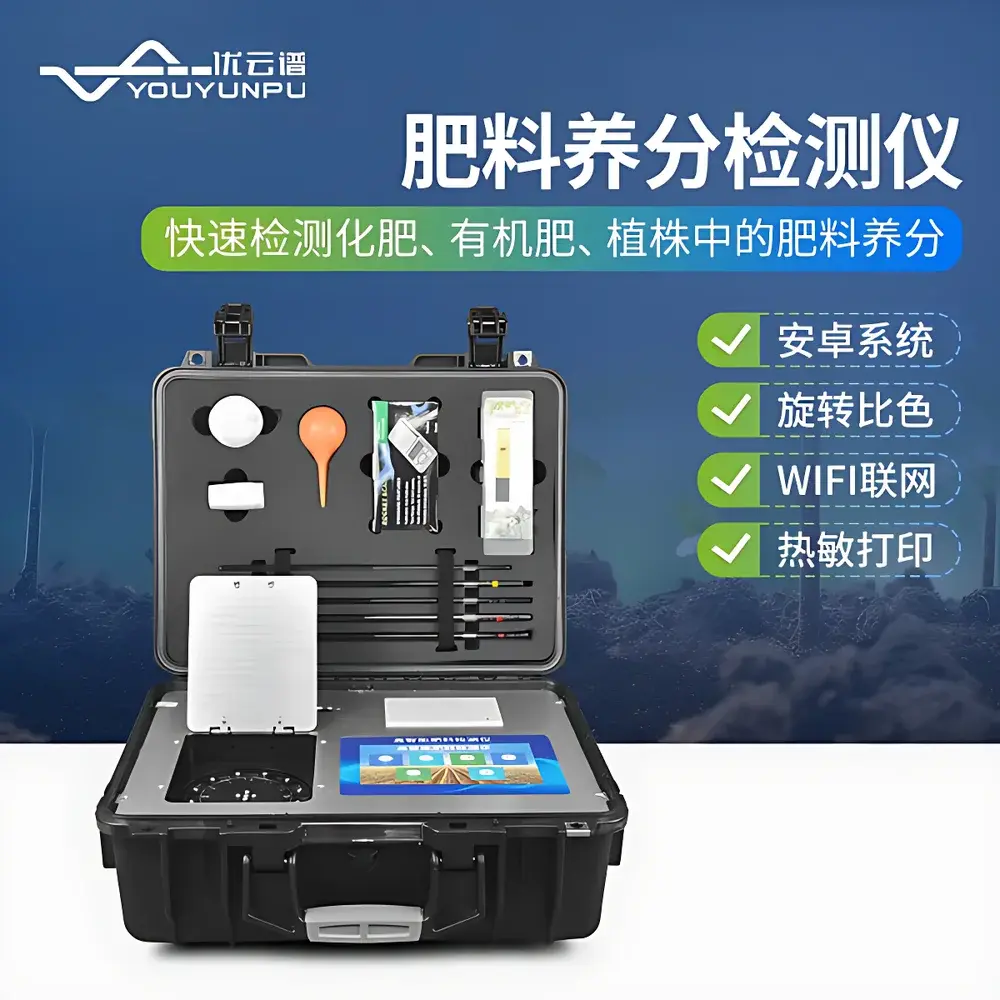
Youyunpu YP-GT1 Portable Soil Nutrient Analyzer
| Brand | Youyunpu |
|---|---|
| Origin | Shandong, China |
| Manufacturer Type | Direct Manufacturer |
| Product Category | Domestic |
| Model | YP-GT1 |
| Price Range | USD 450 – 8,400 (FOB) |
| Instrument Type | Portable |
| Detection Channels | 6 |
| Test Parameters | Nitrogen (N), Phosphorus (P), Potassium (K), Organic Matter, Total Organic Carbon (TOC), C/N Ratio, pH, Electrical Conductivity (EC), Micronutrients (e.g., Fe, Zn, Cu, Mn), Heavy Metals (e.g., Cd, Pb, As, Cr) |
| Weight | 5.2 kg |
Overview
The Youyunpu YP-GT1 Portable Soil Nutrient Analyzer is an integrated field-deployable instrument engineered for rapid, on-site quantification of key agronomic and environmental soil parameters. Based on standardized colorimetric detection principles—compliant with Chinese Ministry of Agriculture NY/T 1121 series standards and aligned with internationally recognized methods such as Olsen extraction (for available P), ammonium acetate leaching (for exchangeable K), Kjeldahl digestion (for total N), and Walkley-Black or dichromate oxidation (for organic matter)—the YP-GT1 delivers reproducible semi-quantitative to quantitative results without requiring off-site laboratory infrastructure. Its embedded optical detection module employs solid-state photometric sensors with auto-calibrated LED light sources and temperature-compensated signal processing, ensuring consistent performance across ambient conditions from −10 °C to 45 °C. Designed for decentralized agricultural extension services, cooperative agronomy teams, fertilizer manufacturers’ technical support units, and large-scale farming operations, the YP-GT1 functions as a self-contained mobile soil testing platform—requiring only deionized water and pre-formulated reagent vials to initiate analysis.
Key Features
- Six independent, fixed-wavelength photometric detection channels enable parallel analysis of up to six soil samples per batch—reducing per-sample turnaround time and minimizing cross-contamination risk.
- ARM Cortex-A7 quad-core processor (RK3288, 1.88 GHz) powers a responsive Android-based interface with intuitive navigation, multilingual UI support (English, Spanish, Arabic), and offline operation capability.
- Built-in calibration routines include dark-current compensation, LED intensity auto-adjustment, and reference blank normalization—ensuring measurement stability across repeated use and varying ambient light conditions.
- Integrated agronomic decision-support system contains region-specific crop nutrient response databases covering >120 staple and horticultural crops (e.g., maize, rice, wheat, citrus, tomato), generating yield-targeted fertilizer recommendations based on measured soil indices and local nutrient removal coefficients.
- On-device thermal printer supports QR-coded report generation—including sample ID, test date, parameter values, interpretation thresholds, and recommended N-P-K application rates—with optional barcode embedding for traceability in GLP-aligned workflows.
Sample Compatibility & Compliance
The YP-GT1 accepts air-dried, sieved (<2 mm) soil samples across texture classes (sand, loam, clay) and organic matter contents (0.5–15% OM). It accommodates both mineral and organic-amended soils, including biochar-amended substrates and compost blends, provided interfering turbidity is minimized via centrifugation or filtration per standard protocol. Reagent kits comply with GB/T 32739–2016 (Chinese national standard for soil testing reagents) and are compatible with AOAC 982.12 (total carbon), ISO 10390:2021 (soil pH), and ISO 11265:2020 (soil EC) methodologies. While not certified under ISO/IEC 17025, the instrument meets functional requirements for preliminary screening in accordance with FAO’s Soil Health Assessment Framework and supports data collection aligned with UN SDG Indicator 15.3.1 (land degradation neutrality).
Software & Data Management
Data acquisition, storage, and export are managed through the proprietary Youyunpu AgriLink™ firmware (v3.2+), supporting CSV and Excel-compatible exports via USB OTG or microSD card. Wireless connectivity includes dual-mode Wi-Fi (802.11 b/g/n) and optional 4G LTE/GPRS modules for real-time cloud synchronization to secure HTTPS endpoints. All transmitted records include timestamp, GPS coordinates (via connected external GNSS receiver), operator ID, and audit trail metadata—enabling partial compliance with FDA 21 CFR Part 11 requirements for electronic records when deployed with user authentication and session logging enabled. Firmware updates are delivered over-the-air (OTA) with SHA-256 signature verification.
Applications
- Rapid baseline soil fertility mapping for precision agriculture zoning and variable-rate fertilizer prescription.
- Field validation of compost maturity and nutrient release kinetics during organic amendment trials.
- Extension service delivery in resource-constrained regions where centralized lab access is limited or delayed.
- Quality control of commercial fertilizers and soil amendments via comparative extract analysis (e.g., water-soluble K vs. ammonium acetate–extractable K).
- Longitudinal monitoring of soil health indicators (pH, EC, OM, C/N) in conservation agriculture and regenerative farming systems.
FAQ
What sample preparation is required prior to analysis?
Air-dry soil samples for 48 hours, grind and sieve through a 2-mm mesh, then weigh precisely per included protocol cards (typically 2.0 g for NPK, 5.0 g for OM). Deionized water is the only solvent required.
Can heavy metal results be used for regulatory reporting?
The YP-GT1 provides semi-quantitative screening-level data for Cd, Pb, As, and Cr using modified DTPA or HNO₃ extraction protocols; confirmatory analysis by ICP-MS or AAS is required for regulatory compliance (e.g., EU Council Directive 86/278/EEC).
Is calibration verification traceable to NIST standards?
While the instrument uses factory-calibrated optical references, users may perform field verification using NIST-traceable soil reference materials (e.g., SRM 2710a, 2711a) via optional add-on validation kits.
How is data security handled during wireless transmission?
All cloud uploads employ TLS 1.2 encryption; device-level data is stored in encrypted SQLite databases with AES-256 cipher, accessible only after PIN or biometric authentication.
Does the unit support third-party LIMS integration?
Yes—via RESTful API endpoints documented in the AgriLink™ Developer Portal; JSON payloads conform to OGC SensorThings API Part 1 (ISO 19156) for interoperability with enterprise agri-data platforms.
Related Products







