
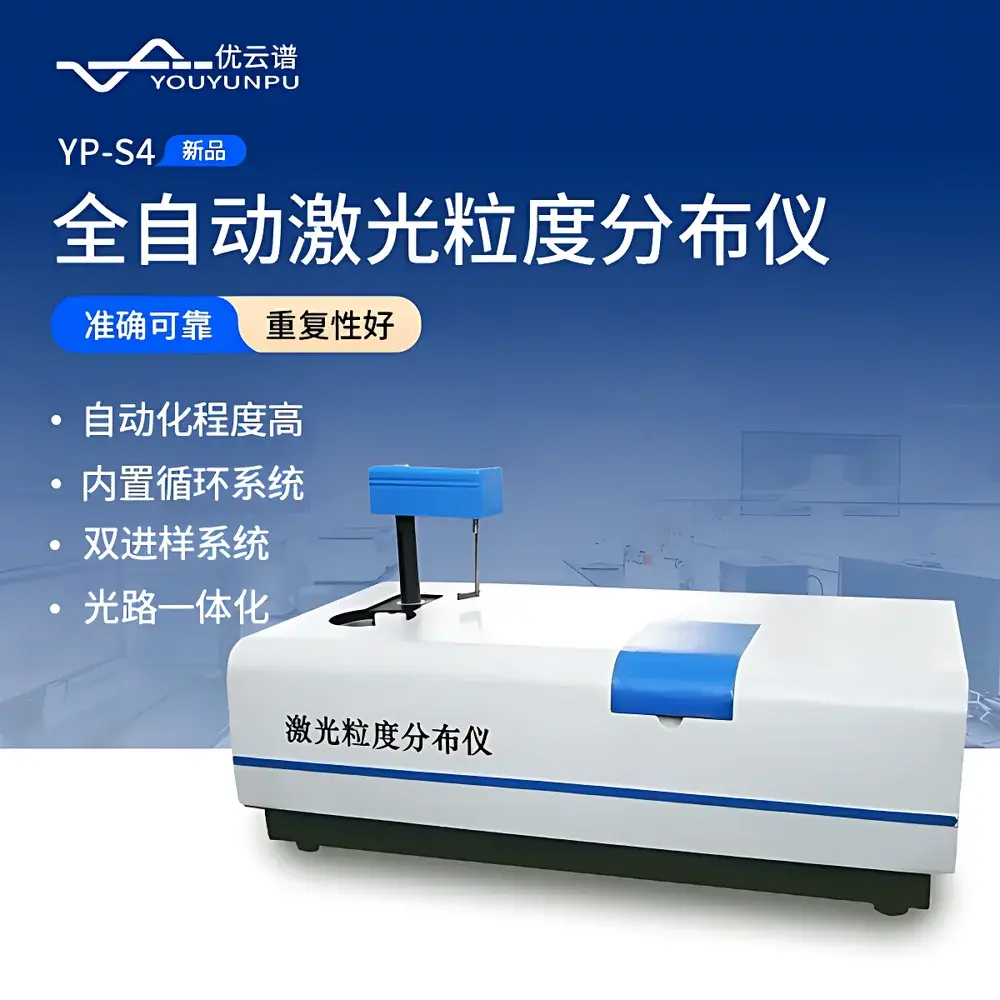
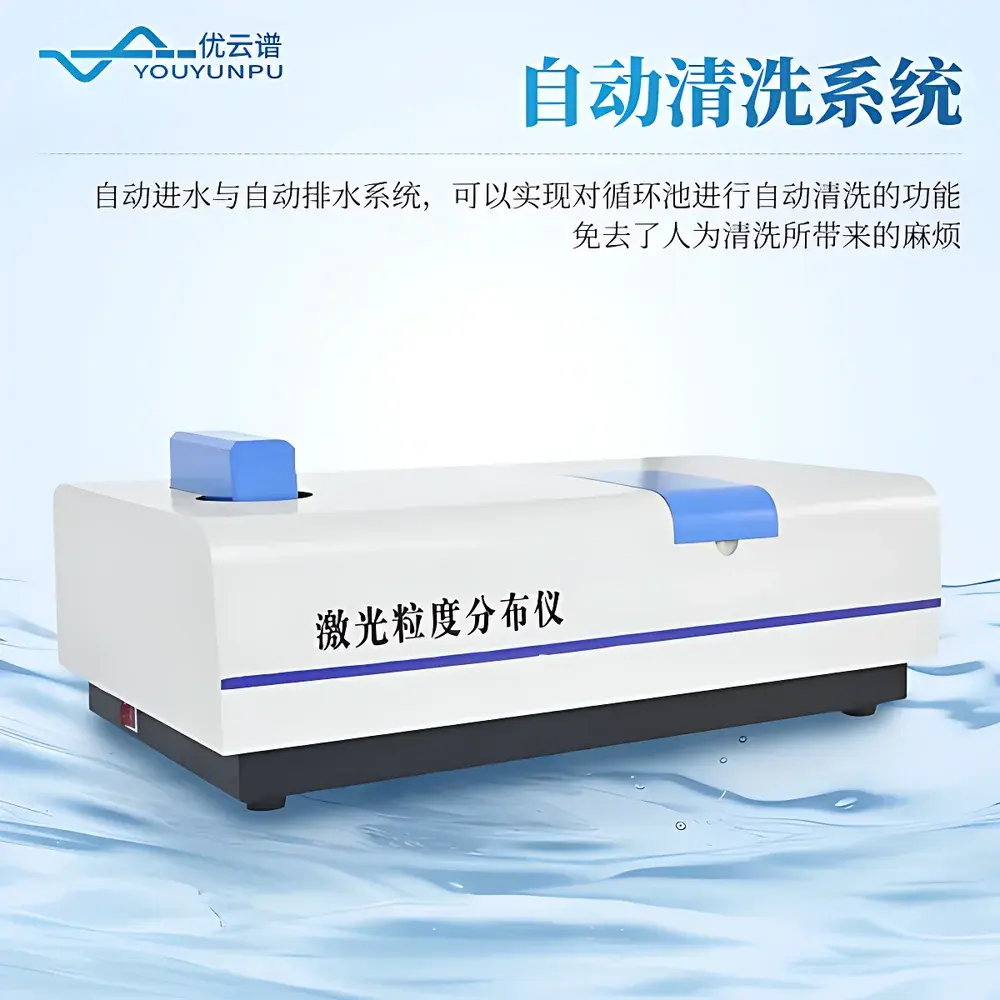
Youyunpu YP-S3 Laser Particle Size Analyzer
| Brand | Youyunpu |
|---|---|
| Origin | Shandong, China |
| Manufacturer Type | Direct Manufacturer |
| Instrument Type | Laboratory Laser Diffraction Particle Size Analyzer |
| Measurement Range | 0.1 µm – 500 µm |
| Reproducibility | < 0.5% RSD |
| Measurement Time | < 60 seconds per analysis (excluding sample dispersion) |
| Dispersion Method | Wet Dispersion |
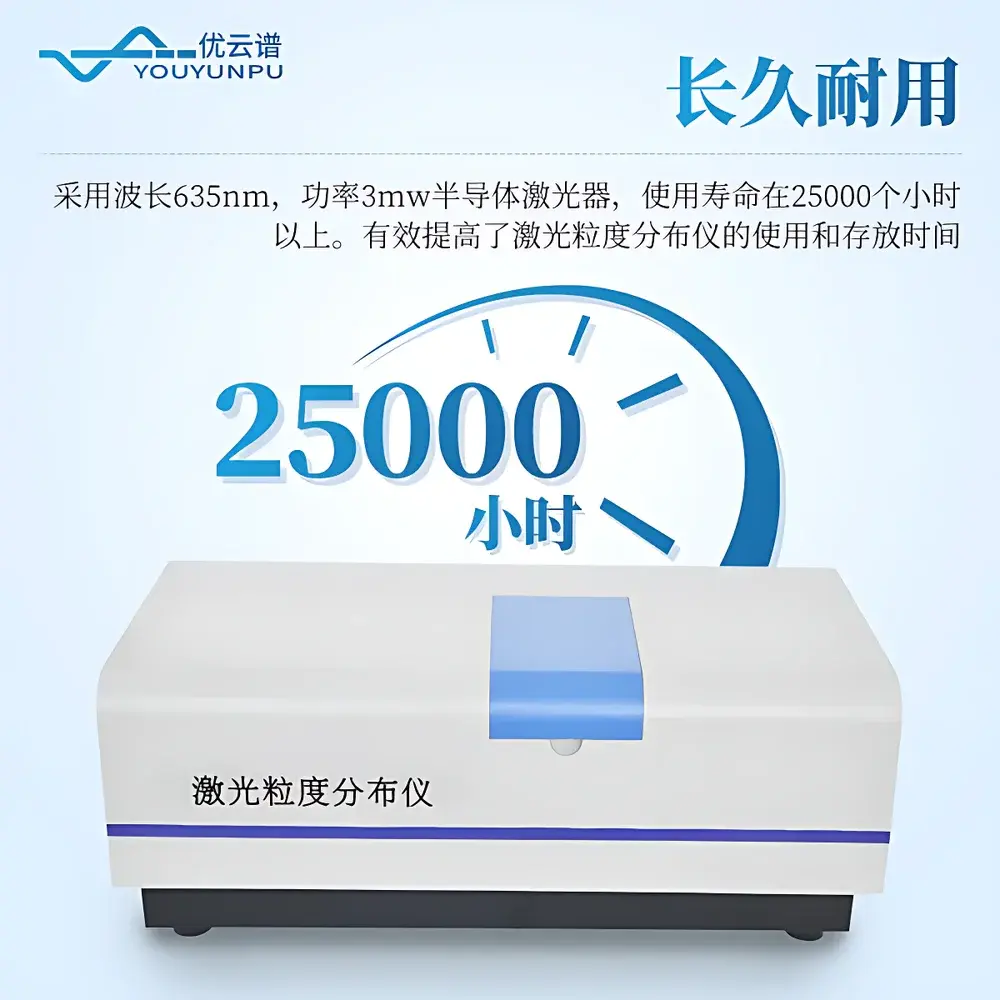
| Laser Source | 635 nm semiconductor laser (3 mW output, >25,000 h lifetime) |
| Detection Channels | 76 independent photodiode elements |
| Ultrasonic Power | 50 W |
| Stirring Speed | 100–600 rpm (adjustable) |
| Sample Concentration Range | 0.05–1.0% w/v (dependent on particle density, size distribution, and refractive index) |
| Data Acquisition Rate | 2000 scans/sec |
| Interface | RS-232 serial port |
| Operating System Compatibility | Windows 95 or later |
| Power Supply | AC 220 V ±10%, 50/60 Hz, 200 W |
| Environmental Requirements | 5–35 °C ambient temperature, <85% relative humidity |
Overview
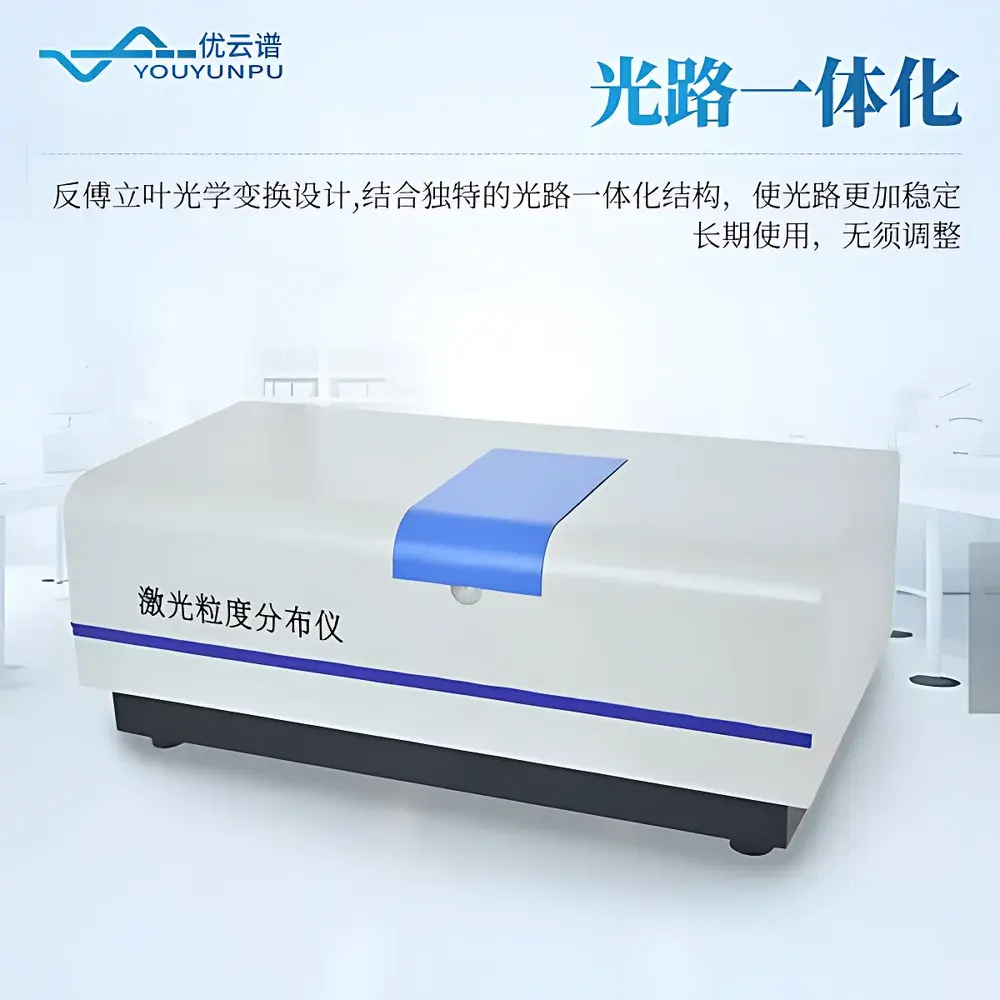
The Youyunpu YP-S3 Laser Particle Size Analyzer is a laboratory-grade instrument engineered for precision particle size distribution (PSD) analysis using the principle of laser diffraction. It operates on Mie scattering theory—fully integrated with rigorous optical modeling—to deliver high-fidelity size distributions across a broad dynamic range from 0.1 µm to 500 µm. Designed for routine quality control, R&D screening, and method development in industrial and academic laboratories, the YP-S3 employs a stable 635 nm semiconductor laser (3 mW, >25,000 h operational lifetime) and a 76-channel photodetector array to capture angular scattering intensity profiles with high signal-to-noise ratio. Its optical path is optimized for minimal alignment drift and long-term stability, supporting reproducible measurements under GLP-aligned workflows. The system is calibrated using NIST-traceable polystyrene latex standards and supports both ISO 13320:2020 (laser diffraction particle sizing) and ASTM E799-22 (standard practice for particle size analysis by laser diffraction) compliance documentation.
Key Features
- High-resolution detection architecture with 76 independent photodiode elements enabling robust angular scattering data collection
- Integrated wet dispersion module featuring programmable ultrasonic dispersion (50 W), variable-speed mechanical stirring (100–600 rpm), and automated liquid handling with dual-level water level sensors (fill and overflow)
- Real-time data acquisition at 2000 scans per second, ensuring full capture of transient scattering events during measurement
- Optimized optical design with minimized stray light and thermal drift—validated for continuous operation over extended duty cycles
- RS-232 serial interface compatible with LIMS integration and external automation controllers; supports time-stamped raw data export in ASCII format
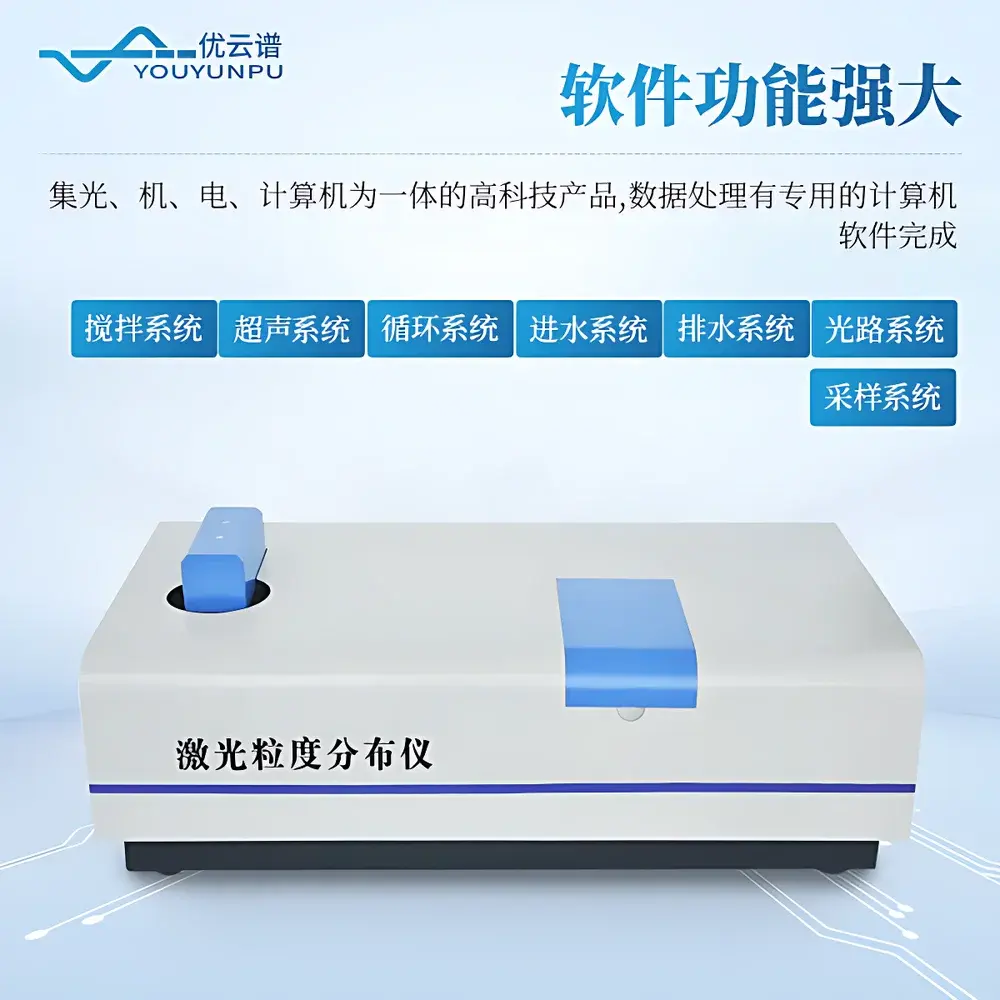
- Comprehensive SOP-driven operation mode with user-defined measurement protocols, parameter locking, and operator ID logging
- Self-diagnostic routines including laser power monitoring, detector baseline verification, and flow cell cleanliness alerts
Sample Compatibility & Compliance
The YP-S3 is validated for aqueous and organic suspensions of inorganic oxides, pharmaceutical actives, polymers, catalysts, pigments, and ceramic precursors. Sample concentration is maintained between 0.05% and 1.0% w/v via real-time turbidity feedback—automatically adjusted based on material-specific optical properties (refractive index, absorption coefficient, and density). All wet dispersion components—including the circulation pump, sonicator horn, and sample cell—are constructed from chemically resistant materials (e.g., borosilicate glass, PTFE, and 316 stainless steel) to ensure compatibility with mild acids, bases, and common solvents. The instrument meets electromagnetic compatibility requirements per IEC 61326-1 and safety standards per IEC 61010-1. Documentation packages support FDA 21 CFR Part 11 readiness, including audit trails for calibration, maintenance, and result modification events.
Software & Data Management
The embedded software platform runs natively on Windows OS (95 through Windows 11) and provides full control over measurement parameters, dispersion optimization, and post-acquisition analysis. It includes built-in modules for D10/D50/D90 reporting, span calculation, multimodal deconvolution, and comparative overlay of up to eight distributions. Raw scattering patterns are stored with metadata (timestamp, operator ID, instrument serial number, calibration ID, and environmental conditions). Export formats include CSV, TXT, and XML—structured for seamless ingestion into statistical process control (SPC) systems or enterprise data warehouses. Software validation documentation (IQ/OQ/PQ templates) and electronic signature support are available upon request for regulated environments.
Applications
- Pharmaceutical formulation development: API crystallinity assessment, excipient particle sizing, and suspension stability profiling
- Advanced materials R&D: Nanoparticle synthesis validation, battery cathode/anode powder characterization, and additive manufacturing feedstock qualification
- Quality assurance in ceramics and coatings: Raw material batch release testing, slurry homogeneity verification, and defect root-cause analysis
- Environmental and geotechnical labs: Sediment grain-size classification per USDA and ASTM D422 protocols
- Food & beverage processing: Emulsion droplet sizing, starch granule distribution, and powdered ingredient consistency monitoring
FAQ
What optical model does the YP-S3 use for size inversion?
It applies the full Mie scattering solution with user-configurable complex refractive index inputs—default values provided for common materials (e.g., SiO₂, TiO₂, lactose, polystyrene).
Is the instrument compliant with ISO 13320?
Yes—the optical configuration, calibration procedure, and reporting outputs align with ISO 13320:2020 requirements for laser diffraction particle sizing instruments.
Can the YP-S3 be integrated into a networked lab environment?
It supports RS-232 communication for point-to-point connection to PCs or PLCs; Ethernet or Wi-Fi connectivity requires optional hardware adapters (not included).
What maintenance is required for long-term accuracy?
Recommended quarterly verification using traceable reference standards; annual optical alignment check and ultrasonic transducer performance validation are advised.
Does the software support multi-user permission levels?
Yes—administrator, analyst, and viewer roles can be assigned with configurable access to method editing, calibration, report generation, and data deletion functions.



