
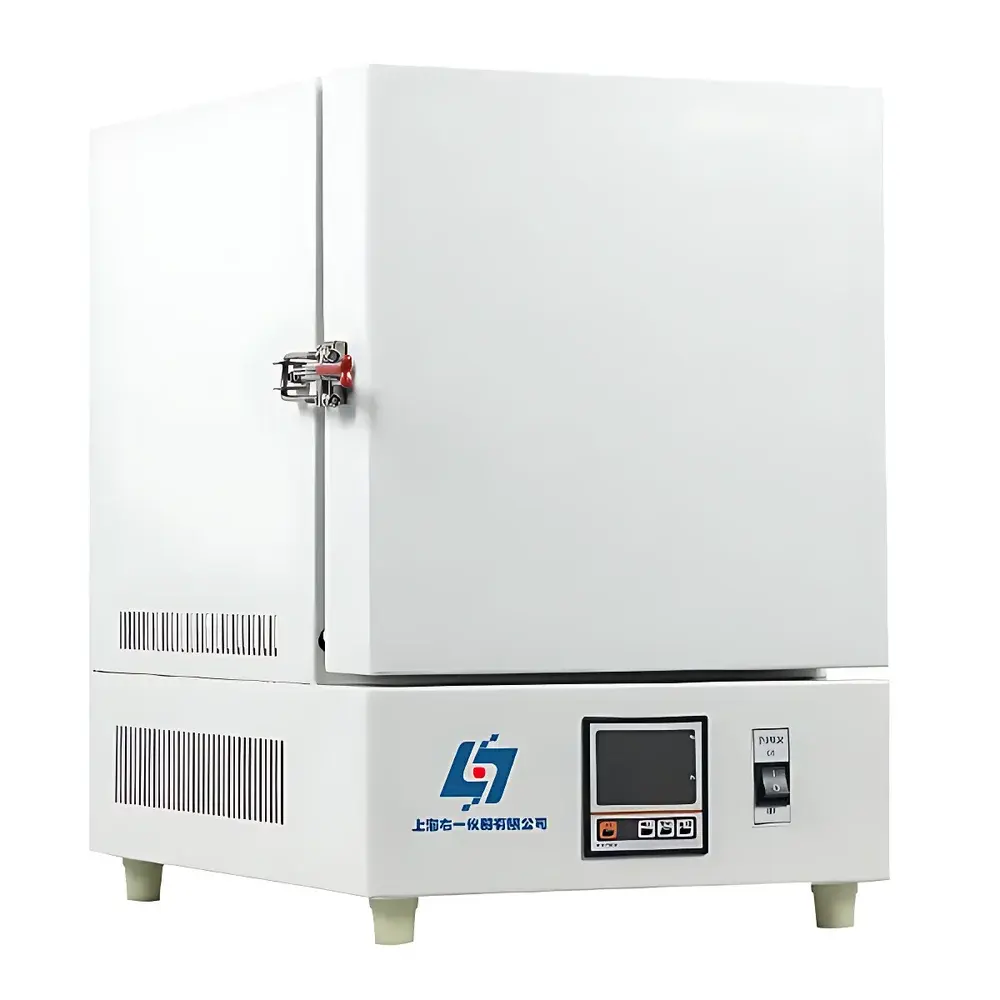
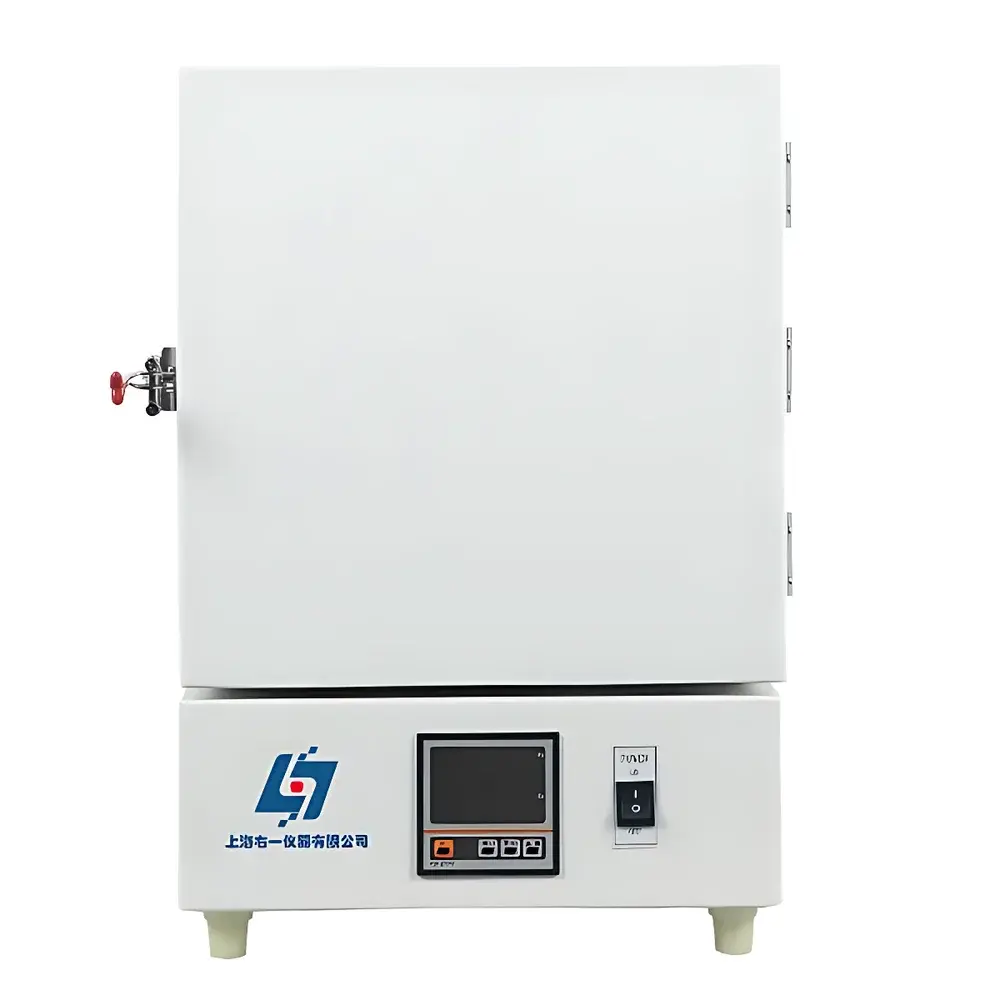
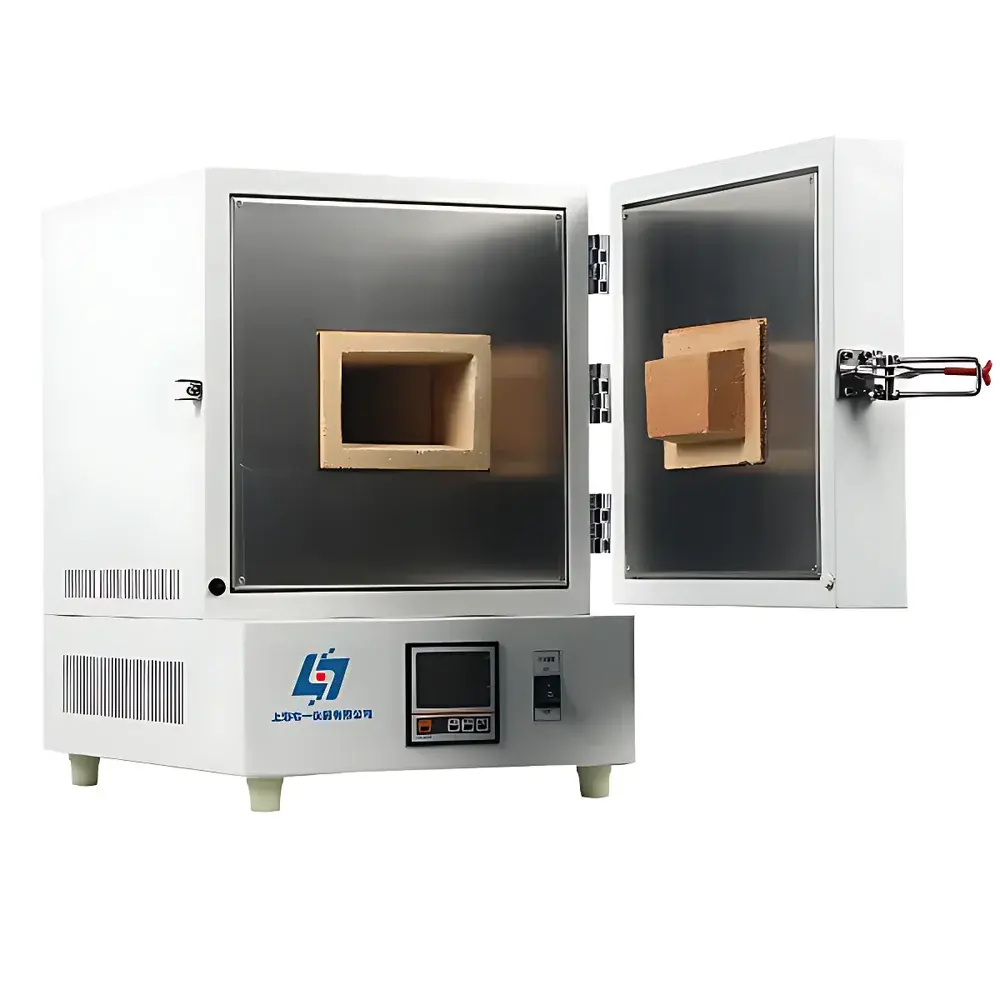
Yoyilab SX2-10-12 Box-Type Muffle Furnace
| Brand | Yoyilab |
|---|---|
| Origin | Shanghai, China |
| Manufacturer | Yes |
| Type | Box-type Resistance Furnace |
| Model | SX2-10-12 |
| Max Temperature | 1200 °C |
| Temperature Control Accuracy | ±3 °C |
| Rated Power | 10 kW |
| Heating Method | Electric Resistance Heating |
| Internal Dimensions | 250 × 400 × 160 mm |
| Nominal Volume | 16 L |
| Controller | 4.3-inch LCD with PID Algorithm |
| Temperature Resolution | 1 °C |
| Timer Range | 1–9999 min |
| Thermocouple Type | K |
| Heating Element | Nickel-Chromium Wire |
| Chamber Lining | Refractory Brick |
| Safety Features | Overtemperature Alarm, Door-Interlocked Power Cut-off, Leakage Protection, Overcurrent/Overvoltage Protection |
| Power Supply | 380 V / 50 Hz |
Overview
The Yoyilab SX2-10-12 Box-Type Muffle Furnace is a robust, laboratory-grade resistance heating furnace engineered for precise thermal processing in research, quality control, and small-batch production environments. Operating on the principle of resistive Joule heating via embedded nickel-chromium (NiCr) wire elements, the furnace isolates samples from combustion byproducts and external contaminants through its fully enclosed, refractory-brick-lined chamber—meeting the fundamental definition of a true muffle configuration. With a maximum operating temperature of 1200 °C and a stable, uniform thermal field across its 16-liter nominal chamber (250 × 400 × 160 mm internal dimensions), it supports applications requiring rapid ramp rates, extended dwell times, and repeatable thermal profiles under ambient atmospheric conditions. Its integrated 4.3-inch LCD interface and microprocessor-based PID control system deliver real-time monitoring and fine-grained adjustment of setpoint, actual temperature, and hold duration—ensuring reproducibility critical for ASTM E1113 (standard test method for calibration of muffle furnaces), ISO 5667-17 (water quality sampling—thermal treatment of samples), and routine ash content determination per USP and AOAC 943.01.
Key Features
- Integrated structural design: Unified furnace body and control unit minimize footprint and simplify benchtop integration.
- PID-controlled thermal regulation with ±3 °C accuracy over the full 25–1200 °C range, calibrated against NIST-traceable reference thermocouples.
- Refractory brick chamber construction ensures long-term dimensional stability, low thermal mass, and resistance to thermal shock during repeated cycling.
- Comprehensive electrical safety architecture: Dual-stage overtemperature cutoff, door-activated power interruption, earth leakage circuit protection, and overvoltage/overcurrent suppression.
- Power-fail recovery function retains user-defined parameters—including ramp rate, soak time, and final setpoint—enabling uninterrupted operation after grid interruption.
- LCD interface displays simultaneous readouts of set temperature, real-time chamber temperature, elapsed time, remaining hold time, and status indicators—eliminating need for external dataloggers during routine runs.
Sample Compatibility & Compliance
The SX2-10-12 accommodates crucibles (alumina, silica, platinum), ceramic saggars, metal trays, and quartz boats up to 200 mm in height. Its sealed muffle design prevents cross-contamination between successive runs, making it suitable for ashing biological tissues (per EPA Method 3050B), calcining catalyst precursors, pre-conditioning filter media for gravimetric particulate analysis (ISO 12103-1), and heat-treating metallurgical specimens prior to hardness testing (ASTM E384). The furnace complies with IEC 61000-6-3 (EMC emission limits) and meets essential safety requirements outlined in EN 60519-2 (safety in electroheating installations). While not certified for Class I Div 1 hazardous locations, its grounding integrity and insulated terminal block design support GLP-compliant lab environments where audit-ready documentation of thermal history is required.
Software & Data Management
Standard operation requires no external software; all thermal programs are configured locally via the front-panel interface. Optional RS485 communication module (sold separately) enables serial connection to host PCs running custom SCADA or LabVIEW-based acquisition systems. When paired with the optional data logging software, users can export timestamped temperature logs in CSV format—including ramp segments, dwell periods, and alarm events—for inclusion in electronic batch records. The firmware supports configurable audit trails for parameter changes and includes password-protected access levels to satisfy basic FDA 21 CFR Part 11 expectations for non-GMP but regulated workflows (e.g., environmental testing labs accredited to ISO/IEC 17025).
Applications
- Quantitative ash residue analysis in food, feed, and pharmaceutical raw materials.
- Pre-sintering and binder burnout of ceramic green bodies prior to final firing.
- Thermal annealing of thin-film substrates and semiconductor wafers under inert or air atmospheres.
- Heat treatment of tool steels and aluminum alloys for microstructural homogenization.
- Calibration verification of thermocouples and infrared pyrometers using fixed-point reference materials (e.g., Zn, Al, Cu).
- Residue quantification in wastewater sludge and soil samples per standard methods (SM 2540E).
FAQ
What is the recommended maintenance schedule for the SX2-10-12 furnace?
Visual inspection of heating elements and brick integrity every 200 operational hours; thermocouple verification against a calibrated reference source every 6 months or per internal QA protocol.
Can this furnace operate under inert gas purge?
Yes—two dedicated 6-mm gas inlet/outlet ports are provided on the rear panel; compatible with nitrogen, argon, or forming gas when used with appropriate flow regulators and leak-tested tubing.
Is the furnace supplied with a calibration certificate?
A factory-assembled temperature uniformity report (measured at three zones per ASTM C1022) is included; NIST-traceable calibration certificates are available upon request at additional cost.
What is the typical warm-up time to 1000 °C?
Approximately 42 minutes from ambient, depending on load mass and insulation condition; ramp rate is programmable from 1 to 20 °C/min.
Does the controller support multi-step temperature programming?
The base model supports single-setpoint operation with timer-based hold; the optional programmable controller (part #SX-PC12) adds up to 30 segments with independent ramp/soak logic.



