
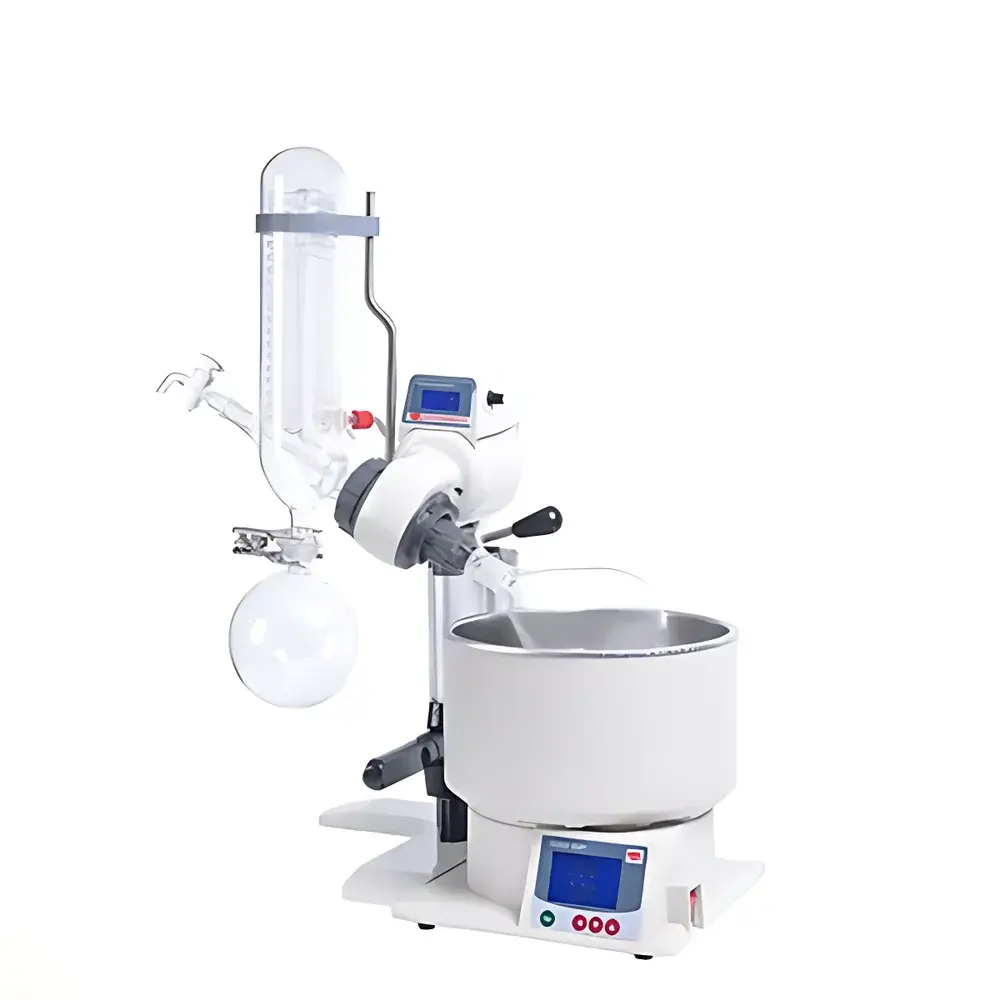
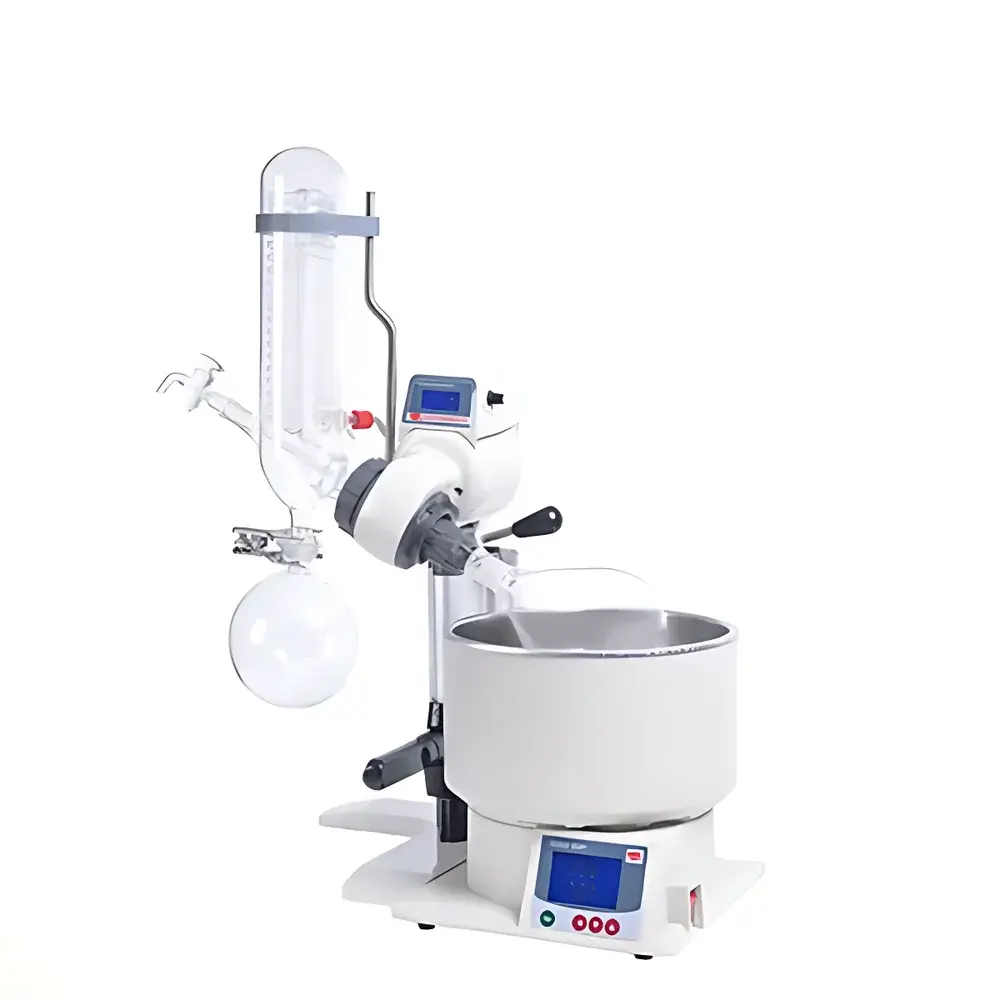
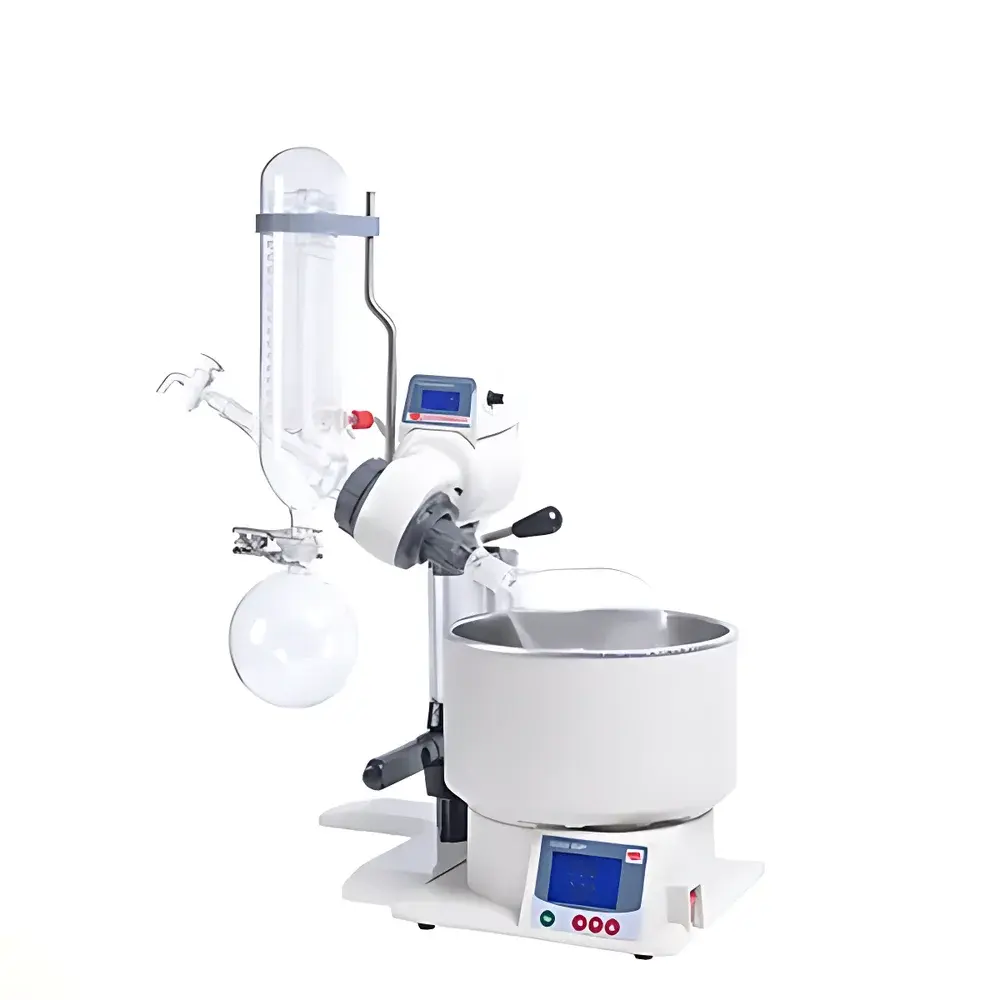
YRE-2011 Rotary Evaporator
| Brand | Gongyi Yuyi Instrument |
|---|---|
| Capacity | 1 L |
| Ultimate Vacuum | -0.098 MPa |
| Rotational Speed | 0–180 rpm |
| Temperature Range | Ambient to 99 °C |
| Heating Control Accuracy | ±1 °C (corrected from erroneous “±1 mL/min”) |
| Condenser Type | Vertical Triple-Coil |
| Cooling Surface Area | 0.27 m² |
| Power Supply | AC 220 V / 50 Hz |
| Motor Output | 25 W |
| Dimensions (W×D×H) | 480 × 320 × 650 mm (max height 910 mm with lift) |
| Weight Balance | Mechanical counterweight system |
| Sealing | Dual-layer PTFE + FKM vacuum seal |
| Interface Standard | ISO 29/38 (TS29/38) ground glass joints |
| Safety | Overload protection fuse |
| Lift Mechanism | Dual-mode — linear slide (100 mm) + manual rack-and-pinion boost (150 mm) |
Overview
The YRE-2011 Rotary Evaporator is an engineered solution for efficient, controlled solvent removal under reduced pressure in research and quality control laboratories. Operating on the principle of rotary distillation—where sample rotation induces thin-film formation on the inner surface of a heated evaporation flask—the system maximizes surface-to-volume ratio and heat transfer efficiency while minimizing bumping and thermal degradation. Designed for continuous operation in chemical synthesis, natural product isolation, pharmaceutical formulation development, and environmental sample preparation, the YRE-2011 integrates precise temperature regulation, variable-speed rotation, and high-vacuum compatibility to support reproducible concentration, purification, and recovery workflows. Its robust mechanical architecture—including a counterbalanced rotating assembly, vertical triple-coil condenser, and dual-stage vacuum sealing—ensures long-term stability and operational consistency across diverse solvents and boiling point ranges.
Key Features
- Motor-driven rotation at continuously adjustable speeds from 0 to 180 rpm, enabling optimal film thickness control for low- to medium-boiling solvents (e.g., dichloromethane, ethyl acetate, ethanol).
- Heating bath with digital temperature control spanning ambient to 99 °C, calibrated to ±1 °C accuracy—critical for thermally sensitive compounds such as peptides, terpenes, or labile APIs.
- Ultimate vacuum capability of –0.098 MPa (equivalent to ~2 mmHg), compatible with standard diaphragm or oil-sealed vacuum pumps for rapid solvent removal without decomposition.
- Dual-mode lifting mechanism: 100 mm motorized linear slide for fine positioning, supplemented by 150 mm manual rack-and-pinion lift—facilitating safe flask insertion/removal and alignment with condenser geometry.
- Vertical triple-coil condenser with 0.27 m² effective cooling surface area, optimized for high-efficiency vapor condensation across wide thermal gradients; compatible with standard recirculating chillers (e.g., –10 °C to 5 °C supply).
- Dual-material vacuum seal combining PTFE and fluorocarbon (FKM) elastomer—resistant to swelling and creep when exposed to chlorinated, aromatic, or polar organic solvents.
- ISO 29/38 (TS29/38) standardized ground-glass interfaces ensure interchangeability with common 1 L pear-shaped evaporation flasks and 500 mL receiving flasks.
- Integrated overload protection via thermal fuse prevents motor damage during prolonged high-torque operation or mechanical binding.
Sample Compatibility & Compliance
The YRE-2011 accommodates standard borosilicate glassware (e.g., Pyrex-type 1 L evaporation flasks, 500 mL collection flasks) and supports routine processing of aqueous, alcoholic, ether-based, and halogenated solvent systems. Its construction meets general laboratory safety standards for electrical insulation (IEC 61010-1 Class I), mechanical stability, and chemical resistance. While not certified to specific regulatory frameworks (e.g., FDA 21 CFR Part 11 or ISO/IEC 17025), the instrument’s design supports GLP-compliant documentation practices—particularly when paired with external vacuum gauges, temperature loggers, or validated chiller units. Users are advised to verify solvent compatibility with PTFE/FKM seals per manufacturer chemical resistance charts prior to operation.
Software & Data Management
The YRE-2011 operates as a stand-alone analog-digital hybrid system: rotational speed is set via front-panel potentiometer with LCD digital readout; bath temperature is displayed and adjusted using a microprocessor-controlled PID module. No embedded software or network interface is included; however, analog outputs (0–5 V or 4–20 mA) for temperature and rotation signals can be integrated into third-party data acquisition systems (e.g., LabVIEW, DeltaV, or custom SCADA) using optional signal conditioning modules. For audit-trail compliance in regulated environments, external recording devices—such as calibrated chart recorders or validated USB data loggers—are recommended to capture time-stamped bath temperature, vacuum level, and runtime parameters.
Applications
- Concentration of reaction mixtures post-synthesis in organic and medicinal chemistry labs.
- Purification of natural extracts (e.g., plant alkaloids, essential oils) where low-temperature solvent removal preserves volatile constituents.
- Removal of residual solvents from polymer solutions prior to GPC or rheological analysis.
- Pre-concentration of environmental water samples (e.g., EPA Method 525.3) before GC-MS analysis.
- Recovery and recycling of high-purity solvents in pilot-scale process development, reducing consumables cost and waste generation.
- Lyophilization pre-processing step for heat-labile biologics requiring gentle dehydration prior to freeze-drying.
FAQ
What is the maximum recommended evaporation rate for water at standard operating conditions?
Under optimal vacuum (–0.098 MPa), 25 °C bath temperature, and 120 rpm rotation, the typical water evaporation capacity is ≤25 mL/min—measured gravimetrically over 5-minute intervals.
Is the heating bath filled with oil or water by default?
The YRE-2011 bath is designed for use with silicone oil (up to 99 °C) or water (up to 80 °C); users must select fluid based on required temperature range and viscosity constraints.
Can the unit be connected to an automated vacuum controller?
Yes—via standard 6 mm vacuum hose port and compatible pressure transducer input (0–100 kPa range); external controllers may modulate pump speed or solenoid valve duty cycle to maintain setpoint vacuum.
What maintenance intervals are recommended for the PTFE/FKM seal?
Inspect and clean the seal every 200 hours of cumulative operation; reapply high-vacuum-grade perfluoropolyether (PFPE) grease after cleaning, avoiding silicone-based lubricants that compromise seal integrity.
Does the YRE-2011 comply with CE or UL safety directives?
The unit conforms to GB/T 25135–2010 (Chinese national standard for rotary evaporators) and carries CCC certification; CE or UL listing requires additional regional conformity assessment and is not factory-installed.



