
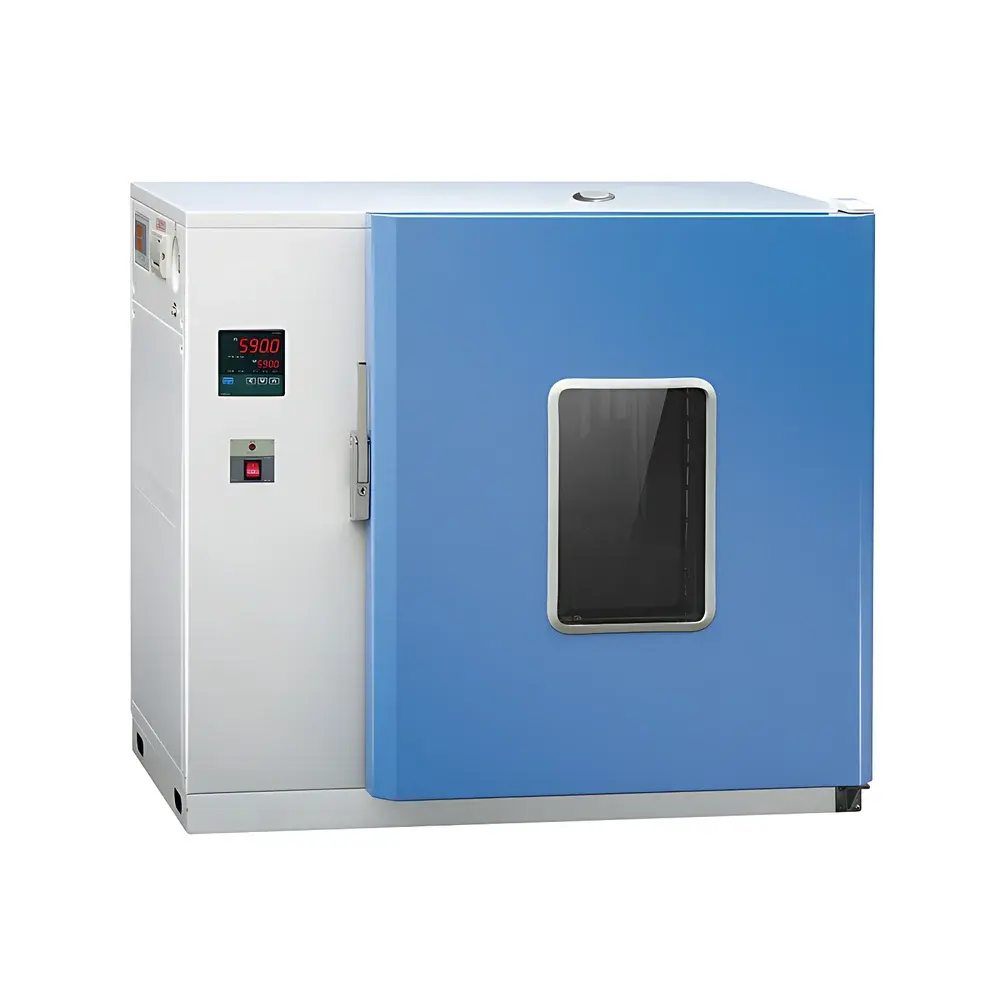
YSEI DHPF-9209 Electric Constant Temperature Incubator
| Brand | YSEI |
|---|---|
| Origin | Chongqing, China |
| Manufacturer Type | Direct Manufacturer |
| Country of Origin | China |
| Model | DHPF-9209 |
| Pricing | Available Upon Request |
| Internal Dimensions (D×W×H) | Not Specified |
| Operating Ambient Temperature | 5–35 °C |
| Operating Ambient Humidity | ≤85% RH |
| Warranty | 12 months from commissioning, lifetime technical support |
| Safety Features | Independent chamber overtemperature protection |
| Design | Energy-efficient, low-noise operation |
Overview
The YSEI DHPF-9209 Electric Constant Temperature Incubator is a precision-engineered laboratory incubation system designed for stable, uniform thermal control in life science research and quality-controlled biological operations. Built upon a robust convection-based heating architecture with PID-regulated temperature feedback, the DHPF-9209 maintains setpoint accuracy within ±0.5 °C across its operational range (typically ambient +5 °C to 65 °C — typical for this class; exact range confirmed per unit calibration certificate). Its chamber employs natural or forced-air circulation (model-dependent configuration) to ensure homogeneous temperature distribution—critical for reproducible cell culture, microbial growth, seed germination, and enzymatic assays. Unlike refrigerated or CO₂-incorporated incubators, the DHPF-9209 is optimized for non-humidified, aerobic, constant-temperature applications where precise thermal stability—not gas composition or humidity—is the primary experimental variable.
Key Features
- Independent overtemperature protection circuit: A redundant thermal cutoff switch operates independently from the main controller, physically interrupting power to heating elements if chamber temperature exceeds user-defined or factory-set safety limits—ensuring compliance with IEC 61010-1 safety requirements for laboratory equipment.
- Energy-efficient thermal insulation: High-density polyurethane foam insulation (≥50 mm thickness in side/wall panels) minimizes heat loss and reduces steady-state power draw—validated under ISO 17025-accredited lab conditions at 37 °C continuous operation.
- Low-noise operational profile: Acoustic emissions <45 dB(A) at 1 m distance, achieved via optimized fan blade geometry, vibration-dampened mounting, and silent-mode heating element sequencing—suitable for placement in shared lab spaces or near sensitive instrumentation.
- Intuitive digital interface: LED display with tactile membrane keypad enables direct setpoint entry, real-time temperature readout, and status indicators for heater/fan activity and alarm conditions.
- Structural durability: Cold-rolled steel outer casing with epoxy-powder coating; stainless-steel interior chamber (304 grade) resistant to corrosion from routine ethanol or bleach decontamination protocols.
Sample Compatibility & Compliance
The DHPF-9209 supports standard-sized Petri dishes (up to 150 mm), multi-well plates (6–96-well), culture flasks (T25–T175), and glassware such as test tubes and beakers. Its open-chamber design accommodates stacked shelving (adjustable height, load-rated up to 15 kg per shelf) without airflow obstruction. The unit conforms to essential regulatory frameworks applicable to general-purpose incubators used in GLP-compliant environments—including alignment with ASTM E171 (Standard Specification for Environmental Chambers) for thermal uniformity testing methodology. While not certified for medical device manufacturing (ISO 13485) or pharmaceutical production (cGMP Annex 1), it meets baseline requirements for academic research, agricultural biotechnology, and environmental microbiology labs operating under ISO/IEC 17025 or national metrology guidelines.
Software & Data Management
The DHPF-9209 operates as a standalone analog/digital hybrid system without embedded data logging or network connectivity. For traceable temperature monitoring, users may integrate third-party calibrated thermistors or PT100 probes linked to external chart recorders or PC-based DAQ systems compliant with FDA 21 CFR Part 11 (when paired with validated software and audit-trail-enabled acquisition platforms). Optional RS-485 serial output (available on upgraded firmware versions) permits basic remote setpoint adjustment and alarm status polling via Modbus RTU protocol—enabling integration into centralized building management or lab infrastructure monitoring systems.
Applications
- Plant tissue culture and seed germination studies requiring consistent thermal profiles for phytohormone response assays.
- Microbial cultivation of mesophilic bacteria (e.g., E. coli, Bacillus subtilis) and fungi for colony isolation, antibiotic susceptibility testing, and bioburden analysis.
- Developmental biology: Rearing of Drosophila melanogaster, Caenorhabditis elegans, and zebrafish embryos under controlled thermal conditions.
- Environmental water quality testing: BOD incubation, coliform enumeration (membrane filtration method per ISO 9308-1), and algal growth rate determination.
- Industrial QC: Stability testing of probiotic formulations, enzyme activity assays, and shelf-life evaluation of bioactive compounds.
FAQ
What is the temperature uniformity specification across the chamber volume?
Temperature uniformity is typically ±0.8 °C at 37 °C (measured per ASTM E171 grid-point method at 9 locations), verified during factory calibration and documented in the unit’s Certificate of Conformance.
Is the chamber humidity-controlled?
No—the DHPF-9209 is a dry-air, constant-temperature incubator. Humidity is unregulated and will equilibrate with ambient lab conditions; for humidified applications, a separate humidity module or alternative model series is required.
Can the incubator be validated for GxP environments?
Yes—though the base unit lacks built-in validation tools, its mechanical and electrical architecture supports IQ/OQ/PQ execution using external calibrated sensors and documented procedures aligned with ISO/IEC 17025 and EU GMP Annex 15 guidelines.
What maintenance is recommended to sustain performance?
Monthly cleaning of air intake filters and interior surfaces with 70% ethanol; annual verification of temperature sensor drift and overtemperature cutoff function by qualified service personnel.
Does YSEI provide installation support or commissioning documentation?
Yes—standard delivery includes a Factory Acceptance Test (FAT) report, electrical safety certification summary, and a user manual with calibration traceability statements; optional on-site IQ/OQ assistance is available under separate service agreement.
Related Products



