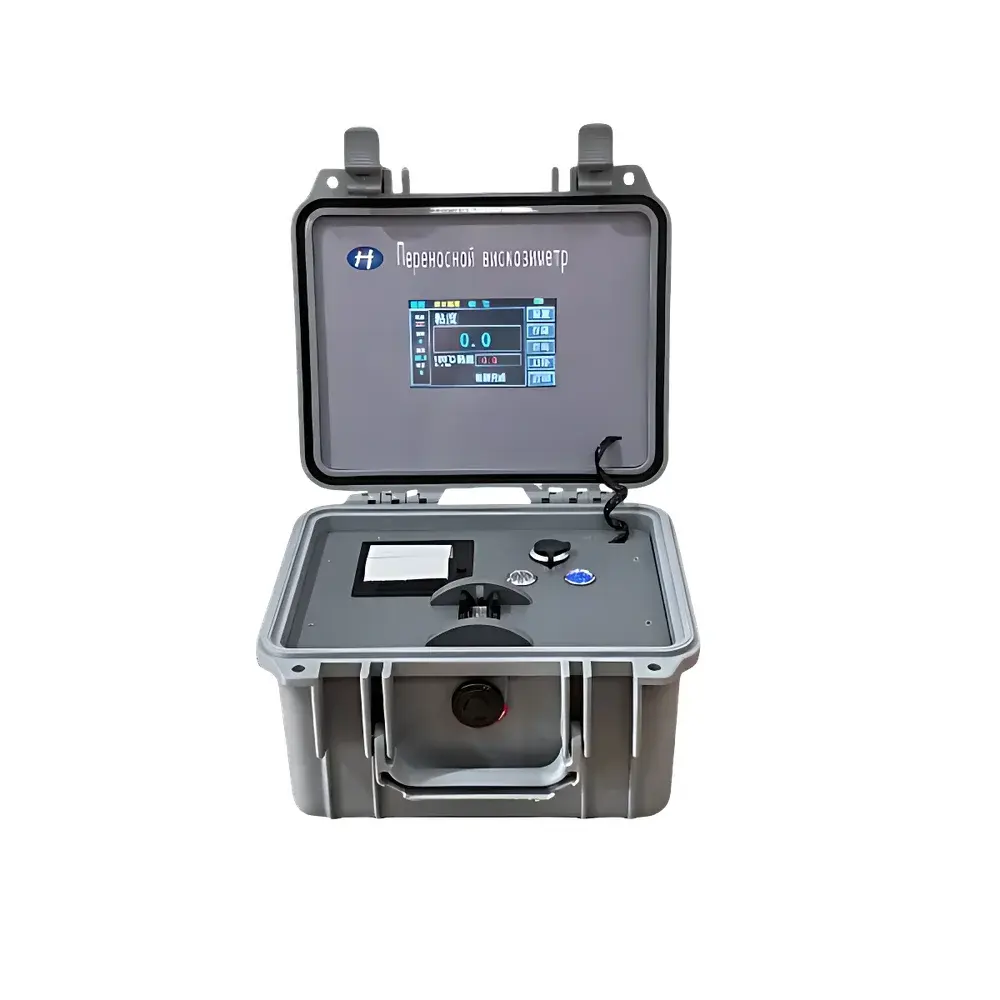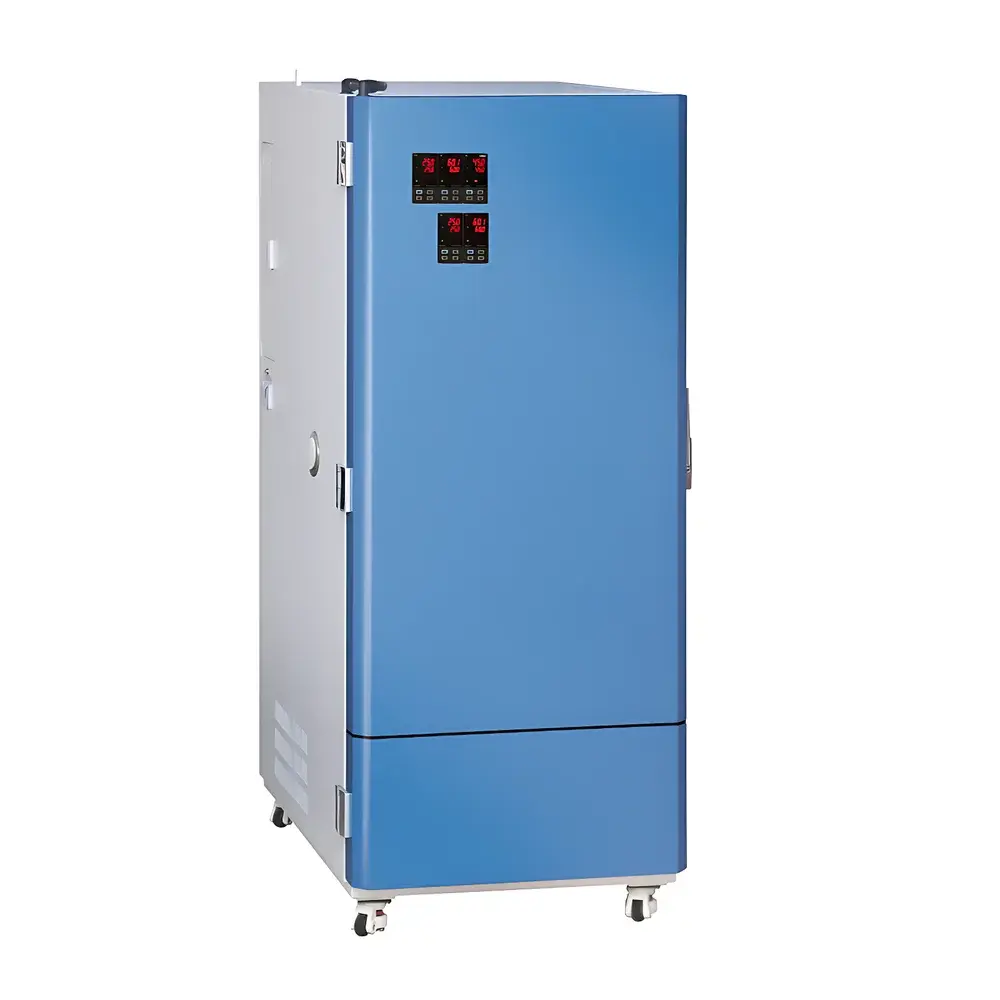
YSEI SHH-100GD-2 Pharmaceutical Photostability Testing Chamber
| Brand | YSEI |
|---|---|
| Origin | Chongqing, China |
| Manufacturer Type | Direct Manufacturer |
| Product Category | Domestic |
| Model | SHH-100GD-2 |
| Pricing | Upon Request |
| Dimensions (D×W×H) | As specified per configuration |
| Operating Power | Measured at 25°C steady-state |
| Ambient Operating Conditions | 5–35°C, ≤85% RH |
| Compliance | ICH Q1B, USP <115>, Chinese Pharmacopoeia 2015 Ed. (Chemical Drug Stability Guidance), FDA Guidance for Industry — Photosensitivity Testing |
| Data Recording | Dual-channel — thermal printer (adjustable interval) + PC-based RS485 logging |
| Safety Protections | Independent chamber overtemperature cutoff, refrigeration compressor overload protection |
| Validation Support | IQ/OQ protocol documentation and on-site execution available |
| Warranty | 12 months post-acceptance, lifetime technical support |
Overview
The YSEI SHH-100GD-2 Pharmaceutical Photostability Testing Chamber is an engineered environmental simulation system designed specifically to conduct photostability assessments of drug substances and products in accordance with internationally recognized regulatory frameworks. It operates on the principle of controlled, high-intensity visible and near-ultraviolet (UV-A) irradiation under precisely regulated temperature and humidity conditions—enabling quantitative evaluation of photochemical degradation pathways. The chamber implements a dual-wavelength irradiance profile optimized to meet the spectral and dosimetric requirements defined in ICH Q1B: total exposure ≥1.2 × 10⁶ lux·hr and near-UV energy ≥200 W·hr/m² (320–400 nm). Its optical architecture integrates calibrated broad-spectrum xenon arc lamps with precision-filtered output, ensuring reproducible spectral power distribution (SPD) traceable to NIST-traceable reference standards. Temperature control is maintained via a cascade refrigeration system with PID-driven air circulation, enabling stable setpoint operation at 25 ± 2°C—critical for isolating light-induced effects from thermally accelerated degradation.
Key Features
- Regulatory-compliant irradiance delivery: Full-spectrum xenon lamp system with integrated UV-A enhancement and optical filtering to satisfy ICH Q1B spectral distribution and cumulative dose thresholds
- Dual-mode data integrity assurance: Synchronized real-time digital logging via RS485 interface (to PC or LIMS) + optional thermal printer with user-configurable print intervals (e.g., every 15 min, hourly, or event-triggered)
- Centralized multi-unit supervision: Single workstation can monitor and configure up to 30 SHH-GD series units simultaneously via TCP/IP-enabled Ethernet gateway
- Remote operational capability: Web-accessible embedded controller supports secure异地 diagnostics, parameter adjustment, and alarm acknowledgment through authenticated HTTPS session
- Redundant safety architecture: Independent overtemperature cutoff circuit (separate from main controller), dedicated compressor current monitoring with automatic shutdown, and door-open interlock
- Validation-ready design: Prequalified sensor layout (PT100 RTDs, calibrated photodiode array), documented calibration traceability, and factory-provided IQ/OQ templates aligned with ASTM E2500 and EU Annex 15 guidelines
Sample Compatibility & Compliance
The SHH-100GD-2 accommodates standard pharmaceutical packaging configurations—including open Petri dishes, amber vials, blister packs, and primary containers—mounted on adjustable, non-reflective black aluminum sample trays. Its internal geometry ensures uniform irradiance distribution (±5% spatial variation across 90% of working volume, per ISO/IEC 17025–validated mapping). The system complies fully with ICH Q1B (1996), USP Chapter <115> “Photostability Testing”, Chinese Pharmacopoeia 2015 Edition Vol. IV Section 9001, and FDA’s 2022 “Guidance for Industry: Photosensitivity Testing”. All irradiance and temperature sensors are certified to ISO/IEC 17025-accredited calibration intervals, and the chamber’s qualification report includes full uncertainty budgets per GUM (JCGM 100:2008).
Software & Data Management
The embedded controller runs a deterministic real-time OS with audit-trail functionality compliant with FDA 21 CFR Part 11 (electronic signatures, operator-level access control, immutable event logs). Data export supports CSV, XML, and PDF formats, with timestamped metadata including lamp operating hours, cumulative irradiance (lux·hr and W·hr/m²), chamber temperature/humidity history, and alarm status. Integration with laboratory information management systems (LIMS) is supported via Modbus TCP or OPC UA protocols. All recorded datasets retain full ALCOA+ attributes—attributable, legible, contemporaneous, original, accurate, complete, consistent, enduring, and available—for GLP and GMP audit readiness.
Applications
- ICH Q5C-compliant photostability assessment of biologics and monoclonal antibodies under accelerated light stress
- Comparative degradation kinetics studies of generic vs. innovator drug products per ICH Q5F
- Excipient compatibility screening under UV-visible stress to identify photosensitizing interactions
- Stability-indicating method development support for HPLC and UPLC assays targeting photodegradants
- Package integrity evaluation: Light transmission testing of secondary packaging materials (e.g., cartons, labels, desiccant sachets)
- Regulatory submission dossier preparation for ANDA, NDA, and MAA filings requiring photostability data packages
FAQ
Does the SHH-100GD-2 meet ICH Q1B Option 1 and Option 2 requirements simultaneously?
Yes—the chamber’s lamp spectral output and radiometric calibration allow users to select either total visible light exposure (≥1.2 × 10⁶ lux·hr) or near-UV dose (≥200 W·hr/m²), with both metrics logged independently and validated per ICH Q1B Annex.
Can the system be qualified for GMP production environments?
Yes—YSEI provides IQ/OQ documentation packages compliant with ASTM E2500 and EU Annex 15, including test scripts, acceptance criteria, and evidence of sensor calibration traceability to national standards.
What is the typical lamp lifetime and recalibration frequency?
Xenon lamps are rated for 1,500 hours of continuous operation; radiometric recalibration is recommended every 500 hours or prior to each formal stability study, using NIST-traceable reference photometers.
Is humidity control available as an option?
The SHH-100GD-2 operates as a dry-light chamber per ICH Q1B default; however, optional integrated humidity control (10–75% RH, ±3% accuracy) is available under model variant SHH-100GD-2H.
How is data integrity ensured during power interruption?
Non-volatile memory retains all critical parameters and logged data; upon recovery, the system resumes operation from last valid state with time-synchronized continuity and no data loss.