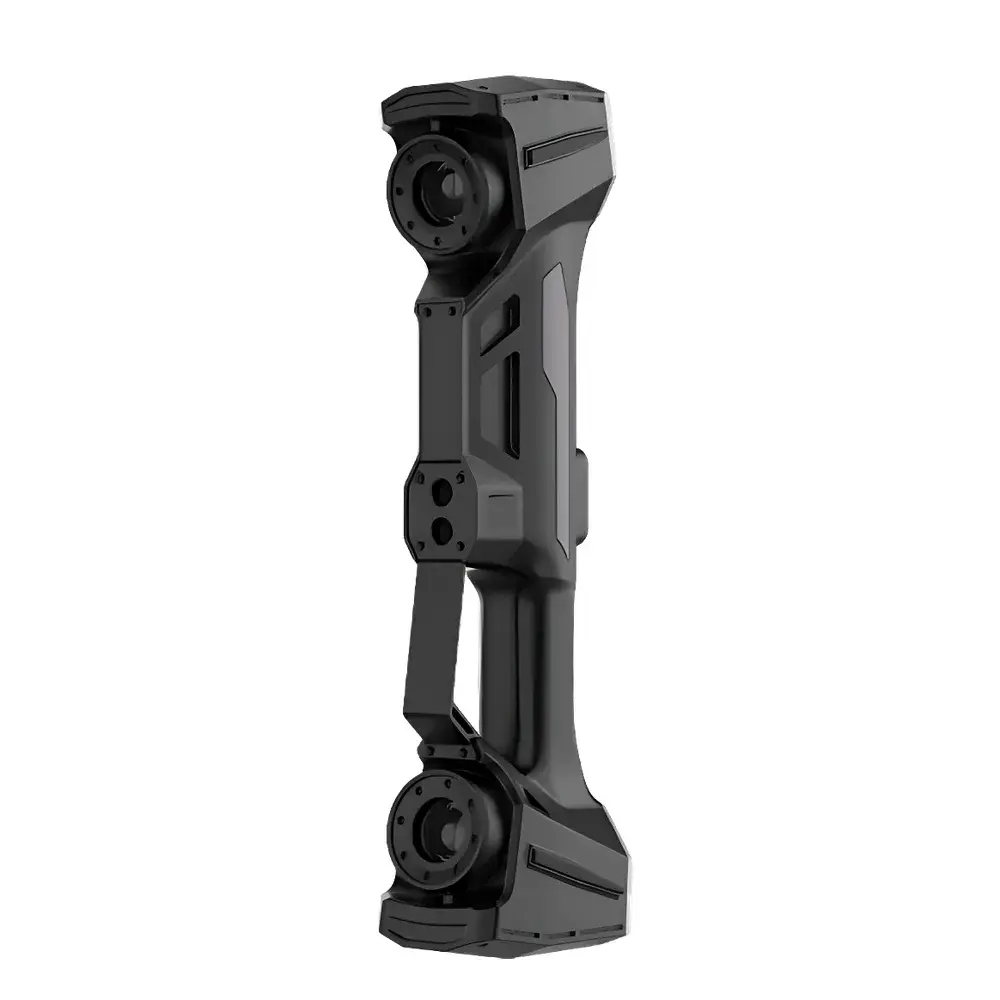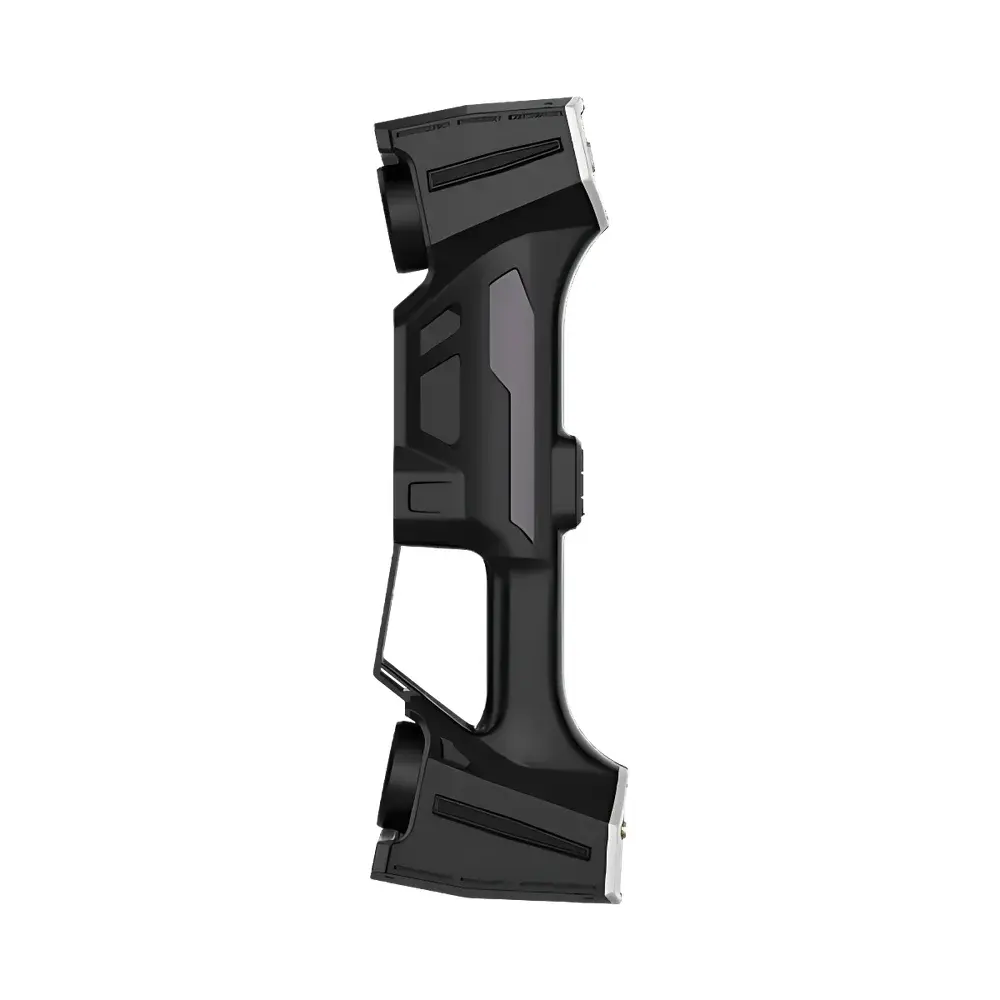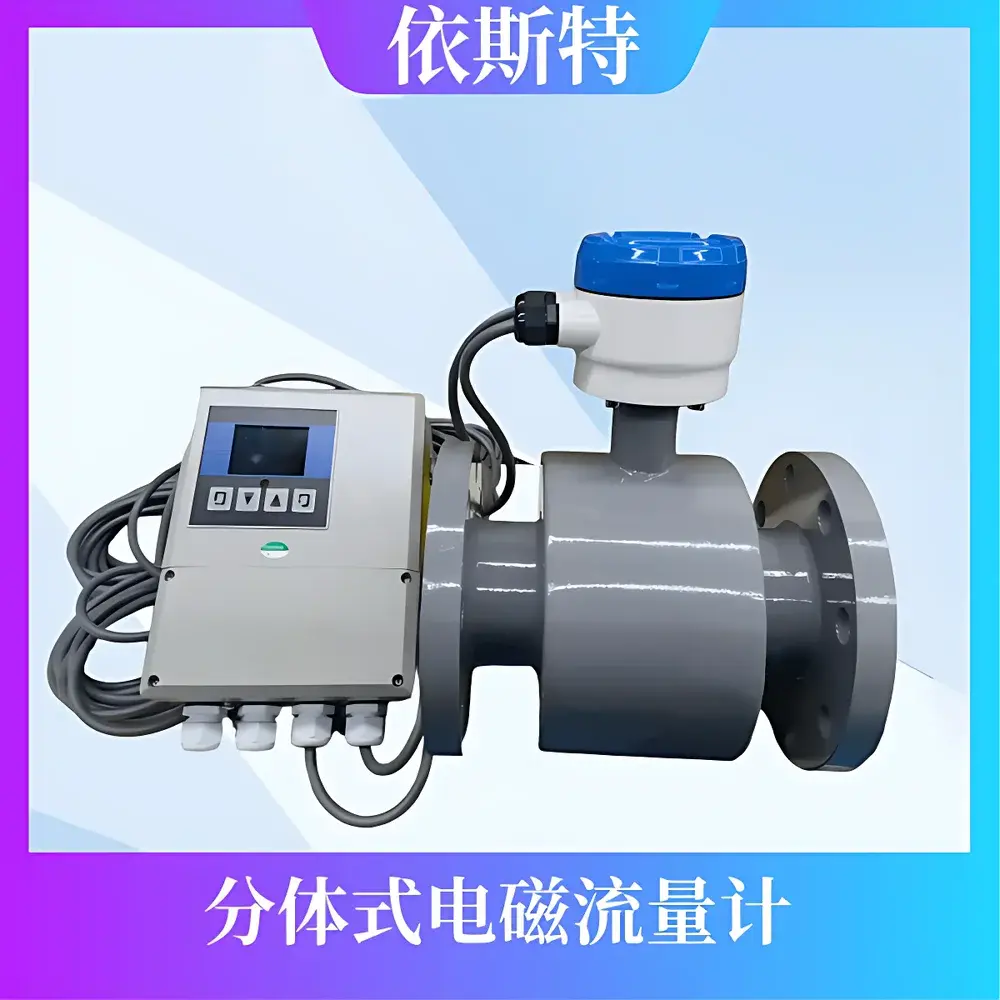
YST Electromagnetic Flow Meter with F46 Lining, DN25 (Model YST183F-A50XL)
| Brand | YST |
|---|---|
| Origin | Liaoning, China |
| Model | YST183F-A50XL |
| Nominal Diameter | DN25 mm |
| Lining Material | F46 (Fluorinated Ethylene Propylene, FEP) |
| Flow Range | 0.01–6 m³/h |
| Nominal Pressure | 1.6 MPa |
| Medium Temperature | −40 °C to +180 °C (remote transmitter configuration) |
| Ambient Temperature | −25 °C to +60 °C |
| Minimum Conductivity | ≥20 µS/cm |
| Sensor Protection Rating | IP65 |
| Accuracy | ±0.5% of Full Scale (FS) |
Overview
The YST Electromagnetic Flow Meter with F46 Lining, DN25 (Model YST183F-A50XL), is an industrial-grade liquid flow measurement instrument engineered for precision, chemical resistance, and long-term stability in demanding process environments. Operating on Faraday’s law of electromagnetic induction, this meter measures volumetric flow rate of electrically conductive liquids without mechanical obstruction or dependence on fluid density, viscosity, temperature, or pressure. Its core sensing principle relies on the voltage induced across a moving conductive fluid perpendicular to a magnetic field—ensuring intrinsically linear output and high reproducibility over time. Designed specifically for small-bore pipeline applications, the DN25 (1-inch) configuration supports flow rates from 0.01 to 6 m³/h, making it suitable for metering low-velocity, viscous, or chemically aggressive media where conventional mechanical meters face erosion, clogging, or calibration drift.
Key Features
- F46 (FEP) lining: Chemically inert fluoropolymer lining offering exceptional resistance to strong acids, alkalis, oxidizers, and organic solvents; compliant with USP Class VI and FDA 21 CFR 177.1550 for food-contact applications; maintains dimensional stability and non-stick surface integrity at temperatures up to +180 °C.
- Full-bore, obstruction-free design: No moving parts or flow restrictions—eliminates pressure loss, minimizes maintenance, and prevents sediment accumulation or shear-induced degradation of sensitive fluids (e.g., fruit pulp suspensions, polymer solutions).
- Electrode configuration with electrostatic shielding: Stainless steel electrodes with integrated electrostatic shielding reduce capacitive coupling and common-mode noise, enhancing signal integrity during low-flow operation (<0.1 m/s) and in electrically noisy industrial settings.
- Compact remote transmitter architecture: Separated sensor and transmitter allow installation in harsh ambient conditions (−25 °C to +60 °C) while enabling front-panel access for configuration, diagnostics, and local display in controlled areas.
- Minimal straight-pipe requirement: Requires only ≥5×DN upstream and ≥2×DN downstream straight pipe length—reducing spatial footprint and simplifying retrofit into existing piping layouts.
Sample Compatibility & Compliance
This flow meter is validated for use with conductive liquids having minimum electrical conductivity of 20 µS/cm—covering water-based solutions, acids (e.g., HCl, H₂SO₄), caustics (e.g., NaOH), food-grade syrups, juices, dairy streams, and many pharmaceutical process fluids. The F46-lined wetted path meets ISO 22852:2021 (food processing equipment hygiene), complies with CE marking requirements under the EU Electromagnetic Compatibility Directive 2014/30/EU and Low Voltage Directive 2014/35/EU, and supports documentation traceability aligned with GLP and GMP audit frameworks. While not intrinsically safe certified, its IP65-rated sensor housing provides protection against dust ingress and water jets—suitable for indoor industrial enclosures and covered outdoor installations.
Software & Data Management
The YST183F-A50XL supports standard 4–20 mA analog output with HART protocol (version 7.5), enabling bidirectional communication for configuration, diagnostics, and real-time scaling via handheld or PC-based tools. It records totalized flow, instantaneous rate, and alarm status with timestamped event logging (e.g., empty pipe detection, electrode fault, excitation failure). Data export is compatible with Modbus RTU over RS-485 for integration into SCADA, DCS, or MES platforms. Audit trail functionality—including parameter change history and user login timestamps—is configurable to support FDA 21 CFR Part 11 compliance when deployed with validated host systems and electronic signature workflows.
Applications
- Food & beverage production: Accurate dosing of fruit concentrates, sugar syrups, and dairy emulsions in batch mixing tanks and filler lines—where hygienic surface finish and low-flow repeatability are critical.
- Chemical R&D and pilot-scale reactors: Precise reagent feed control in corrosion-prone lab-scale synthesis loops, especially for halogenated solvents or nitric acid streams.
- Water treatment dosing systems: Monitoring coagulant, flocculant, or disinfectant injection at low flow rates where traditional turbine or ultrasonic meters exhibit poor linearity.
- Pharmaceutical intermediate manufacturing: Inline verification of solvent transfer volumes during API crystallization steps, meeting ICH Q7 Annex 11 data integrity expectations.
- Biotechnology buffer preparation: Flow assurance for pH-adjusted saline or Tris-HCl solutions prior to filtration and filling operations.
FAQ
What is the minimum conductivity requirement for reliable measurement?
The meter requires a minimum liquid conductivity of 20 µS/cm. Below this threshold, signal-to-noise ratio degrades, leading to unstable readings or empty-pipe alarms.
Can this meter be used for sanitary applications in food processing?
Yes—the F46 lining is FDA-compliant and exhibits smooth, non-porous surface characteristics suitable for CIP/SIP cycles; however, full 3-A certification requires additional validation of flange geometry and surface roughness (Ra ≤ 0.8 µm).
Is temperature compensation applied internally for conductivity variations?
No—the device assumes constant conductivity within its specified operating range; for highly temperature-sensitive media (e.g., concentrated electrolytes), external conductivity compensation must be implemented in the control system.
Does the meter support pulse output for totalization in PLC-based batching systems?
Yes—it offers optional open-collector pulse output (NPN/PNP selectable) with programmable scaling (e.g., 1 pulse = 0.01 L), fully compatible with Allen-Bradley, Siemens, and Mitsubishi PLC counters.
How is calibration traceability maintained for quality-critical processes?
Factory calibration is performed per ISO/IEC 17025-accredited procedures using gravimetric master meters; calibration certificates include uncertainty budgets and reference to NIST-traceable standards—available upon request with serial-number-specific documentation.