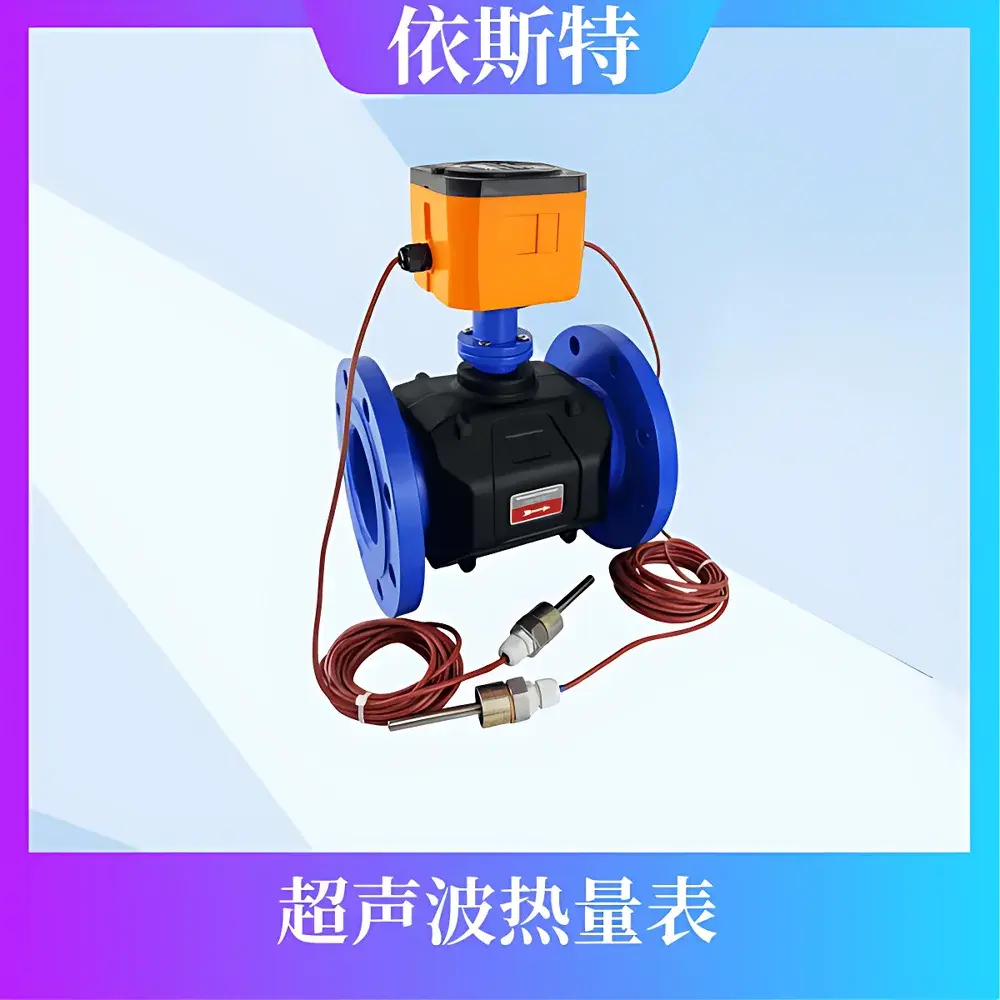
YST Ultrasonic Heat Meter YST306D50-BF223
| Brand | YST (Dalian Yist) |
|---|---|
| Origin | Liaoning, China |
| Model | YST306D50-BF223 |
| Nominal Diameter | DN50 |
| Flow Velocity Range | 0.1–10 m/s (for water) |
| Temperature Measurement Range | −20 °C to +150 °C |
| Temperature Accuracy | ±0.1 °C (0–100 °C) |
| Output Signals | 4–20 mA (2-wire), RS485 (Modbus RTU) |
| Protection Rating | IP65 |
| Power Supply | 24 VDC (wide-input) or Li-based battery (≥6 years lifespan) |
| Pipe Material Options | Carbon steel or AISI 304 stainless steel |
Overview
The YST Ultrasonic Heat Meter YST306D50-BF223 is a certified thermal energy meter engineered for continuous, non-intrusive measurement of heat transfer in liquid heating and cooling systems. Based on time-of-flight ultrasonic transit-time differential measurement, it calculates thermal energy consumption (in kWh or MJ) by simultaneously measuring volumetric flow rate and the temperature differential (ΔT) between supply and return lines. Designed specifically for district heating, industrial process heat exchange, HVAC chilled/hot water systems, and commercial building energy submetering, this device complies with core metrological requirements outlined in EN 1434-2015 (European standard for heat meters) and supports traceable calibration under ISO/IEC 17025-accredited procedures. Its dual-sensor architecture—featuring matched Pt1000 Class A temperature probes and clamp-on or insertion-type ultrasonic transducers—ensures high reproducibility across variable flow regimes without mechanical wear or pressure loss.
Key Features
- Non-invasive flow sensing: Utilizes transit-time ultrasonic technology with no moving parts or flow obstruction—eliminating pressure drop, minimizing maintenance, and enabling installation on existing pipelines without system shutdown.
- Wide dynamic flow range: Accurate measurement from 0.1 m/s up to 10 m/s, maintaining linearity and repeatability even at low-flow conditions typical in residential heat allocation or partial-load HVAC operation.
- High-precision temperature metrology: Dual Pt1000 sensors (Class A per IEC 60751) deliver ±0.1 °C accuracy within the 0–100 °C operational band—critical for reliable ΔT calculation and compliance with billing-grade accuracy requirements.
- Dual power architecture: Supports both continuous 24 VDC operation (with wide-input tolerance for industrial environments) and long-life lithium battery operation (≥6 years under typical reading intervals), ensuring deployment flexibility in remote or retrofit installations.
- Robust environmental resilience: IP65-rated enclosure provides protection against dust ingress and water jets—suitable for indoor technical rooms, utility shafts, and semi-outdoor mechanical enclosures.
- Material versatility: Available with either carbon steel or AISI 304 stainless steel flow tubes—enabling compatibility with varying water chemistry, corrosion resistance requirements, and regulatory specifications in food-grade or pharmaceutical process loops.
Sample Compatibility & Compliance
The YST306D50-BF223 is validated for use with clean, low-turbidity aqueous media—including softened water, glycol-water mixtures (up to 30% concentration), and treated condensate—commonly found in central heating networks, absorption chillers, and pasteurization circuits. It is not intended for steam, abrasive slurries, or highly aerated fluids. From a regulatory standpoint, the meter meets the essential metrological characteristics defined in EN 1434-1:2015 (accuracy class C or B depending on configuration), supports optional MID (Measuring Instruments Directive) certification for EU market deployment, and is compatible with GLP/GMP-aligned data integrity workflows when integrated with audit-trail-capable SCADA or BMS platforms. Temperature sensor calibration certificates are provided with each unit, traceable to national standards (e.g., NIM China or PTB Germany).
Software & Data Management
Data output is standardized via two parallel interfaces: a 4–20 mA analog signal (linearly scaled to instantaneous heat flow or cumulative energy) and a digital RS485 port implementing Modbus RTU protocol (function codes 03/04/16). This enables seamless integration into third-party energy management systems (EMS), building automation systems (BAS), and cloud-based IoT platforms. Configuration, diagnostics, and firmware updates are performed using YST’s proprietary PC-based commissioning tool (Windows-compatible, USB-to-RS485 adapter required), which logs parameter changes with timestamps and user identifiers—supporting basic audit trail functionality required under ISO 50001 and internal quality control protocols. Optional data logging modules (external SD card or internal flash memory) allow local storage of hourly/daily aggregates for offline reconciliation or validation audits.
Applications
- District heating submetering: Installed at building entry points or individual apartment risers to enable fair, usage-based billing in multi-tenant residential complexes—validated in deployments exceeding 1,000 units across northern Chinese heating zones.
- Industrial process thermal monitoring: Integrated into pasteurization, sterilization, and drying loops where precise heat input tracking directly correlates with product consistency and regulatory compliance (e.g., FDA 21 CFR Part 11–aligned batch records).
- Commercial HVAC optimization: Deployed in chilled water distribution networks of shopping malls and office towers to quantify zone-level cooling demand—feeding real-time data into predictive control algorithms for chiller sequencing and pump speed modulation.
- Renewable energy system verification: Used to quantify thermal yield from solar thermal collectors and ground-source heat pumps, supporting incentive reporting and performance guarantee validation under schemes such as China’s Renewable Energy Law or EU EED Article 8.
FAQ
What is the minimum fluid conductivity or clarity requirement for stable ultrasonic measurement?
The meter requires water-like acoustic impedance and minimal suspended solids (<50 ppm turbidity) or air entrainment. No minimum electrical conductivity is needed—unlike electromagnetic meters—making it suitable for deionized or softened water applications.
Can the device be calibrated in-situ without removal from the pipe?
Yes—zero-flow verification and temperature probe calibration checks can be performed on-site using reference thermometers and static pressure verification tools. Full flow calibration requires a certified flow rig per EN 1434-4, but field verification against master meters is supported via Modbus register comparison.
Is the battery-powered version compliant with explosion-proof or hazardous area classifications?
No—the current design does not carry ATEX, IECEx, or NEC Class I/II/III certifications. It is rated for general-purpose industrial use only (non-hazardous locations per IEC 60079-0).
How frequently should periodic verification be performed according to metrological best practice?
EN 1434-3 recommends verification every 5 years for Class C meters used in residential billing; however, annual functional checks (including ΔT symmetry, signal-to-noise ratio, and zero-flow drift) are advised for critical industrial processes.
Does the RS485 interface support encrypted communication or TLS?
No—Modbus RTU operates at the serial layer and lacks native encryption. Secure data transmission must be implemented at the network level (e.g., via industrial firewalls, VLAN segmentation, or TLS tunneling through gateway devices).