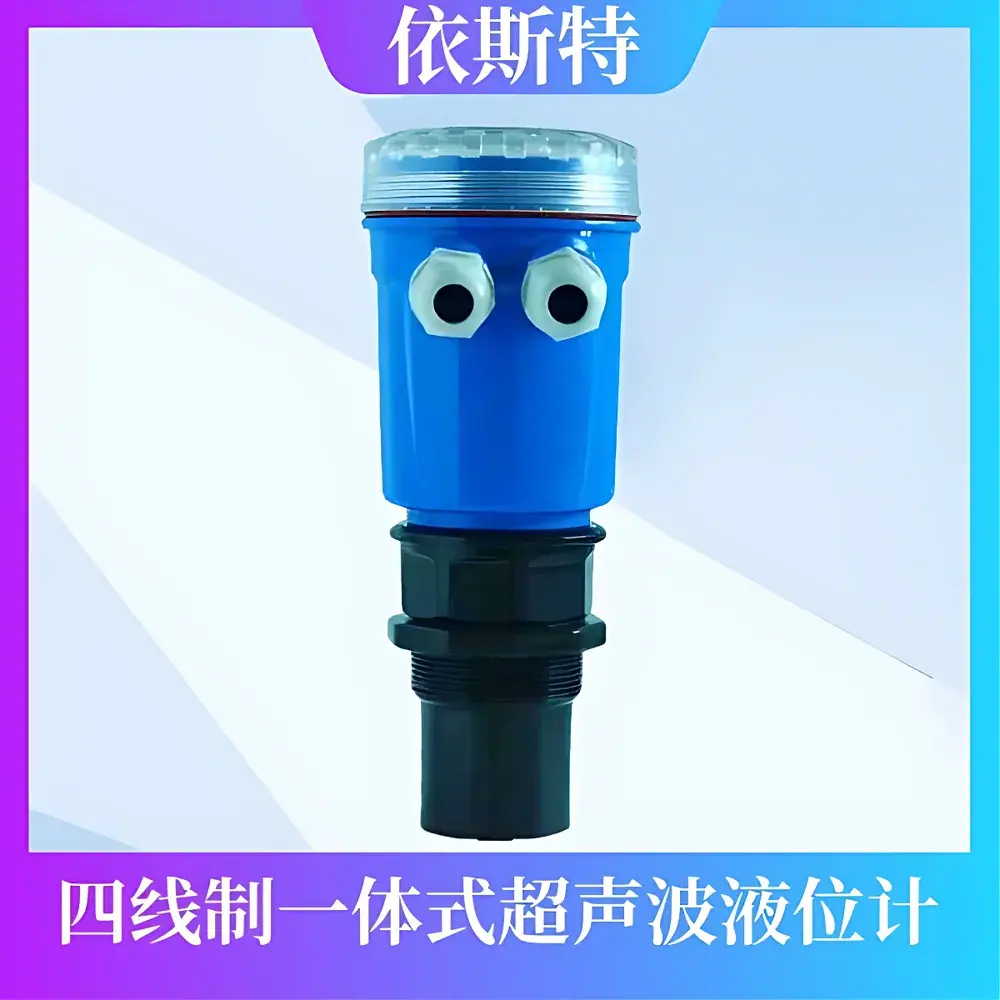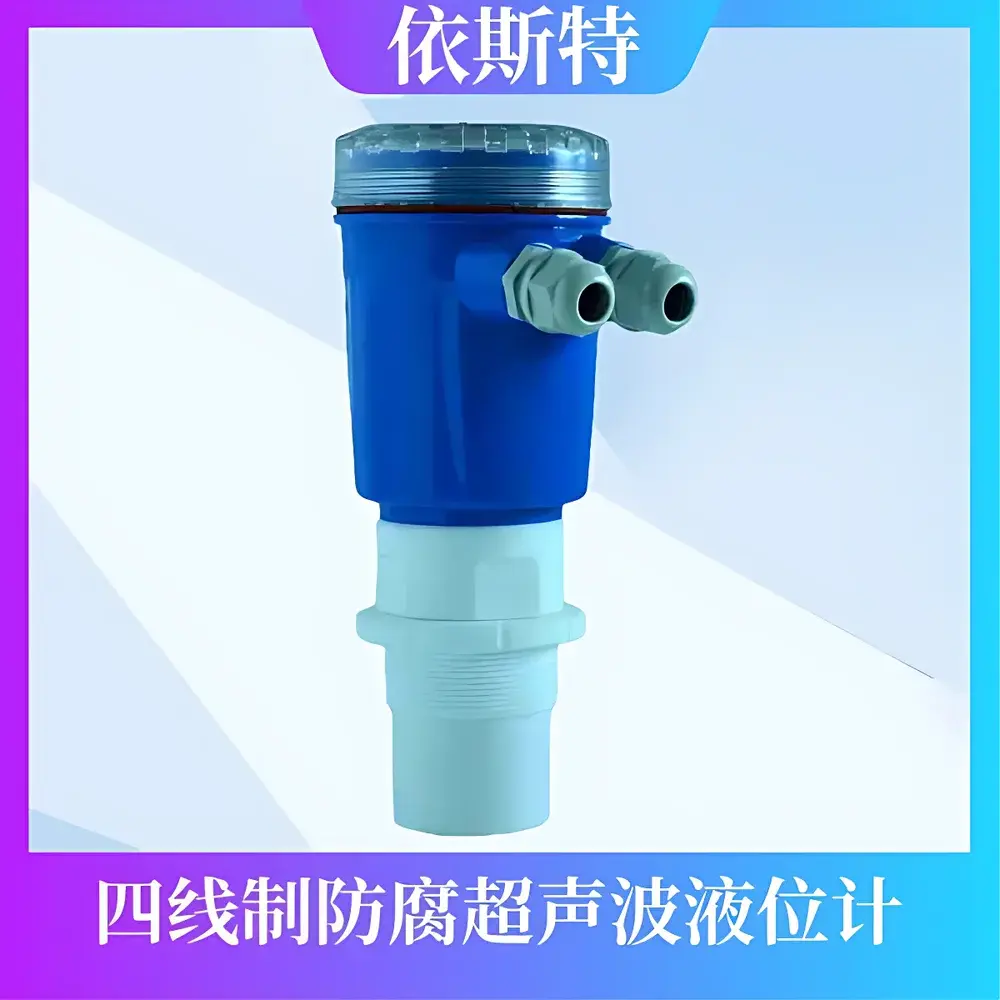
YST820CY10 Integrated Top-Mount Ultrasonic Level Transmitter (4–20 mA / RS485 Modbus, IP65–IP68)
| Brand | YST (Dalian Yistech) |
|---|---|
| Origin | Liaoning, China |
| Model | YST820CY10 |
| Measurement Principle | Non-contact ultrasonic time-of-flight |
| Range | 0.1–30 m (configurable up to 50 m) |
| Accuracy | ±0.2% FS or ±1 mm |
| Operating Temperature | −40 °C to +80 °C (high-temp option: >120 °C) |
| Humidity | 0–95% RH (non-condensing) |
| Output | 4–20 mA (2-wire/3-wire/4-wire configurable), RS485 with Modbus RTU protocol |
| Power Supply | DC 12–24 V or AC 220 V |
| Enclosure Rating | IP65 to IP68 |
| Compliance | CE-marked for industrial EMC and LVD |
Overview
The YST820CY10 is an integrated top-mount ultrasonic level transmitter engineered for reliable, non-contact continuous level measurement in demanding industrial process environments. It operates on the principle of ultrasonic time-of-flight (ToF), emitting high-frequency acoustic pulses from a transducer mounted above the medium surface and precisely measuring the elapsed time until the echo returns. This method eliminates physical contact with liquids, slurries, granular solids, or corrosive media—ensuring long-term sensor integrity and minimizing maintenance interventions. Designed for fixed installation on tank roofs, hoppers, or open-channel weirs, the YST820CY10 delivers stable performance across variable ambient conditions, including wide temperature swings, high humidity, and airborne particulates. Its modular electronics architecture enables field-configurable wiring modes (2-, 3-, or 4-wire), supporting both analog current loop integration and digital communication within modern automation infrastructures.
Key Features
- Non-invasive measurement: No wetted parts; immune to corrosion, fouling, or chemical degradation caused by aggressive media such as acidic wastewater, caustic solutions, or abrasive slurries.
- Multi-mode signal output: Simultaneous 4–20 mA analog output (HART-compatible wiring configurations) and RS485 serial interface with Modbus RTU protocol for bidirectional parameter configuration and real-time data streaming.
- Environmental resilience: Operating temperature range from −40 °C to +80 °C standard; optional high-temperature transducer variants rated for sustained exposure above 120 °C. IP65 to IP68 ingress protection ensures suitability for outdoor, washdown, or submersible mounting scenarios.
- Field-adaptable calibration: Supports zero/span adjustment, damping control, and echo profile filtering via local keypad or remote software interface—enabling optimization for foam-prone, turbulent, or low-dielectric surfaces.
- Low-power DC operation: Compatible with 12–24 V DC supply, facilitating deployment in solar-powered or battery-backed telemetry applications where AC infrastructure is unavailable.
Sample Compatibility & Compliance
The YST820CY10 is compatible with a broad spectrum of industrial media—including water, wastewater, brine, diesel, crude oil, grain silos, lime slurry, activated sludge, and fly ash—regardless of conductivity, viscosity, or density. Its ultrasonic measurement principle does not require dielectric constant thresholds or conductive pathways, unlike capacitive or guided-wave radar alternatives. While the device itself is CE-marked for electromagnetic compatibility (EN 61326-1) and low-voltage directive (EN 61000-6-2/6-4), system-level compliance with regulatory frameworks (e.g., FDA 21 CFR Part 11, ISO 9001, or IEC 61511 for functional safety) depends on integration architecture, validation protocols, and data handling practices implemented by end users. When paired with audit-trail-enabled SCADA or DCS platforms, the YST820CY10 supports traceable measurement records required under GLP and GMP environments.
Software & Data Management
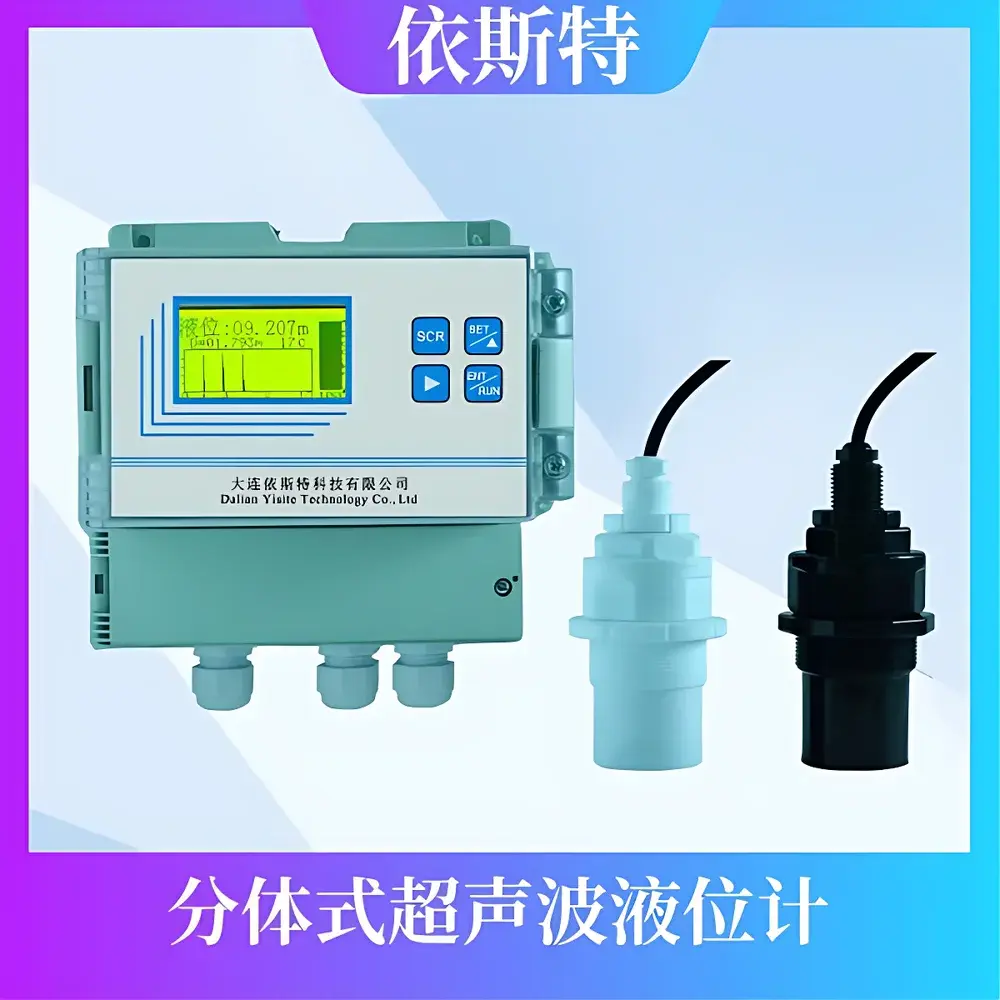
Configuration and diagnostics are performed using the manufacturer’s PC-based utility (Windows-compatible), which provides access to real-time echo curve visualization, signal strength monitoring, and historical trend export in CSV format. The embedded Modbus register map includes read/write access to measurement values, status flags (e.g., signal loss, temperature fault), and calibration parameters—enabling seamless integration into third-party HMI, MES, or cloud-based IIoT platforms. For applications requiring cybersecurity hardening, the RS485 interface supports hardware-level isolation and can be deployed behind industrial firewalls without protocol translation. Firmware updates are delivered via USB or serial connection and include version-controlled change logs for quality assurance documentation.
Applications
- Municipal wastewater treatment: Continuous monitoring of aeration basins, clarifiers, and sludge thickeners—reducing manual cleaning cycles and enabling automated pump sequencing based on level thresholds.
- Rural water supply networks: Remote supervision of elevated storage tanks across geographically dispersed sites, supporting predictive refill scheduling and outage mitigation through edge-triggered SMS/email alerts.
- Chemical and pharmaceutical manufacturing: Level verification in intermediate storage vessels containing solvents, reagents, or effluent streams where material compatibility and minimal process intrusion are critical.
- Food & beverage processing: Inventory tracking in bulk ingredient silos (e.g., sugar, flour, malt) and CIP tank level control—meeting hygiene requirements without internal sensors or penetrations.
- Mining and mineral processing: Monitoring of tailings ponds and thickener feed sumps under dusty, vibration-prone conditions where mechanical float devices fail prematurely.
FAQ
Does the YST820CY10 require periodic recalibration?
No routine recalibration is necessary under stable installation conditions. However, annual verification against a known reference (e.g., dip tape or laser distance meter) is recommended for critical applications governed by ISO/IEC 17025 or similar metrological standards.
Can it measure through foam or vapor layers?
Foam absorption may attenuate the return signal; advanced echo processing algorithms allow selective rejection of false echoes from foam surfaces. For persistent heavy foam, a higher-frequency transducer variant or guided-wave radar hybrid solution should be evaluated.
Is explosion-proof certification available?
The standard YST820CY10 is not intrinsically safe or ATEX-certified. For hazardous area installations (Zone 1/21), consult the manufacturer for explosion-proof housing options or remotely mounted transducer kits compliant with IEC 60079-0/11.
How is temperature compensation handled?
An integrated Pt1000 RTD measures ambient air temperature near the transducer face and applies real-time speed-of-sound correction to the ToF calculation, maintaining accuracy across the full operating range.
What is the minimum measurable distance?
The blind zone—the shortest detectable distance from the transducer face—is typically 0.1 m. Installation height must exceed this value to avoid near-field interference.