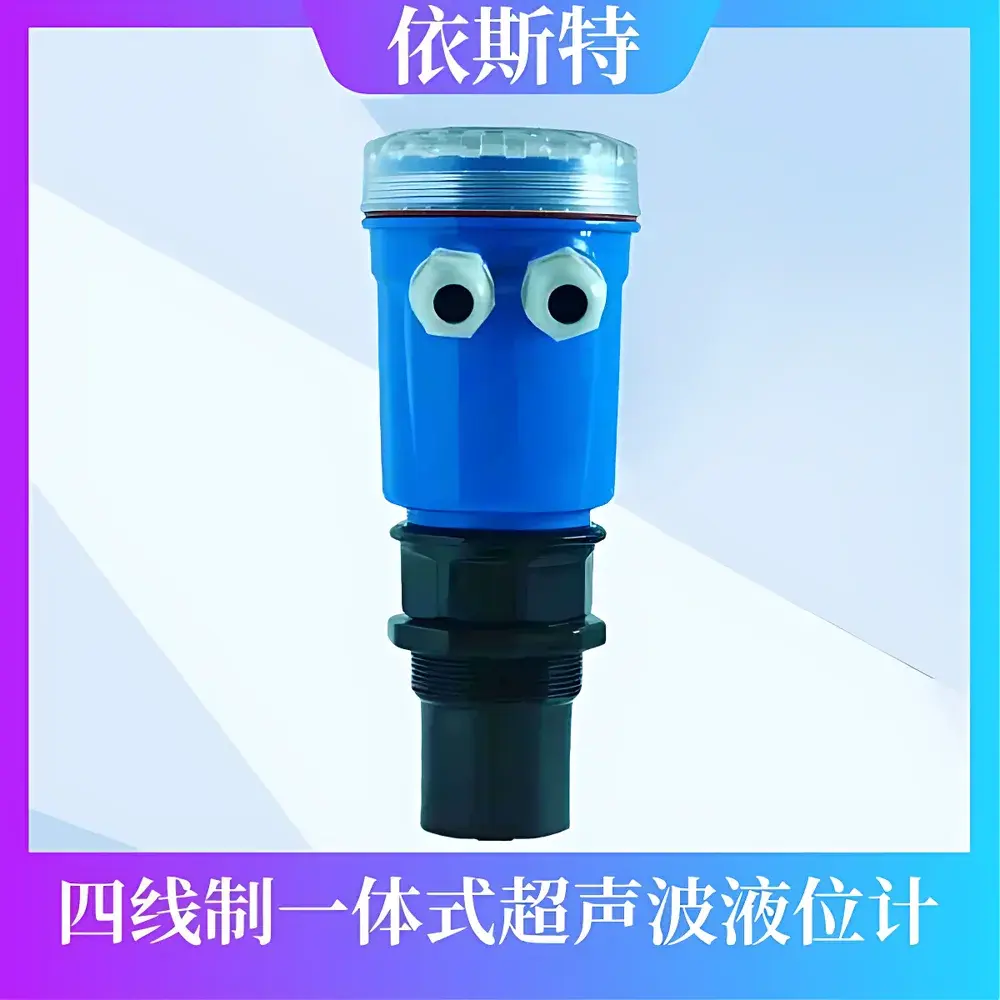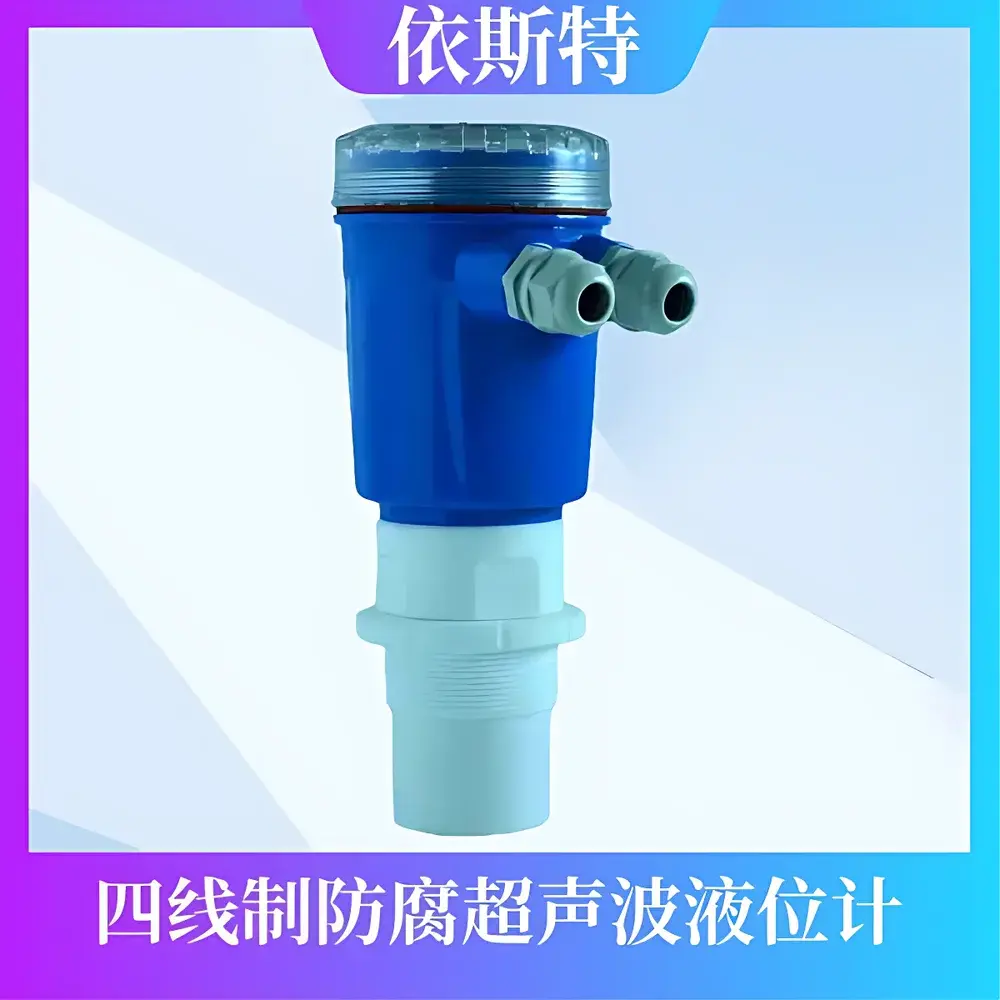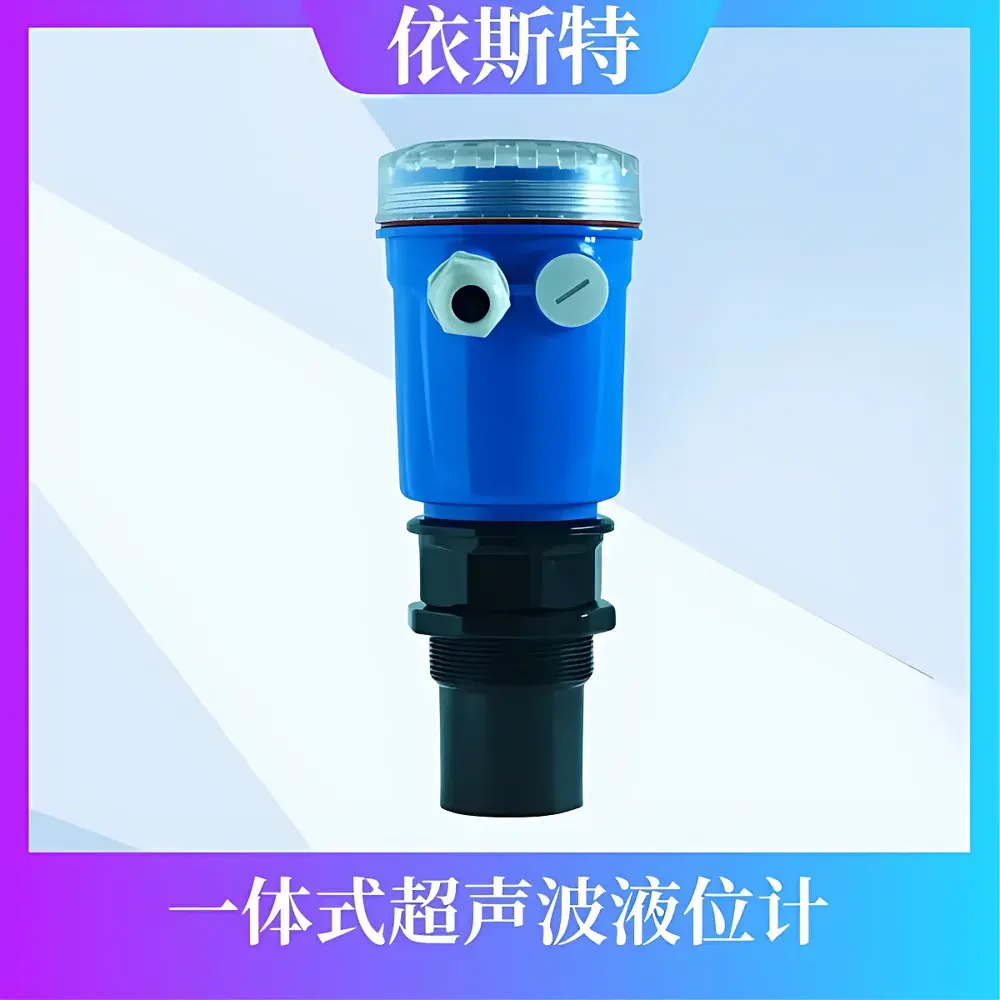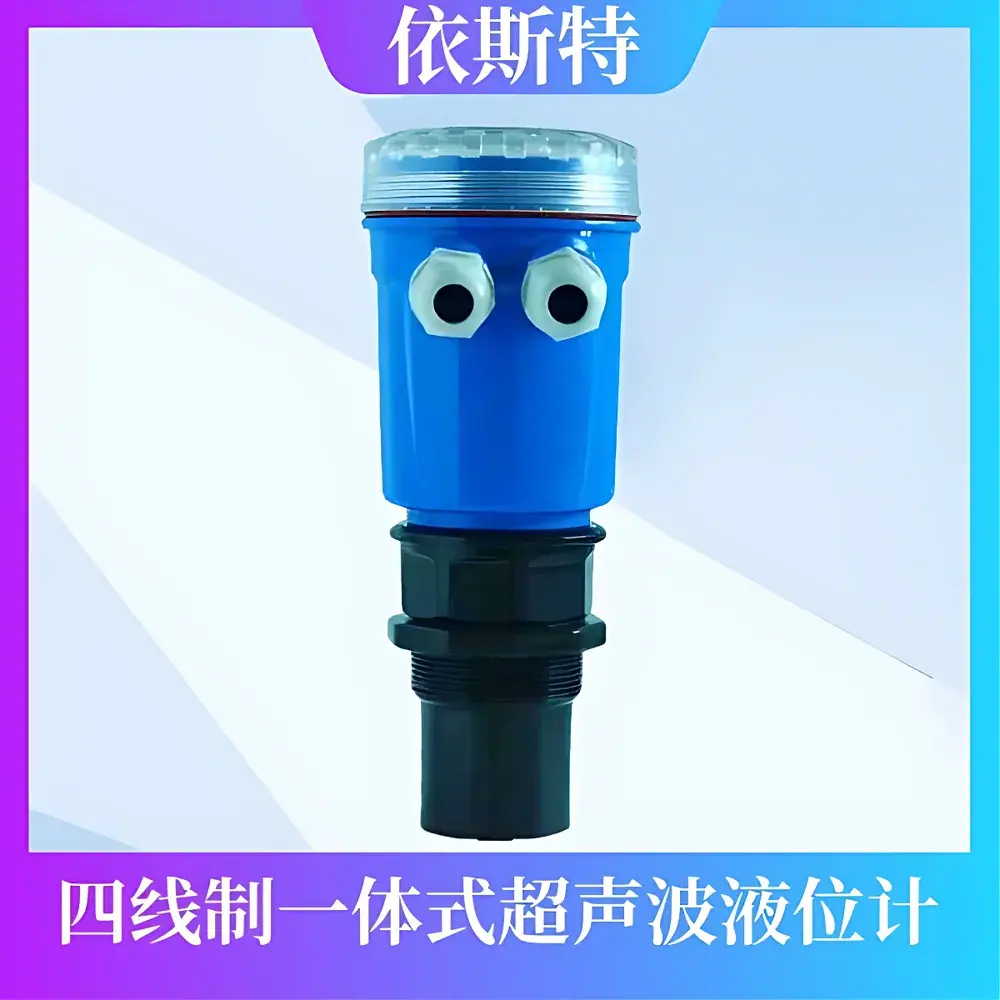
YST820CY10 Integrated Ultrasonic Level Transmitter (IP67, 4–20 mA / RS485, 0.3–10 m)
| Brand | YST (Dalian Yisite) |
|---|---|
| Origin | Liaoning, China |
| Model | YST820CY10 |
| Measurement Range | 0.3–10 m (customizable up to 20 m) |
| Accuracy | ±0.5% FS |
| Resolution | 0.1 mm |
| Blind Zone | ≤0.3 m |
| Output Signals | 4–20 mA (2-wire/3-wire/4-wire configurable), RS485 Modbus RTU |
| Power Supply | DC 24 V (standard), AC 220 V (optional) |
| Enclosure Rating | IP67 (IP68 optional) |
| Operating Temperature | −20 °C to +60 °C (wide-temp version available) |
| Display | Backlit LCD (level/distance dual-mode) |
Overview
The YST820CY10 Integrated Ultrasonic Level Transmitter is an engineered solution for continuous, non-contact liquid level monitoring in demanding submerged or semi-submerged containment applications—particularly waterproof sumps, fire water tanks, sewage settling basins, and municipal stormwater retention structures. It operates on the principle of time-of-flight ultrasonic echo measurement: a high-frequency transducer emits short acoustic pulses toward the liquid surface; the elapsed time between emission and echo return is precisely measured and converted into distance using the speed of sound in air (temperature-compensated). This distance is then inverted to compute liquid level relative to a fixed reference plane (e.g., tank top). Unlike radar or guided-wave radar systems, ultrasonic technology avoids electromagnetic interference concerns and requires no process contact, making it ideal for clean-to-moderately-turbid aqueous media—including potable water, rainwater, clarified effluent, and fire reserve water—where dielectric constant variations or surface foam are minimal.
Key Features
- True integrated architecture: Sensor head, signal processing unit, and display are housed in a single robust enclosure—eliminating inter-unit cabling, reducing installation time by >60%, and minimizing failure points associated with junction boxes or remote electronics.
- Multi-protocol analog & digital output: Configurable 4–20 mA current loop (2-, 3-, or 4-wire mode) for direct PLC/DCS integration, plus RS485 serial interface supporting Modbus RTU protocol for bidirectional communication, parameter configuration, and diagnostic readout.
- Environmental resilience: IP67-rated aluminum alloy housing with UV-stabilized polymer front lens; corrosion-resistant transducer diaphragm; built-in temperature compensation algorithm ensures stable acoustic velocity calibration across −20 °C to +60 °C ambient operation.
- Intelligent signal conditioning: Adaptive gain control, echo filtering algorithms, and dynamic threshold detection suppress false echoes from tank walls, agitator blades, or surface turbulence—critical for reliable performance in variable-flow wastewater sumps.
- On-device human interface: Backlit monochrome LCD displays real-time level (in %, m, or ft), distance-to-surface, signal strength, and status flags—enabling local commissioning and troubleshooting without external tools.
Sample Compatibility & Compliance
The YST820CY10 is validated for use with non-viscous, low-foaming aqueous liquids having sound absorption coefficients typical of water-based media (e.g., <0.1 dB/m at 50 kHz). It is not recommended for highly viscous fluids (e.g., sludge >5,000 cP), volatile organic solvents, or surfaces with persistent heavy foam layers (>5 cm thickness), as these attenuate or scatter ultrasonic energy. While not certified to IEC 61508 SIL or ATEX/IECEx standards, its design adheres to functional safety principles aligned with IEC 61511 Annex D for basic-level process monitoring. The device supports traceable calibration via zero/span adjustment routines and retains configuration data through power cycles—facilitating GLP-aligned recordkeeping in municipal utility operations. Its 4–20 mA output complies with NAMUR NE43 fault signaling conventions (3.6–20.5 mA range), and RS485 implementation conforms to EIA/TIA-485-A physical layer specifications.
Software & Data Management
No proprietary PC software is required for basic operation. Configuration—including measurement units, damping time (0.1–10 s), output scaling, and fail-safe behavior (e.g., hold-last-value vs. 3.6 mA fault signal)—is performed locally via membrane keypad navigation. For fleet management or remote diagnostics, the RS485 interface enables integration with SCADA platforms (e.g., Ignition, Siemens Desigo, Schneider EcoStruxure) using standard Modbus register maps. All configuration changes are logged with timestamped audit trails in non-volatile memory—a capability essential for ISO 9001 or ISO/IEC 17025 accredited laboratories managing infrastructure instrumentation. Data logging intervals and alarm thresholds (high/low level, signal loss) are programmable, and event-triggered snapshots can be retrieved via serial query.
Applications
- Municipal wastewater treatment: Continuous level monitoring in primary clarifiers, equalization basins, and pump sump pits—supporting pump staging logic and overflow prevention per EPA NPDES compliance requirements.
- Fire protection systems: Reliable water level verification in underground fire tanks and rooftop reservoirs, meeting NFPA 25 Chapter 5 inspection frequency and accuracy expectations for passive storage integrity.
- Commercial building infrastructure: Integration into BMS networks for HVAC condensate tank monitoring, rainwater harvesting cisterns, and greywater reuse systems—ensuring operational continuity and regulatory reporting readiness.
- Light industrial process support: Monitoring of coolant reservoirs, chemical dilution tanks, and rinse water holding vessels where cost-effective, maintenance-light sensing is prioritized over high-precision metrology.
FAQ
Is the YST820CY10 suitable for measuring level in boiling or highly aerated liquids?
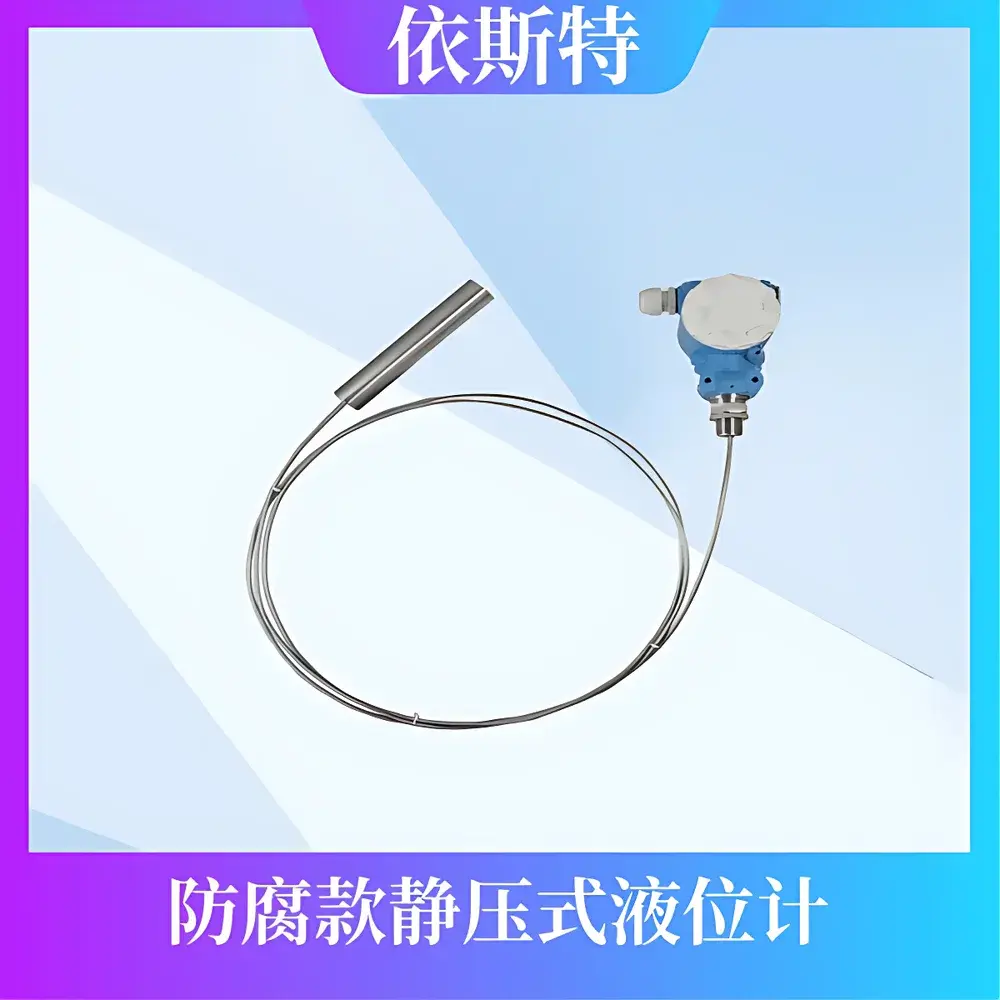
No. Boiling surfaces generate intense vapor turbulence that scatters ultrasonic energy, while excessive aeration introduces air pockets that cause erratic echo returns. For such conditions, guided-wave radar or hydrostatic pressure transmitters are technically preferred.
Can the device be calibrated against a known reference level in-field?
Yes. Zero and span calibration can be executed using the local keypad: “zero” sets the current distance reading as full-scale empty (e.g., tank top), and “span” assigns a second known level (e.g., 2.5 m depth) to define the linear output range.
Does the RS485 interface support Modbus TCP or only Modbus RTU?
Only Modbus RTU over RS485 physical layer. Ethernet or wireless gateway integration requires an external protocol converter.
What is the expected service life under continuous operation in humid environments?
Rated for ≥60,000 hours MTBF (mean time between failures) when operated within specified environmental limits; field data from municipal deployments indicate median service life of 7.2 years before routine sensor cleaning or firmware update.
Is there documentation available in English for regulatory submittals?
Yes. Full technical datasheets, CE-conformity declarations (EMC Directive 2014/30/EU, RoHS 2011/65/EU), and calibration procedure templates are provided in English upon request for QA/QC and audit preparation.
Related Products