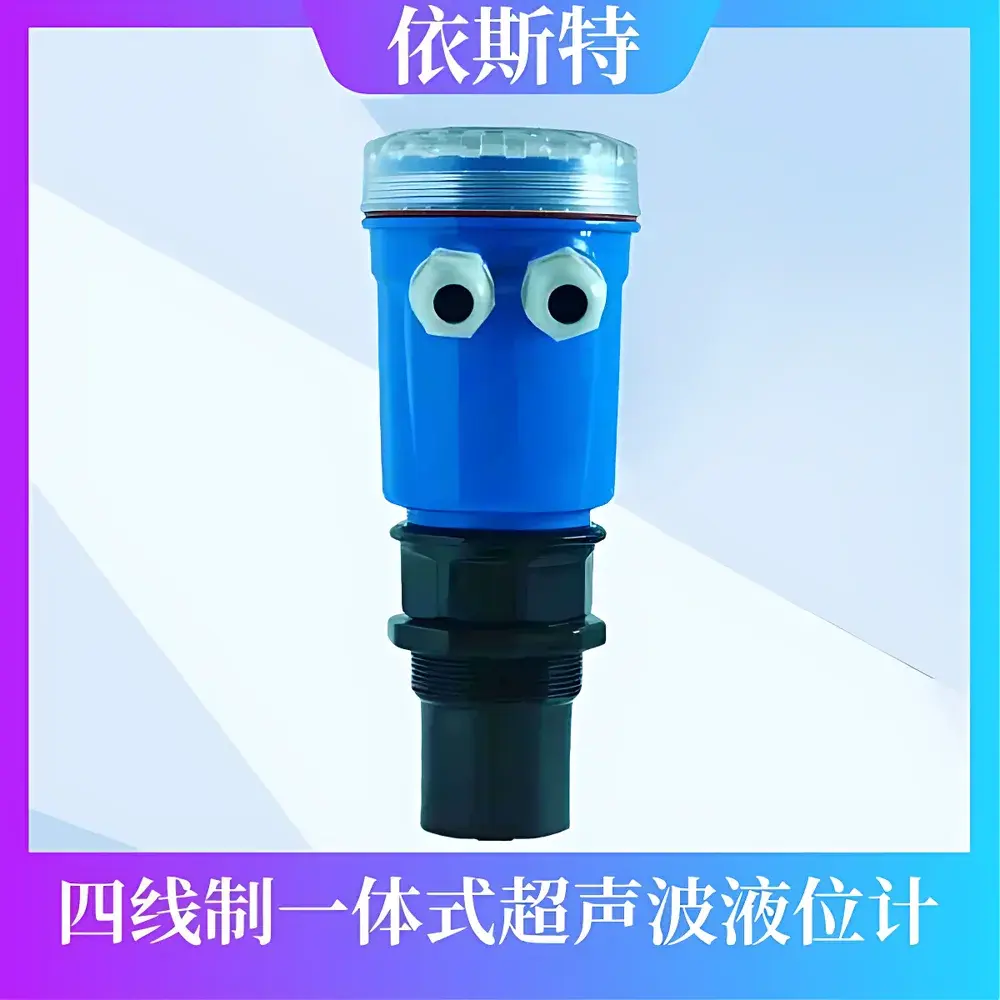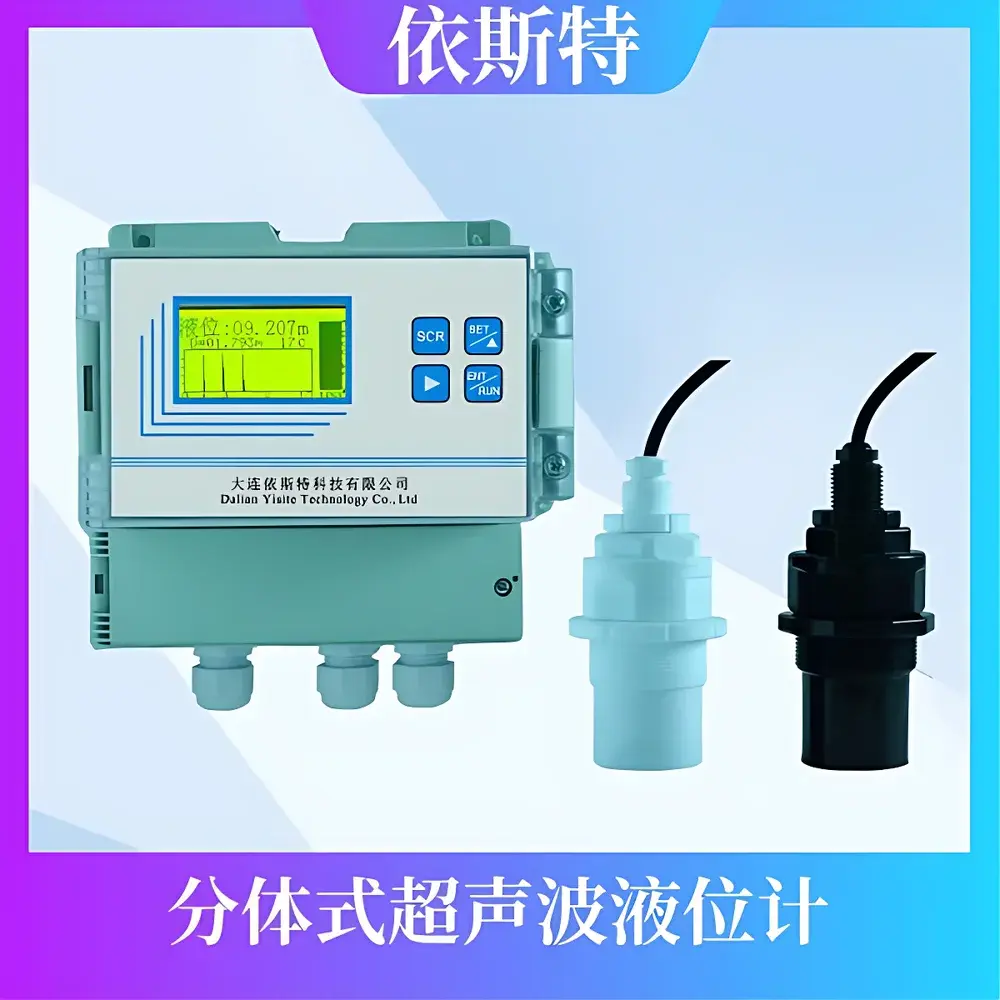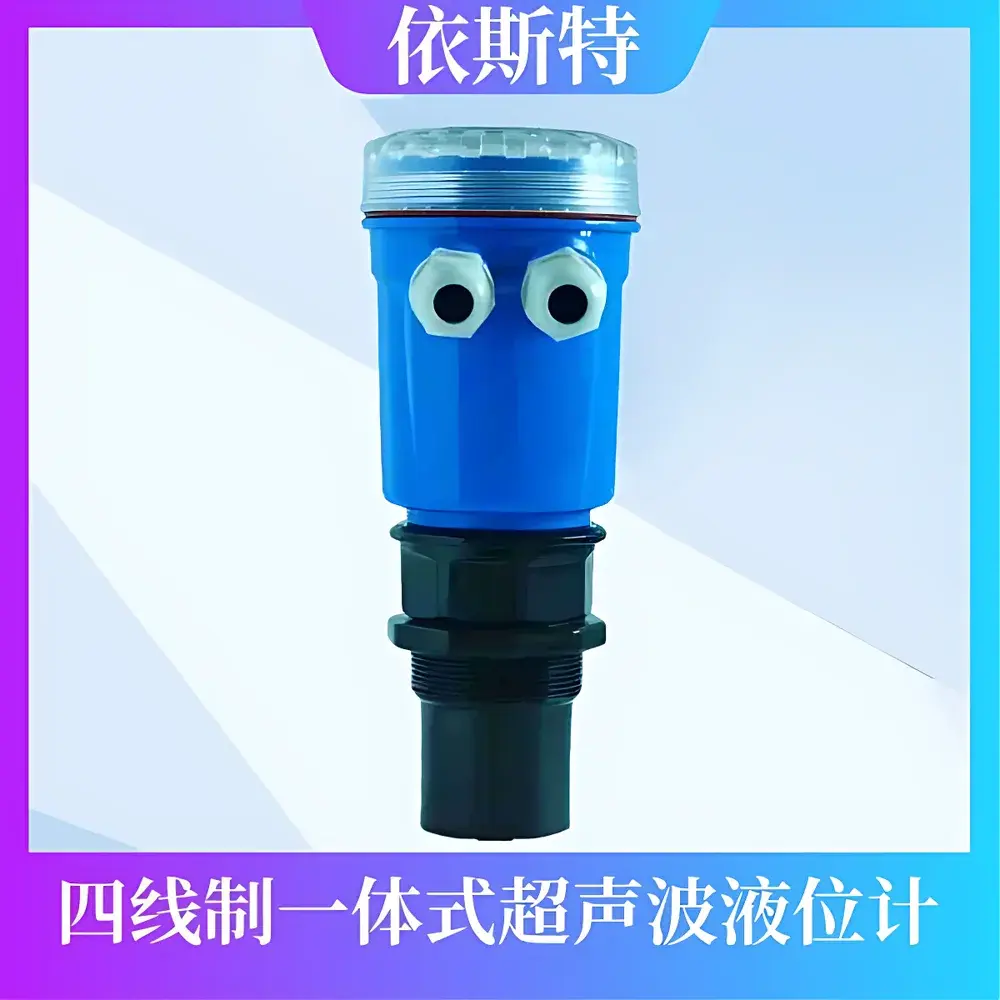
YST820CY10 Ultrasonic Level Monitor for Urban Drainage Networks
| Brand | YST (Dalian Yist) |
|---|---|
| Origin | Liaoning, China |
| Model | YST820CY10 |
| Measurement Range | 0–10 m (customizable) |
| Accuracy | ±0.5% FS |
| Resolution | 3 mm |
| Operating Temperature | −20 °C to +60 °C |
| Ingress Protection | IP68 |
| Power Supply | DC 24 V (2-wire or 3-wire configuration) |
| Output Signals | 4–20 mA analog + RS485 Modbus RTU |
| Sampling Interval | 10 s (configurable) |
| Housing Material | Reinforced PA66 |
| Mounting | Wall-mounted bracket |
Overview
The YST820CY10 Ultrasonic Level Monitor is an industrial-grade, non-contact level sensing instrument engineered specifically for continuous, real-time monitoring of liquid levels in urban drainage infrastructure—including combined, stormwater, and sanitary sewer networks. Utilizing time-of-flight ultrasonic measurement principles, the device emits high-frequency acoustic pulses (typically 50 kHz) toward the liquid surface and calculates distance based on the precise echo return time. Propagation velocity compensation is dynamically applied via an integrated temperature sensor, mitigating measurement drift caused by ambient thermal fluctuations—a critical requirement for long-term field deployment across seasonal extremes. Designed for permanent installation inside manholes, inspection chambers, and underground vaults, the YST820CY10 delivers robust performance under high-humidity, condensation-prone, and electromagnetically noisy conditions typical of municipal utility environments.
Key Features
- IP68-rated sealed enclosure: Fully submersible housing constructed from reinforced polyamide 66 (PA66), resistant to corrosion, UV degradation, and mechanical impact—validated for continuous operation in flooded or partially submerged manholes.
- Integrated temperature compensation: Onboard thermistor continuously monitors ambient air temperature adjacent to the transducer, enabling real-time adjustment of sound speed in air (331.3 + 0.606 × T °C m/s), ensuring consistent accuracy across −20 °C to +60 °C operational range.
- Dual-output interface: Simultaneous 4–20 mA analog output (HART-compatible wiring) and RS485 serial communication (Modbus RTU protocol) enable seamless integration with SCADA systems, PLCs, and cloud-based IoT platforms without signal conversion hardware.
- Low-power, maintenance-optimized architecture: Ultra-low quiescent current draw (<12 mA at 24 VDC) supports extended service intervals; no moving parts or consumables reduce lifecycle cost of ownership and simplify compliance with municipal preventive maintenance schedules.
- Configurable sampling and reporting: Default 10-second measurement interval is programmable via Modbus register write; configurable hold time, averaging window, and alarm thresholds support adaptive data acquisition strategies aligned with hydraulic modeling requirements.
Sample Compatibility & Compliance
The YST820CY10 is validated for use in open-channel and closed-conduit drainage applications where free-surface flow conditions prevail. It is compatible with wastewater containing suspended solids, biofilm, and variable turbidity—provided the liquid surface remains acoustically reflective (i.e., no heavy foam layer or turbulent splashing directly beneath the transducer). While not certified to ATEX or IECEx for explosive atmospheres, the device conforms to IEC 60529 (IP68), IEC 61000-4-2/3/4/6 (EMC immunity), and RoHS 2011/65/EU directives. Its output signals meet ANSI/ISA-50.00.01 analog signal standards, and Modbus RTU implementation adheres to version 1.1 specification. For projects requiring regulatory traceability, optional firmware logging supports timestamped raw echo amplitude and temperature readings—facilitating GLP-aligned data integrity practices when deployed in municipal asset management frameworks.
Software & Data Management
Data acquisition and configuration are managed exclusively through industry-standard Modbus RTU over RS485, eliminating vendor-locked software dependencies. Users may employ generic Modbus masters (e.g., Ignition SCADA, Node-RED, or custom Python scripts using pymodbus) to read registers including: measured distance (mm), compensated level (mm), internal temperature (°C), signal strength (%), and diagnostic flags (e.g., “no echo,” “temperature out of range”). The 4–20 mA output maps linearly to full-scale range (0–10 m); zero and span calibration points are adjustable via Modbus registers to accommodate custom mounting offsets or basin geometry corrections. No cloud dependency or proprietary gateway is required—enabling fully offline, air-gapped deployments compliant with municipal cybersecurity policies.
Applications
- Real-time flood early warning in combined sewer overflow (CSO) control systems
- Performance validation of pump station wet-well levels and cycle timing
- Calibration reference for hydrodynamic models (e.g., EPA SWMM) using high-frequency level time-series
- Monitoring of retention/detention basin fill status during storm events
- Verification of gravity-fed flow capacity in aging pipe networks
- Integration into smart city dashboards for public-facing water infrastructure transparency
FAQ
Is the YST820CY10 suitable for measuring sludge depth or sediment accumulation?
No—it measures the distance from transducer face to the upper liquid surface only. Sludge interface detection requires low-frequency radar or guided wave radar (GWR) technology.
Can the device be installed in a vertical pipe with flowing water?
Yes, provided the pipe diameter exceeds 300 mm and the transducer is mounted centrally above a stilling well or baffle chamber to minimize surface turbulence interference.
Does it support HART communication?
The 4–20 mA output is HART-enabled; however, digital configuration and diagnostics require RS485 Modbus RTU—HART command set is not implemented.
What is the minimum recommended mounting height above maximum expected water level?
A clearance of ≥500 mm is advised to avoid submersion of electronics during surcharge events and to maintain optimal acoustic beam geometry.
Is firmware update capability available in-field?
Firmware updates are performed via RS485 using YST-provided binary files and documented Modbus register sequences—no physical reprogramming interface is required.
Related Products