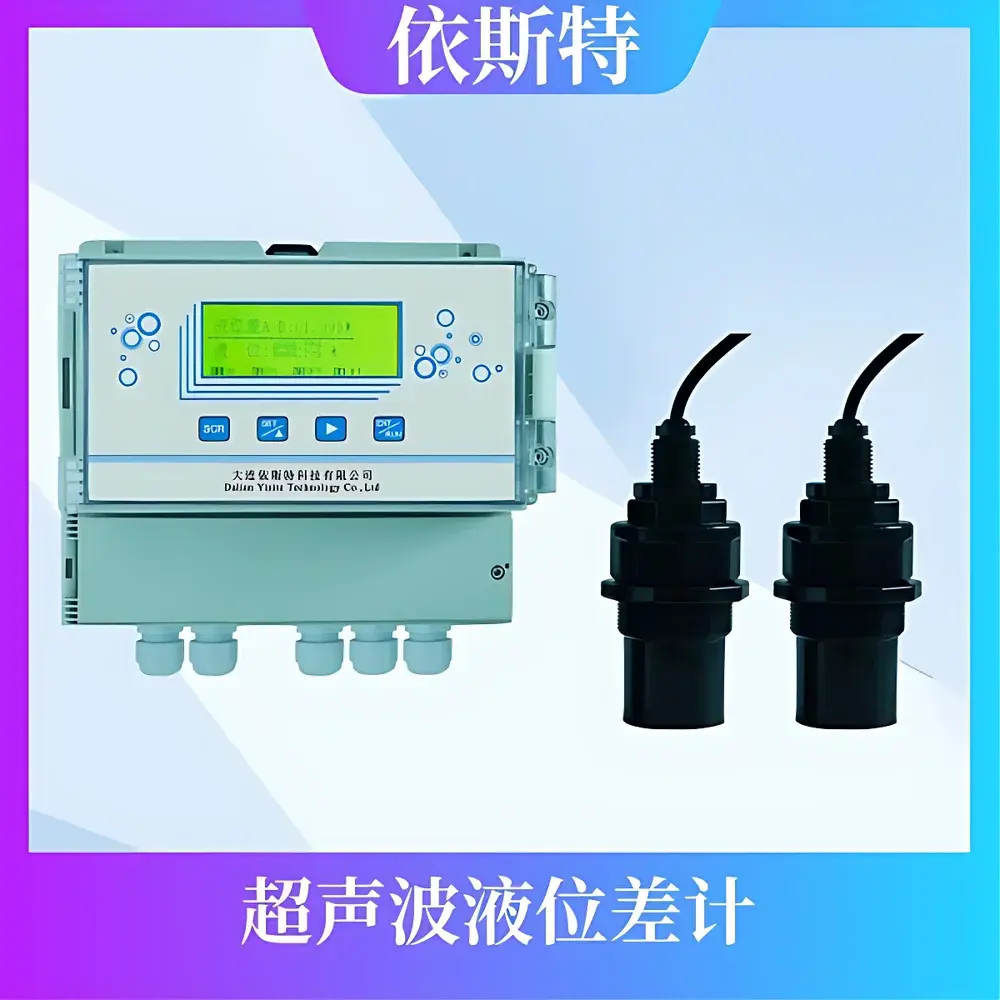
YST940S-2CY10 Ultrasonic Level Differential Monitor
| Brand | YST (Dalian Yist) |
|---|---|
| Origin | Liaoning, China |
| Model | YST940S-2CY10 |
| Measurement Range (Level Difference) | 0.1–10 m |
| Accuracy | ±0.2% FS or ±1 mm (whichever is greater) |
| Resolution | 1 mm |
| Operating Temperature | Sensor: −30°C to +90°C |
| Electronics Unit | 0°C to +50°C |
| IP Rating | Sensor IP67 |
| Output Signals | 4–20 mA analog + RS485 digital (Modbus RTU) |
| Power Supply | 24 VDC (wide-range input) |
| Mounting | Horizontal/vertical bracket mount for open tanks or enclosed vessels |
Overview
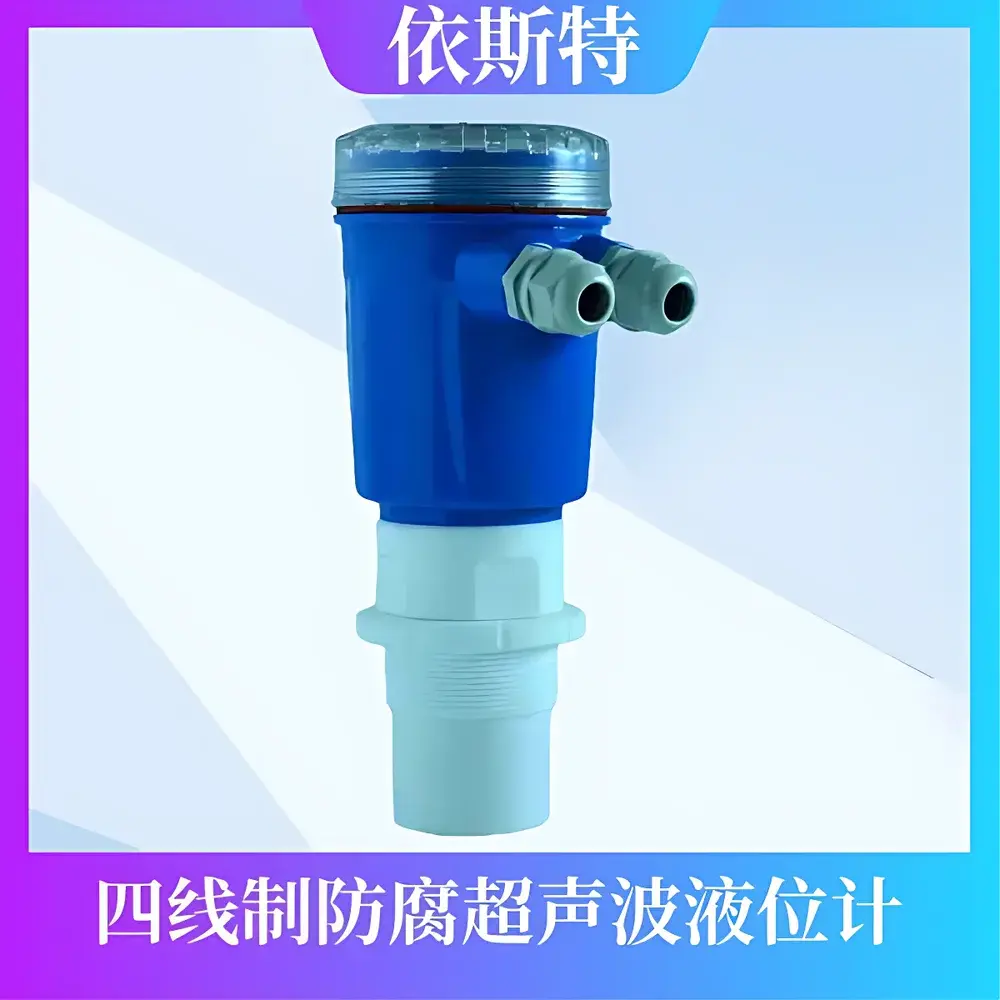
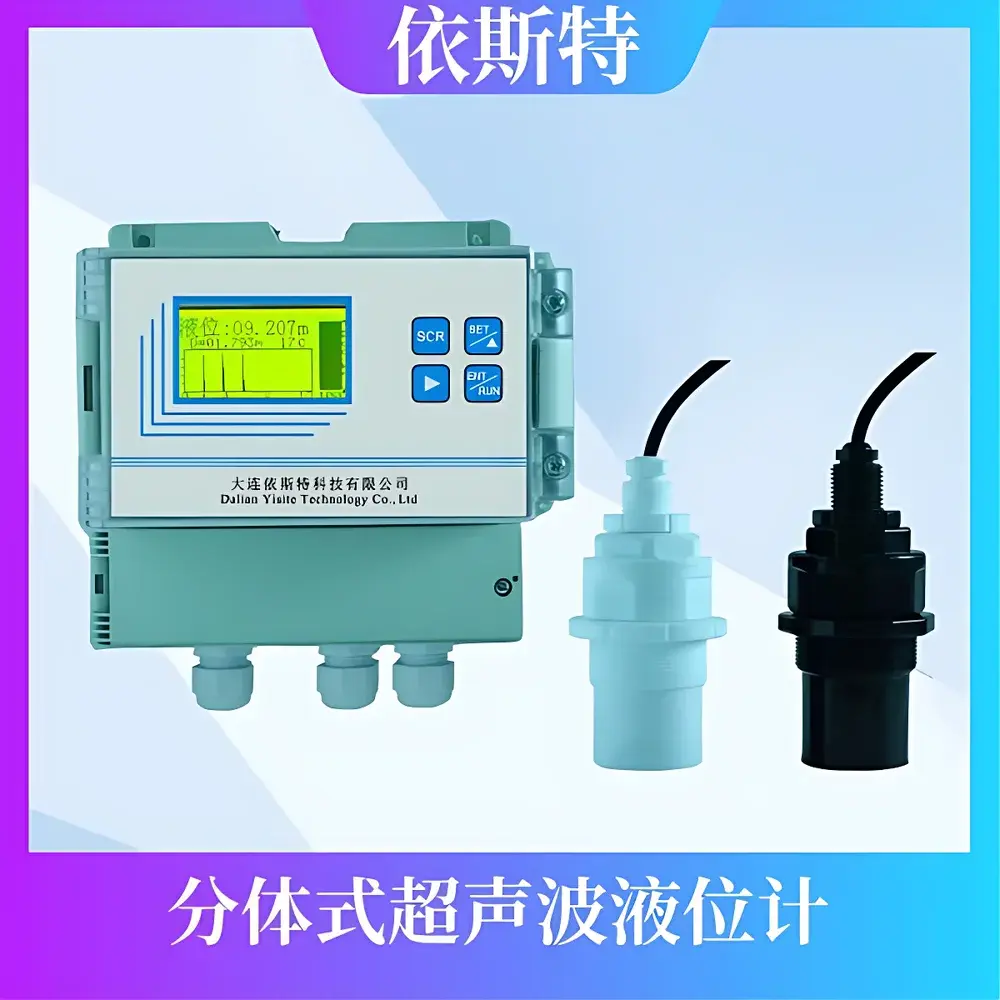
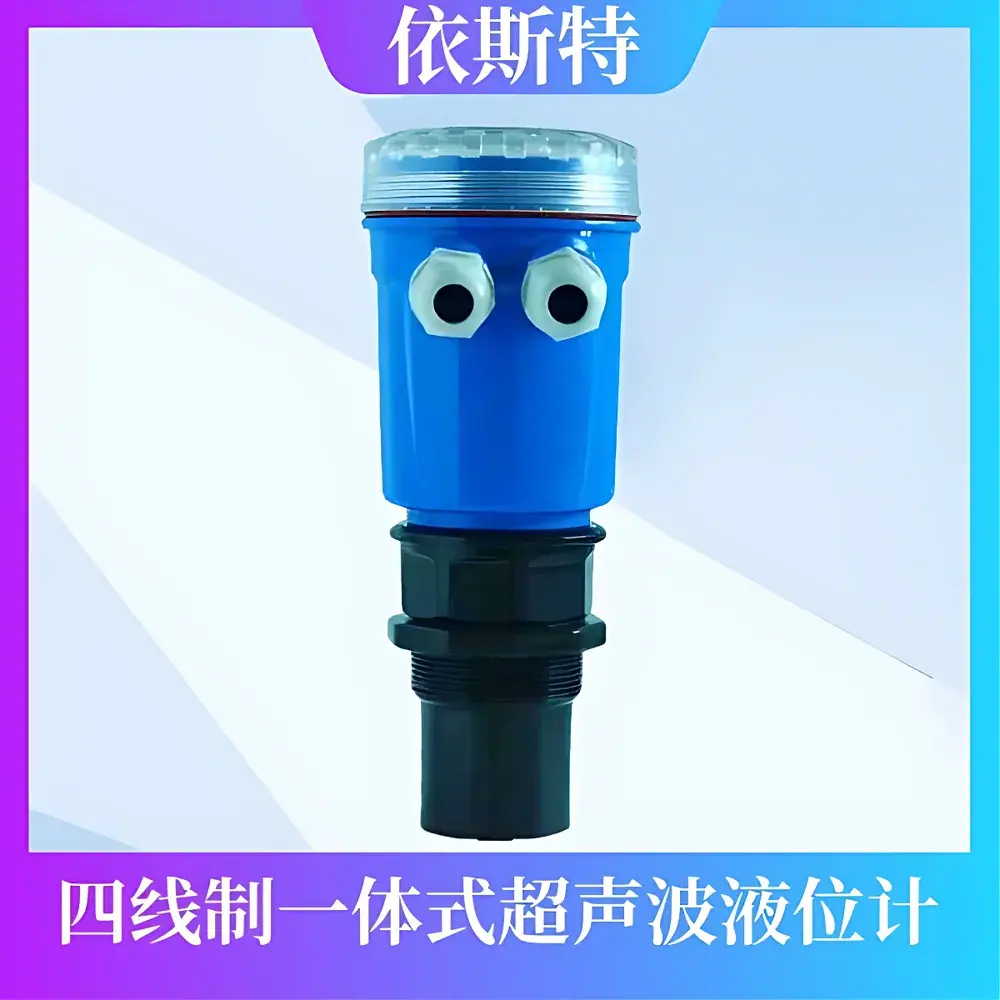
The YST940S-2CY10 Ultrasonic Level Differential Monitor is an industrial-grade, non-contact measurement instrument engineered for continuous, real-time monitoring of level differentials between two distinct points in liquid-containing systems. Based on time-of-flight ultrasonic echo principle, the device emits high-frequency acoustic pulses from dual transducers mounted at fixed vertical positions—typically above a channel, tank, or sump—and precisely calculates the time delay between emitted and reflected signals to determine individual liquid surface heights. The embedded microprocessor then computes the differential value (Δh) with millimeter-level resolution, enabling reliable detection of flow obstructions, sediment accumulation, or inter-tank transfer imbalances. Designed for integration into process-critical infrastructure, the YST940S-2CY10 delivers stable performance under variable ambient conditions without requiring vessel penetration or media contact—eliminating risks of corrosion, fouling, or cross-contamination commonly associated with submersible or guided-wave technologies.
Key Features
- Non-invasive dual-point measurement: Two independent ultrasonic transducers operate synchronously to acquire simultaneous level readings at designated reference points, enabling true differential calculation without mechanical linkage or shared reference plane assumptions.
- Robust environmental resilience: Transducer housing rated IP67 ensures operational integrity in high-humidity, dusty, or splash-prone environments—including outdoor pump stations, wastewater grit chambers, and chemical storage bunds.
- Dual-output interface architecture: Simultaneous 4–20 mA analog output (scalable to user-defined differential range) and RS485 serial communication compliant with Modbus RTU protocol support seamless integration with PLCs, DCS platforms, SCADA gateways, and edge-based IIoT controllers.
- Wide operating temperature tolerance: Transducers function reliably across −30°C to +90°C ambient extremes, while the electronics enclosure maintains stability within 0°C to +50°C—suitable for unheated outdoor enclosures and thermally fluctuating industrial settings.
- Configurable signal conditioning: On-device parameterization via local keypad or Modbus register access allows adjustment of damping filters, echo threshold sensitivity, and output scaling—enabling optimization for foamy, turbulent, or low-reflectivity surfaces (e.g., activated sludge, emulsified solvents).
Sample Compatibility & Compliance
The YST940S-2CY10 is compatible with a broad spectrum of conductive and non-conductive liquids—including municipal wastewater, neutral and aggressive aqueous solutions (pH 2–12), food-grade syrups, and mineral oils—provided surface conditions permit sufficient ultrasonic reflection. Its non-contact operation eliminates compatibility constraints related to material compatibility, viscosity, or suspended solids concentration. While not certified to IEC 61508 SIL or ATEX directives, the device meets general-purpose industrial safety requirements per IEC 61000-6-2 (EMC immunity) and IEC 61000-6-4 (EMC emission) standards. Its 24 VDC power architecture complies with SELV (Safety Extra-Low Voltage) limits defined in IEC 61000-1-1, supporting deployment in Class I, Division 2 hazardous locations when installed with appropriate barrier systems. For regulated industries, audit-ready data logging (via external Modbus master) supports alignment with GLP/GMP documentation practices where differential level trends serve as process verification metrics.
Software & Data Management
The YST940S-2CY10 operates autonomously without proprietary software dependencies. Configuration and diagnostics are performed using standard Modbus RTU commands (function codes 03h, 06h, 10h) over RS485, enabling interoperability with third-party HMI platforms, historian servers (e.g., Ignition, Siemens Desigo CC), and cloud-based asset monitoring stacks. All configuration parameters—including zero/span calibration offsets, damping time constants, and alarm thresholds—are stored in non-volatile memory and retained during power cycling. While the unit itself does not implement FDA 21 CFR Part 11-compliant electronic signatures or audit trails, its deterministic output behavior and timestamped Modbus register reads allow traceable data acquisition when paired with validated supervisory systems meeting regulatory data integrity requirements.
Applications
- Municipal wastewater infrastructure: Monitoring head loss across bar screens, measuring sludge blanket depth versus supernatant level in clarifiers, and detecting backwater conditions in force mains.
- Chemical process balancing: Maintaining consistent level differentials between acid/base buffer tanks, solvent recovery columns, and intermediate surge vessels to ensure stoichiometric feed control.
- Food & beverage production: Tracking fill-level differentials between raw material silos and blending tanks to trigger automated dosing sequences while preserving sanitary integrity.
- Industrial cooling water circuits: Detecting flow restriction in heat exchanger headers by correlating inlet/outlet level differentials with pump performance curves.
- Flood monitoring networks: Deploying paired units across weirs or flumes to compute real-time discharge rates using calibrated stage-discharge relationships.
FAQ
Can the YST940S-2CY10 measure absolute level at each point, or only the difference?
The device outputs both individual level values (L1 and L2) and their arithmetic difference (Δh = L1 − L2) via separate Modbus registers and configurable analog output scaling—supporting either differential-only or dual-level reporting modes.
Is field calibration required after installation?
Yes. Initial zero and span calibration must be performed using known reference levels at both transducer mounting positions to compensate for mechanical misalignment, beam divergence, and acoustic path variations caused by vapor or temperature gradients.
How does foam or heavy surface turbulence affect measurement accuracy?
Foam layers attenuate ultrasonic energy; however, the device’s adjustable echo gain and advanced echo processing algorithms enable reliable detection of the true liquid surface beneath light-to-moderate foam. For highly aerated or boiling surfaces, physical stilling wells or guided wave radar alternatives may be recommended.
Does the unit support HART protocol?
No. It supports only 4–20 mA analog output and RS485 Modbus RTU. HART functionality is not implemented.
What is the maximum cable length between transducers and the electronics unit?
Standard configuration supports up to 100 meters for each transducer cable (shielded twisted pair, AWG22). Extended reach requires signal repeaters or fiber-optic conversion kits, which are available as optional accessories.
Related Products