
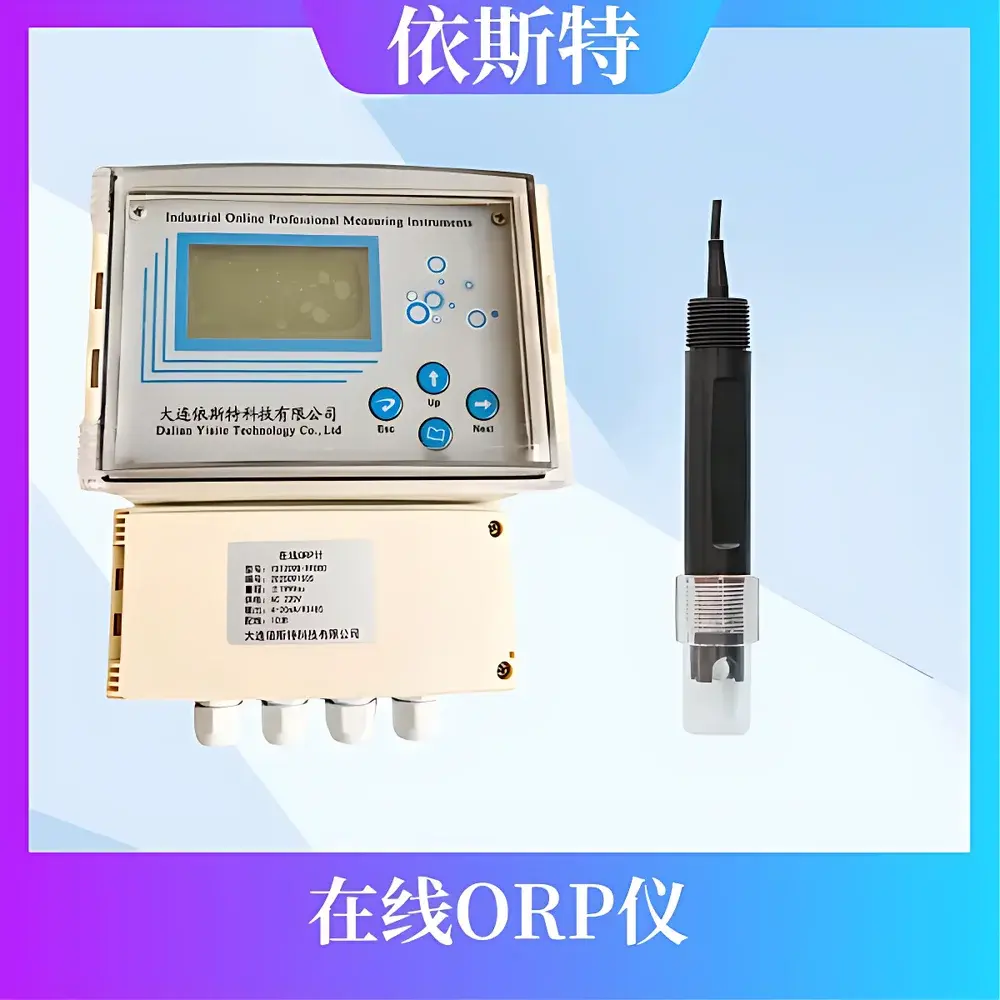
YSTorp YST209B-RP880 ORP Meter
| Brand | YSTorp (Dalian Yistorp) |
|---|---|
| Origin | Liaoning, China |
| Model | YST209B-RP880 |
| Measuring Range | ORP –1999 to +1999 mV (0.1 mV resolution) |
| Accuracy | ±1 mV (ORP), ±0.5 °C (Temperature, 0–60.0 °C) |
| Automatic Temperature Compensation (ATC) | 0.0–120.0 °C (reference 25 °C) |
| Output | 4–20 mA isolated analog output |
| Power Supply | AC 220 V ±10 %, 50 Hz ±1 Hz |
| Enclosure Rating | IP65 |
| Dimensions | 96 × 96 × 110 mm (panel cutout: 92 × 92 mm) |
| Installation Options | Flow-through, submersible, flanged, pipe-mounted, sidewall-mounted |
| Operating Environment | 0–60 °C ambient, RH <85 % non-condensing |
Overview
The YSTorp YST209B-RP880 ORP Meter is a precision electrochemical instrumentation system engineered for continuous, real-time monitoring of oxidation-reduction potential (ORP) and temperature in aqueous process streams. Based on the fundamental Nernst equation principle, the device measures the electrical potential difference between a noble-metal sensing electrode (typically platinum or gold) and a stable reference electrode (Ag/AgCl with saturated KCl electrolyte), providing quantitative insight into the electron-transfer capacity of water-based solutions. This measurement serves as a critical surrogate indicator for disinfectant residual efficacy (e.g., free chlorine, ozone, chlorine dioxide), redox-driven biological activity (e.g., denitrification, sulfate reduction), and overall chemical stability in potable water, wastewater, industrial cooling loops, aquaculture systems, and swimming pool management. Designed for fixed-installation deployment, the YST209B-RP880 integrates robust analog signal conditioning, embedded ATC algorithms, and industrial-grade housing—enabling reliable operation under variable hydraulic, thermal, and ambient conditions without requiring frequent recalibration.
Key Features
- High-stability dual-electrode ORP sensor with Pt or Au working element and Ag/AgCl reference, optimized for long-term drift resistance in turbid or low-conductivity media
- True automatic temperature compensation (ATC) across 0.0–120.0 °C range, referenced to 25 °C, minimizing thermal-induced measurement error per ISO 5814:2012 guidelines
- Industrial-grade analog output: galvanically isolated 4–20 mA current loop compliant with IEC 61000-6-2/6-4 EMC standards, supporting distances up to 500 m without signal degradation
- Optional RS485 serial interface with Modbus RTU protocol (addressable, 9600 baud, 8N1), enabling seamless integration into SCADA, DCS, or PLC-based supervisory control systems
- IP65-rated polycarbonate enclosure with gasket-sealed front panel, rated for outdoor or high-humidity indoor environments (e.g., pump stations, chlorination rooms, food processing wet zones)
- Panel-mount form factor (96 × 96 mm DIN size) with universal mounting options: flow cell adapter, submersible probe holder, ANSI/ISO flange kit, or side-wall bracket
- Low-drift electronics architecture featuring 24-bit sigma-delta ADC and SMT-based signal conditioning, delivering ≤ ±1 mV absolute accuracy over 30-day operational intervals
Sample Compatibility & Compliance
The YST209B-RP880 is validated for use with potable water, secondary effluent, activated sludge mixed liquor, recirculated cooling water, and chlorinated recreational water (pH 2–12, conductivity ≥50 µS/cm). It complies with core metrological requirements outlined in ASTM D1293 (Standard Test Method for pH of Water) and ISO 7888 (Water quality — Determination of electrical conductivity), while its ORP measurement methodology aligns with EPA Method 150.2 (Oxidation-Reduction Potential) for process control applications. The device supports GLP-compliant data integrity through configurable output logging intervals and maintains traceable calibration records when paired with YSTorp’s certified calibration buffers (±5 mV certified at 25 °C). All materials in contact with process fluid—including sensor body, O-rings, and electrolyte gel—are NSF/ANSI Standard 61 compliant for drinking water system components.
Software & Data Management
While the YST209B-RP880 operates as a standalone transmitter with local LED display and menu-driven navigation, its digital interface enables full remote configuration via standard Modbus RTU commands. Users can adjust ATC parameters, set alarm thresholds (high/low ORP or temperature), configure damping time (1–60 s), and toggle mA output scaling (e.g., –1000 to +1000 mV → 4–20 mA). When integrated into enterprise-level platforms such as Ignition SCADA or Siemens Desigo CC, the meter supports automated audit trails, timestamped event logging, and alarm acknowledgment workflows—meeting foundational requirements of FDA 21 CFR Part 11 for electronic records where electronic signatures are not mandated but data provenance is essential. Calibration history and sensor status (e.g., reference junction impedance, electrode slope deviation) are accessible via register reads, facilitating predictive maintenance scheduling.
Applications
- Municipal Wastewater Treatment: Real-time ORP monitoring in anoxic/anaerobic basins to optimize denitrification efficiency and reduce carbon dosing requirements
- Drinking Water Disinfection Control: Closed-loop feedback to chlorine or sodium hypochlorite dosing pumps based on ORP setpoints correlated to CT values per US EPA Guidance Manual for Disinfection By-Products
- Industrial Process Water Management: Monitoring redox stability in closed-loop cooling towers to prevent microbiologically influenced corrosion (MIC)
- Food & Beverage Production: Ensuring sanitizing rinse efficacy (e.g., peracetic acid, chlorine dioxide) on CIP lines prior to product contact surfaces
- Swimming Pool & Spa Operations: Dynamic adjustment of oxidant feed rates to maintain target ORP (650–750 mV) while minimizing chloramine formation
- Aquaculture Systems: Early detection of anaerobic sediment conditions via ORP decline in recirculating aquaculture systems (RAS)
FAQ
What is the recommended calibration frequency for the YST209B-RP880 in continuous monitoring applications?
Calibration should be performed at least once every 7 days using certified ORP standard solutions (e.g., +225 mV Zobell’s solution and –200 mV quinhydrone solution), or more frequently if operating in high-fouling environments (e.g., wastewater influent). Field verification against a portable reference meter is advised before each calibration.
Can the device operate reliably in seawater or brackish water applications?
Yes—the sensor assembly includes a double-junction reference design with KNO₃ salt bridge to minimize liquid junction potential errors in high-ionic-strength media. However, routine cleaning of the platinum surface and periodic replacement of the reference electrolyte gel (every 6 months) are required to sustain accuracy.
Is the 4–20 mA output linear across the full –1999 to +1999 mV range?
The output is programmable: users may define any 2000 mV span within the instrument’s full range (e.g., 0 to +1000 mV mapped to 4–20 mA) to maximize signal resolution for application-specific operating windows.
Does the YST209B-RP880 support HART communication?
No—only 4–20 mA analog and RS485 Modbus RTU are supported. HART functionality is available in the higher-tier YST209B-RP880-H model upon request.
What is the maximum allowable process pressure for submersible installation?
The standard sensor housing is rated for continuous operation at ≤0.6 MPa (6 bar) static pressure, suitable for most gravity-fed and low-pressure pumped applications. Custom high-pressure variants (up to 10 bar) are available under OEM agreement.




