
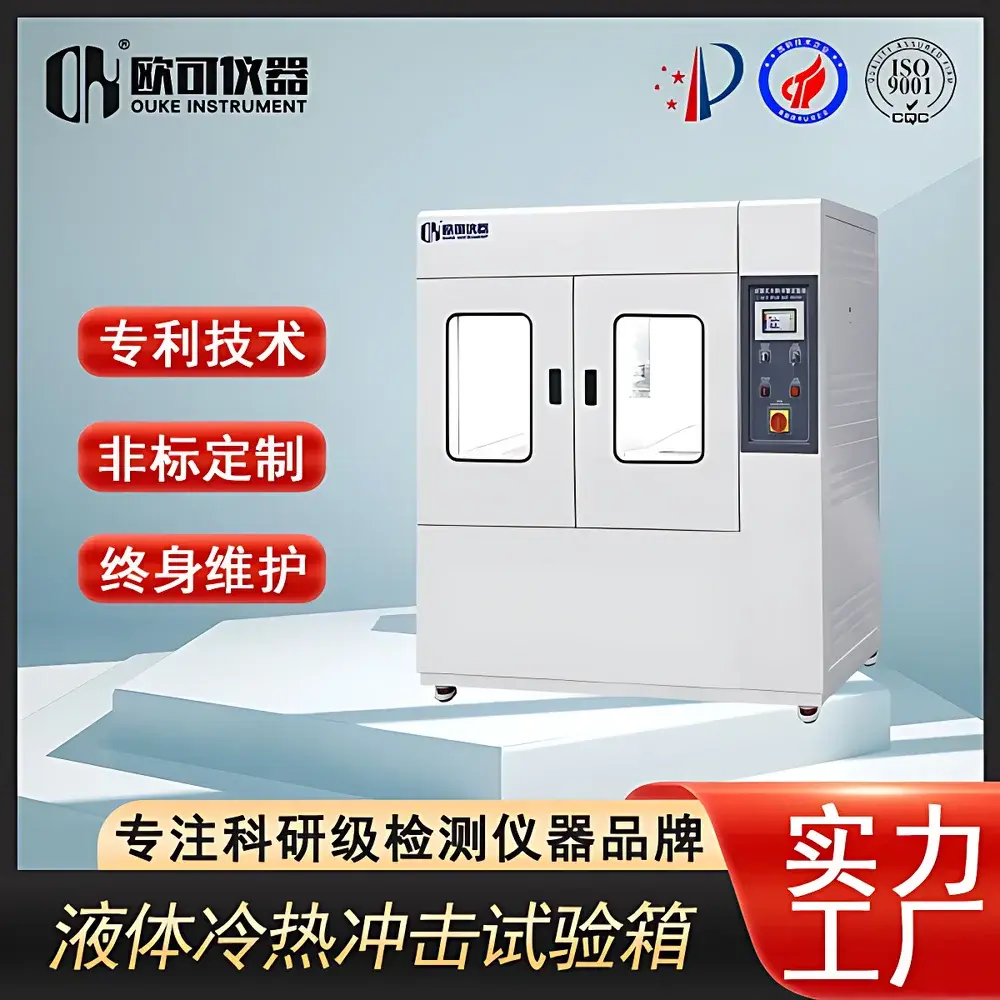
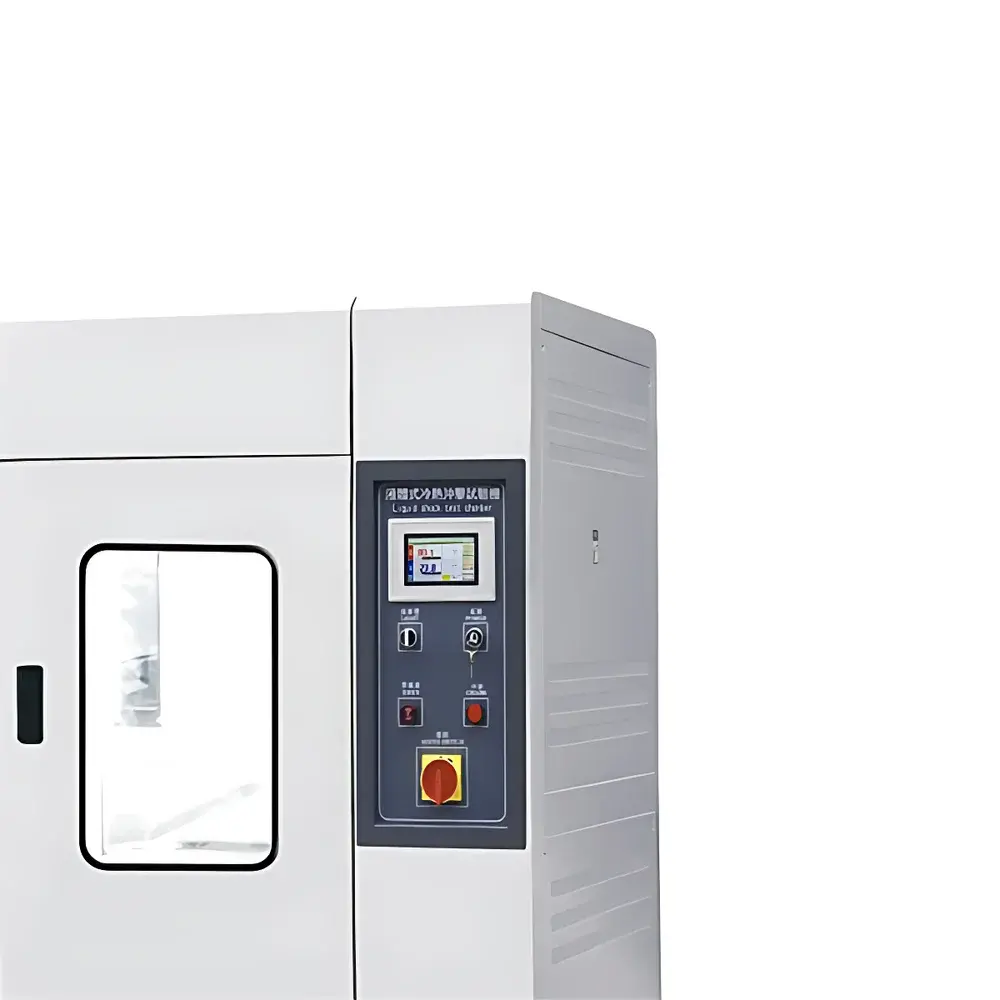
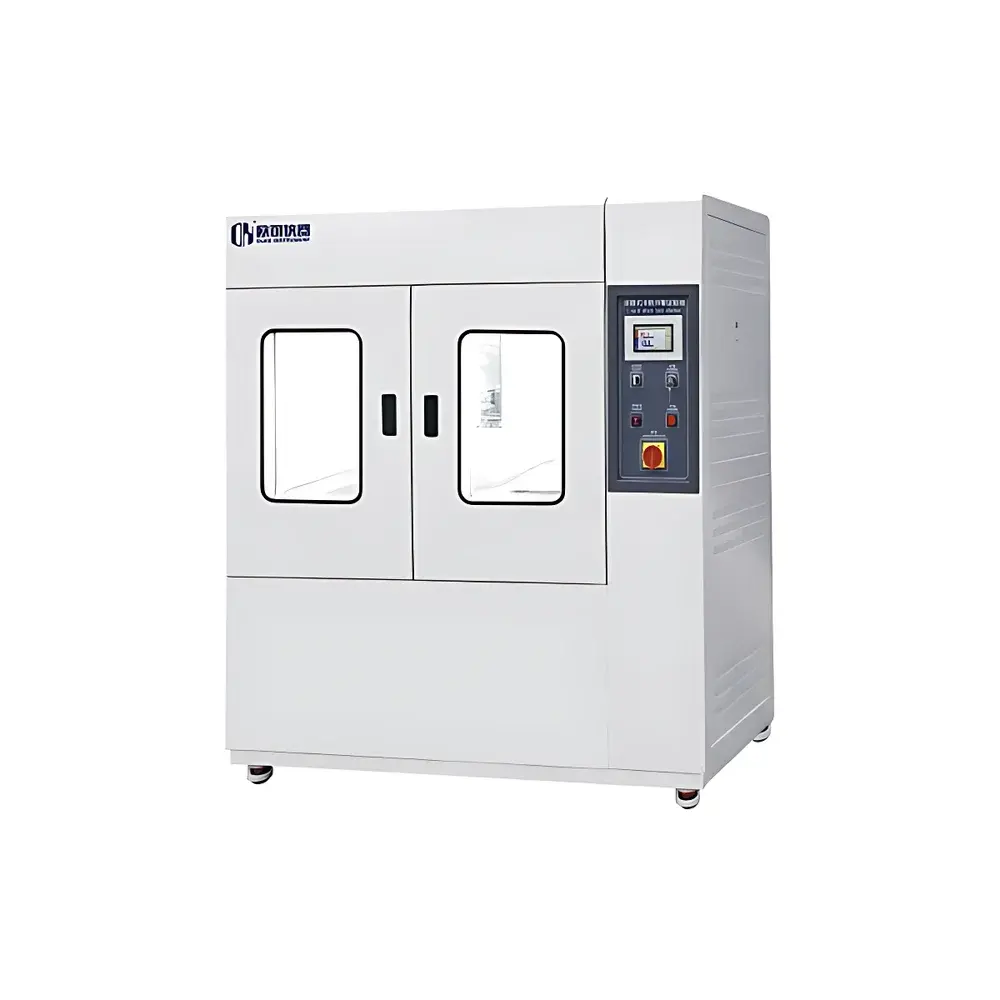
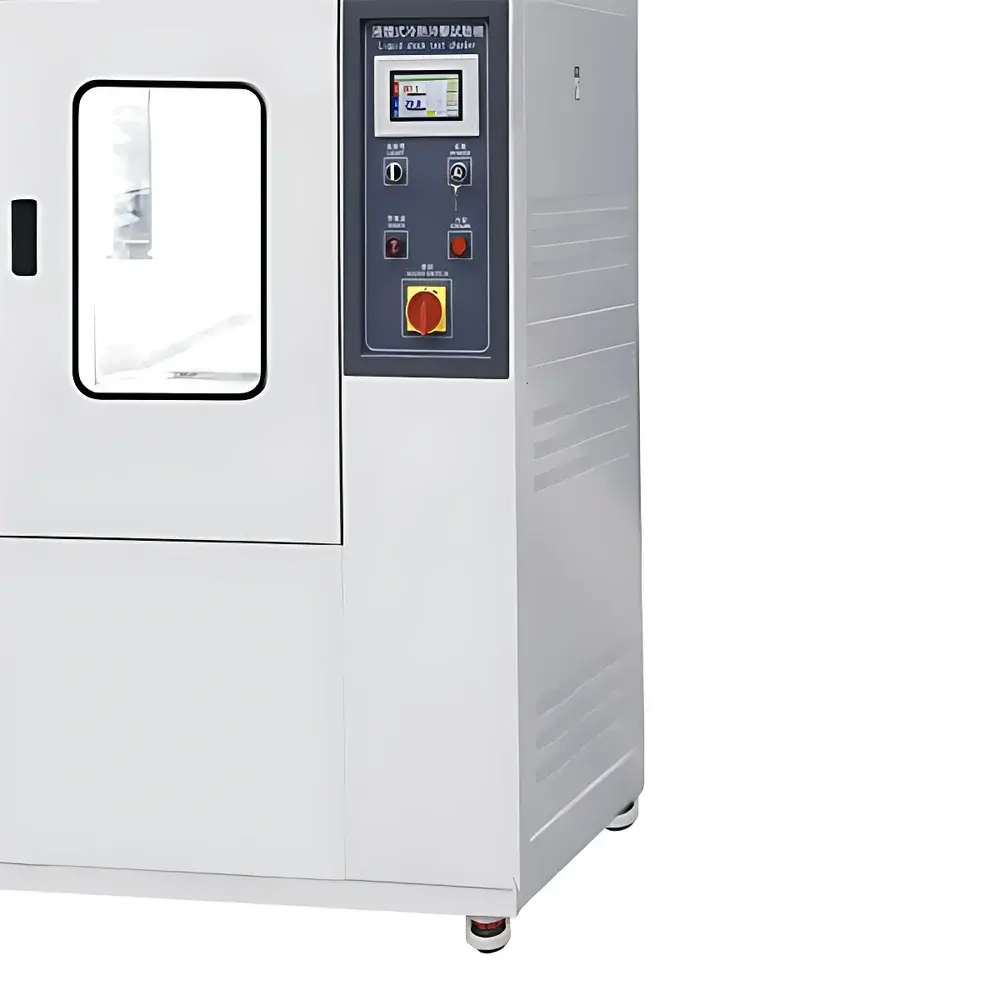
OK-YT-01 Liquid-Mediated Thermal Shock Test Chamber
| Brand | OK Instruments |
|---|---|
| Origin | Guangdong, China |
| Manufacturer Type | Direct Manufacturer |
| Model | OK-YT-01 |
| High-Temperature Range | +150 °C |
| Low-Temperature Range | −50 °C |
| Thermal Shock Range | −50 °C to +150 °C |
| Temperature Stability | ±2 °C |
| Heating Rate | 20 s (to target temp) |
| Cooling Rate | 20 s (to target temp) |
Overview
The OK-YT-01 Liquid-Mediated Thermal Shock Test Chamber is an engineered solution for accelerated environmental reliability testing under extreme thermal transients. Unlike gas-based (three-chamber) thermal shock systems that rely on convective air transfer, the OK-YT-01 employs a dual-liquid-bath architecture—utilizing high-flashpoint silicone oil in the hot bath and anhydrous ethanol or low-temperature synthetic fluid in the cold bath—to achieve direct conductive heat exchange with test specimens. This design enables rapid, reproducible thermal transitions governed by Newton’s law of cooling and interfacial thermal resistance minimization. The system operates on a two-tank immersion principle: samples mounted on a pneumatically actuated transfer basket are alternately immersed in stabilized liquid media, delivering controlled thermal shocks compliant with MIL-STD-810 Method 503 (Temperature Shock), IEC 60068-2-14 (Test N), and GJB 150.5A. Its core application domain includes qualification screening of aerospace avionics, automotive powertrain electronics, and high-density interconnect assemblies where failure modes are thermally activated—such as solder joint fatigue, die attach delamination, and coefficient-of-thermal-expansion (CTE) mismatch-induced microcracking.
Key Features
- Dual independent liquid baths: Hot bath (silicone oil, up to +150 °C) and cold bath (anhydrous ethanol or certified low-temp fluid, down to −50 °C), each equipped with PID-controlled immersion heaters and cascade refrigeration circuits
- Pneumatic high-speed transfer mechanism: Basket movement time ≤10 s between baths; total transition-to-immersion time <20 s, ensuring minimal thermal lag and maximum shock fidelity
- Thermal stability maintained at ±2 °C across full operating range, verified per ISO/IEC 17025-accredited calibration protocols
- Integrated safety architecture: Liquid-level sensors, leak detection via conductivity monitoring, overtemperature cutoffs, emergency basket lift activation, and optional fume extraction interface for volatile media handling
- Modular construction with stainless-steel 316L wetted parts and corrosion-resistant insulation, supporting long-term exposure to aggressive thermal fluids
Sample Compatibility & Compliance
The OK-YT-01 is intended for specimens capable of short-term immersion in non-aqueous thermal media—or those sealed within inert, pressure-balanced housings. It is routinely deployed for testing PCBAs with conformal coating, hermetically sealed sensors, encapsulated battery modules (per UN 38.3 pre-conditioning requirements), and ceramic-packaged RF components. All operational parameters comply with the thermal profile definitions in JESD22-A104 (Temperature Cycling), EIA-364-32 (Thermal Shock), and IEC 60749-26 (Integrated Circuit Reliability Testing). The chamber supports GLP/GMP-aligned audit trails when paired with optional data logging firmware compliant with FDA 21 CFR Part 11 (electronic records and signatures).
Software & Data Management
Control is managed via a real-time embedded OS with touchscreen HMI, supporting programmable multi-step profiles—including dwell time, cycle count, ramp rate limits, and conditional abort logic. Raw temperature data from dual PT100 sensors (one per bath, traceable to NIST standards) is logged at 1 Hz resolution and exportable in CSV or XML format. Optional Ethernet/IP connectivity enables integration into centralized test management platforms (e.g., LabVantage, Siemens Opcenter) and supports SNMP-based alarm forwarding. Audit logs record operator ID, parameter changes, calibration events, and safety interlock triggers—meeting ISO 9001:2015 Clause 8.5.2 (Identification and traceability) and IATF 16949 Section 8.5.1.2 (Control of production process).
Applications
- Aerospace: Qualification of flight-critical FPGAs, MEMS inertial measurement units (IMUs), and satellite thermal control valves exposed to stratospheric thermal cycling
- Automotive: Stress screening of ADAS domain controllers, traction inverters, and 48V DC-DC converters per LV 124 and GMW 3172 requirements
- Electronics manufacturing: Burn-in and defect screening of BGA, QFN, and wafer-level chip-scale packages (WLCSP) prior to shipment
- Materials R&D: Evaluation of thermal fatigue life in metal-matrix composites, polymer-ceramic laminates, and additive-manufactured Ti-6Al-4V structures
- Medical device validation: Verification of hermetic seal integrity in implantable pulse generators and sensor housings under cyclic thermal stress
FAQ
What distinguishes liquid-mediated thermal shock from air-based systems?
Liquid-mediated systems achieve significantly higher thermal transfer coefficients—typically 25–50× greater than forced-air convection—enabling shock rates exceeding 30 °C/min. This replicates field-relevant stresses more accurately for miniaturized, high-power-density components.
Can the OK-YT-01 accommodate unsealed electronic assemblies?
No. Specimens must either be inherently liquid-compatible or housed in validated, vented, pressure-equalized enclosures. Standard practice includes IPC-J-STD-033-compliant moisture barrier bagging prior to loading.
Is routine fluid maintenance required?
Yes. Silicone oil requires periodic filtration and flash-point verification every 500 operational hours; ethanol must be replaced after 200 cycles or upon water content >50 ppm (measured via Karl Fischer titration).
Does the system support automated reporting for regulatory submissions?
Yes—when configured with the optional Compliance Data Module, it generates PDF test reports with embedded digital signatures, calibration certificates, and raw time-series datasets formatted per ASTM E2918 and ISO/IEC 17025 reporting guidelines.
What safety certifications does the OK-YT-01 hold?
The base configuration meets CE marking requirements under the Machinery Directive 2006/42/EC and EMC Directive 2014/30/EU. Optional ATEX Zone 2 certification is available for hazardous location deployment.



