
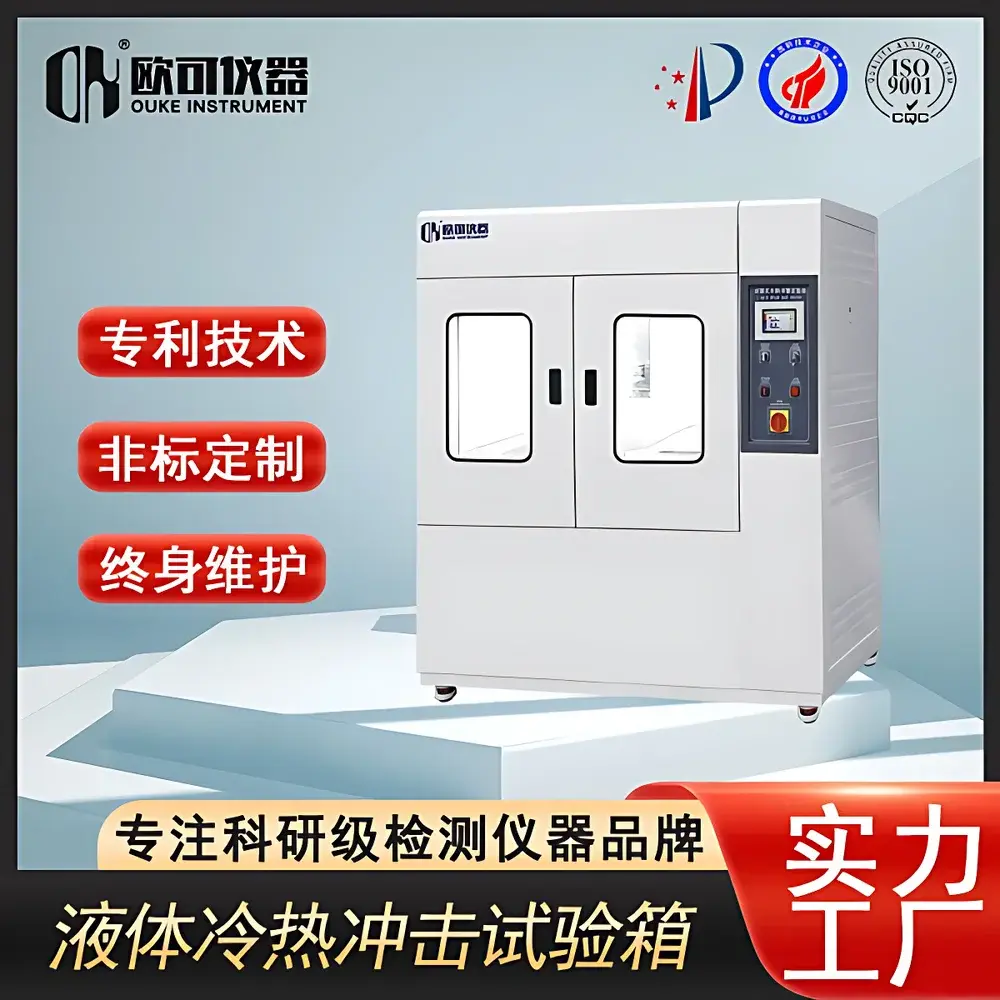
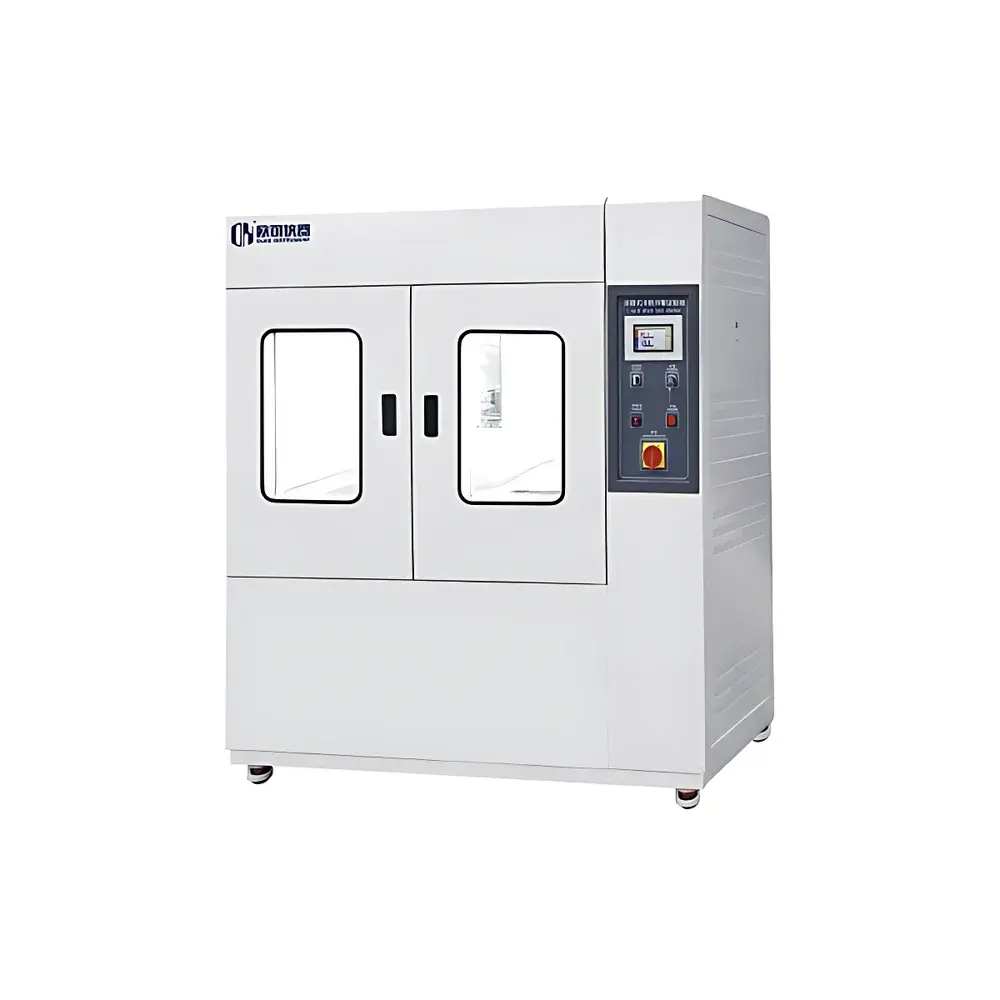
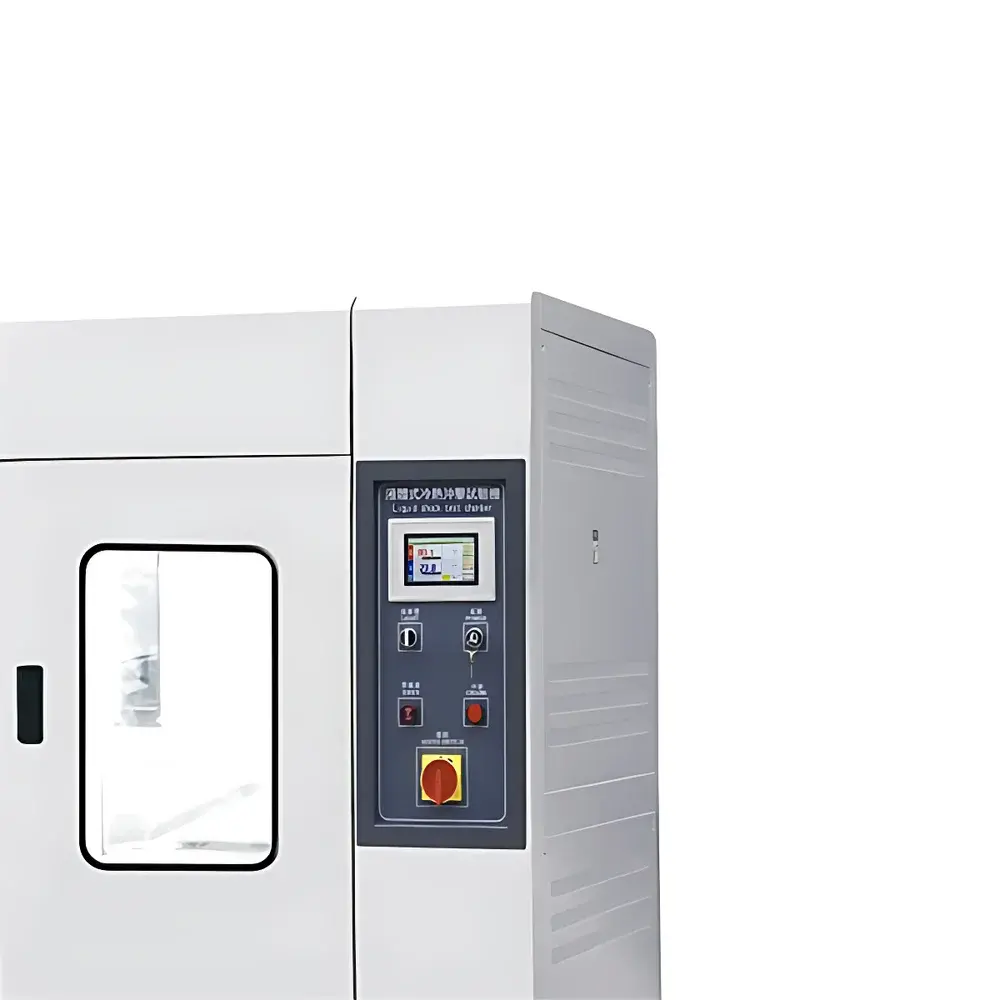
OK-YT-02 Liquid-Mediated Thermal Shock Test Chamber
| Brand | OK Instruments |
|---|---|
| Origin | Guangdong, China |
| Manufacturer Type | Direct Manufacturer |
| Model | OK-YT-02 |
| High-Temperature Range | +150 °C |
| Low-Temperature Range | −50 °C |
| Thermal Shock Range | −50 °C to +150 °C |
| Temperature Stability | ±2 °C |
| Heating Rate | ≥30 °C/min (liquid immersion) |
| Cooling Rate | ≥30 °C/min (liquid immersion) |
| Transfer Time | <10 s |
Overview
The OK-YT-02 Liquid-Mediated Thermal Shock Test Chamber is an engineered environmental reliability testing system designed for accelerated thermal stress evaluation under extreme, rapid temperature transitions. Unlike gas-based (three-chamber) thermal shock systems that rely on forced convection in air, the OK-YT-02 employs dual-liquid immersion—using high-flashpoint silicone oil in the hot bath and anhydrous ethanol or low-temperature synthetic fluid in the cold bath—to achieve direct, high-efficiency conductive heat transfer. This architecture enables sustained thermal transition rates exceeding 30 °C/min across the full operational range (−50 °C to +150 °C), with sample transfer between baths completed in less than 10 seconds via a pneumatically actuated basket mechanism. The system operates on the principle of controlled, repetitive thermal cycling through liquid-phase immersion, inducing quantifiable thermo-mechanical strain in materials and assemblies—critical for identifying latent defects such as interfacial delamination, solder joint fatigue, coefficient-of-thermal-expansion (CTE) mismatch failures, and hermetic seal degradation.
Key Features
- Dual independent liquid baths: Hot bath filled with industrial-grade silicone oil (flash point >300 °C), rated up to +150 °C; cold bath utilizing low-viscosity, low-freezing-point ethanol-based coolant, stable to −50 °C.
- Pneumatic high-speed basket transfer system with position feedback and mechanical end-stop redundancy, ensuring repeatable sub-10-second immersion-to-immersion transitions.
- Temperature uniformity maintained within ±2 °C across active immersion volume per bath, verified per IEC 60068-3-5 and ASTM E2207 calibration protocols.
- Integrated safety architecture including liquid-level sensors, over-temperature cut-off (dual-stage), vapor detection for organic coolants, emergency basket lift activation, and door-interlocked power cutoff.
- Modular insulation design with vacuum-jacketed bath walls and low-conductivity gasketing to minimize cross-bath thermal bleed and improve energy efficiency during extended cycling.
Sample Compatibility & Compliance
The OK-YT-02 is intended for specimens capable of short-term immersion in non-aqueous, non-corrosive thermal media—or those appropriately encapsulated, sealed, or mounted in inert carriers. It is not suitable for water-sensitive, porous, or unsealed electronics without prior validation. The chamber meets functional requirements for test execution under multiple international standards, including but not limited to: IEC 60068-2-14 (Test N: Change of temperature), MIL-STD-810H Method 503.7 (Temperature Shock) and Method 510.7 (Sand and Dust—when combined with auxiliary enclosures), GJB 150.5A-2009 (Military Standard for Environmental Test Methods), JESD22-A104D (Temperature Cycling), and EIA-364-32 (Thermal Shock Testing of Electrical Connectors). While the equipment itself does not carry formal ISO/IEC 17025 accreditation, its control algorithms, sensor traceability (NIST-traceable Pt100 RTDs), and audit-ready event logging support GLP/GMP-compliant test documentation when integrated into validated laboratory workflows.
Software & Data Management
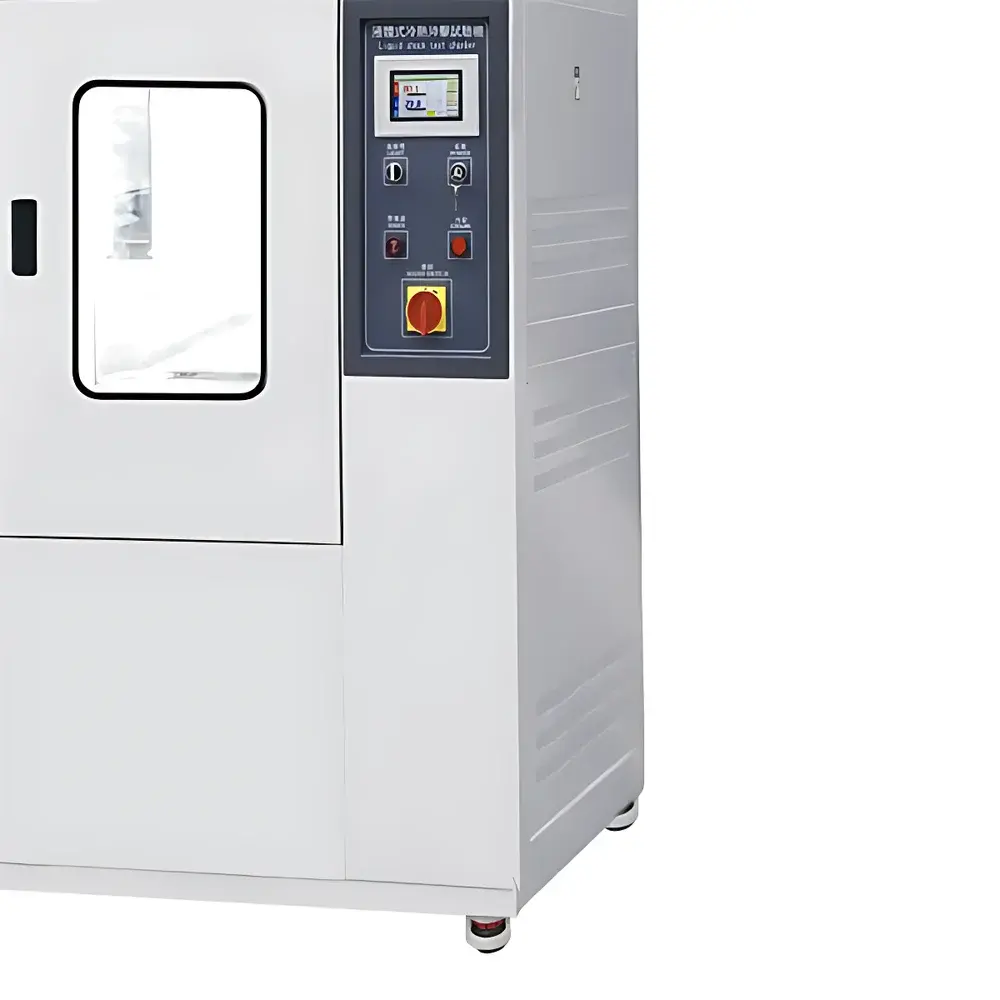
The chamber is equipped with an embedded industrial PLC controller running OK’s proprietary ThermalCycle™ firmware, supporting programmable multi-segment profiles (up to 99 cycles, 99 segments per cycle), real-time bath temperature monitoring, basket position tracking, and automatic dwell time adjustment based on actual thermal equilibrium detection. All operational parameters—including setpoints, actual temperatures, transfer timestamps, alarm logs, and sensor diagnostics—are timestamped and exportable in CSV format via USB or Ethernet interface. Optional software add-ons provide FDA 21 CFR Part 11-compliant user access control, electronic signature capability, and audit trail generation for regulated environments. Raw data files retain millisecond-resolution timestamps and are structured for seamless import into statistical process control (SPC) platforms or failure analysis databases.
Applications
- Aerospace: Qualification testing of avionics modules, satellite payload components, and flight-critical sensors subjected to stratospheric thermal transients.
- Automotive: Stress screening of engine control units (ECUs), battery management systems (BMS), radar modules, and power electronics exposed to under-hood thermal cycling.
- Semiconductor & Packaging: Evaluation of BGA, QFN, and wafer-level chip-scale packages for intermetallic growth, die attach cracking, and mold compound delamination.
- Materials Science: Fatigue life assessment of polymer composites, aluminum-lithium alloys, and ceramic matrix composites under repeated thermal strain.
- Medical Devices: Verification of hermeticity and structural integrity in implantable electronics and sterilizable diagnostic housings per ISO 13485-aligned protocols.
FAQ
What types of samples are compatible with liquid-mediated thermal shock testing?
Samples must be chemically inert to silicone oil and anhydrous ethanol, or fully encapsulated in non-reactive, thermally conductive housings. Unsealed PCBs, hygroscopic ceramics, or devices with vented membranes require pre-test compatibility validation.
How does the OK-YT-02 differ from three-chamber air-based thermal shock systems?
It achieves significantly higher thermal transition rates (>30 °C/min vs. typical 10–25 °C/min), shorter stabilization times (<10 s immersion vs. minutes in air), and more aggressive thermal gradients—making it suitable for accelerated failure mode identification where air-based systems lack sufficient stress intensity.
Is routine maintenance required for the liquid baths?
Yes. Silicone oil must be filtered quarterly and replaced annually under continuous operation; ethanol-based coolant requires moisture content monitoring and replacement every 6–12 months depending on usage frequency and ambient humidity exposure.
Can the system be integrated into an automated test lab environment?
Yes. It supports Modbus TCP and RS-485 communication protocols for integration with MES, SCADA, or centralized test orchestration platforms. Digital I/O signals enable external trigger synchronization and safety interlocking.
Does the OK-YT-02 comply with safety standards for testing lithium-ion batteries?
When configured with optional explosion-proof cabinet integration, vapor extraction, and real-time off-gas monitoring (e.g., CO/H₂ sensors), the system can be adapted for UN 38.3 Section 5.2 thermal shock evaluation—subject to site-specific risk assessment and local regulatory approval.



