
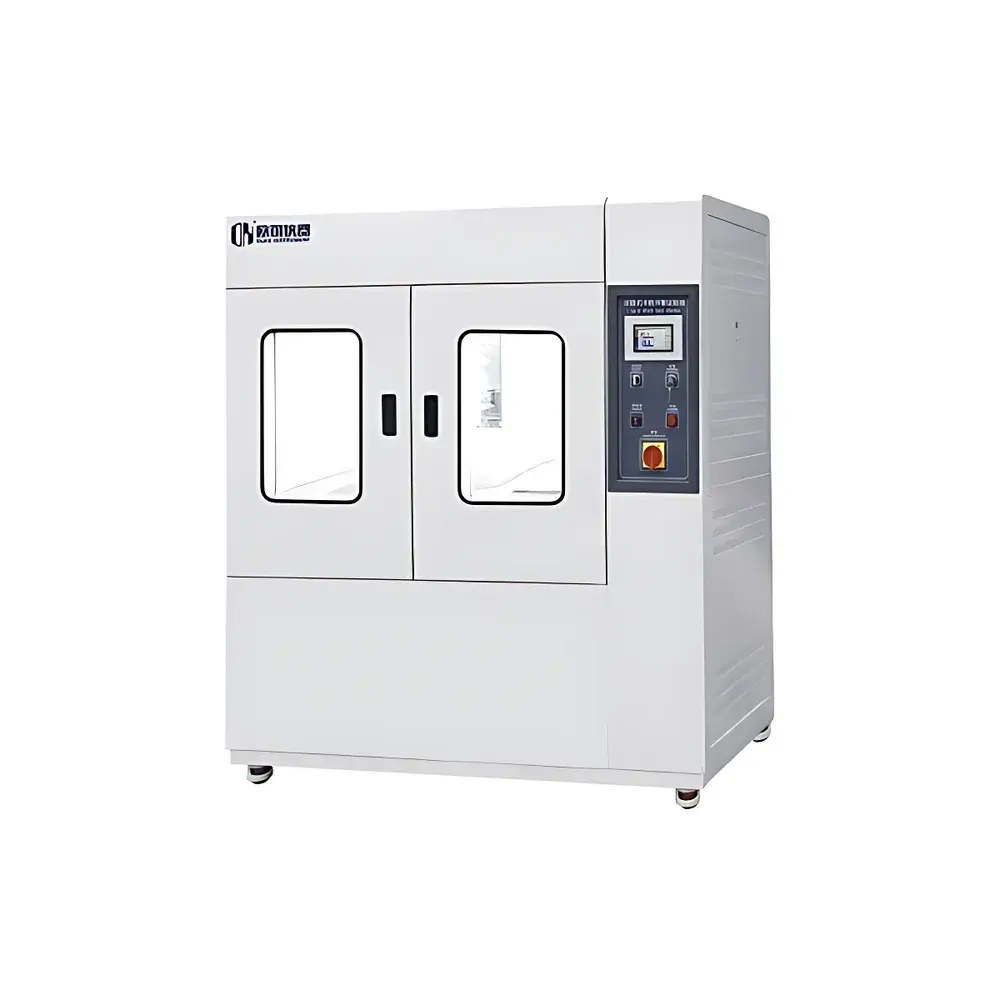
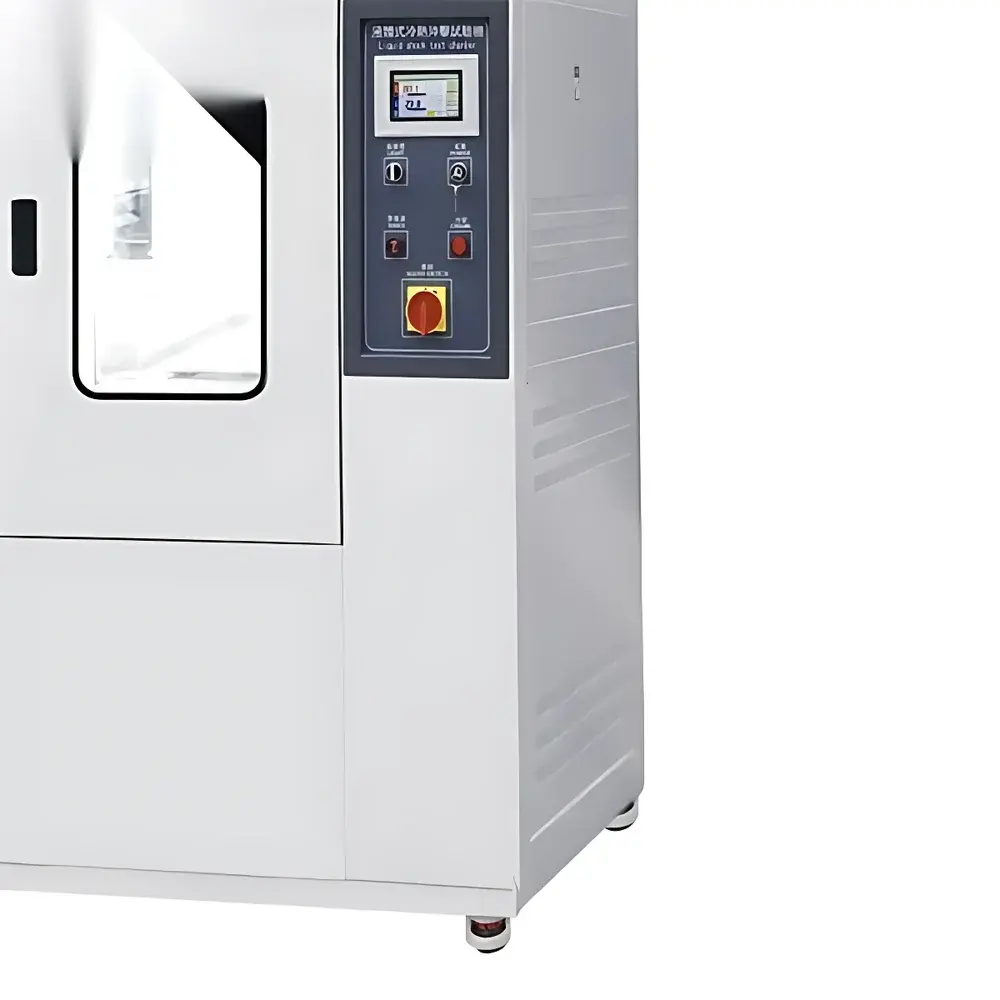
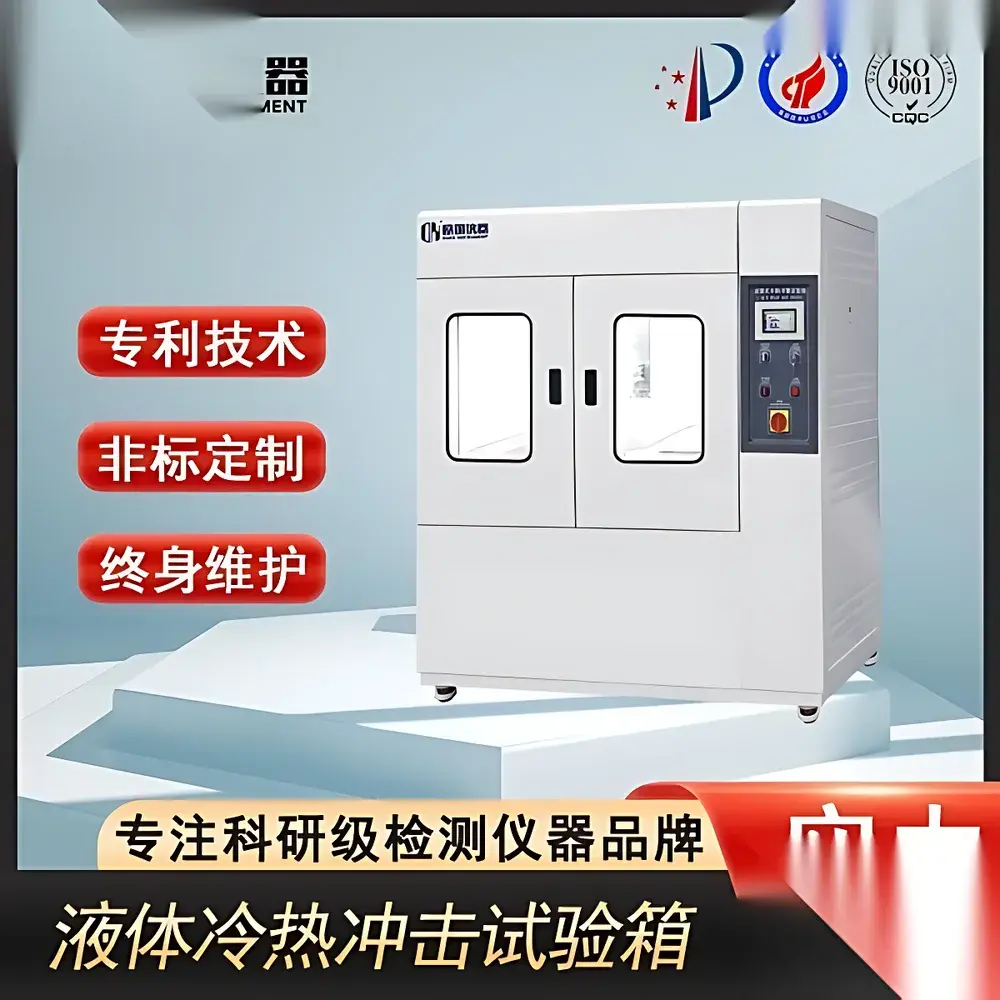
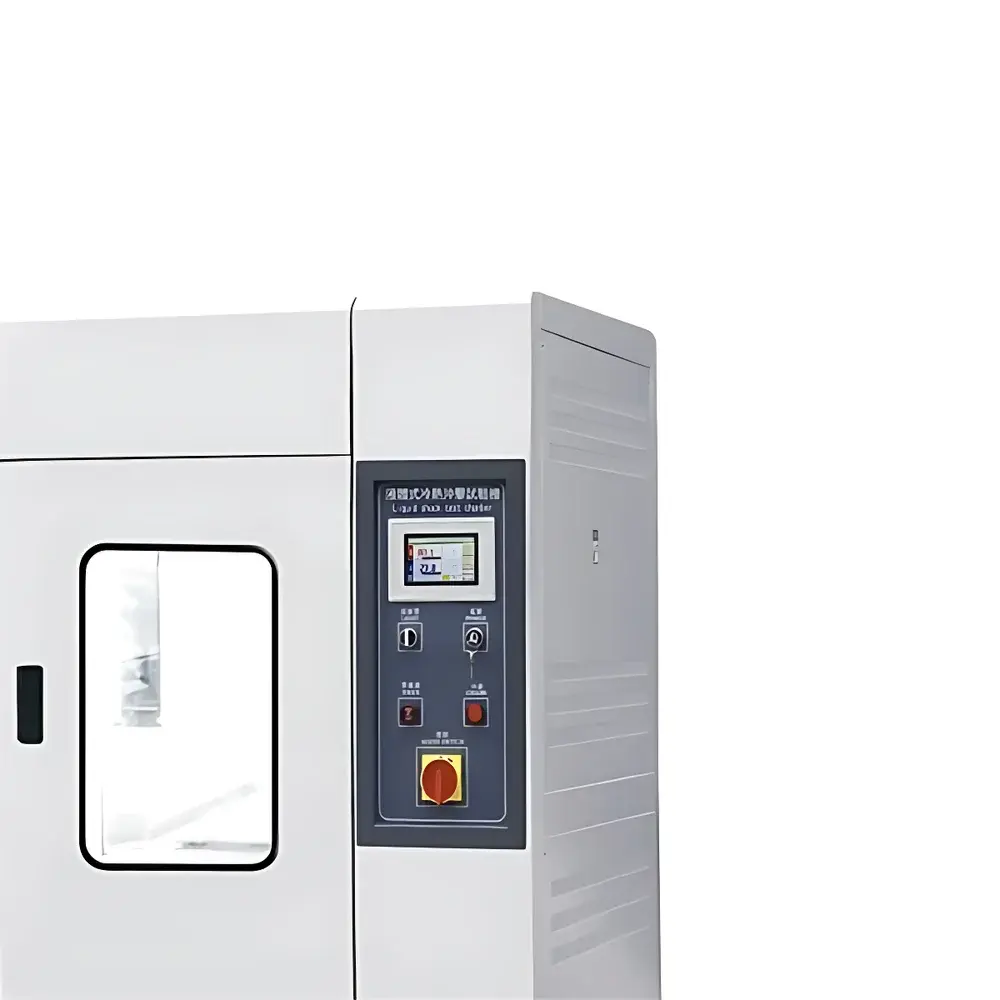
OK-YT Series Liquid Thermal Shock Test Chamber
| Brand | OK |
|---|---|
| Model | OK-YT-01 / OK-YT-02 / OK-YT-03 |
| Internal Chamber Dimensions (W×H×D) | 15×15×15 cm / 20×15×20 cm / 30×20×30 cm |
| Max. Sample Weight | 2 kg |
| High-Temperature Bath Range | RT to +150 °C |
| Low-Temperature Bath Range | RT to –65 °C |
| Heating Time (RT → 150 °C) | ~30 min |
| Cooling Time (RT → –65 °C) | ~85 min |
| Thermal Transfer Time (Hot ↔ Cold Bath) | ≤10 s |
| Temperature Control Accuracy | ±0.5 °C |
| Test Medium Options | Silicone Oil / Glycol Solution / Chilled Water / Specialized Heat Transfer Fluid |
| Drive Mechanism | Mechanical Actuator with Precision Positioning |
| Refrigeration System | Cascade-Type, Hermetic Compressors (R404A/R23) |
| Inner Chamber Material | SUS304 Stainless Steel |
| Outer Casing | Powder-Coated Steel or Optional Stainless Steel |
| Controller | TEMI880 Touchscreen PID Controller (Bilingual: English/Chinese), 100 Programs × 1000 Segments, RS-232/RS-485 Interface |
| Compliance | Designed for ASTM D5276, IEC 60068-2-14, MIL-STD-810G Method 503.5, and GLP/GMP-aligned data logging capability |
Overview
The OK-YT Series Liquid Thermal Shock Test Chamber is an engineered environmental stress screening system designed to evaluate material and component reliability under rapid, extreme temperature transitions between liquid-based thermal reservoirs. Unlike air-based thermal shock chambers, this system employs dual independent liquid baths—filled with silicone oil, glycol-water mixtures, or other certified heat transfer media—to achieve high thermal mass stability, precise boundary control, and repeatable shock profiles. The chamber operates on the principle of mechanical sample immersion: a programmable actuator transfers test specimens directly between hot and cold liquid zones within ≤10 seconds, inducing controlled thermal gradients across surfaces and interfaces. This methodology is critical for identifying latent defects in solder joints, conformal coatings, encapsulants, and hermetic seals—particularly in optoelectronic assemblies (e.g., fiber optic transceivers), display modules (LCD/OLED), multilayer PCBs, lithium-ion battery cells, and MEMS sensors. Its architecture supports both qualification testing per industry standards and accelerated life-cycle validation in R&D and production QA environments.
Key Features
- Dual-bath cascade refrigeration system with independent high-temperature (+150 °C) and low-temperature (–65 °C) reservoirs, enabling wide-range shock profiling without cross-contamination.
- Mechanically driven specimen transfer mechanism with position repeatability < ±0.3 mm, ensuring consistent immersion depth and dwell time in each bath.
- SUS304 stainless steel inner chamber and fluid-contact components compliant with ISO 8502-3 for corrosion resistance and long-term fluid compatibility.
- TEMI880 touchscreen controller with real-time curve visualization, alarm history logging, and password-protected parameter locking—meeting FDA 21 CFR Part 11 requirements for electronic record integrity when configured with audit trail firmware.
- Modular electrical and fluid routing: segregated coolant lines, shielded signal conduits, and front-access service panels reduce downtime during maintenance.
- Integrated observation window with embedded heating element prevents condensation, supporting continuous visual monitoring during sub-zero operation.
- Standard 50 mm diameter test port with silicone gasket seal enables external sensor integration, power feedthrough, or vacuum line connection without compromising chamber integrity.
Sample Compatibility & Compliance
The OK-YT series accommodates samples up to 2 kg across three standard chamber sizes (OK-YT-01 to OK-YT-03), with custom fixtures available for wafer-level carriers, BGA packages, and cylindrical battery formats. All models support test protocols aligned with IEC 60068-2-14 (Change of Temperature), ASTM D5276 (Thermal Shock of Plastics), and MIL-STD-810G Method 503.5 (Temperature Shock). When operated with validated glycol/water mixtures and calibrated thermocouples traceable to NIST standards, the system satisfies GLP and GMP documentation requirements for regulated industries. Optional data export modules generate CSV-formatted reports containing timestamped bath temperatures, transfer timing events, and controller setpoint deviations—facilitating root-cause analysis during failure mode investigations.
Software & Data Management
The TEMI880 controller provides native support for multi-step thermal shock sequences—including ramp-soak-shock cycles, dwell-controlled transitions, and conditional branching based on real-time sensor feedback. Up to 100 programs (each with 1000 segments and 999 loops) can be stored onboard. Remote configuration and monitoring are enabled via RS-232 or RS-485 serial interface using vendor-provided PC software, which logs all operational parameters with millisecond resolution. For enterprise integration, optional OPC UA or Modbus TCP gateways allow synchronization with MES platforms and centralized calibration management systems. Audit trail functionality records user login/logout events, parameter modifications, and alarm acknowledgments—supporting regulatory inspections under ISO/IEC 17025 and ISO 9001 quality frameworks.
Applications
This chamber is routinely deployed in semiconductor packaging labs to assess die attach integrity after repeated exposure to –55 °C/+125 °C cycles; in automotive electronics validation for infotainment control units subjected to under-hood thermal cycling; in medical device manufacturing for verifying epoxy bond strength in implantable sensor housings; and in aerospace component qualification where thermal mismatch-induced delamination must be quantified prior to flight certification. It also serves as a reference platform for developing IPC-9701-compliant accelerated testing methodologies and for calibrating infrared thermography setups used in non-destructive evaluation.
FAQ
What types of heat transfer fluids are compatible with the OK-YT chamber?
Silicone oil (e.g., Dow Corning DC-200), 50/50 ethylene glycol/water solutions, and deionized water are approved. Fluid selection must consider viscosity at operating extremes, flash point, and chemical compatibility with SUS304 and elastomeric seals.
Is the chamber suitable for testing sealed electronic enclosures?
Yes—provided ingress protection (IP) ratings are verified prior to immersion. The 50 mm test port allows pressure-equalization lines to prevent differential stress during rapid thermal transients.
How is temperature uniformity validated across the test volume?
Per IEC 60068-3-5, 9-point sensor mapping is performed at three load conditions (empty, half-load, full-load) using calibrated Class A PT100 probes. Uniformity tolerance is ±1.5 °C at steady state.
Can the system operate unattended for extended durations?
Yes—equipped with over-temperature cutoff, low-fluid-level detection, and compressor high-pressure safety switches. Remote SMS/email alerts are supported via optional IoT gateway.
Does the controller support automated report generation for ISO 17025 compliance?
When paired with the TEMI Report Generator add-on module, it produces PDF/CSV reports containing instrument ID, calibration dates, operator credentials, raw data traces, and uncertainty budgets per ISO/IEC 17025 Clause 7.7.



