
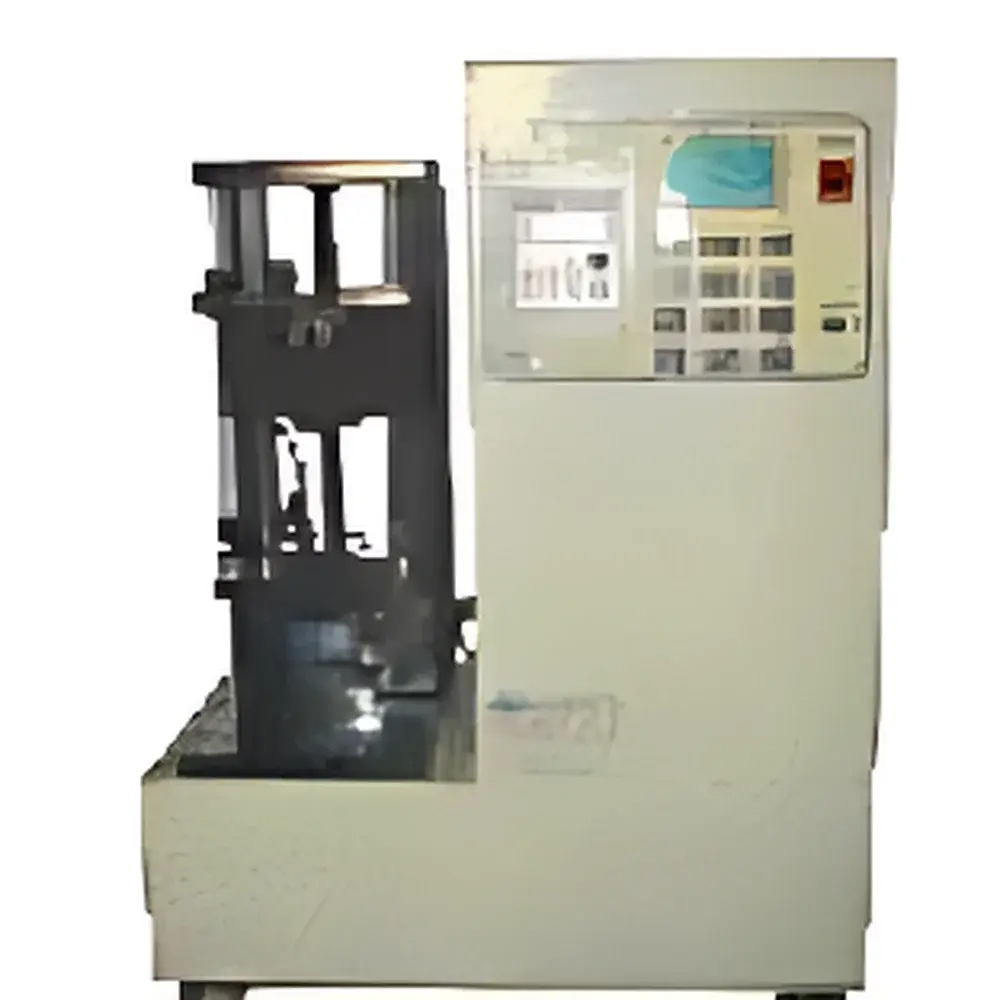
YT930 Eyewear Tensile Testing Machine
| Origin | Taiwan |
|---|---|
| Manufacturer Type | Authorized Distributor |
| Regional Classification | Asia-Pacific Sourced |
| Model | YT930 |
| Pricing | Available Upon Request |
Overview
The YT930 Eyewear Tensile Testing Machine is a precision-engineered mechanical testing system designed specifically for the optical and ophthalmic manufacturing industry. It operates on the fundamental principle of uniaxial tensile loading, applying controlled force along a single axis to quantify the mechanical integrity of eyewear components—including hinge joints, temple attachments, nose pad bonding interfaces, and frame material substrates. Unlike general-purpose universal testers, the YT930 integrates purpose-built fixtures, low-force load cell calibration (typically 0–50 N range), and sub-millimeter displacement resolution optimized for the delicate geometry and failure thresholds characteristic of acetate, TR-90, titanium, and stainless-steel eyewear assemblies. Its design adheres to core mechanical testing conventions defined in ISO 527-1 (plastics), ASTM D638 (tensile properties of plastics), and ISO 12870 (ophthalmic frames), enabling traceable, repeatable assessment of both adhesive cure verification and base material strength.
Key Features
- Dedicated eyewear fixture set: Interchangeable jaw configurations for temple bending, hinge torsion simulation, and bridge pull tests—each aligned to ANSI Z80.1 and ISO 12870 dimensional reference points.
- High-resolution load measurement: Digital load cell with ±0.5% full-scale accuracy and real-time sampling at 100 Hz, supporting detection of subtle bond-line yielding prior to catastrophic separation.
- Programmable test profiles: Predefined test sequences for ISO 12870 Clause 4.5 (hinge durability), Clause 4.6 (temple strength), and custom ramp-hold cycles for UV-cured adhesive validation.
- Compact benchtop architecture: Footprint under 450 × 300 mm, engineered for integration into QC labs adjacent to assembly lines without requiring structural floor anchoring.
- Thermal-stable frame construction: Aluminum alloy chassis with vibration-dampening feet, minimizing environmental noise during low-force measurements (<5 N).
Sample Compatibility & Compliance
The YT930 accommodates full-frame, semi-rimless, and rimless eyewear configurations with temple lengths up to 150 mm and lens widths up to 140 mm. Fixtures support both metal (titanium, β-titanium, Monel) and polymer-based materials (cellulose acetate, propionate, TR-90, nylon). All test methods align with regulatory expectations for Class I medical devices under FDA 21 CFR Part 801 and EU MDR Annex I essential requirements. Data acquisition supports GLP-compliant audit trails when paired with optional software modules, including user authentication, electronic signatures, and immutable test record export (CSV/PDF). Calibration certificates are traceable to NIST or national metrology institutes via accredited third-party providers.
Software & Data Management
The embedded control interface provides real-time force-displacement curve visualization, peak load capture, and automatic yield point identification using tangent modulus analysis. Optional PC-based software enables advanced data handling: batch reporting across multiple specimens, statistical process control (SPC) charting (X̄-R, Cpk), and comparative overlay of historical batches. Export formats include CSV (for Excel/SPSS), XML (for LIMS integration), and PDF with embedded digital signatures compliant with FDA 21 CFR Part 11 requirements. Audit logs record operator ID, timestamp, test parameters, and any manual overrides—retained for minimum 12 months per internal QA policy.
Applications
- Verification of epoxy, UV-acrylate, and thermoplastic adhesive cure state in hinge-to-frame bonding processes.
- Quantification of tensile strength and elongation-at-break for injection-molded acetate temples and nylon-based flexible hinges.
- Validation of mechanical stability after accelerated aging (ISO 10993-12 simulated wear cycles).
- Root cause analysis of field failures—correlating lab-measured joint strength with customer return data.
- Supplier qualification testing per OEM technical specifications (e.g., Luxottica, Safilo, EssilorLuxottica sourcing protocols).
FAQ
What standards does the YT930 support out-of-the-box?
It natively implements test sequences aligned with ISO 12870:2012 Sections 4.5–4.7 and ASTM F2503-18 for ophthalmic frame mechanical evaluation.
Can the system be calibrated in-house?
No—calibration requires certified deadweight standards and must be performed by an ISO/IEC 17025-accredited service provider; annual recalibration is recommended.
Is thermal compensation available for ambient temperature fluctuations?
Yes—the load cell incorporates temperature drift compensation over 15–30°C operating range, with drift <±0.02% FS/°C.
Does the YT930 meet FDA 21 CFR Part 11 requirements?
When configured with the optional validated software package and network-authenticated user accounts, it satisfies electronic record and signature criteria.
What is the typical lead time for custom fixture development?
Standard eyewear fixtures ship with the unit; application-specific fixtures (e.g., for smart glasses mounting brackets) require 4–6 weeks from engineering approval.



