
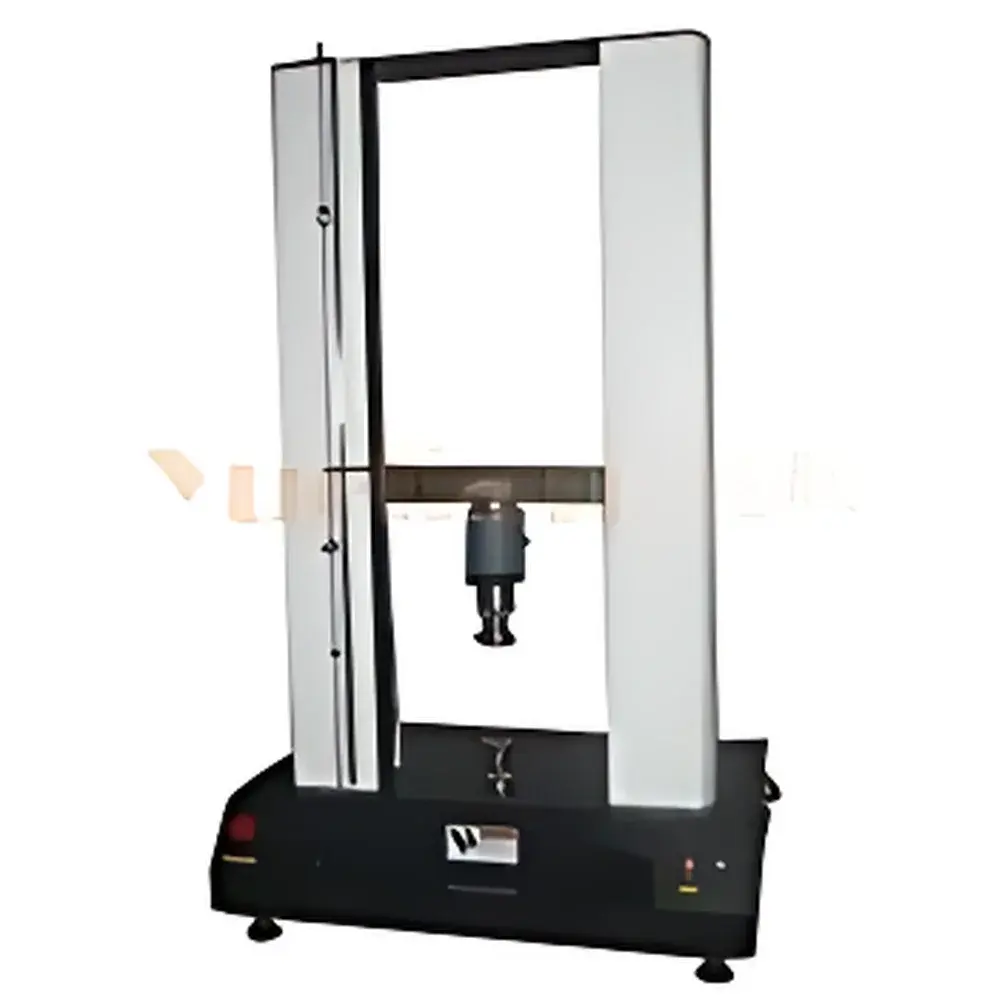
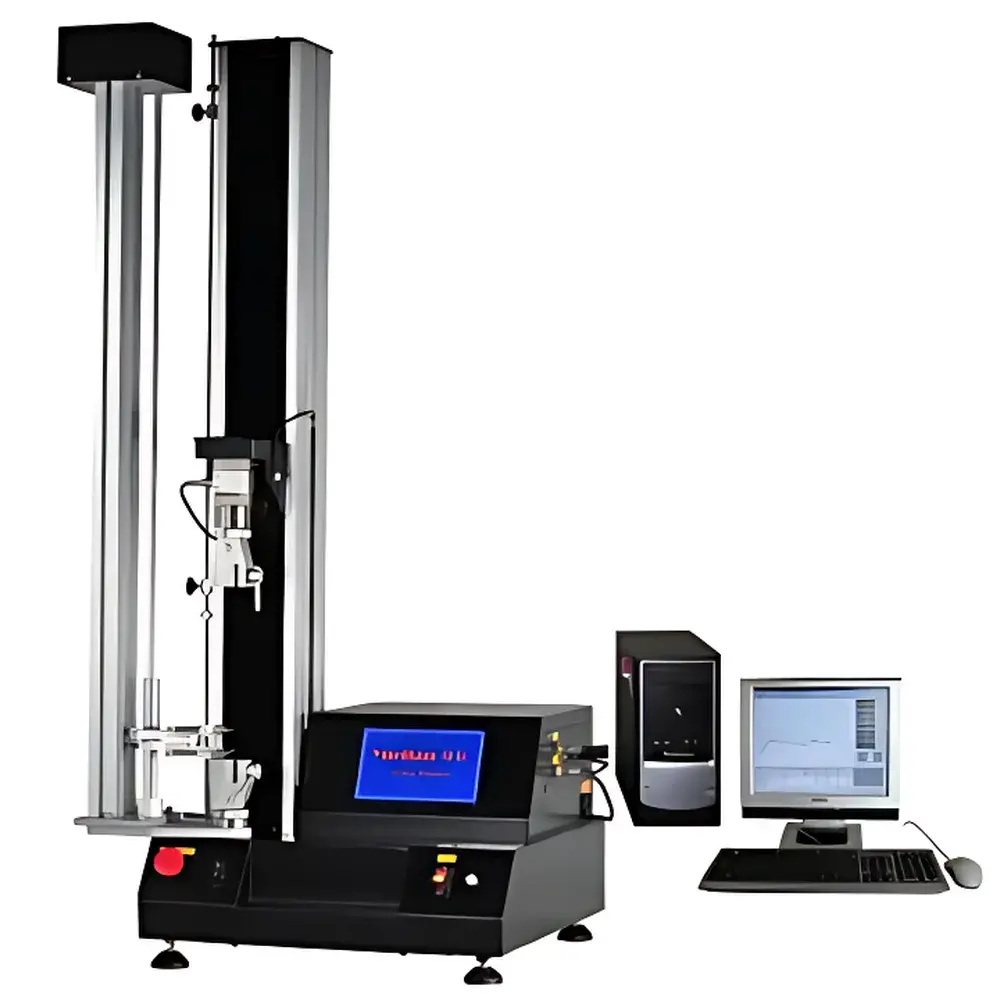
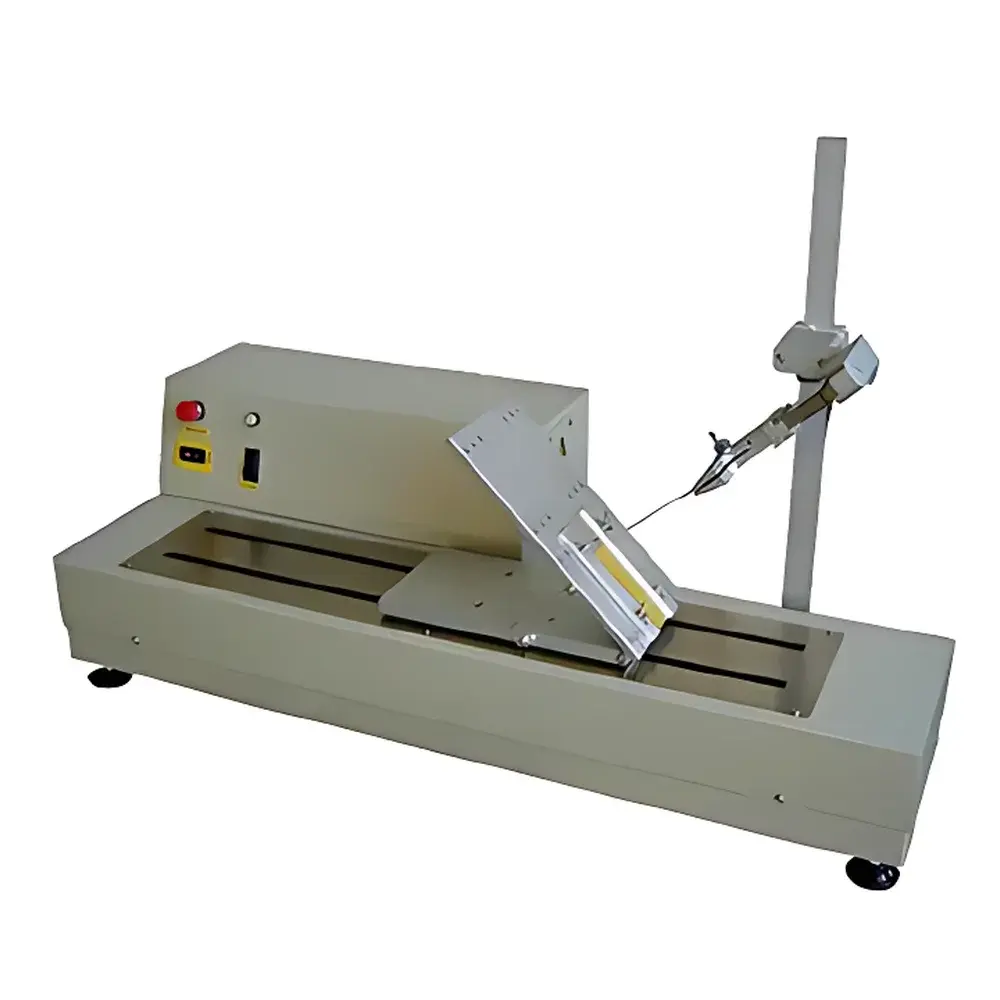
Yuelian YL-1123 Universal Testing Machine
| Brand | Yuelian |
|---|---|
| Origin | Guangdong, China |
| Model | YL-1123 |
| Capacity Options | 5–2000 kgf (or 10 N–20 kN) |
| Force Resolution | 1/250,000 full scale |
| Force Accuracy | ≤ ±0.5% FS |
| Stroke Resolution | 0.005 mm |
| Test Stroke | 700 mm (excl. grips) |
| Test Width | 350 mm |
| Test Speed Range | 0.5–500 mm/min |
| Force Units | kgf, g, N, kN, lbf, ton, MPa |
| Stop Modes | Overload stop, specimen rupture auto-stop, emergency stop, upper/lower limit set stop, over-travel protection |
| Control System | Full computerized servo control |
| Drive System | Servo motor + precision ball screw + synchronous timing belt |
| Dimensions (W×D×H) | 95 × 58 × 151 cm |
| Weight | ~140 kg |
| Power Supply | AC 220 V, 50–60 Hz, 4 A, 400 W |
| Standard Accessories | One set of universal tensile grips, USB interface cable, proprietary test software with data acquisition and reporting module |
Overview
The Yuelian YL-1123 Universal Testing Machine is a dual-column, servo-controlled electromechanical system engineered for high-reproducibility mechanical property characterization across static and quasi-static loading regimes. It operates on the principle of controlled displacement actuation via a precision ball screw driven by a closed-loop servo motor, enabling precise regulation of test speed, load ramping, and displacement feedback. The machine complies with fundamental force measurement traceability requirements defined in ISO 7500-1 (Class 0.5) and ASTM E4 for verification of force-measuring systems. Designed for laboratory and quality assurance environments, it supports standardized test methods including ASTM D638 (tensile properties of plastics), ASTM D3039 (tensile properties of polymer matrix composites), ISO 6892-1 (metallic materials – tensile testing), ISO 179 (impact resistance), and GB/T 1457 (peel strength of sandwich constructions). Its modular frame architecture accommodates interchangeable load cells, environmental chambers (optional), and specialized fixtures — making it suitable for routine QC, incoming inspection, R&D material evaluation, and mechanical behavior research.
Key Features
- High-resolution force measurement with ≤ ±0.5% full-scale accuracy and 1/250,000 internal resolution, ensuring compliance with ISO 7500-1 Class 0.5 certification protocols.
- Precision linear motion system featuring preloaded ball screws and synchronous timing belts, delivering smooth, backlash-free operation and long-term dimensional stability.
- Wide dynamic speed range (0.5–500 mm/min), programmable in 0.1 mm/min increments via PC-based control software; includes rapid jog controls for grip positioning.
- 700 mm effective test stroke and 350 mm throat depth accommodate diverse specimen geometries—from thin films and adhesives to structural metal coupons and composite laminates.
- Multi-unit force display and conversion (N, kN, kgf, lbf, ton, MPa) with real-time unit switching during active tests, supporting international reporting conventions.
- Comprehensive safety architecture: hardware-enforced overload cutoff, emergency stop circuitry, automatic rupture detection, programmable upper/lower displacement limits, and mechanical over-travel end stops.
- Integrated color LCD touchscreen interface with tactile soft keys enables standalone operation; full functionality unlocked when connected to Windows-based host PC.
Sample Compatibility & Compliance
The YL-1123 accommodates specimens ranging from sub-millimeter polymer filaments to 2000 kgf-rated steel rods, contingent upon selected load cell capacity (10 N to 20 kN options available). Standard wedge-action, pneumatic, and hydraulic grips support flat, round, and irregular cross-sections. Optional accessories include peel fixtures (90°/180°), shear plates, bending jigs (3-point/4-point), compression platens, and environmental enclosures (-40°C to +150°C). All test configurations align with GLP documentation practices and support audit-ready data trails per FDA 21 CFR Part 11 when paired with validated software versions. Calibration certificates are traceable to national metrology institutes (e.g., CNAS-accredited labs in China), and mechanical verification follows ISO 7500-1 procedures.
Software & Data Management
The proprietary YL-TestSuite software provides real-time graphical display of stress–strain, load–displacement, and time-based curves. It supports automated calculation of modulus, yield strength, ultimate tensile strength (UTS), elongation at break, secant modulus, and peel adhesion energy (J/m²). Data export formats include CSV, Excel (.xlsx), PDF reports (with configurable templates), and XML for LIMS integration. Audit trail logging records user actions, parameter changes, calibration events, and test interruptions. Software validation packages—including IQ/OQ documentation, electronic signature support, and role-based access control—are available upon request for regulated industries (pharmaceuticals, aerospace, medical devices).
Applications
This system serves as a foundational platform for mechanical testing in diverse sectors: tensile and compressive evaluation of metallic alloys (ASTM E8/E9), peel strength assessment of pressure-sensitive adhesives (ASTM D3330, GB/T 2792), tear resistance of elastomers (ISO 34-1), flexural rigidity of packaging substrates (ASTM D790), bond integrity of laminated composites (ASTM D1002), and elongation profiling of thermoplastic films (ISO 527-3). It is routinely deployed in wire & cable manufacturing (IEC 60811), footwear component validation (ISO 20344), automotive interior trim qualification (SAE J2236), and aerospace fastener testing (AMS 2750).
FAQ
What load cell capacities are available for the YL-1123?
Standard options span 10 N to 20 kN (equivalent to 1 kgf to 2000 kgf); dual-range configurations are supported for extended versatility.
Is the system compliant with ISO 17025 or GLP requirements?
Yes—when operated with calibrated transducers, documented maintenance logs, and validated software, the system meets core technical requirements for ISO/IEC 17025 accredited laboratories and GLP-compliant studies.
Can the machine perform cyclic or fatigue testing?
No—the YL-1123 is optimized for static and quasi-static monotonic tests only; fatigue applications require dedicated servo-hydraulic or electrodynamic systems.
Does the software support multi-language interfaces?
English and Simplified Chinese are natively supported; additional language packs may be commissioned for enterprise deployments.
What is the recommended calibration interval?
Annual calibration is advised per ISO/IEC 17025; interim verification using certified reference standards should occur before critical test campaigns or after mechanical impact.



