
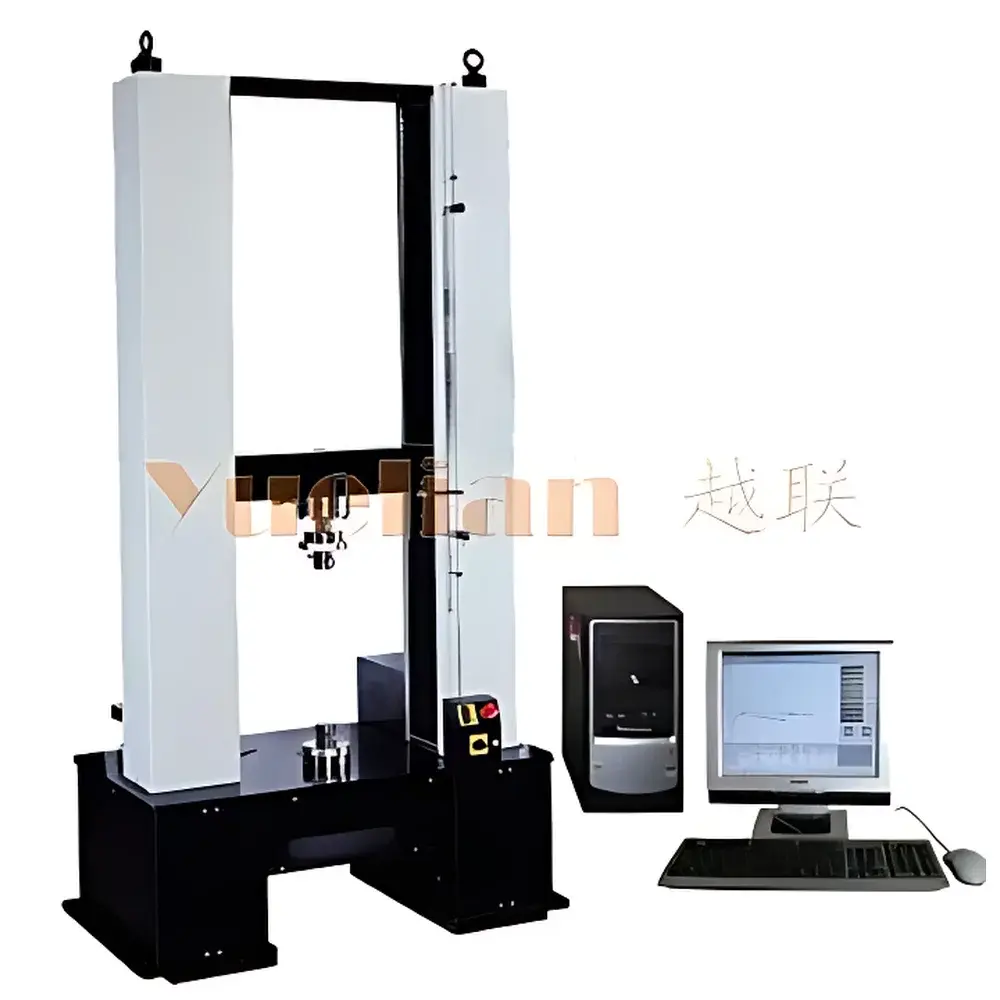
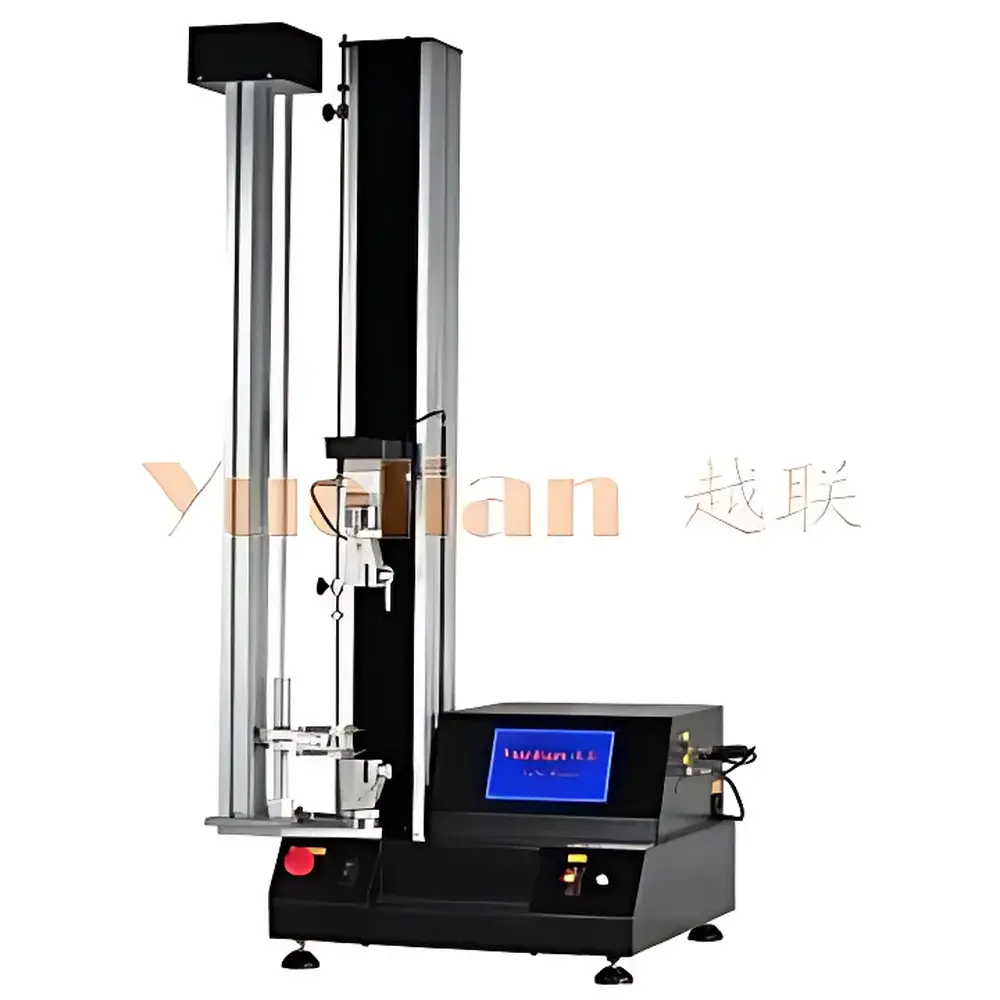
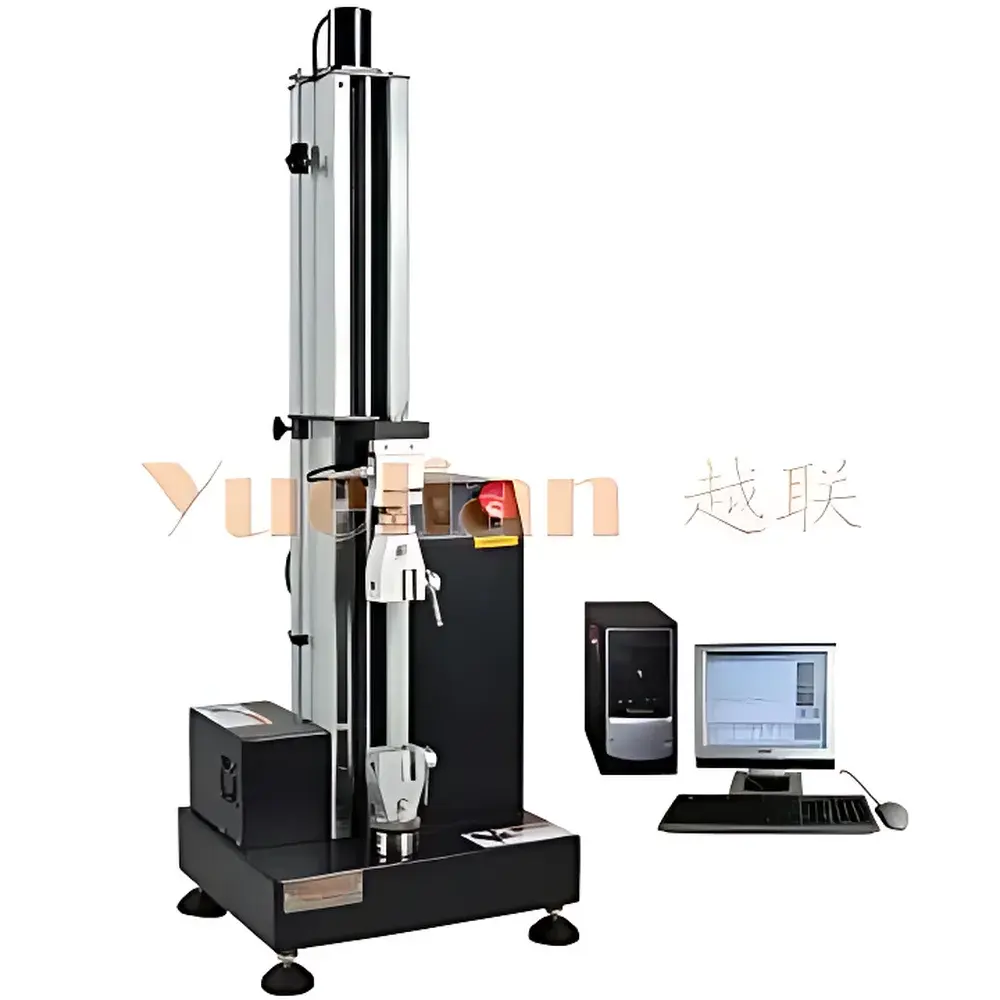
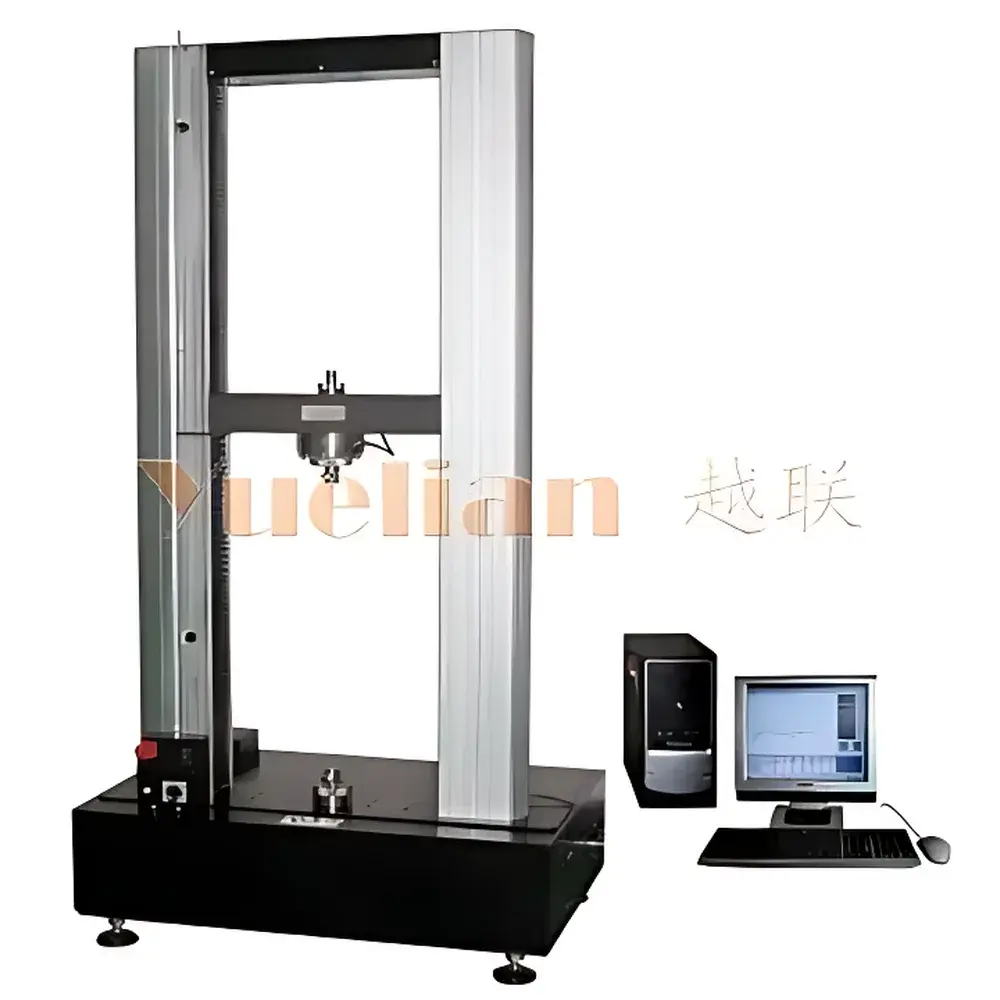
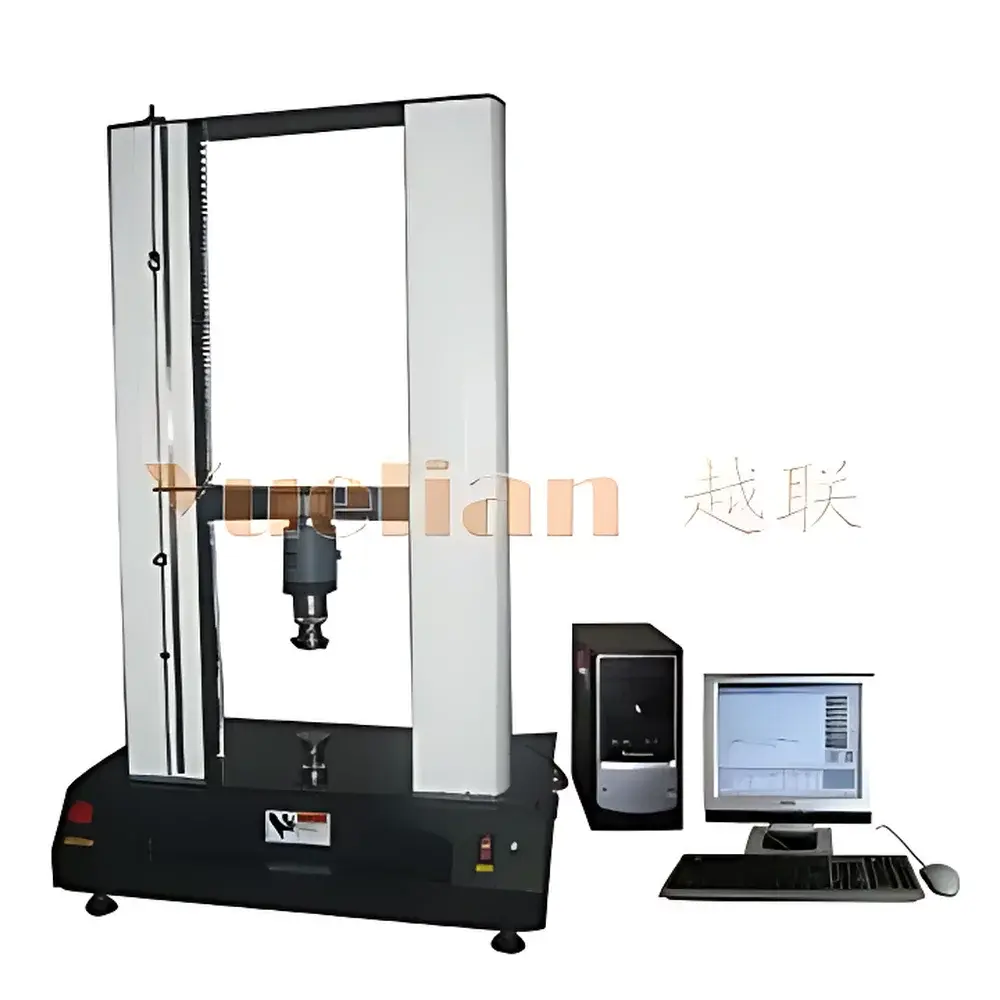
Yuelian YL-1151 10 Ton Universal Testing Machine
| Brand | Yuelian |
|---|---|
| Origin | Guangdong, China |
| Manufacturer Type | Authorized Distributor |
| Country of Origin | China |
| Model | YL-1151 |
| Price Range | USD 14,000 – 42,000 (FOB Guangdong) |
| Instrument Type | Electromechanical Universal Testing Machine |
| Maximum Load Capacity | 100 kN (10 Ton-force) |
| Drive System | Precision Ball-Screw Actuator with AC Servo Motor |
| Control Mode | Closed-Loop Digital PID Control |
| Test Speed Range | 0.001 – 500 mm/min (adjustable in real time) |
| Displacement Resolution | ≤ 0.001 mm |
| Load Accuracy | ±0.5% of full scale |
| Crosshead Travel | 1,200 mm (standard) |
| Data Acquisition Rate | Up to 1,000 Hz |
| Compliance Standards | ASTM E4, ASTM E8/E8M, ISO 6892-1, GB/T 228.1-2021 |
Overview
The Yuelian YL-1151 10 Ton Universal Testing Machine is an electromechanical static testing system engineered for high-reproducibility mechanical characterization of metallic, polymeric, composite, and ceramic materials under tension, compression, bending, and shear loading conditions. Built upon a rigid two-column load frame with preloaded linear guideways and a high-stiffness crosshead assembly, the system employs a precision-ground ball-screw actuator driven by a brushless AC servo motor and paired with a digitally tuned PID control loop. Force measurement is performed via a calibrated S-type or cantilever-type load cell traceable to national metrological standards, ensuring compliance with ASTM E4 requirements for verification of force-measuring instruments. The machine operates within a defined ambient temperature range (10–35 °C) and relative humidity ≤ 80% non-condensing, meeting baseline environmental specifications for GLP-compliant mechanical testing laboratories.
Key Features
- Robust dual-column steel frame with vibration-damped base and integrated safety interlocks compliant with ISO 13857 guarding principles
- Real-time closed-loop control architecture supporting displacement-, load-, and strain-controlled test modes per ISO 5893 and ASTM E4
- High-resolution optical encoder feedback (≥ 1 µm position resolution) synchronized with 1,000 Hz data acquisition for dynamic event capture
- Modular grip system accommodating wedge-action, pneumatic, hydraulic, and custom fixtures — compatible with ASTM E8 standard specimen geometries (e.g., Type A flat tensile bars)
- Integrated extensometer interface supporting clip-on, video, and laser extensometers (optional) for true strain measurement per ISO 6892-1 Annex B
- CE-marked power supply and EMC-compliant electronics meeting IEC 61326-1 for industrial laboratory environments
Sample Compatibility & Compliance
The YL-1151 accommodates standardized test specimens up to 300 mm in gauge length and 50 mm in maximum width, with adjustable crosshead spacing optimized for ASTM E8, ISO 6892-1, and GB/T 228.1-2021 specimen configurations. It supports both room-temperature testing and optional environmental chamber integration (−70 °C to +300 °C). All calibration procedures follow ISO/IEC 17025 guidelines, and factory-certified load cell calibrations are provided with NIST-traceable documentation. The system meets essential requirements of the Machinery Directive 2006/42/EC and supports audit-ready documentation for FDA-regulated quality systems operating under 21 CFR Part 11 when paired with validated software.
Software & Data Management
The YL-1151 operates with Yuelian’s proprietary TESTMaster v3.2 software — a Windows-based platform supporting multi-language UI (English, Spanish, Chinese), customizable test method templates, and automated report generation in PDF, Excel, and XML formats. Software features include real-time curve overlay, modulus calculation (tangent, secant, chord), yield point detection (0.2% offset method), and fracture energy integration. Audit trail functionality logs all user actions, parameter changes, and test executions with timestamp and operator ID — satisfying ALCOA+ data integrity principles. Raw data export adheres to ASTM E1434-22 for digital archiving, and optional 21 CFR Part 11 add-on enables electronic signatures and role-based access control.
Applications
- Tensile property evaluation of structural steels, aluminum alloys, and stainless grades per ASTM E8/E8M
- Compression testing of concrete cores, polymer foams, and biomedical implant materials per ASTM C39 and ISO 604
- Flexural analysis of thermoset composites and laminated boards using three-point bending per ASTM D790
- Adhesion strength assessment of coated substrates and adhesive joints per ASTM D4541 (pull-off) and ASTM D1876 (T-peel)
- Quality assurance testing in automotive component suppliers, aerospace Tier-2 manufacturers, and ISO 9001-certified production labs
- Educational use in university materials science laboratories for undergraduate and graduate-level mechanical behavior courses
FAQ
What is the maximum load capacity of the YL-1151, and is it verified per ASTM E4?
The YL-1151 is rated for 100 kN (10 ton-force) maximum capacity. Each unit undergoes factory verification per ASTM E4 Annex A2 using certified deadweight standards, with calibration certificates supplied at shipment.
Does the system support strain-controlled testing with an extensometer?
Yes — the controller provides dedicated analog and digital inputs for clip-on and non-contact extensometers, enabling strain-controlled ramp-hold tests per ISO 6892-1 Clauses 9.2 and 10.2.
Can the software generate reports compliant with ISO/IEC 17025 requirements?
TESTMaster v3.2 includes configurable report templates with embedded uncertainty statements, calibration status indicators, and raw data traceability — fully aligned with ISO/IEC 17025:2017 Clause 7.8.2.
Is remote operation or network integration possible?
The system supports TCP/IP communication via Ethernet; optional OPC UA server module enables integration into MES or SCADA environments for Industry 4.0-ready test data flow.
What maintenance intervals are recommended for long-term accuracy retention?
Biannual verification of load cell linearity and crosshead alignment is advised; annual recalibration of the displacement transducer and PID tuning validation are recommended per ISO 7500-1.



