
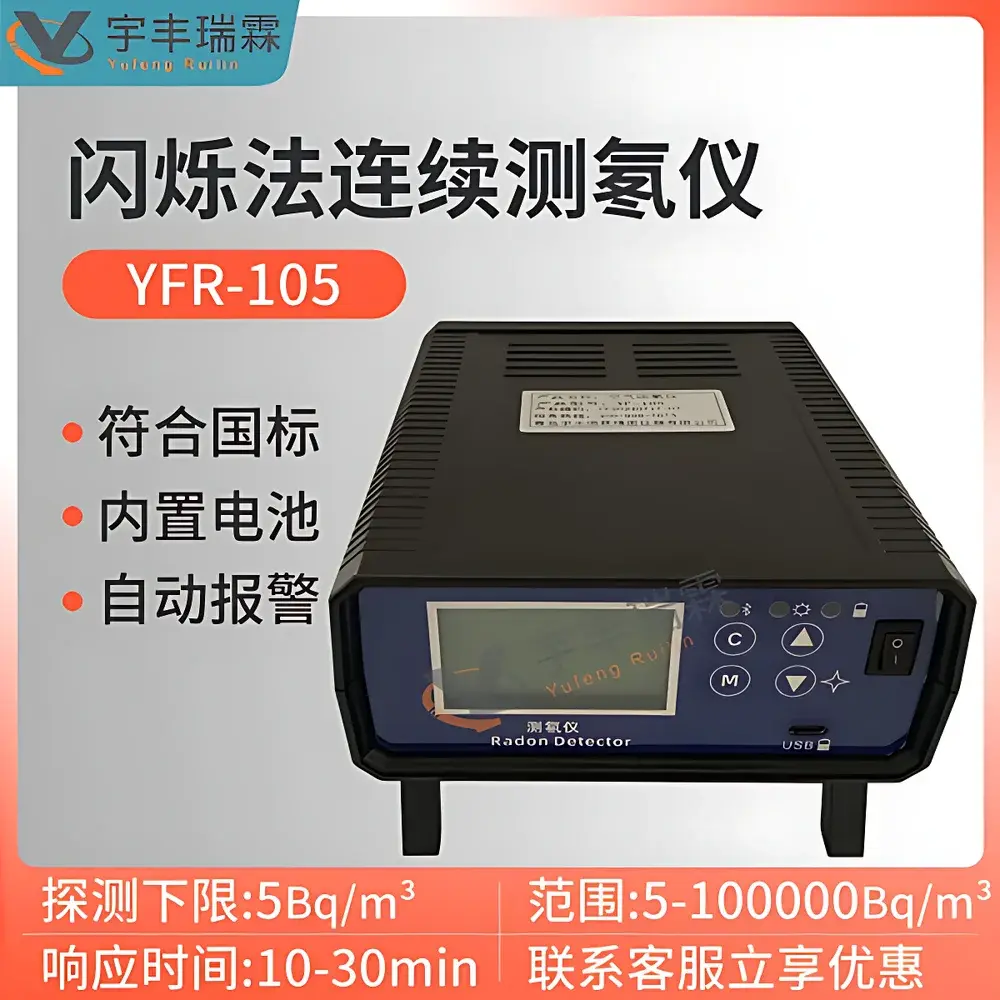
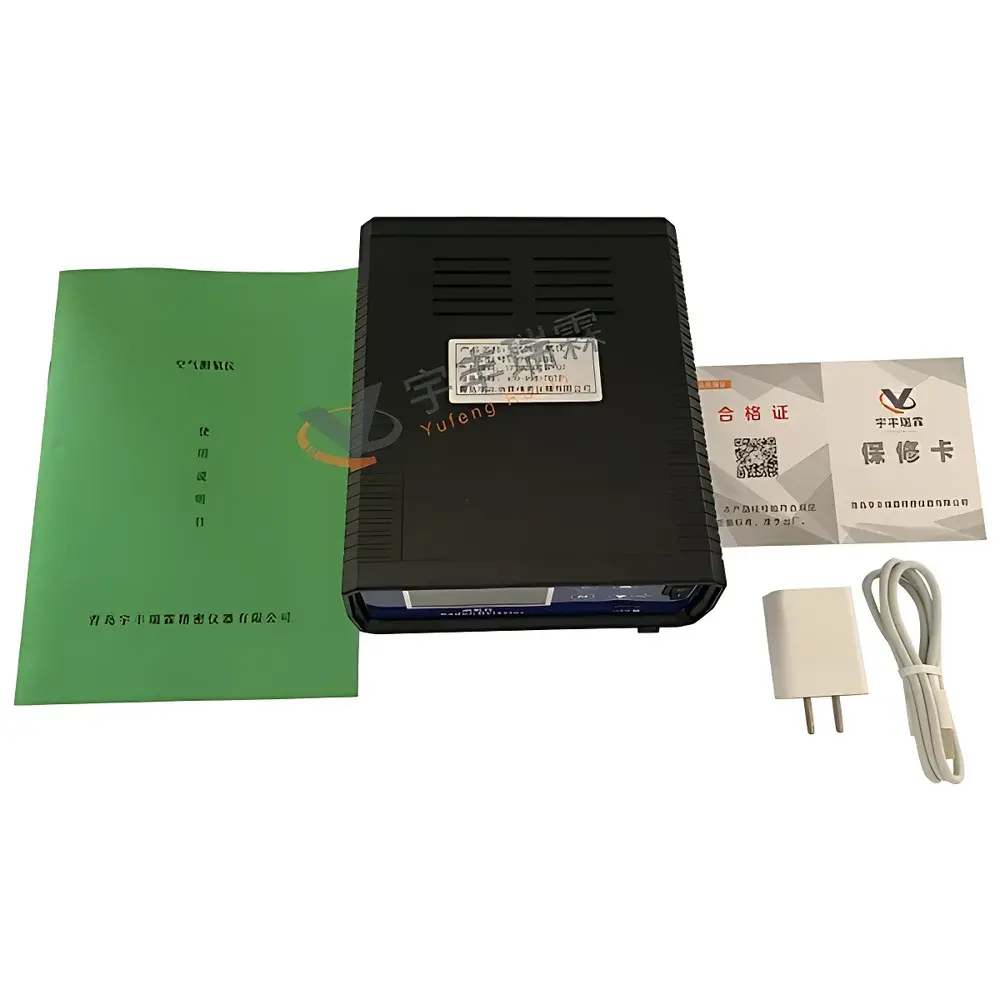
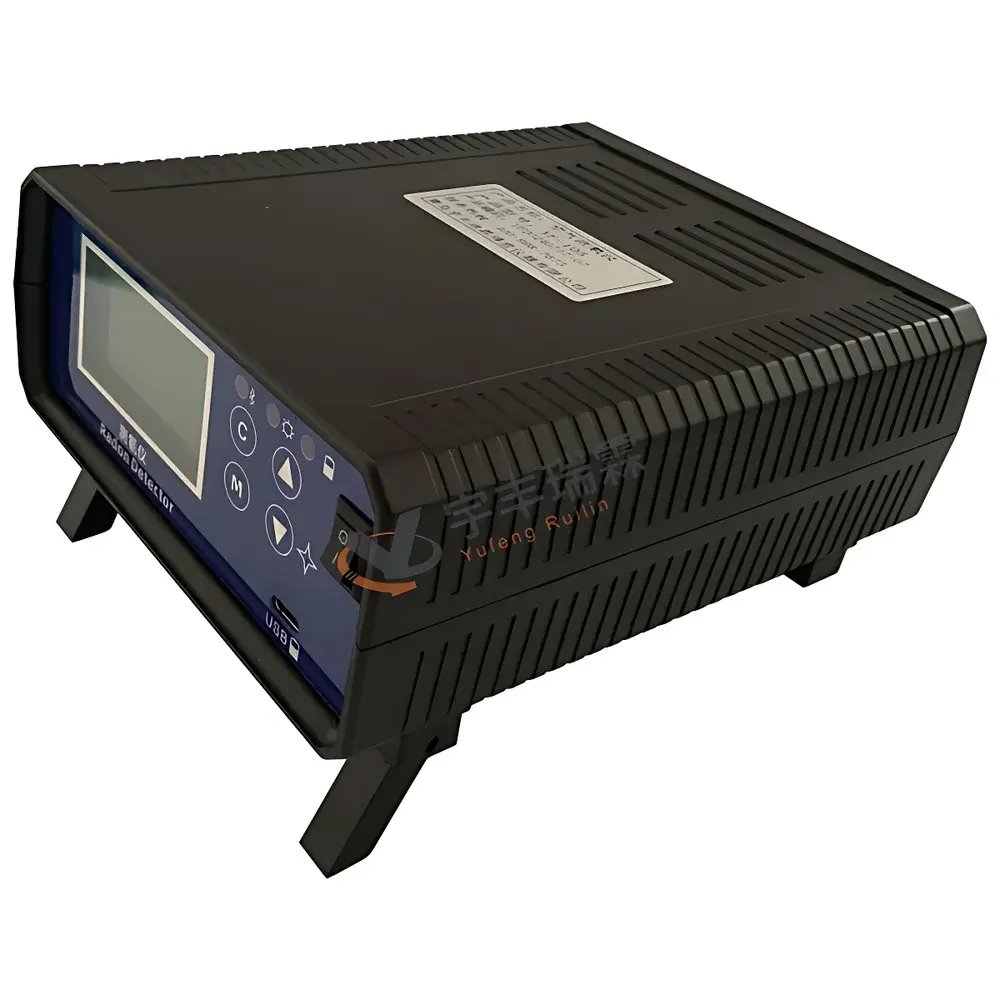
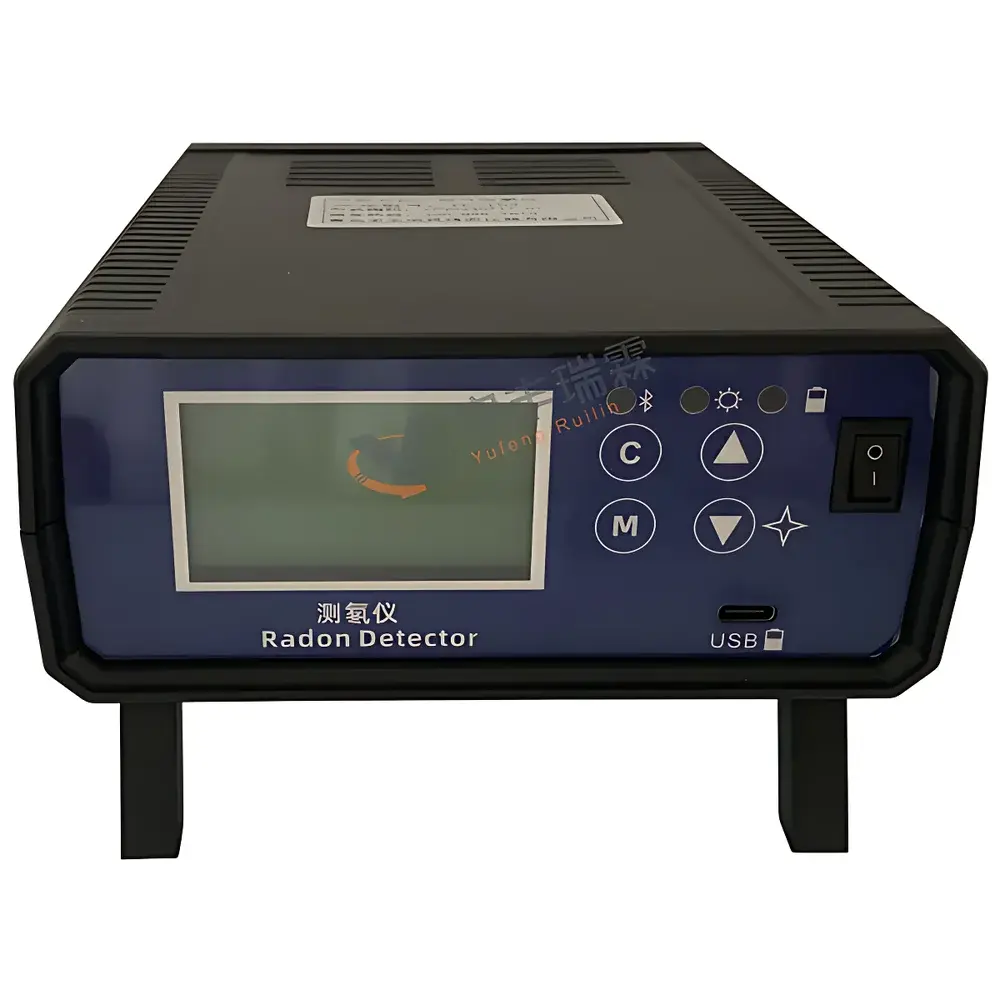
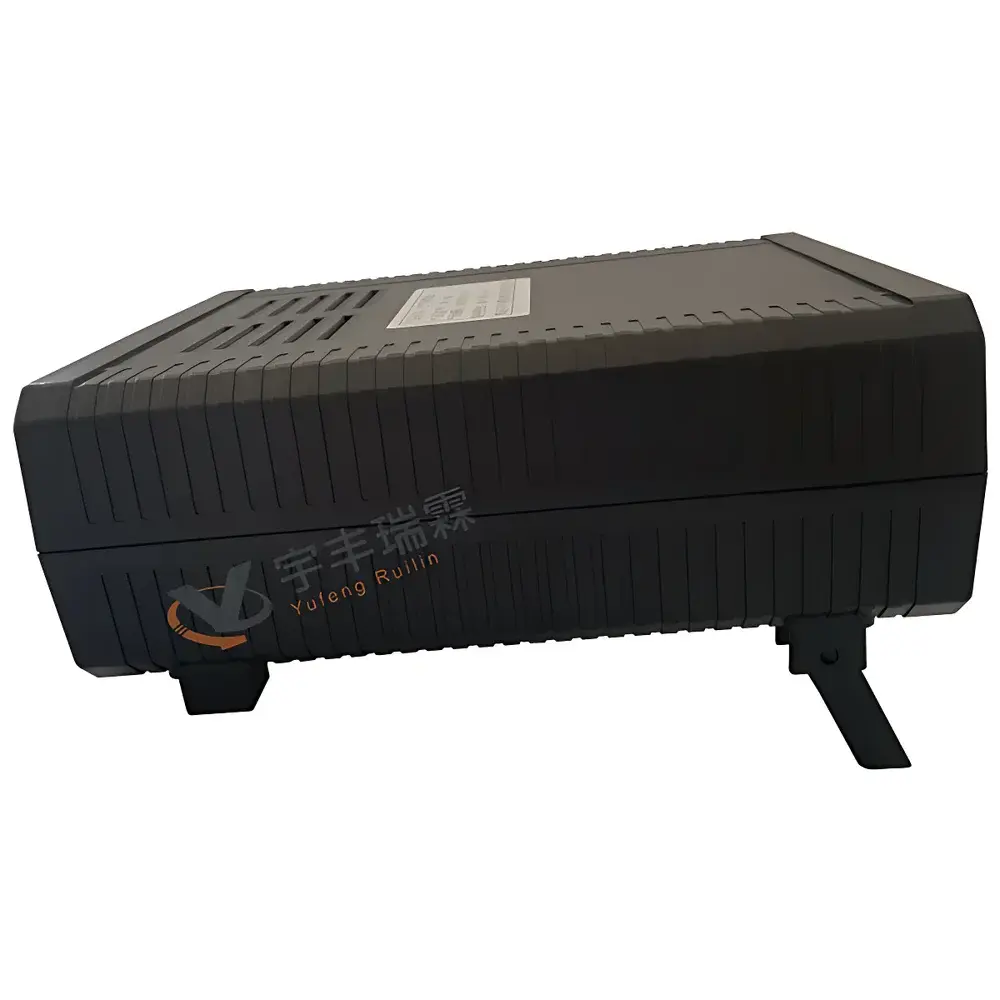
YUFENGRUILIN YFR-105 Scintillation-Based Air Radon Monitor
| Brand | YUFENGRUILIN |
|---|---|
| Model | YFR-105 |
| Measurement Principle | Diffusion-type scintillation cell |
| Detection Range | 5–100,000 Bq/m³ |
| Minimum Detectable Concentration | 5 Bq/m³ |
| Uncertainty | ±15% (k=2) |
| Response Time | ≤30 min (typical), down to 10 min under optimized conditions |
| Power Supply | Rechargeable 5000 mAh Li-ion battery (48 h continuous operation) + AC adapter |
| Operating Environment | −10 °C to +40 °C, ≤90% RH |
| Dimensions | 140 × 170 × 60 mm |
| Weight | 0.8 kg |
| Data Storage | 19,999 measurement records |
| Communication Options | Optional RS-485 interface (customizable for continuous online monitoring), optional Bluetooth printer support |
Overview
The YUFENGRUILIN YFR-105 Scintillation-Based Air Radon Monitor is a portable, field-deployable instrument engineered for precise and reliable measurement of radon-222 (²²²Rn) activity concentration in ambient air. It operates on the well-established scintillation counting principle: radon gas diffuses passively into a sealed, ZnS(Ag)-coated scintillation chamber, where alpha decays from radon and its short-lived progeny (primarily ²¹⁸Po and ²¹⁴Po) generate flashes of light. These scintillations are detected by a low-noise photomultiplier tube (PMT), converted to electrical pulses, and processed via digital pulse-height discrimination to suppress background and enhance specificity. The instrument complies with national standard GB/T 16147–1995 “Method for measuring radon concentration in air using scintillation cells” and supports regulatory assessment per GB 50325–2020 “Standard for indoor environmental pollution control of civil construction projects.” Its design emphasizes metrological robustness, field readiness, and traceability—making it suitable for indoor air quality audits, occupational radiation protection programs, geological survey support, post-event radiological assessment, and academic research in environmental radioactivity.
Key Features
- Diffusion-type scintillation cell with enhanced geometry and surface treatment to maximize radon collection efficiency while minimizing wall-loss effects and humidity-induced quenching.
- High-sensitivity detection system calibrated against NIST-traceable radon reference sources; achieves a minimum detectable concentration (MDC) of 5 Bq/m³ at 30-minute integration (k = 2).
- Integrated rechargeable 5000 mAh lithium-ion battery enabling up to 48 hours of continuous operation—ideal for unattended or mobile surveys without grid access.
- Real-time display of elapsed measurement time, battery status, current count rate, and calculated radon concentration (Bq/m³) on a backlit monochrome LCD with intuitive Chinese-language UI.
- Automatic data logging: stores up to 19,999 timestamped measurements with internal clock synchronization; no external PC required for basic deployment.
- Dual power mode: seamless transition between battery and AC power; USB Type-C charging port compatible with standard power banks for extended field use.
- Configurable alarm threshold: visual and audible alert triggers when real-time or averaged radon concentration exceeds user-defined limits (e.g., 100 Bq/m³ or 300 Bq/m³ per WHO guidance).
- Optional RS-485 serial interface (factory-customized) enables integration into building management systems (BMS) or centralized environmental monitoring networks for long-term, unattended online radon surveillance.
Sample Compatibility & Compliance
The YFR-105 is designed exclusively for gaseous radon-222 quantification in undisturbed ambient air samples. It does not require filtration, drying, or pre-concentration—making it appropriate for direct indoor air testing in residential, commercial, educational, and healthcare facilities. The instrument meets the performance criteria outlined in GB/T 16147–1995 and aligns with ISO 11665-2:2019 “Measurement of radioactivity — Radon-222 — Part 2: Integrated measurement methods for determining average activity concentration,” particularly regarding calibration traceability, uncertainty budgeting (±15%, k = 2), and environmental operating limits (−10 °C to +40 °C, ≤90% RH non-condensing). While not certified to IEC 61526 or ANSI N42.31 for personal dosimetry, its measurement methodology and uncertainty reporting conform to GLP-aligned laboratory practice requirements for environmental radon screening.
Software & Data Management
Data retrieval is performed via USB connection using proprietary Windows-compatible configuration and export software (supplied on included microSD card). The software supports batch download, CSV export, time-series plotting, and statistical summary (mean, max, min, SD). All stored records include UTC timestamp, duration, raw counts, background-subtracted net counts, and final concentration value. Audit trail functionality logs operator ID (optional), calibration date, and firmware version per session. Although the device itself does not implement FDA 21 CFR Part 11 electronic signature controls, exported datasets retain full metadata integrity and may be imported into validated LIMS or QA/QC platforms for further review and regulatory submission.
Applications
- Indoor radon screening in dwellings, schools, and offices per national building codes and public health guidelines.
- Radiation protection monitoring in uranium mining support zones, geothermal facilities, and underground workplaces.
- Baseline environmental surveys prior to construction or land-use planning in radon-prone geological formations.
- Educational demonstration of radioactive decay kinetics, alpha spectroscopy fundamentals, and environmental radioecology principles.
- Post-remediation verification of radon mitigation system efficacy (e.g., sub-slab depressurization, ventilation upgrades).
- Seismotectonic research correlating anomalous radon exhalation with crustal stress changes—deployable in remote sensor arrays via optional RS-485 telemetry.
FAQ
What is the recommended calibration interval for the YFR-105?
Annual calibration against a certified radon reference source is recommended; users should document calibration dates, source certificates, and adjustment factors in accordance with ISO/IEC 17025 or internal QA procedures.
Can the YFR-105 measure radon in water or soil gas?
No—it is configured solely for air sampling. Water or soil gas analysis requires dedicated extraction and transfer systems not integrated into this model.
Does the instrument compensate for temperature and humidity drift during measurement?
Yes—internal sensors feed real-time environmental data into the concentration algorithm to correct for PMT gain variation and scintillator quenching effects within the specified operating range.
Is the RS-485 interface standard or optional?
It is a factory-customized option; standard units ship without communication ports unless explicitly ordered with RS-485 firmware and hardware integration.
How is background subtraction handled?
The instrument performs automatic background measurement during idle periods or prior to each cycle; net counts are derived by subtracting the stored background rate (averaged over ≥1 hour) from gross counts.
Related Products







