
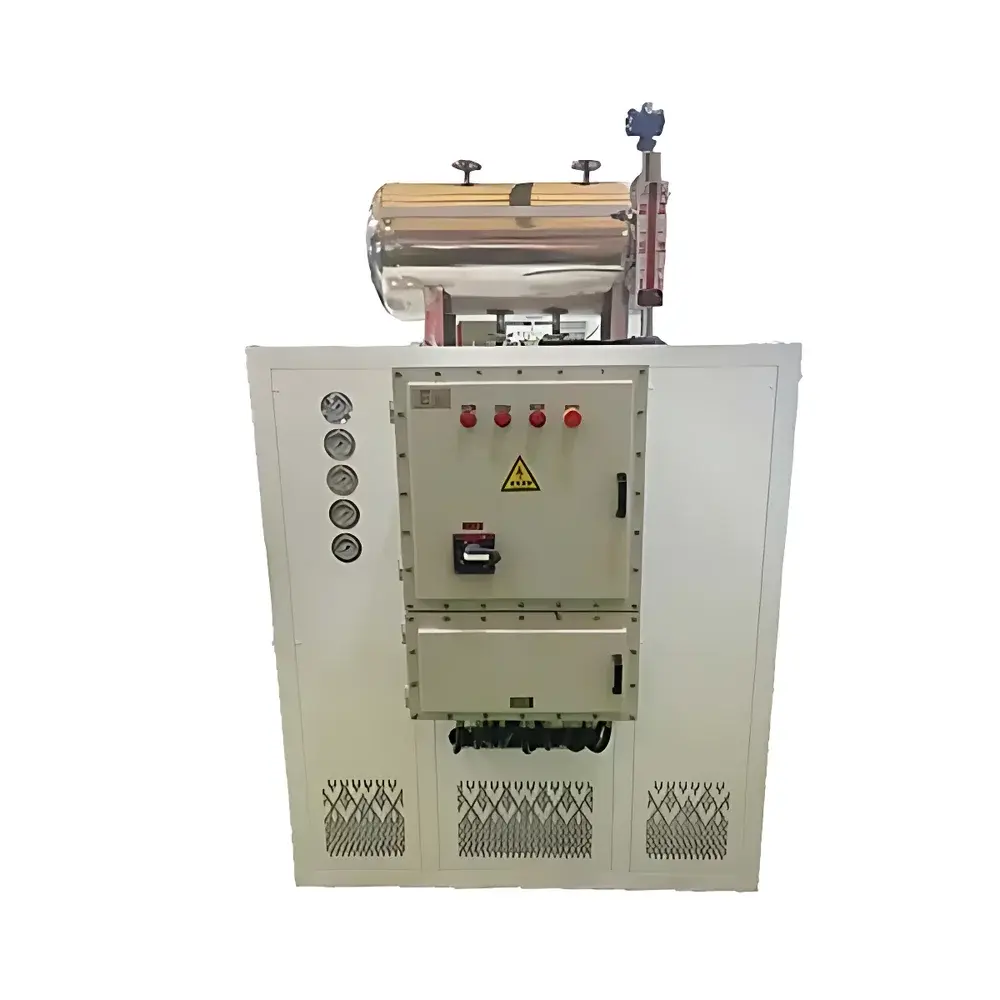
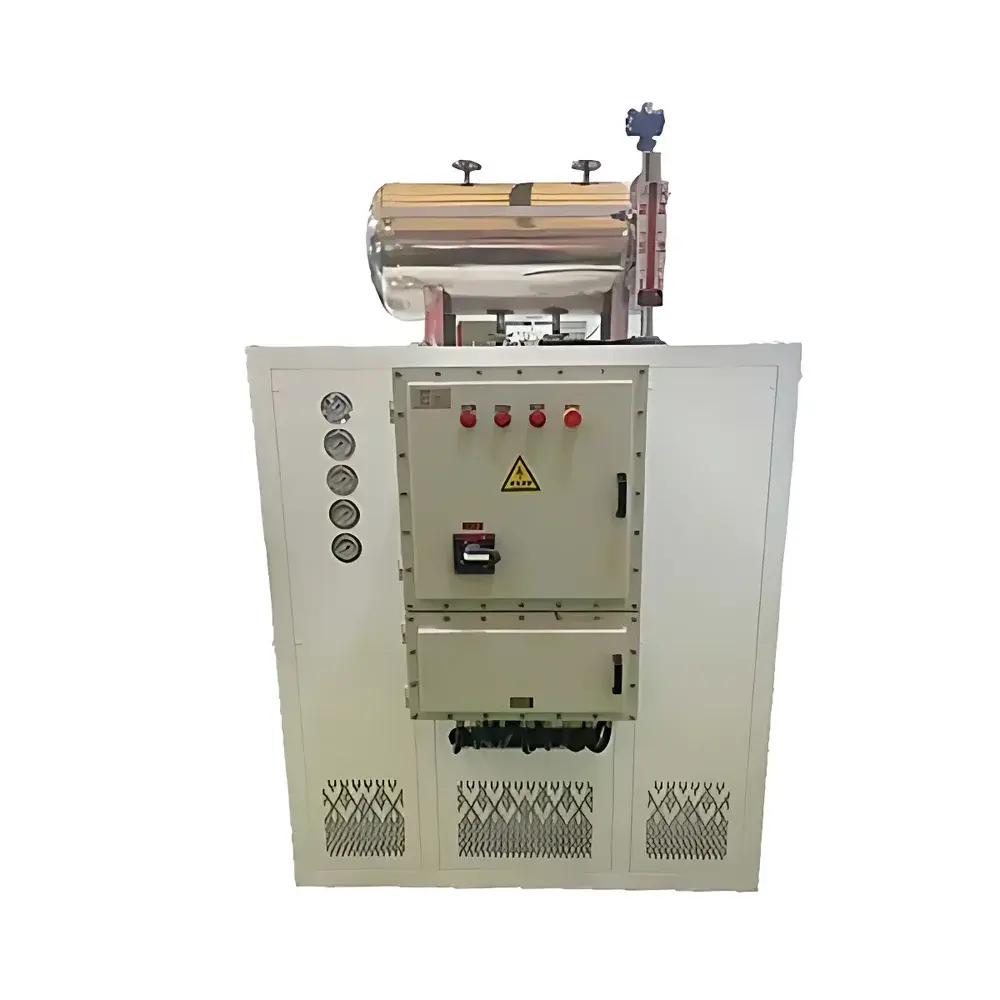
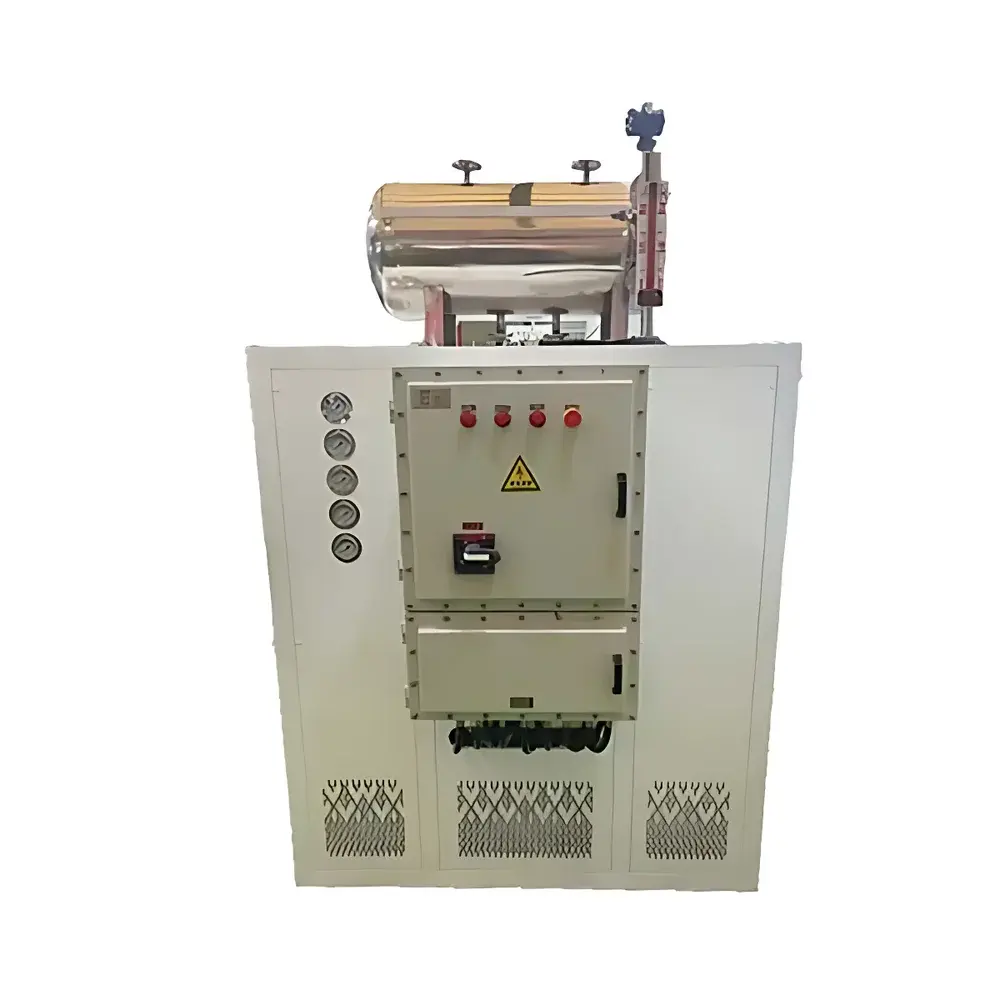
YUHUA TCU Temperature Control Unit for Multi-Reactor Systems
| Brand | YUHUA (Gongyi Yuyi Instrument) |
|---|---|
| Origin | Henan, China |
| Manufacturer Type | Authorized Distributor |
| Country of Origin | China |
| Model | TCU Temperature Control Unit |
| Pricing | Upon Request |
Overview
The YUHUA TCU Temperature Control Unit is an engineered thermal management system designed for precise, synchronized temperature regulation across multiple jacketed reactors in parallel process environments. It operates on a closed-loop heat transfer principle, utilizing thermally stable synthetic heat transfer fluids (e.g., silicone oil or glycol-water mixtures) circulated via a high-efficiency dual-mode system—capable of both active cooling and rapid heating within a wide operational range (typically –40 °C to +250 °C, dependent on fluid selection and configuration). Unlike single-reactor chillers or heaters, this unit integrates refrigeration, steam preheating, and electric resistance heating into one unified platform, enabling seamless transitions between exothermic and endothermic process phases. Its architecture supports critical reaction workflows including sulfonation, nitration, hydrogenation, hydrocarbon alkylation, polymerization, and condensation—processes demanding tight thermal control to ensure reaction selectivity, yield consistency, and operator safety.
Key Features
- Modular dual-mode thermal regulation: Integrated refrigeration circuit with plate-type heat exchanger for rapid fluid cooling; steam-assisted preheating stage followed by high-power flanged electric heaters compliant with JB/T 2379 standard for thermal oil service.
- High-reliability circulation system: AUS304 stainless steel piping and fittings resistant to thermal cycling, low-temperature embrittlement, and chemical exposure; equipped with non-return valves to prevent backflow under transient pressure conditions.
- Thermally optimized expansion management: Pressurized expansion tank with integrated level monitoring and temperature-compensated volume accommodation for fluid thermal expansion/contraction over full operating range.
- Intelligent human-machine interface: 7-inch TFT true-color touchscreen with intuitive navigation; supports both material-side and thermal-fluid-side temperature control modes; programmable logic with up to 120 multi-segment profiles (100 segments per program).
- Comprehensive safety architecture: Dual-stage pressure monitoring (high/low refrigerant and thermal fluid), oil flow protection, motor overload and phase-failure detection (under-voltage, over-voltage, phase loss, reverse phase), and real-time fault logging.
- Industrial communication readiness: MODBUS RTU protocol over RS-485 interface for integration into DCS or SCADA systems; audit-ready event timestamps for GLP/GMP-aligned process documentation.
Sample Compatibility & Compliance
The TCU system is compatible with standard jacketed glass and stainless-steel reactors (0.5–5000 L volume range) equipped with DIN or ISO-standard thermal jackets. It accommodates common industrial heat transfer media—including Dowtherm™ J, Therminol™ VP-1, and aqueous glycol solutions—subject to viscosity and flash point constraints. The unit complies with GB/T 19001 (ISO 9001 equivalent) quality management requirements and meets electromagnetic compatibility (EMC) Class A criteria per GB/T 17626 series. While not certified to UL/CE for direct EU/US market placement without local adaptation, its design principles align with core functional safety expectations referenced in IEC 61511 (process industry) and ASTM E2500 (verification of laboratory equipment).
Software & Data Management
The embedded controller firmware provides native support for time-stamped temperature trajectory recording at user-defined intervals (1–60 s resolution). All setpoints, actual values, alarm events, and mode transitions are stored internally with >30 days of buffered history. Data export is available via USB mass storage or RS-485 serial dump in CSV format for traceability and post-process analysis. Optional OPC UA gateway modules enable secure integration with MES platforms. Audit trail functionality includes operator login tracking, parameter change logs, and system reboot records—supporting FDA 21 CFR Part 11 compliance when deployed with validated access controls and electronic signature protocols.
Applications
This TCU system serves as a central thermal utility in pilot-scale and production R&D laboratories across pharmaceutical synthesis (e.g., API crystallization, catalytic hydrogenation), fine chemical manufacturing (nitration batch control), food-grade emulsification processes, petrochemical catalyst testing, and battery electrolyte formulation. Its ability to maintain ±0.3 °C stability under dynamic load conditions makes it suitable for kinetic studies requiring reproducible thermal ramping (e.g., 0.1–5 °C/min) and hold precision during extended isothermal periods (>24 h). It is routinely deployed in facilities operating under cGMP, ISO 17025, or internal QA/QC frameworks where temperature deviation directly impacts product purity or regulatory filing data integrity.
FAQ
What temperature range can the TCU achieve with different heat transfer fluids?
Standard configurations using silicone oil support –30 °C to +250 °C; glycol/water mixtures limit operation to –20 °C to +120 °C. Fluid selection must consider vapor pressure, thermal stability, and compatibility with reactor jacket seals.
Is remote monitoring supported out-of-the-box?
Yes—via RS-485 MODBUS RTU; Ethernet or Wi-Fi connectivity requires optional gateway hardware and firmware update.
Can the system be integrated with PLC-based reactor automation?
Absolutely—the MODBUS register map is documented and supports read/write access to setpoints, status bits, and real-time PV values for closed-loop cascade control.
Does the unit include validation documentation for GxP environments?
Factory-supplied IQ/OQ templates are provided; PQ execution and calibration certificate traceability to national standards require third-party service engagement.
How is maintenance access structured for refrigeration components?
Refrigerant circuit components—including compressor, condenser, and expansion valve—are front-accessible with standardized service ports conforming to ISO 8573-1 for leak testing and recharge procedures.



