
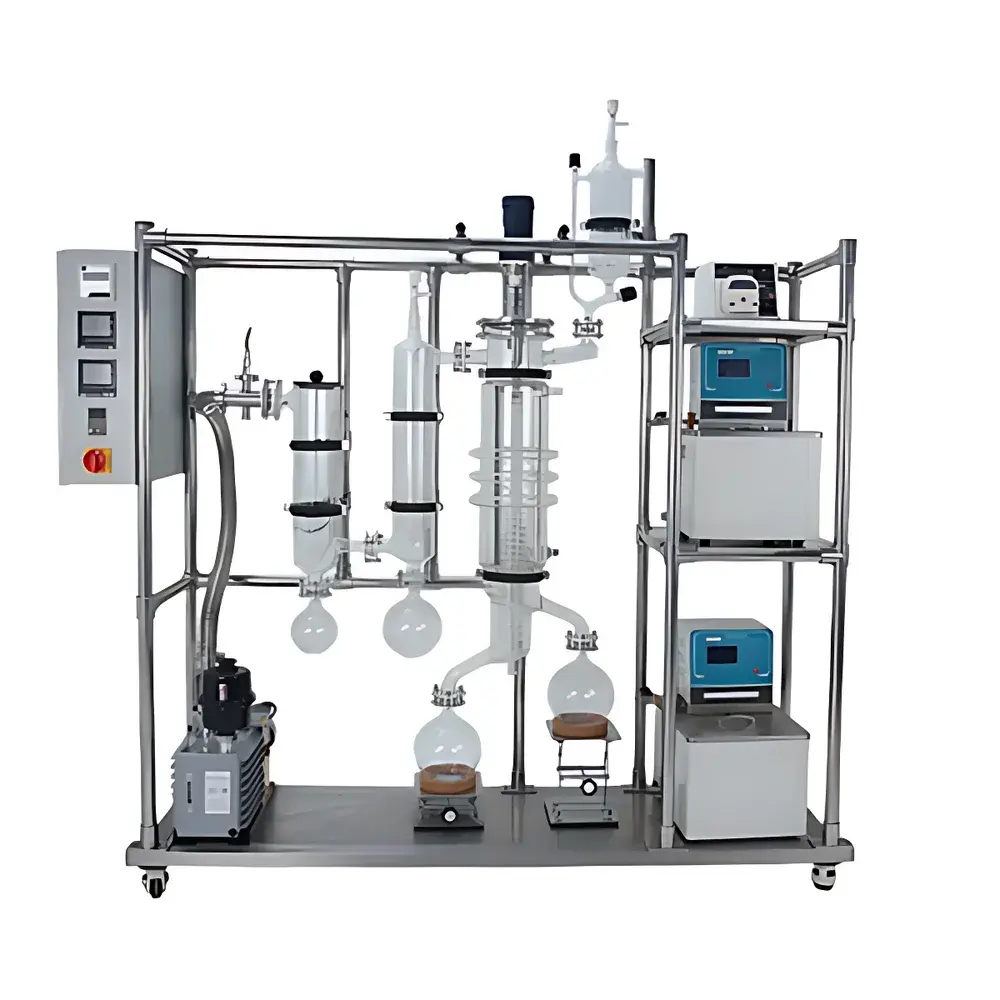
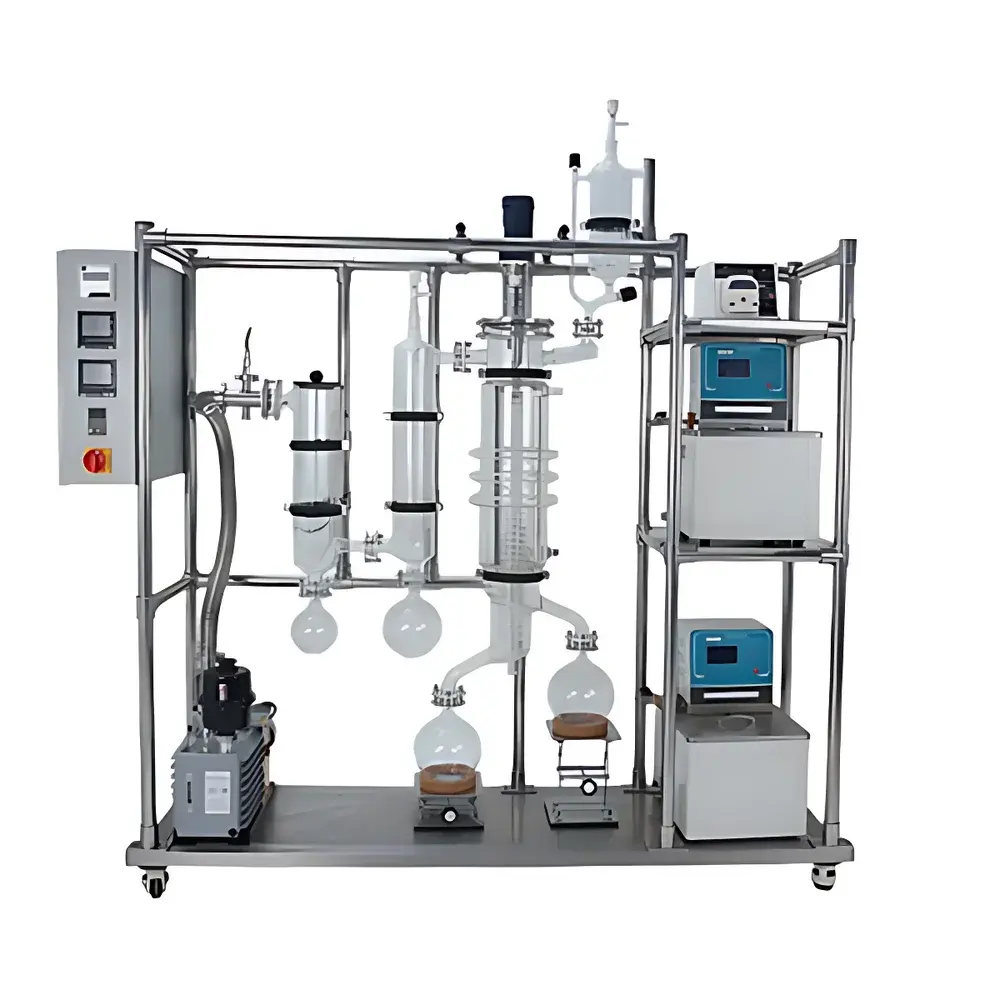
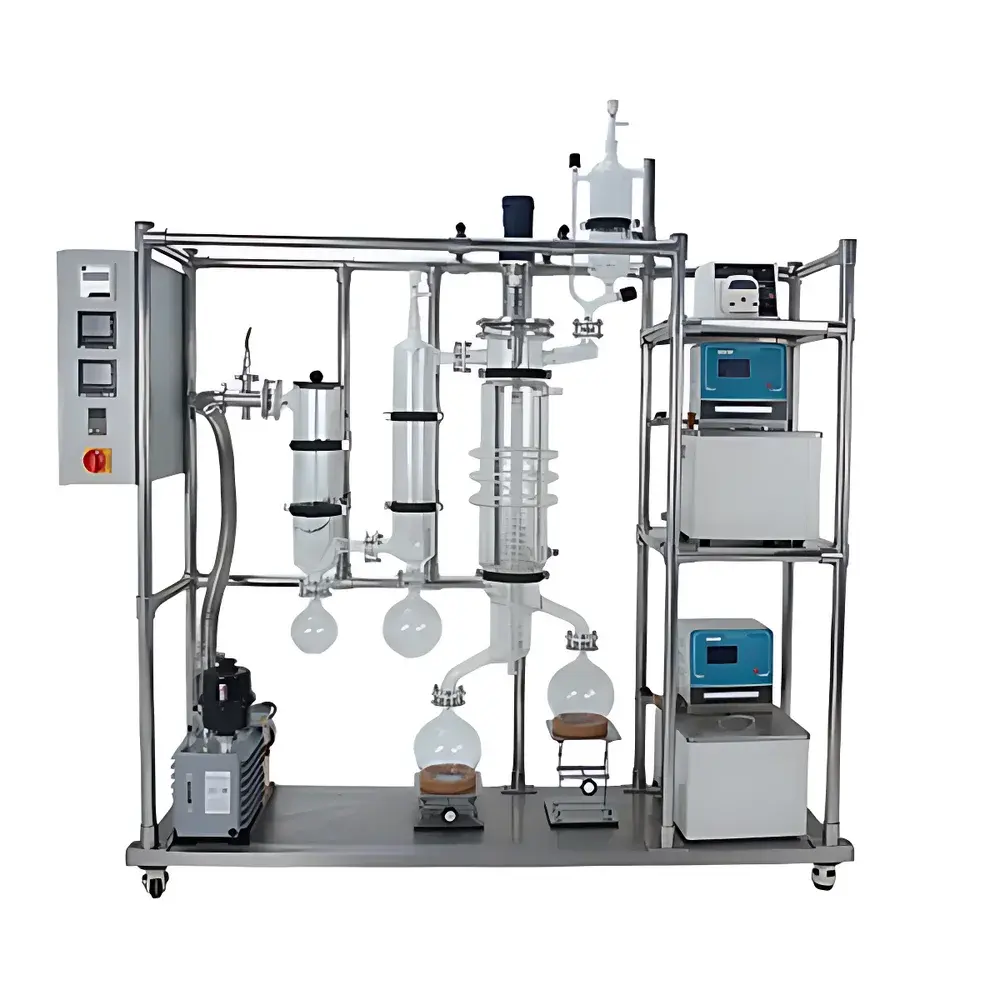
YUHUA YHMD Series Glass Molecular Distillation System
| Brand | YUHUA (Gongyi Yuyi Instrument) |
|---|---|
| Origin | Henan, China |
| Manufacturer Type | Authorized Distributor |
| Country of Origin | China |
| Model | YHMD Series |
| Effective Evaporation Area | 0.03–0.05 m² |
| Evaporator Inner Diameter | 60 mm |
| Compatible Collection Flasks | 50 mL, 100 mL, 250 mL |
| Condensation Area | 0.02–0.04 m² |
Overview
The YUHUA YHMD Series Glass Molecular Distillation System is a precision short-path molecular distillation instrument engineered for high-efficiency separation and purification of thermally labile, high-boiling-point, and low-volatility organic compounds. Unlike conventional fractional or vacuum distillation—relying on vapor pressure differentials at equilibrium—the YHMD system operates on the principle of mean free path differentiation under high vacuum (typically < 0.1 Pa). In this regime, molecules travel in near-ballistic trajectories from the heated evaporative surface to the cooled condensing surface, with separation governed by differences in molecular mass, vapor pressure, and collision-free travel distance. This enables selective fractionation of compounds with minimal thermal degradation—critical for applications involving pharmaceutical actives, natural extracts, vitamins, polyunsaturated fatty acids (PUFAs), and polymer additives.
Key Features
- High-purity borosilicate glass construction (DIN/ISO 3585 compliant) ensures chemical inertness, optical clarity, and resistance to thermal shock and corrosive feedstocks.
- Horizontally mounted, gravity-fed falling-film evaporator with integrated PTFE-coated rotor scraper—ensures uniform film thickness, enhanced heat transfer, and reduced residence time (< 30 s typical).
- Precision-machined 60 mm internal diameter evaporator tube optimized for laminar flow dynamics and minimal back-mixing.
- Adjustable condenser geometry with active cooling (dry ice/methanol or recirculating chiller) delivering condensation temperatures as low as –20 °C to maximize light-fraction capture efficiency.
- Modular design supporting rapid assembly/disassembly: all joints conform to standard ISO-KF (QF) vacuum flange specifications (KF25/KF40); no adhesives or permanent seals required.
- Integrated vacuum compatibility up to 1 × 10⁻² Pa (achievable with dual-stage rotary vane + secondary diffusion or turbomolecular pumping), validated per ASTM E2912-21 for residual gas analysis in high-vacuum purification systems.
Sample Compatibility & Compliance
The YHMD system accommodates feedstock viscosities ranging from 1 cP (e.g., ethanol solutions) to 500 cP (e.g., crude fish oil or polymer melts) without pre-dilution. It complies with general laboratory safety standards including IEC 61010-1 (electrical safety) and ISO 15195:2018 (calibration of vacuum measurement devices). While not certified for GMP manufacturing, its transparent glass architecture supports visual process monitoring aligned with GLP documentation requirements. All wetted surfaces are non-metallic and extractables-free—suitable for USP Class VI-compliant material handling when paired with certified collection vessels. The system meets common method validation criteria for residual solvent removal per ICH Q3C(R8) and heavy metal purification per USP /.
Software & Data Management
The YHMD Series is a manually operated, analog-controlled system—intentionally designed for direct operator intervention and empirical parameter optimization. No embedded firmware or proprietary software is included; instead, users integrate external digital instrumentation: calibrated Pt100 temperature sensors (±0.1 °C accuracy), capacitance manometers (0–1000 Pa range, ±0.25% FS), and peristaltic feed pumps with pulse-width modulation control. Data logging is performed via third-party platforms (e.g., LabVIEW, MATLAB, or Python-based DAQ systems) compliant with FDA 21 CFR Part 11 when configured with electronic signatures and audit trails. Process parameters—including evaporator surface temperature, condenser setpoint, absolute pressure, feed rate, and collection timing—are recorded in timestamped CSV format for full traceability during method development or regulatory submissions.
Applications
- Purification of omega-3 ethyl esters (EPA/DHA) from fish oil hydrolysates, achieving >95% enrichment while preserving cis-configuration integrity.
- Deacidification and deodorization of vegetable oil distillates (e.g., rice bran oil, palm fatty acid distillate) without stripping tocopherols or sterols.
- Isolation of heat-sensitive alkaloids (e.g., vinblastine precursors) and terpenoids (e.g., artemisinin derivatives) from botanical extracts.
- Removal of residual monomers and catalysts from synthetic polymers (e.g., silicone oils, polyetheramines) prior to biomedical use.
- Concentration of fragrance volatiles and pheromone standards for GC-MS reference material preparation.
FAQ
What vacuum level is required for optimal operation?
A base pressure ≤ 0.1 Pa is recommended for effective molecular regime separation; system leak rate must remain below 1 × 10⁻³ Pa·L/s after bake-out.
Can the YHMD handle viscous or particulate-containing feeds?
Yes—pre-filtration (≤5 µm) is advised for particulates; for viscosities >200 cP, preheating the feed vessel to reduce inlet viscosity improves film formation.
Is the glassware covered under warranty?
No—borosilicate glass components are excluded from the standard 12-month limited warranty due to inherent fragility and user-handling variables.
How is temperature uniformity across the evaporator surface ensured?
Heating is provided via adjustable silicone oil bath or electric mantle with PID-controlled feedback; surface gradient is maintained within ±1.5 °C over the active evaporation length.
What maintenance intervals are recommended for long-term reliability?
O-rings and scraper blade edges should be inspected every 50 operating hours; vacuum pump oil replaced every 200 hours or per manufacturer specification.



