Yunfan YFSP-T Electrospinning Machine
| Brand | Yunfan / YFSP |
|---|---|
| Origin | Tianjin, China |
| Manufacturer Type | Authorized Distributor |
| Country of Origin | China |
| Model | YFSP-T |
| Pricing | Available Upon Request |
Overview
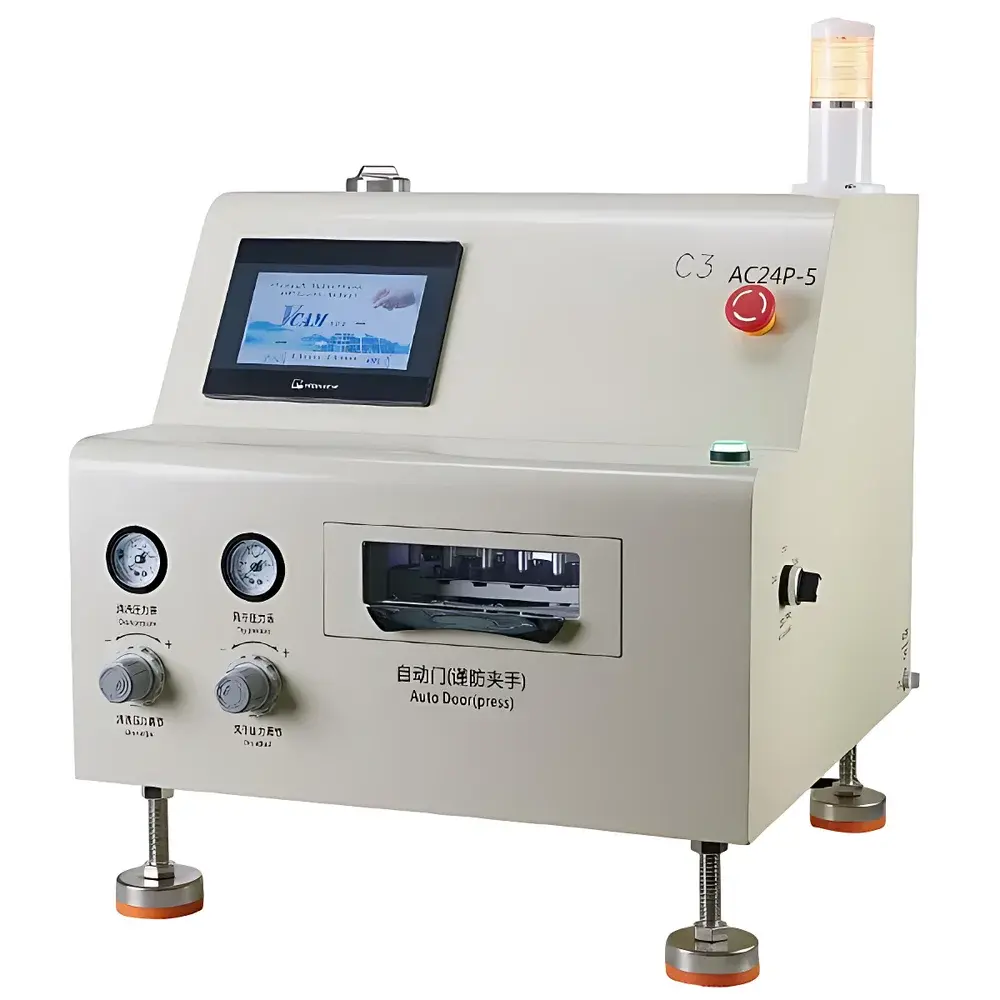
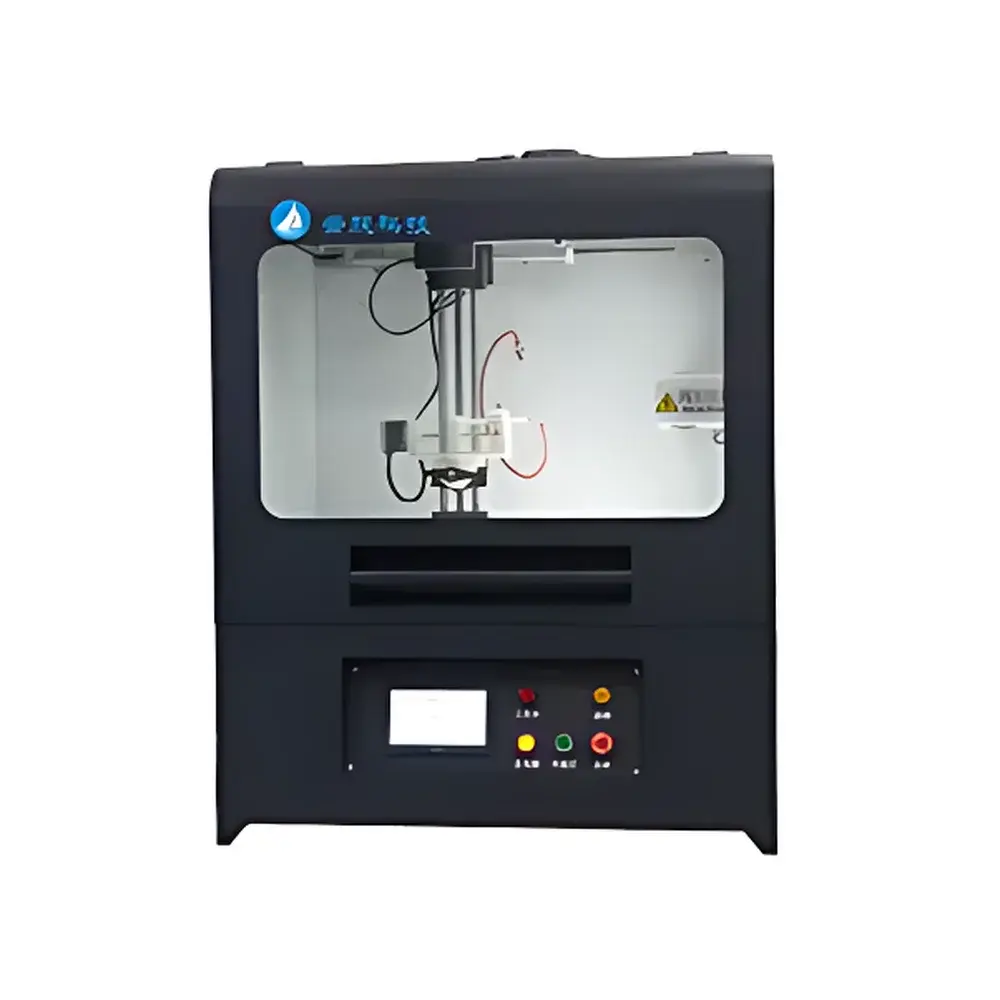
The Yunfan YFSP-T Electrospinning Machine is a benchtop, PLC-controlled electrostatic fiber fabrication system engineered for reproducible nanofiber synthesis in academic laboratories and industrial R&D settings. It operates on the principle of electrohydrodynamic (EHD) jetting: a high-voltage electric field induces charge accumulation at the tip of a polymer solution droplet, overcoming surface tension to generate a stable Taylor cone and continuous nanofiber jet toward a grounded collector. Designed specifically for rubber, polymer, and advanced material research, the YFSP-T integrates core subsystems—including dual syringe pumps, adjustable high-voltage power supply, environmental control, and multi-axis collector positioning—into a single compact architecture. Its modular design supports both single- and coaxial electrospinning configurations, enabling fabrication of core–shell, hollow, or Janus nanofibers for applications ranging from filtration membranes to tissue engineering scaffolds.
Key Features
- PLC-based centralized control system with 7-inch full-color touchscreen interface for intuitive parameter setting and real-time monitoring.
- Dual high-precision micro-syringe pumps: each pump supports 1–4 parallel needles; integrated needle mounting eliminates tubing-induced flow delay or leakage, ensuring volumetric accuracy and solvent compatibility with corrosive solutions (e.g., HFIP, DMF, chloroform).
- Adjustable high-voltage DC power supply (0–30 kV, digitally regulated via PLC) with arc detection and automatic shutdown to prevent dielectric breakdown and ensure operator safety.
- X–Y–Z manual/programmable collector stage: X–Y axes feature engraved metric scales for positional repeatability; Z-axis motion speed and displacement are programmable via touchscreen to optimize fiber alignment and uniformity across wide-area substrates.
- Integrated environmental chamber with Swiss-made capacitive humidity sensor and PID-controlled heating/cooling elements—maintains temperature stability ±1.5°C and relative humidity within ±3% RH across 30–80% RH range.
- Modular collector system: interchangeable flat plate and rotating drum receivers; optional auxiliary collectors (e.g., wire mesh, rotating mandrel, electrostatically biased grids) available for morphology-specific deposition.
- Compact footprint (W600 × D500 × H850 mm) suitable for standard fume hoods or dedicated lab benches; all high-voltage components fully enclosed and interlocked per IEC 61010-1 safety requirements.
Sample Compatibility & Compliance
The YFSP-T accommodates a broad spectrum of electrospinnable materials, including thermoplastic elastomers (TPE), polyacrylonitrile (PAN), polylactic acid (PLA), polyvinyl alcohol (PVA), polyurethane (PU), and composite dispersions containing nanoparticles (e.g., TiO₂, ZnO, carbon nanotubes). Solvent compatibility extends to halogenated (chloroform, dichloromethane), polar aprotic (DMF, DMAc), and protic (water, ethanol/water mixtures) systems. The system conforms to ISO 13849-1 (Category 3 PLd) for functional safety architecture and meets electromagnetic compatibility standards per EN 61326-1. All electrical enclosures comply with IP2X ingress protection. While not certified for GMP production environments, its audit-ready logging capability and parameter traceability support GLP-compliant documentation workflows.
Software & Data Management
The embedded HMI firmware records all operational parameters—including voltage, flow rates, ambient T/RH, collector position, and runtime—into timestamped CSV files stored on internal flash memory (expandable via USB). Data export is performed manually via USB drive; no cloud connectivity or remote access is implemented to preserve experimental integrity and data sovereignty. Firmware updates are delivered offline via encrypted firmware packages validated using SHA-256 checksums. Audit trail functionality includes user login timestamps, parameter change logs, and emergency stop event capture—aligned with basic FDA 21 CFR Part 11 expectations for non-GxP research use. Custom scripting for automated multi-step protocols (e.g., ramped voltage sequences, timed collector rotation) is supported through optional ladder logic programming modules.
Applications
- Rubber and polymer science: fabrication of nanostructured elastomeric mats for strain-sensitive sensors and self-healing composites.
- Biomedical engineering: preparation of aligned PAN or PCL scaffolds for neural or tendon tissue regeneration studies.
- Filtration R&D: development of hierarchical nanofiber membranes with controlled pore size distribution (100–2000 nm) for aerosol or liquid-phase separation testing.
- Energy materials: electrospun Si/C composite anodes for lithium-ion battery research; metal oxide nanofiber catalyst supports for PEM fuel cells.
- Functional coatings: deposition of antimicrobial (AgNP-loaded) or hydrophobic (fluorinated polymer) nanofiber layers onto textiles or medical devices.
FAQ
What types of solvents are compatible with the dual syringe pumps?
The pumps utilize chemically resistant PTFE and sapphire components, supporting common electrospinning solvents including DMF, THF, chloroform, acetone, and aqueous solutions up to pH 2–12.
Can the YFSP-T perform coaxial electrospinning out of the box?
Yes—the dual independent pump channels and co-axial nozzle adapter kit are included as standard equipment.
Is remote monitoring or network connectivity available?
No. The system operates in standalone mode only; all data remain locally stored to ensure compliance with institutional IT security policies.
What maintenance is required for long-term reliability?
Annual calibration of the humidity sensor and visual inspection of HV electrode insulation are recommended; syringe pump tubing requires replacement only if used with aggressive solvents exceeding 1000-hour cumulative exposure.
Does the system meet CE or UL certification requirements?
It carries CE marking under the Low Voltage Directive (2014/35/EU) and EMC Directive (2014/30/EU); UL listing is not pursued due to its classification as a research-grade instrument rather than industrial machinery.