
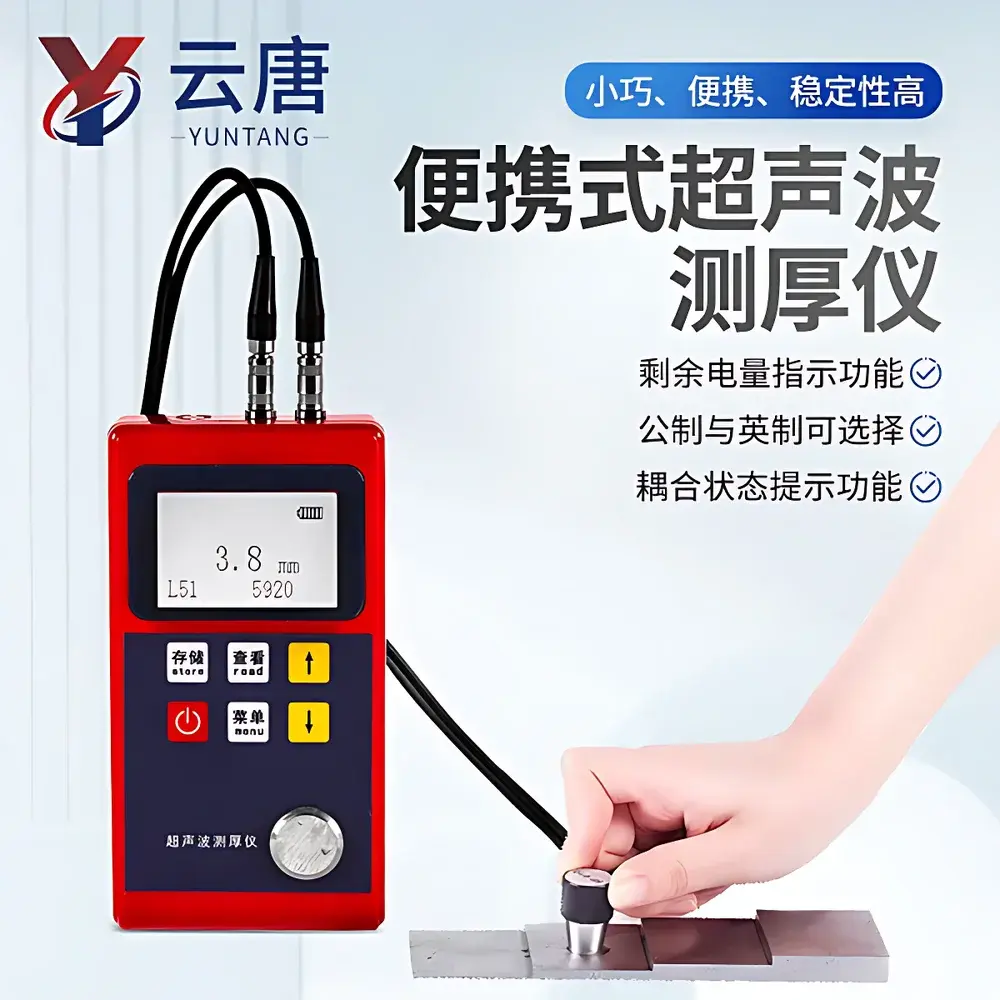

Yuntang YT-321 Ultrasonic Thickness Gauge for Galvanized Coating & Metallic Substrates
| Brand | Yuntang |
|---|---|
| Origin | Shandong, China |
| Manufacturer Type | Direct Manufacturer |
| Region Classification | Domestic (China) |
| Model | YT-321 |
| Price | USD 170 (FOB) |
| Measurement Principle | Pulse-Echo Ultrasonic |
| Range (Steel) | 0.75–350 mm |
| Standard Probe Range | 1–250 mm |
| Resolution | 0.1 mm |
| Sound Velocity Adjustment | 1000–9999 m/s |
| Operating Temp. | −10 to +60 °C |
| Accuracy | ±(1% H + 0.1) mm (H = actual thickness) |
| Power | Two AAA alkaline batteries |
| Battery Life | ~200 hours |
| Dimensions | 130 × 70 × 25 mm |
| Weight | 0.2 kg (instrument only) |
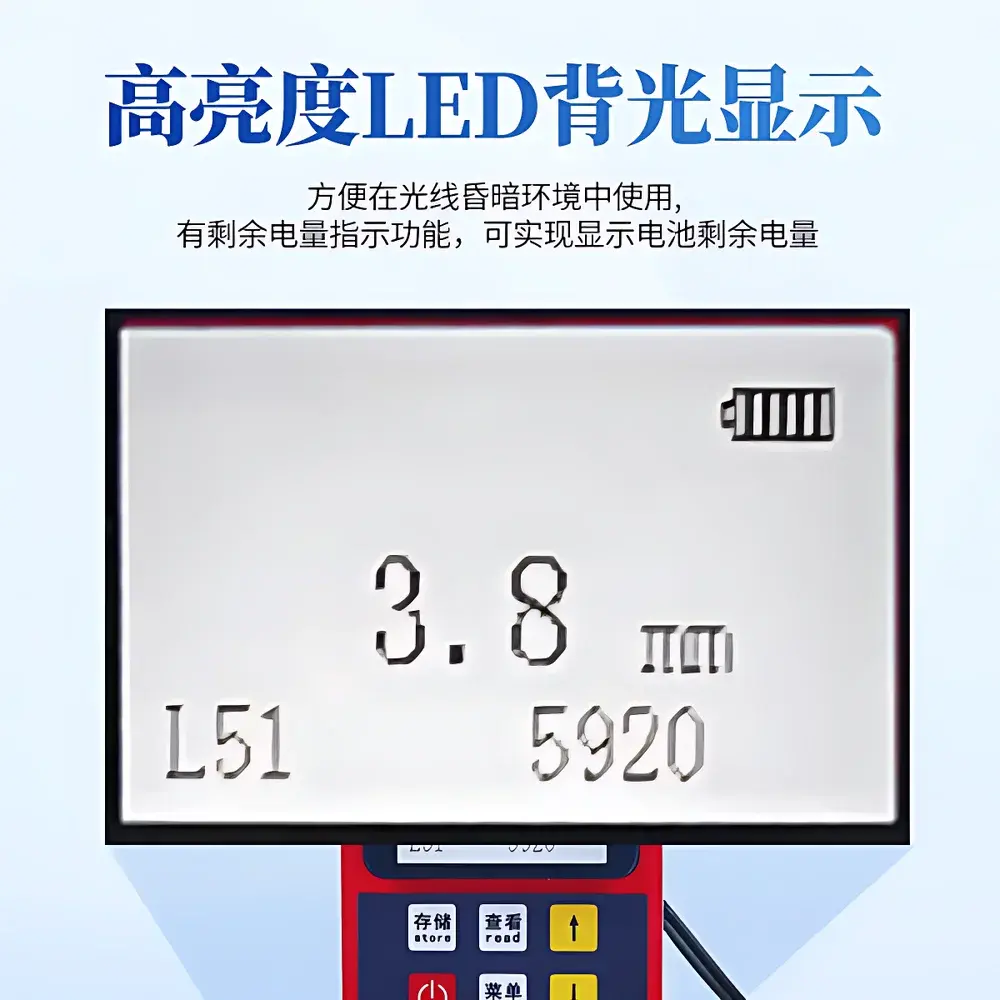
| Display | High-brightness LED backlight |
| Compliance | Designed per ISO 2400:2019 (Ultrasonic thickness measurement — Calibration and verification procedures) |
Overview
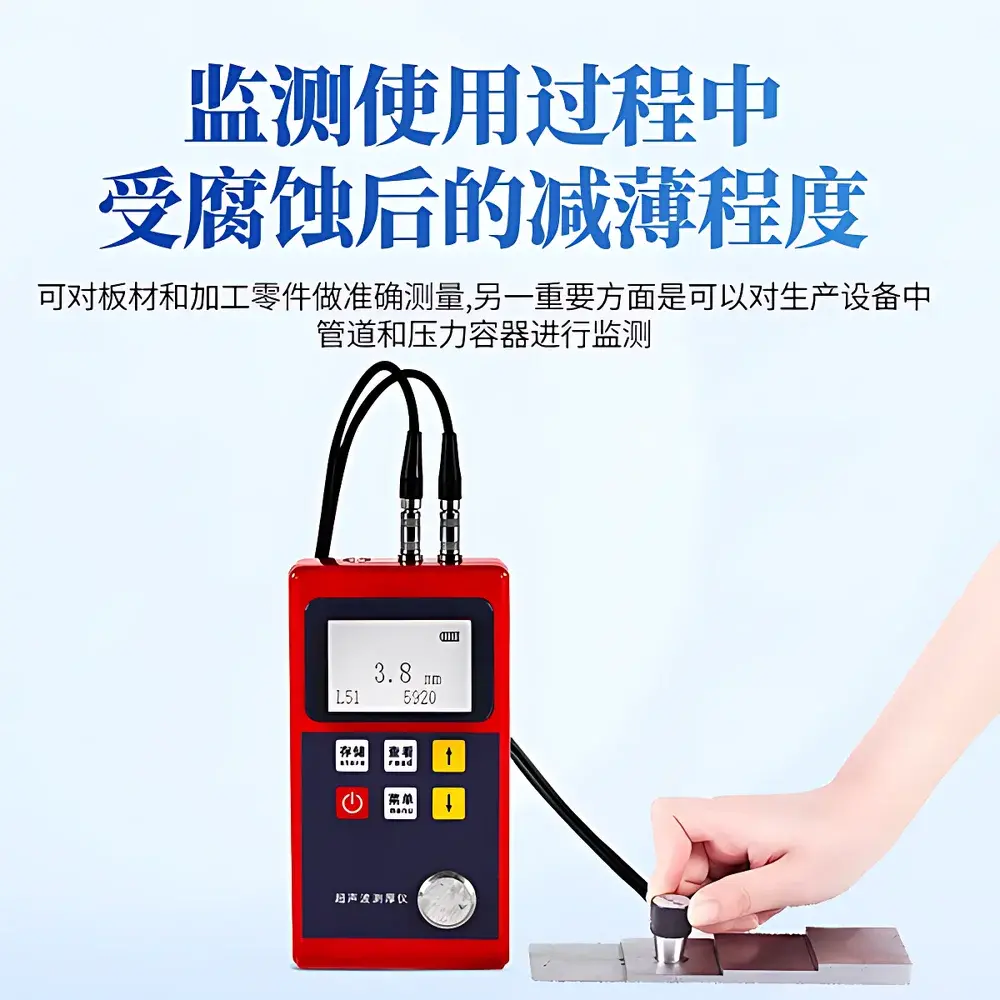
The Yuntang YT-321 Ultrasonic Thickness Gauge is an industrial-grade, handheld pulse-echo ultrasonic instrument engineered for non-destructive thickness evaluation of metallic substrates—including galvanized steel, stainless steel, aluminum, copper, cast iron—and select non-metallic materials such as plastics, ceramics, glass, and composites. It operates on the principle of time-of-flight (TOF) measurement: a high-frequency ultrasonic pulse (typically 1–10 MHz, dependent on probe selection) is transmitted into the material via a piezoelectric transducer; upon reaching the back surface or internal interface, the pulse reflects and returns to the transducer. The instrument precisely calculates thickness by multiplying half the measured round-trip transit time by the calibrated sound velocity in the material. This method ensures traceable, repeatable measurements without requiring access to both sides of the test piece—making it ideal for in-service inspection of pipelines, pressure vessels, storage tanks, structural plates, and coated infrastructure where corrosion-induced wall loss must be quantified against baseline or specification limits.
Key Features
- Pulse-echo ultrasonic architecture with real-time TOF calculation and automatic zero-point calibration for probe compensation
- Adjustable sound velocity input (1000–9999 m/s), enabling accurate thickness determination across heterogeneous or unknown-material assemblies
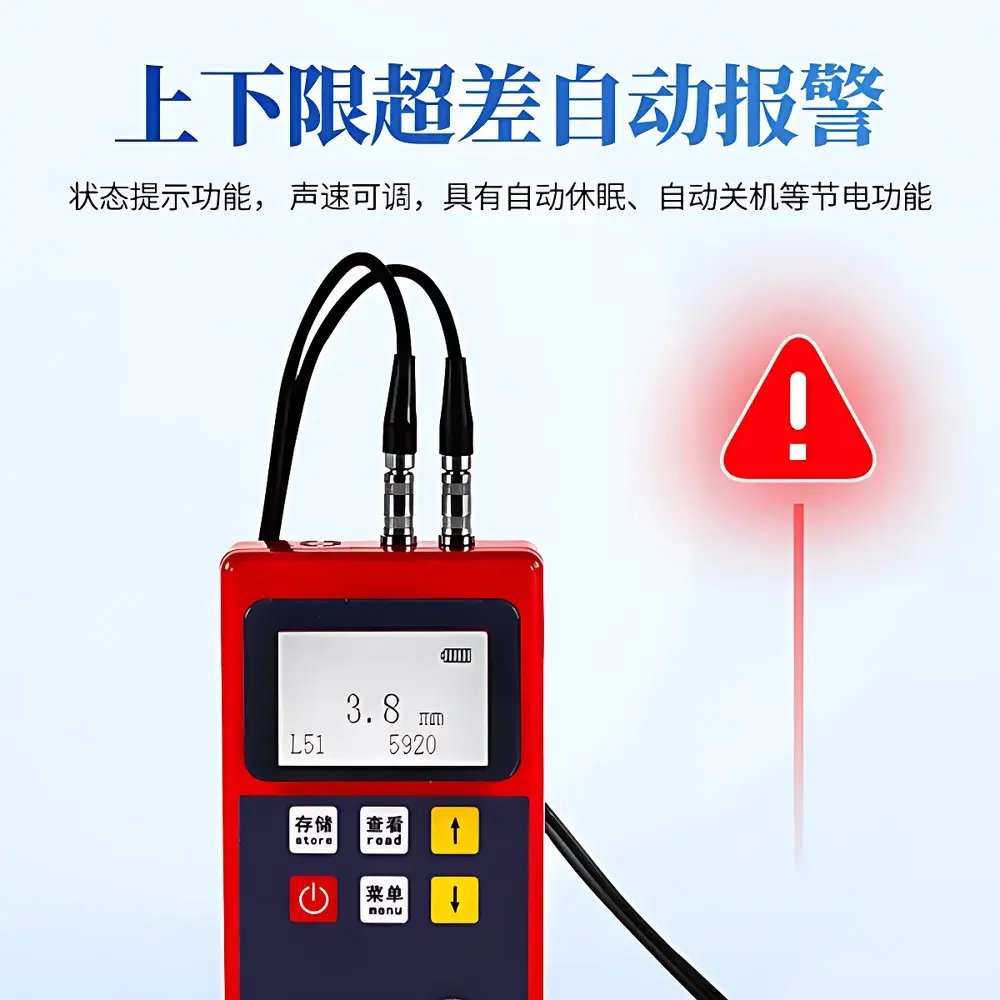
- Programmable upper/lower tolerance limits with audible and visual alarm activation upon deviation
- Coupling status indicator—provides immediate feedback on acoustic contact quality between probe and surface
- High-contrast LED-backlit LCD display with 0.1 mm resolution and dual metric/imperial unit selection
- Battery level indicator and intelligent power management: auto-sleep after 2 minutes of inactivity; auto-shutdown after 10 minutes
- Ruggedized housing rated for field use: resistant to mechanical shock (IEC 60068-2-27), vibration (IEC 60068-2-6), and electromagnetic interference (EMC Class B per IEC 61326-1)
- Operating temperature range: −10 °C to +60 °C—validated for outdoor and industrial plant-floor environments
Sample Compatibility & Compliance
The YT-321 is validated for use on homogeneous, isotropic materials that support longitudinal ultrasonic wave propagation with minimal attenuation. Compatible base materials include carbon steel (5920 m/s), stainless steel (5740 m/s), aluminum (6340–6400 m/s), copper (4720 m/s), cast iron (4400–5820 m/s), titanium (5990 m/s), and engineering polymers (e.g., PVC: 2388 m/s; PTFE: 1422 m/s). It is not suitable for highly attenuative, porous, or coarse-grained structures (e.g., concrete, fiberboard, or heavily corroded surfaces with pitting > 0.5 mm depth). While not certified to ASTM E797 or ISO 2400:2019 out-of-the-box, the instrument supports user-defined calibration using reference blocks traceable to NIST or national metrology institutes. Its firmware architecture allows audit-ready logging when paired with optional PC software—facilitating GLP/GMP-aligned documentation workflows.
Software & Data Management
The YT-321 supports data export via optional RS-232 or USB-to-serial interface (cable sold separately). When connected to Yuntang’s proprietary PC application (v3.2+), users can perform batch calibration, generate thickness trend reports, overlay historical readings on CAD schematics, and export CSV/Excel files compliant with internal QA protocols. The software includes configurable report templates aligned with common industry formats (e.g., API RP 570 Annex B, ASME B31.4 Appendix D). All stored readings retain timestamp, probe ID, sound velocity setting, and operator tag—enabling full traceability required under FDA 21 CFR Part 11 (when deployed with electronic signature module and controlled access).
Applications
- In-service wall thickness monitoring of carbon steel piping in refineries and chemical processing plants (per API RP 570 guidelines)
- Galvanizing quality control: measuring Zn coating thickness on hot-dip galvanized structural steel prior to erection
- Aerospace maintenance: assessing residual thickness of aluminum airframe skins after lightning strike or hail impact
- Marine asset integrity: evaluating hull plate thinning due to seawater corrosion or cavitation erosion
- Power generation: verifying boiler tube and condenser shell thickness during outage inspections
- Manufacturing QC: final inspection of rolled sheet metal, extruded profiles, and forged components
FAQ
Does the YT-321 measure galvanized coating thickness directly—or only substrate thickness?
It measures total thickness of the coated system. To isolate zinc layer thickness, users must first measure bare substrate thickness (pre-galvanizing) or use a dual-element probe configuration with known base metal thickness—standard practice per ASTM B499 for galvanic coatings.
Can the instrument compensate for temperature-induced sound velocity drift?
No built-in thermal compensation; however, users may manually adjust sound velocity values based on published temperature coefficients (e.g., −1.0 m/s/°C for mild steel near ambient) or calibrate at representative operating temperatures using reference standards.
Is probe calibration required before each use?
Zero-point calibration using the supplied delay line or calibration block is recommended before critical measurements or after probe replacement—per ISO 2400:2019 Clause 7.3.
What is the minimum detectable thickness on aluminum with the standard L51 probe?
The practical lower limit is ~0.75 mm on smooth, parallel-surfaced aluminum sheets—subject to surface finish, coupling consistency, and instrument gain settings.
Does the device support data encryption or user access levels?
Not natively; however, exported CSV files may be secured via enterprise-level file encryption, and PC software supports password-protected project folders for multi-user environments.



