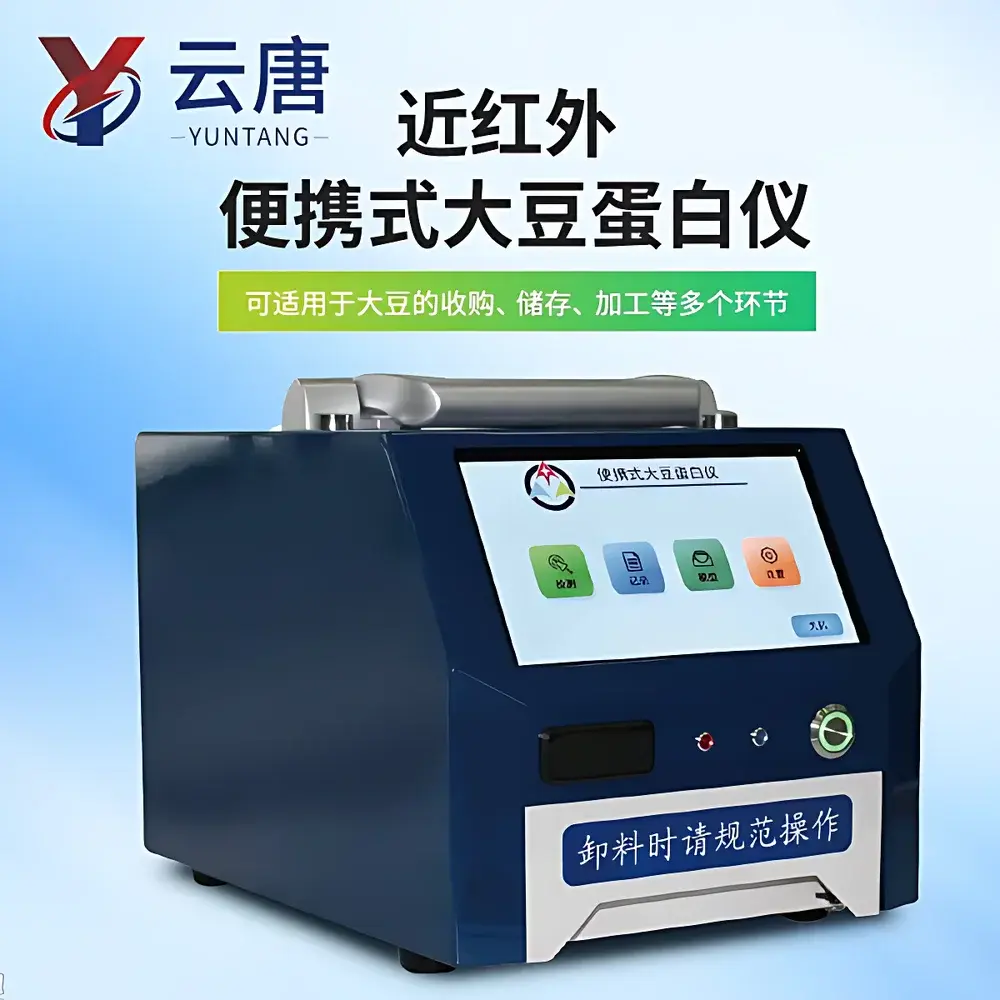
Yuntang YT-DB Near-Infrared Wheat Analyzer for Gluten, Germ, and Protein Quantification
| Brand | Yuntang |
|---|---|
| Origin | Shandong, China |
| Manufacturer Type | Direct Manufacturer |
| Country of Origin | China |
| Model | YT-DB |
| Wavelength Range | 950–1650 nm |
| Sample Form | Solid granules, powders, or forage |
| Measurement Time | 1–3 min per sample |
| Sample Chamber Capacity | 600 mL |
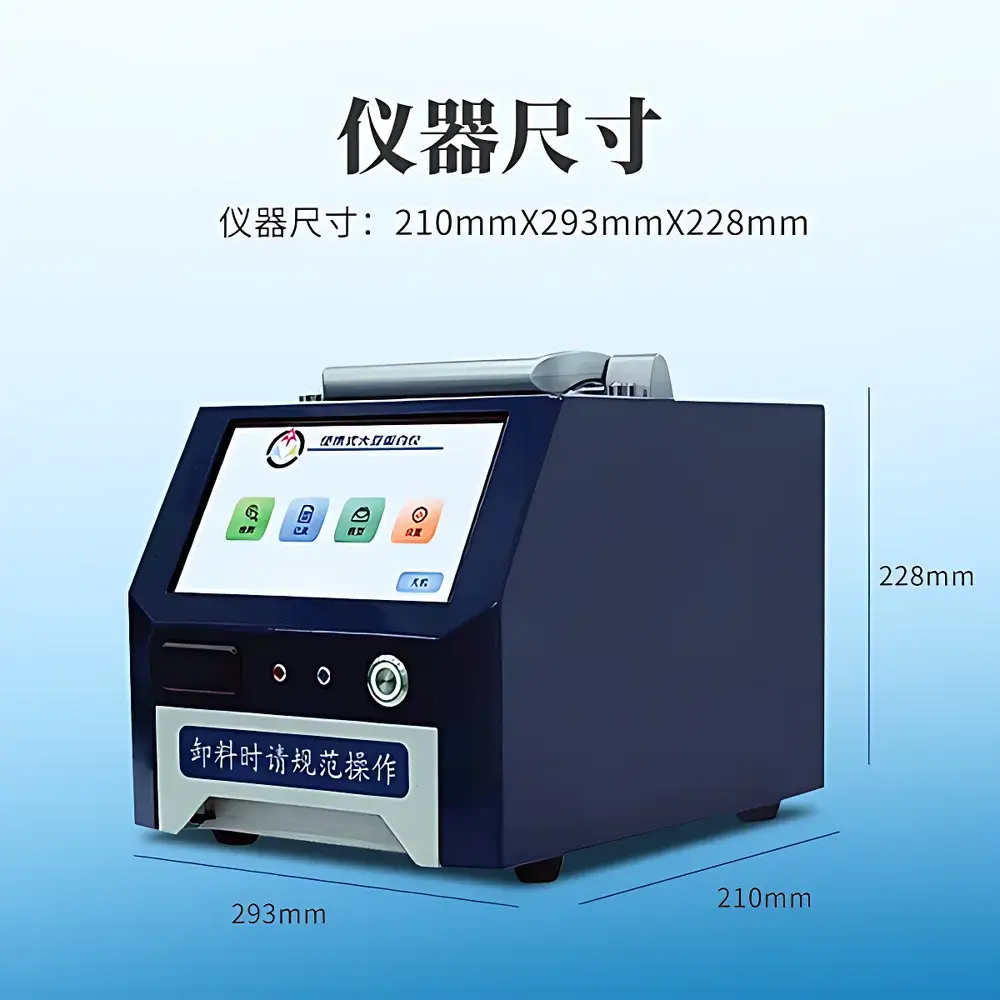
| Dimensions (L×W×H) | 30 × 27 × 23 cm (including sample chamber) |
| Weight | 6 kg |
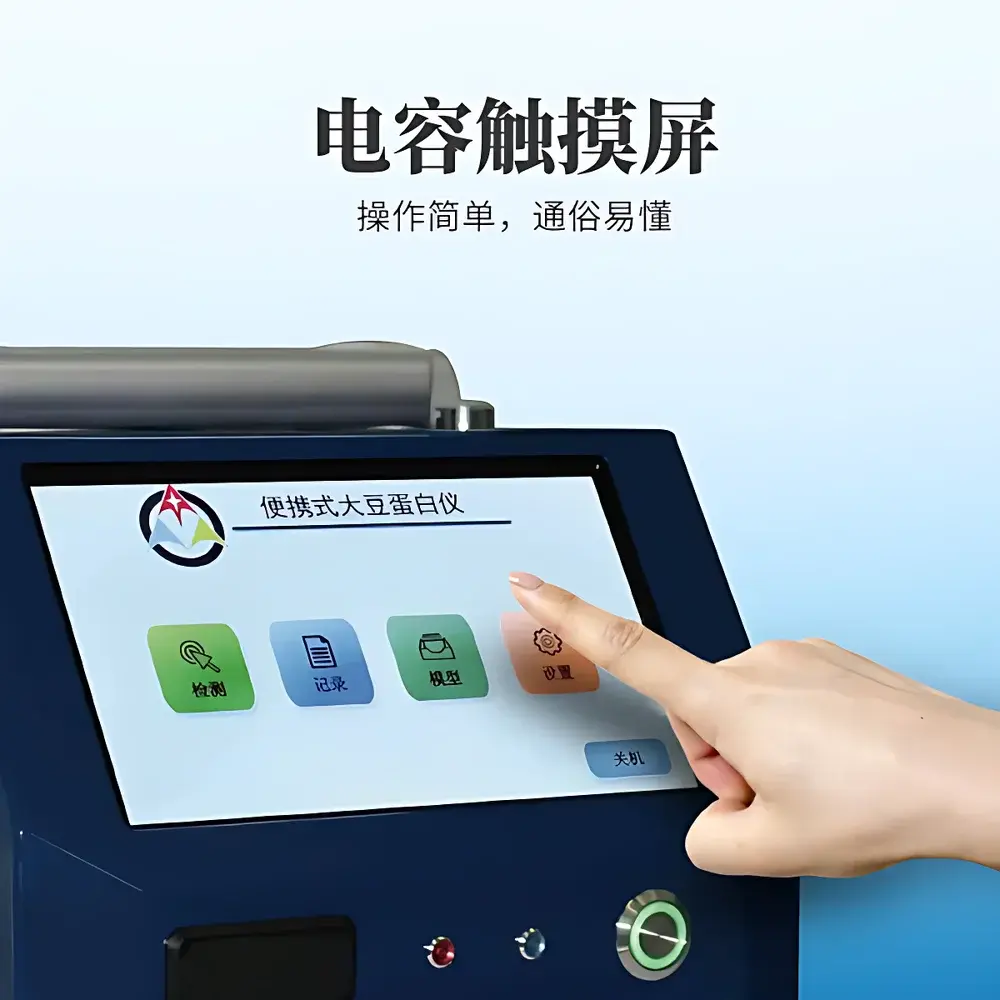
| Display | 10-inch color touchscreen |
| Power Supply | 12 V / 4 A |
| Battery Operation | Optional external battery (5 h runtime) |
| Operating Temperature | 5–45 °C |
| Compliance | Designed for routine QC in food, feed, and grain supply chains per ISO 12099, AOAC 984.27, and USP <1119> NIRS guidelines |
Overview
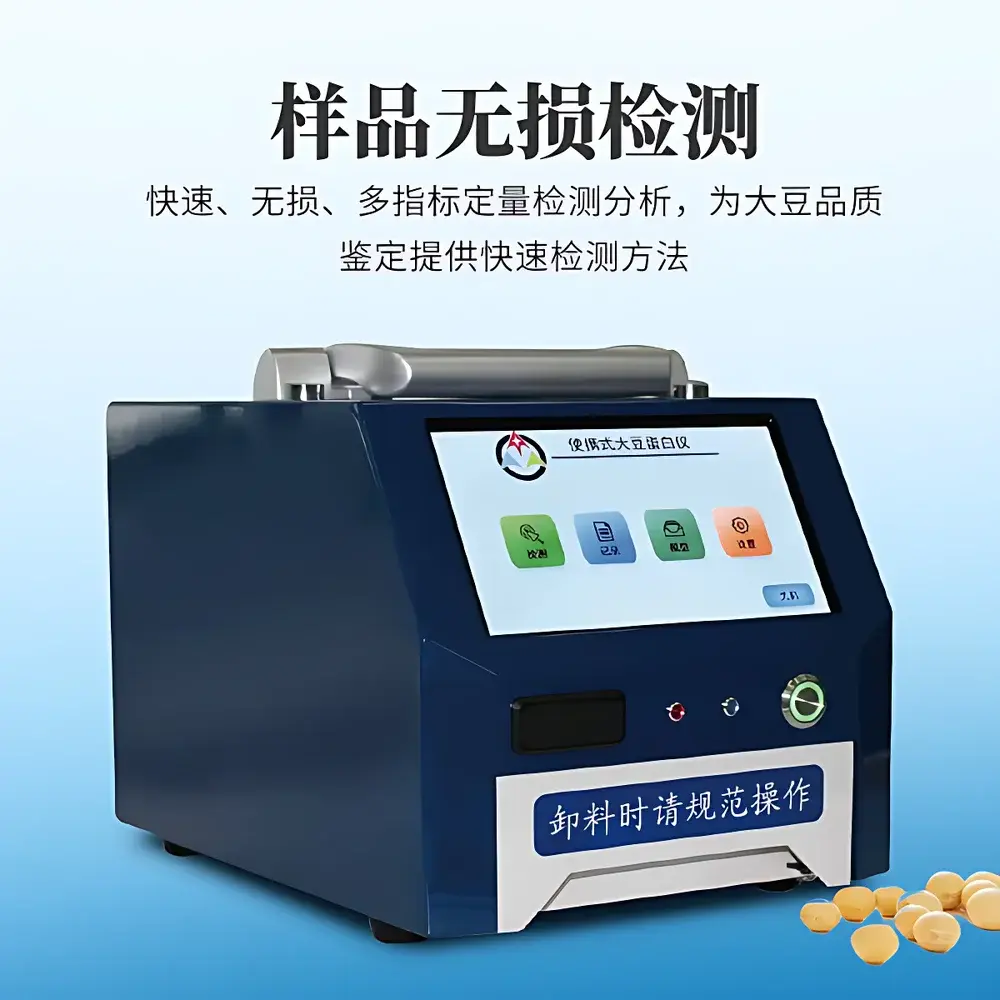
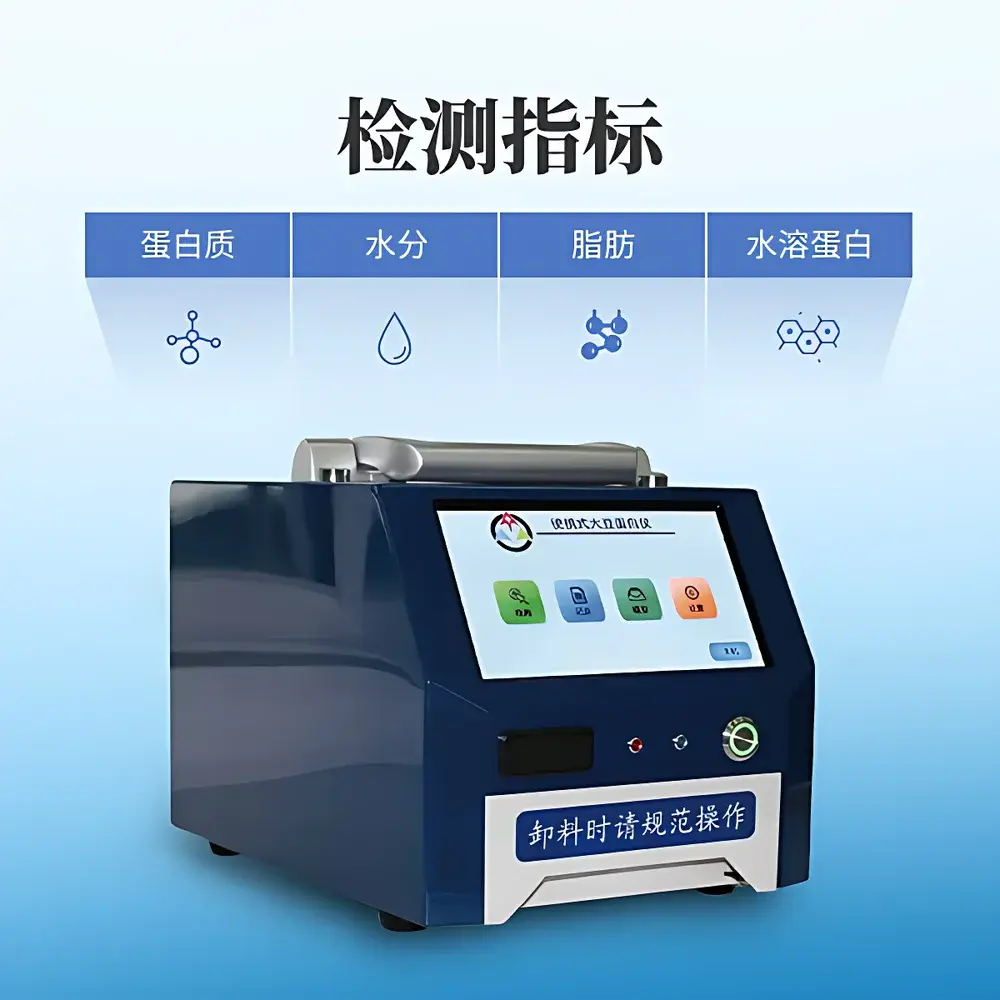
The Yuntang YT-DB Near-Infrared Wheat Analyzer is a benchtop-to-field portable spectrophotometric instrument engineered for rapid, non-destructive quantification of key compositional parameters in wheat and related cereals—including gluten content, germ fraction, protein concentration, moisture, starch, and fat. It operates on the principle of diffuse reflectance near-infrared (NIR) spectroscopy, where incident light in the 950–1650 nm spectral range interacts with C–H, N–H, and O–H molecular bonds in organic matrices. Absorption patterns are captured by a high-stability optical sensor array and translated into quantitative estimates using chemometric calibration models. Unlike wet chemistry methods, this analyzer requires no reagents, sample digestion, or consumables—enabling repeatable measurements directly on intact kernels, milled flour, or ground meal. Its compact architecture (6 kg, 30 × 27 × 23 cm) supports deployment in grain elevators, feed mills, quality control laboratories, and mobile field units, aligning with ISO/IEC 17025-compliant workflows for primary grain assessment.
Key Features
- High-fidelity NIR optical engine with imported photodiode array and thermoelectrically stabilized source, ensuring signal repeatability across ambient temperature fluctuations (5–45 °C)
- Single-shot measurement cycle completed within 1–3 minutes—optimized for throughput in high-volume grain intake or production-line screening
- 10-inch capacitive touchscreen interface with intuitive icon-driven navigation; firmware supports multilingual UI (English, Spanish, Portuguese, Arabic)
- Preloaded calibration models for wheat, barley, rye, soybean, corn, rice, and rapeseed—validated against reference methods per AOAC 984.27 and ICC 167
- Open-model architecture permitting user-defined PLS or PCR calibrations using proprietary software; model validation reports include R², RMSEC, RMSEP, and bias analysis
- Integrated sample chamber (600 mL capacity) accommodates heterogeneous particulates—no sieving or homogenization required for routine grain lots
- Portability enabled by low-voltage DC input (12 V / 4 A); optional external Li-ion battery pack extends operation to 5 hours without grid access
Sample Compatibility & Compliance
The YT-DB accepts solid-phase agricultural materials including whole grains, cracked kernels, milled flours, pelleted feeds, and dried forage. It is routinely applied in compliance with internationally recognized standards for cereal and oilseed analysis: ISO 12099 (animal feeding stuffs—guidelines for NIR calibration), ISO 21709 (cereals—determination of moisture and protein by NIR), and USP <1119> (Near-Infrared Spectroscopy). While not FDA-cleared as a medical device, its performance meets GLP-aligned data integrity requirements—audit trails, user authentication, and electronic signature support are available via optional software modules compliant with 21 CFR Part 11 Annex 11 principles. All factory calibrations are traceable to NIST-traceable reference materials and verified annually per internal SOP-ANL-012.
Software & Data Management
Instrument control and chemometric modeling are managed through Yuntang’s proprietary NIRSoft v3.2 platform, compatible with Windows 10/11 (64-bit). The software provides real-time spectral visualization, outlier detection via Mahalanobis distance, and automated report generation in PDF/CSV formats. Raw spectra and prediction outputs are stored with timestamp, operator ID, and environmental metadata (temperature/humidity if external sensors connected). Data export supports LIMS integration via ASTM E1384-compliant XML schema. Remote diagnostics and firmware updates are delivered over secure HTTPS channels. For regulated environments, optional 21 CFR Part 11 add-on enables role-based access control, electronic audit logs, and digital signature workflows.
Applications
- Grain Procurement & Storage: Rapid verification of protein (wheat gluten index), moisture (preventing mold growth), and starch content in incoming wheat lots at elevators and silos
- Feed Manufacturing: In-line monitoring of crude protein and fiber in soybean meal, corn DDGS, and alfalfa hay to ensure formulation accuracy
- Food Processing: Batch release testing of wheat flour for gluten strength (correlated to SDS sedimentation and alveograph indices), as well as fat oxidation status in bran fractions
- Research & Breeding Programs: High-throughput phenotyping of wheat germplasm for protein yield, kernel hardness, and germination potential using custom-built PLS models
- Regulatory Screening: Pre-screening for aflatoxin B1 (indirectly via spectral shifts in contaminated samples) and mycotoxin-associated lipid peroxidation markers
FAQ
Does the YT-DB require daily calibration with standards?
No—factory-installed calibrations remain stable for ≥6 months under normal use. Daily verification is performed using a built-in ceramic reference tile; full recalibration is recommended only after mechanical shock, optical cleaning, or ambient temperature excursions beyond 5–45 °C.
Can it quantify gluten directly—or only total protein?
It predicts gluten content indirectly via strong correlation with total protein (r > 0.96 vs. Kjeldahl) and calibrated rheological proxies (e.g., SDS sedimentation volume); dedicated gluten-specific models require user-developed calibrations using certified reference gluten isolates.
Is spectral data export supported for third-party chemometrics tools?
Yes—raw absorbance spectra (ASCII .csv) and processed second-derivative vectors are fully exportable for use in Unscrambler, Pirouette, or R-based model development pipelines.
What maintenance is required beyond optical window cleaning?
Annual performance verification by authorized service center is advised; no consumables or lamp replacements are needed—the LED light source has a rated lifetime of >10,000 hours.
How does it handle heterogeneous samples like uncleaned wheat with chaff or dust?
The 600 mL chamber enables representative bulk sampling; however, for optimal accuracy, samples should be free of visible foreign material—ISO 712 recommends sieving through 2 mm mesh prior to analysis.