
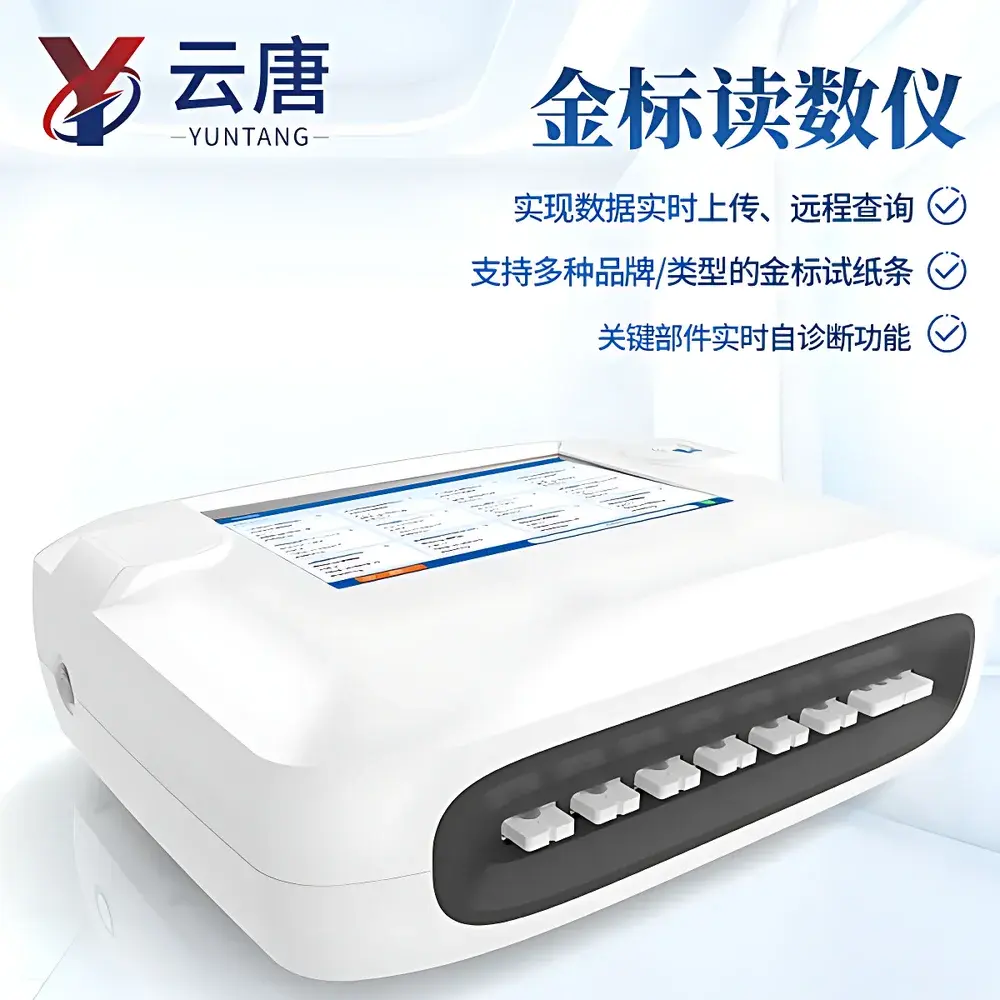

Yuntang YT-JD04 Colloidal Gold & Fluorescence Immunochromatographic Analyzer
| Brand | Yuntang |
|---|---|
| Origin | Shandong, China |
| Manufacturer Type | OEM Manufacturer |
| Region of Origin | Domestic (China) |
| Model | YT-JD04 |
| Price | USD 4,200 (FOB Qingdao) |
Overview
The Yuntang YT-JD04 Colloidal Gold & Fluorescence Immunochromatographic Analyzer is an optical detection platform engineered for quantitative and semi-quantitative analysis of lateral flow immunoassays—specifically colloidal gold-based immunochromatographic assay (GICA) strips and fluorescence-based immunochromatographic assay (FICA) strips. It operates on reflectance photometry principles, utilizing calibrated light-emitting diodes (LEDs) and high-sensitivity photodiodes to measure signal intensity at test (T) and control (C) lines with sub-pixel spatial resolution. Unlike conventional visual interpretation, the YT-JD04 eliminates subjective bias by digitizing strip response through standardized optical path geometry, temperature-controlled incubation, and real-time background correction algorithms. Designed for compliance with Good Laboratory Practice (GLP) and food safety rapid testing workflows, it supports traceability-critical environments including veterinary residue screening, foodborne pathogen surveillance, and environmental contaminant monitoring.
Key Features
- Simultaneous dual-mode detection: Single optical module compatible with both colloidal gold and fluorescence-labeled lateral flow strips—no hardware switching or recalibration required.
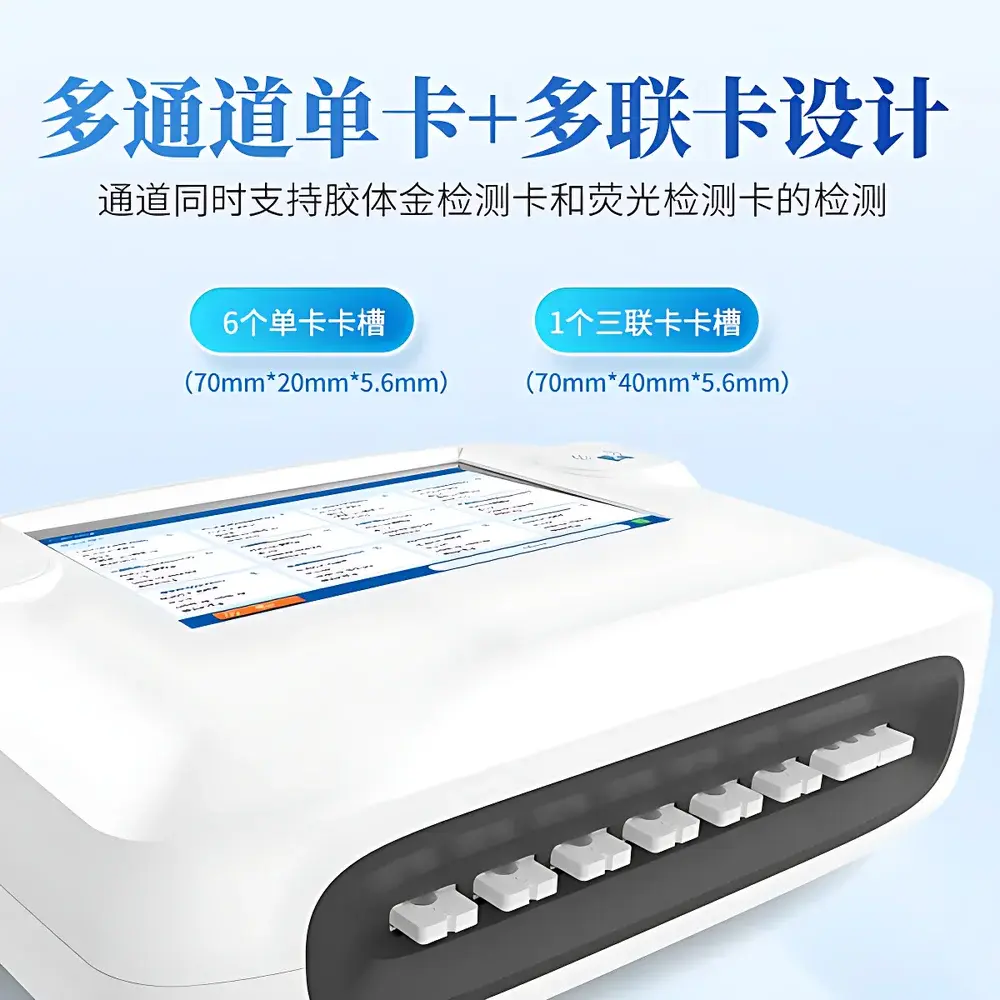
- High-throughput multi-channel architecture: Six independent single-strip slots (70 × 20 × 5.6 mm) plus one triple-strip slot (70 × 40 × 5.6 mm), enabling parallel processing of up to nine assays per run.
- Integrated incubation system: Precise thermal control (ambient +5°C to 60°C, ±0.5°C accuracy) ensures optimal antibody–antigen binding kinetics during on-instrument reaction.
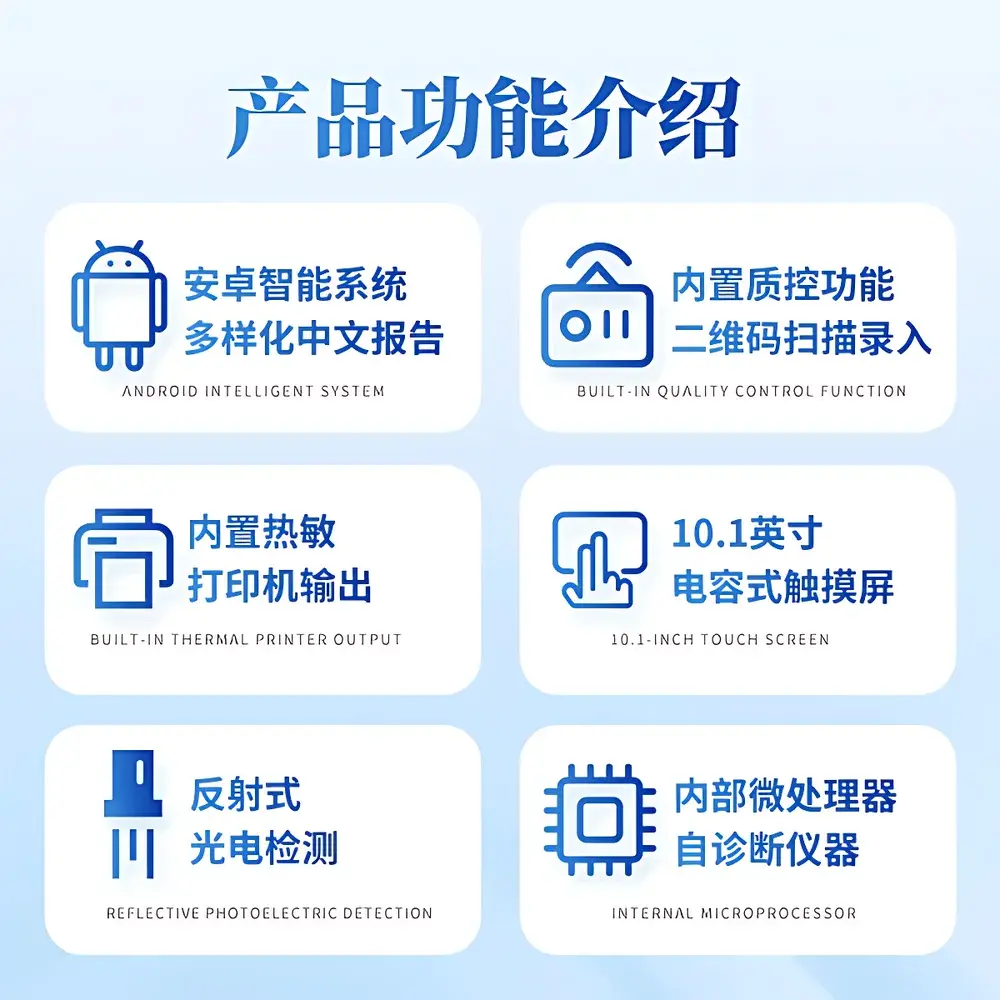
- Android 7.1 operating system with 10.1-inch capacitive touchscreen (1280 × 800 resolution), offering intuitive navigation, customizable UI templates, and embedded bilingual (English/Chinese) interface.
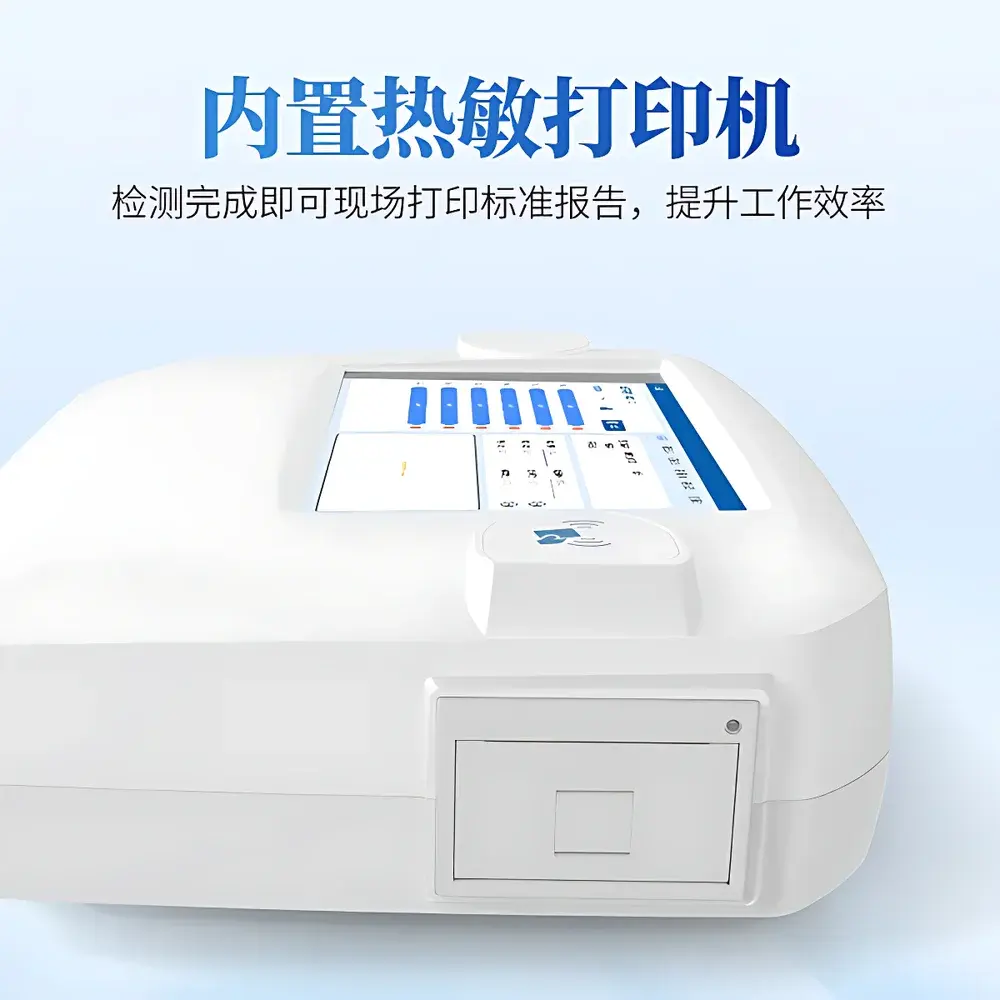
- Onboard thermal printer (57 × 30 mm paper): Generates audit-ready reports containing analyte concentration, LOD, sample ID, operator ID, timestamp, calibration status, and QC flagging.
- Comprehensive data integrity suite: Real-time self-diagnostic routines for optical path alignment, LED stability, sensor drift, and strip positioning; automatic error logging with timestamped event history.
- Robust connectivity: Dual USB-A ports, USB-B (for firmware update), Gigabit Ethernet (LAN), Wi-Fi 802.11 b/g/n, Bluetooth 4.2, and optional RFID/scanner modules for sample traceability.
- Secure data management: Local storage capacity ≥100,000 test records (expandable to 5 million via internal eMMC); encrypted export via USB drive in CSV/Excel-compatible format.
Sample Compatibility & Compliance
The YT-JD04 accepts standard lateral flow formats compliant with ISO 20355:2019 (immunochromatographic assays for food safety) and GB/T 27404–2008 (Chinese accreditation criteria for food testing laboratories). It accommodates common strip dimensions used in veterinary drug residue kits (e.g., sulfonamides, tetracyclines, β-lactams), mycotoxin tests (aflatoxin B1, ochratoxin A), and pathogen antigen assays (Salmonella, Listeria monocytogenes). All measurements adhere to analytical performance criteria defined in AOAC Official Method 2012.01 and EU Commission Regulation (EU) No 519/2013 for rapid screening methods. The instrument’s measurement uncertainty profile meets ≤5% relative error (RE) and ≤3% coefficient of variation (CV) under routine operational conditions—validated per ISO/IEC 17025:2017 Annex A.4 requirements for method verification.
Software & Data Management
The embedded software implements role-based access control (RBAC) with three user tiers: Operator, Supervisor, and Administrator. Audit trails capture all critical actions—including parameter changes, report generation, data deletion, and calibration events—in accordance with FDA 21 CFR Part 11 electronic record requirements. Data synchronization supports HL7 v2.5 and JSON-based RESTful API integration with LIMS, national food safety surveillance platforms (e.g., China’s NIFDC Food Rapid Testing Network), and cloud-based dashboards. Batch reporting includes statistical summaries (mean, SD, CV%), pass/fail status against regulatory thresholds (e.g., MRLs per Codex Alimentarius), and trend charts across time-series sampling. Firmware updates are delivered via signed OTA packages with SHA-256 hash verification.
Applications
- Food Safety Testing: Rapid quantification of pesticide residues (organophosphates, carbamates), veterinary antibiotics (chloramphenicol, nitrofurans), mycotoxins (zearalenone, deoxynivalenol), and allergens (peanut, gluten).
- Veterinary Diagnostics: On-site detection of swine fever virus antigens, avian influenza H5/H7 HA proteins, and porcine reproductive and respiratory syndrome virus (PRRSV) antibodies in serum or tissue homogenates.
- Environmental Monitoring: Screening of heavy metals (Pb²⁺, Cd²⁺) and endocrine disruptors (bisphenol A, phthalates) in surface water and soil extracts using competitive inhibition strips.
- Research & Reference Labs: Standard curve generation, cross-reactivity assessment, and validation of novel lateral flow assay formats prior to commercialization.
- Border Inspection & Field Deployment: Battery-operated mode (via optional external power bank) enables operation in mobile labs, cold chain trucks, and rural veterinary clinics without AC infrastructure.
FAQ
Does the YT-JD04 require external calibration standards for each assay?
No. Preloaded calibration curves for over 80 validated kits are embedded in firmware; users may import custom curves via USB in .csv format following ICH Q2(R2) guidelines.
Can the instrument validate strip lot-to-lot consistency?
Yes. Built-in QC card recognition identifies manufacturer-specific control line intensities and flags deviations exceeding ±15% from historical mean.
Is remote firmware update supported over Wi-Fi?
Yes—signed OTA updates are pushed from Yuntang’s secure server; rollback capability is retained for version recovery.
What is the minimum detectable signal intensity for fluorescence strips?
The system achieves a limit of detection (LOD) equivalent to 50 pg/mm² for europium-chelate labels under optimized excitation (365 nm) and emission (615 nm) settings.
How does the device handle ambient light interference during measurement?
A motorized shutter isolates the optical chamber during acquisition, and ambient light compensation is performed using reference photodiode readings before and after LED pulse activation.





