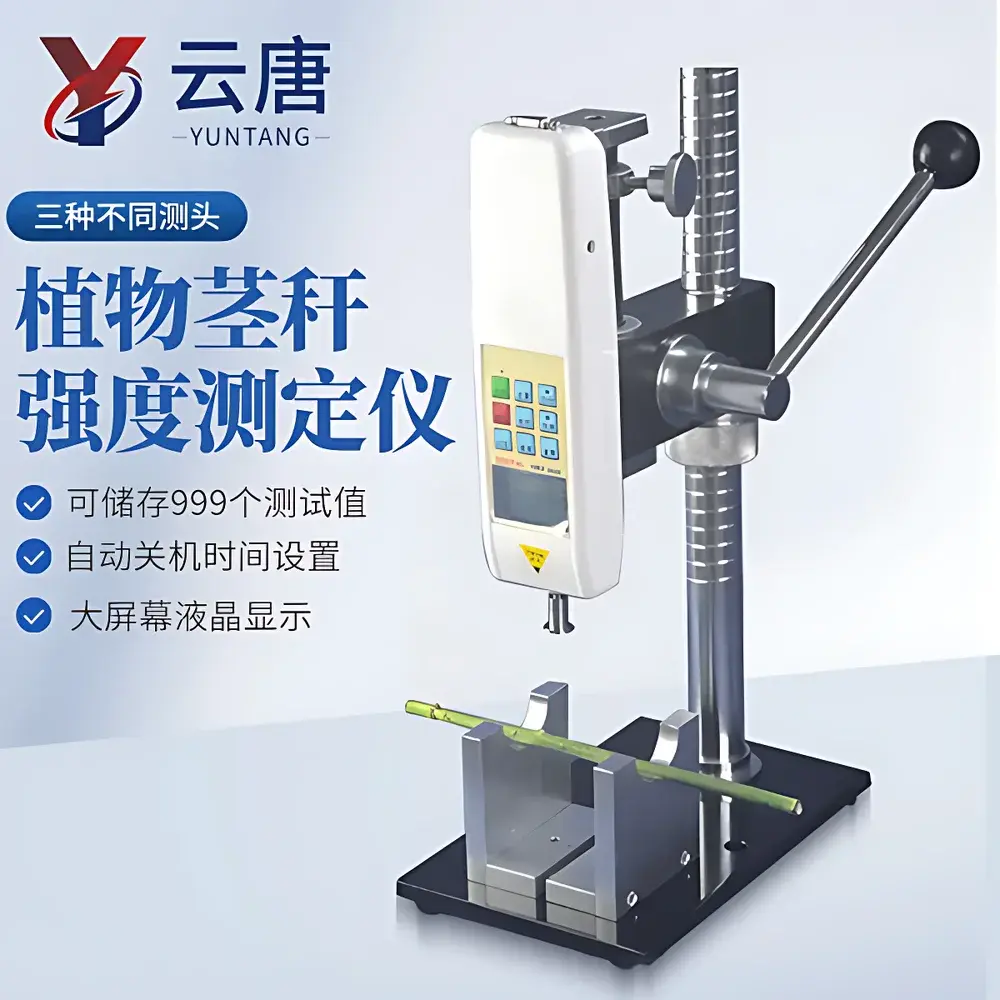

Yuntang YT-JG1A/YT-JG2B Plant Stem Strength Tester
| Brand | Yuntang |
|---|---|
| Origin | Shandong, China |
| Manufacturer Type | Direct Manufacturer |
| Product Origin | Domestic (China) |
| Model | YT-JG1A / YT-JG2B |
| Price Range | USD 350 – 470 |
| Max Load | 500 N |
| Resolution | 0.1 N |
| Accuracy | ±0.5% FS |
| Penetration Needle Diameter | 1 mm |
| Adjustable Span for Bending Test | Up to 300 mm |
| Bending Probe Diameter | 50 mm (customizable) |
| Power Supply | 220 V AC adapter + Rechargeable Li-ion battery |
| Battery Runtime | 4–6 hours |
| Temperature Drift | 0.2 µV/°C (0–60°C) |
| Zero Drift | ≤0.1% FS / 8 h |
| Overload Capacity | 150% FS |
| Operating Temperature | 0–60°C |
| Operating Humidity | ≤80% RH |
| Auto-off Timer | 10–90 min |
| Data Storage | 999 test records |
| Display | Backlit LCD with digit inversion function |
| Unit Conversion | N, kgf, lbf (auto-switching) |
| Interface | USB for PC connectivity and data export |
Overview
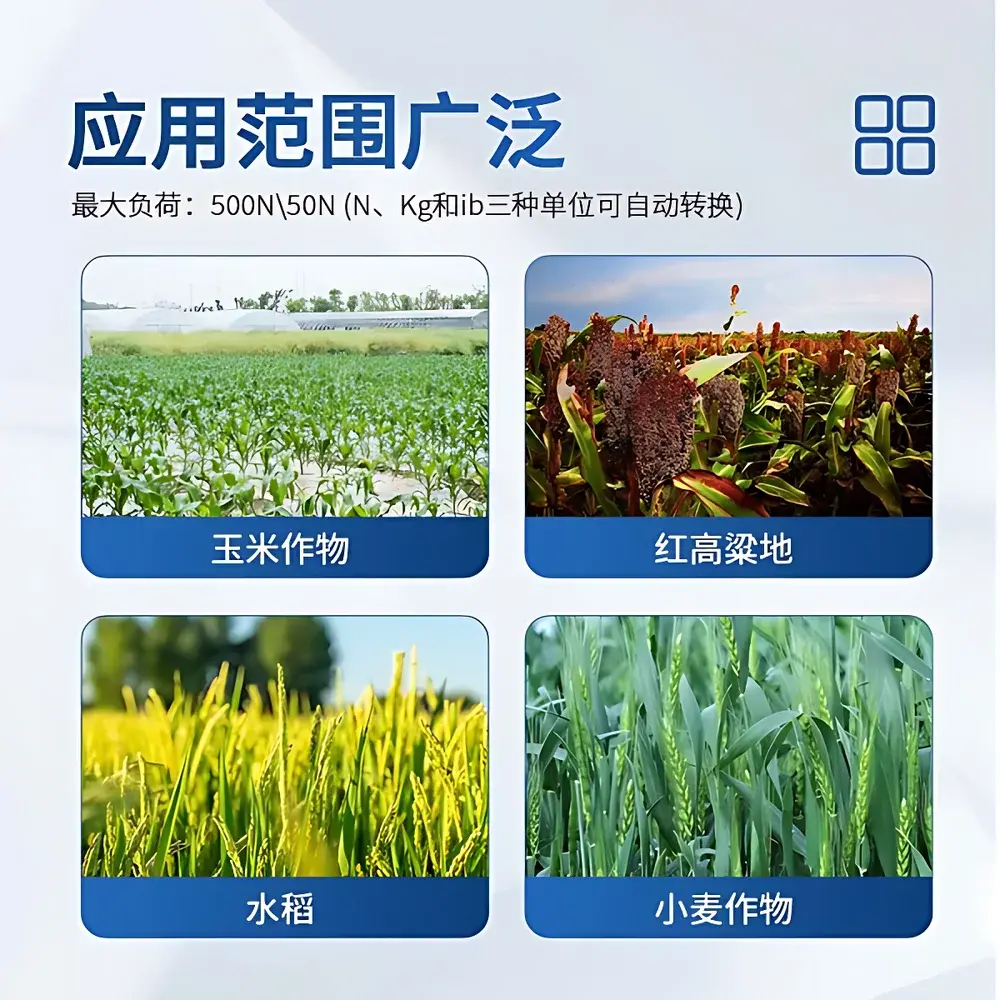
The Yuntang YT-JG1A/YT-JG2B Plant Stem Strength Tester is a precision mechanical testing instrument engineered for non-destructive, in situ quantification of structural mechanical properties in herbaceous and semi-woody plant stems. It operates on the fundamental principles of three-point bending, axial compression, and tissue puncture—each corresponding to distinct biomechanical failure modes observed in field-grown crops such as maize, sorghum, tobacco, rice, and wheat. By measuring the maximum force (in newtons) required to induce stem yielding or fracture under controlled loading conditions, the instrument delivers objective, repeatable metrics directly correlated with lodging resistance—a critical agronomic trait influencing harvest efficiency, grain yield stability, and mechanized farming viability. The device complies with standardized mechanical testing frameworks used in plant biomechanics research, including ASTM D143 (Standard Test Methods for Small Clear Specimens of Timber) adapted for herbaceous biomass, and supports quantitative phenotyping aligned with FAO and CIMMYT crop resilience evaluation protocols.
Key Features
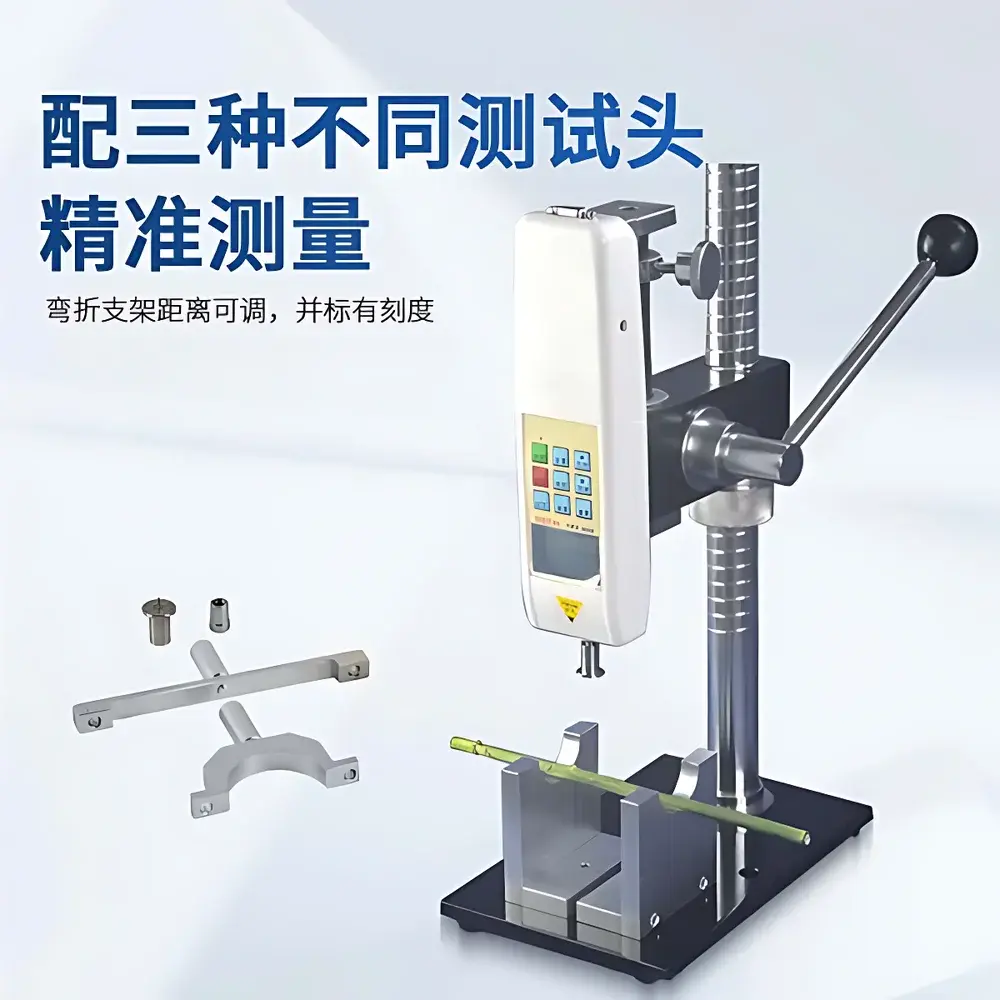
- Triple-mode mechanical testing: configurable probe assemblies enable standardized bending (three-point flexure), axial compression (crushing), and puncture (tissue penetration) measurements—each reflecting different physiological stress responses.
- Adjustable bending span (up to 300 mm) with engraved metric scale for precise specimen support geometry control—essential for normalizing second-moment-of-area effects across varying stem diameters.
- Interchangeable probes: 1 mm diameter stainless-steel puncture needle; 50 mm diameter flat-ended compression platen (custom diameters available); and rigid bending jig with calibrated fulcrum alignment.
- High-fidelity load sensing: integrated S-type strain gauge transducer with 500 N full-scale capacity, 0.1 N resolution, and ±0.5% full-scale accuracy—calibrated traceably to national standards.
- Onboard data management: stores up to 999 test records with timestamp, force peak, displacement (when paired with optional displacement sensor), and unit-converted values (N, kgf, lbf).
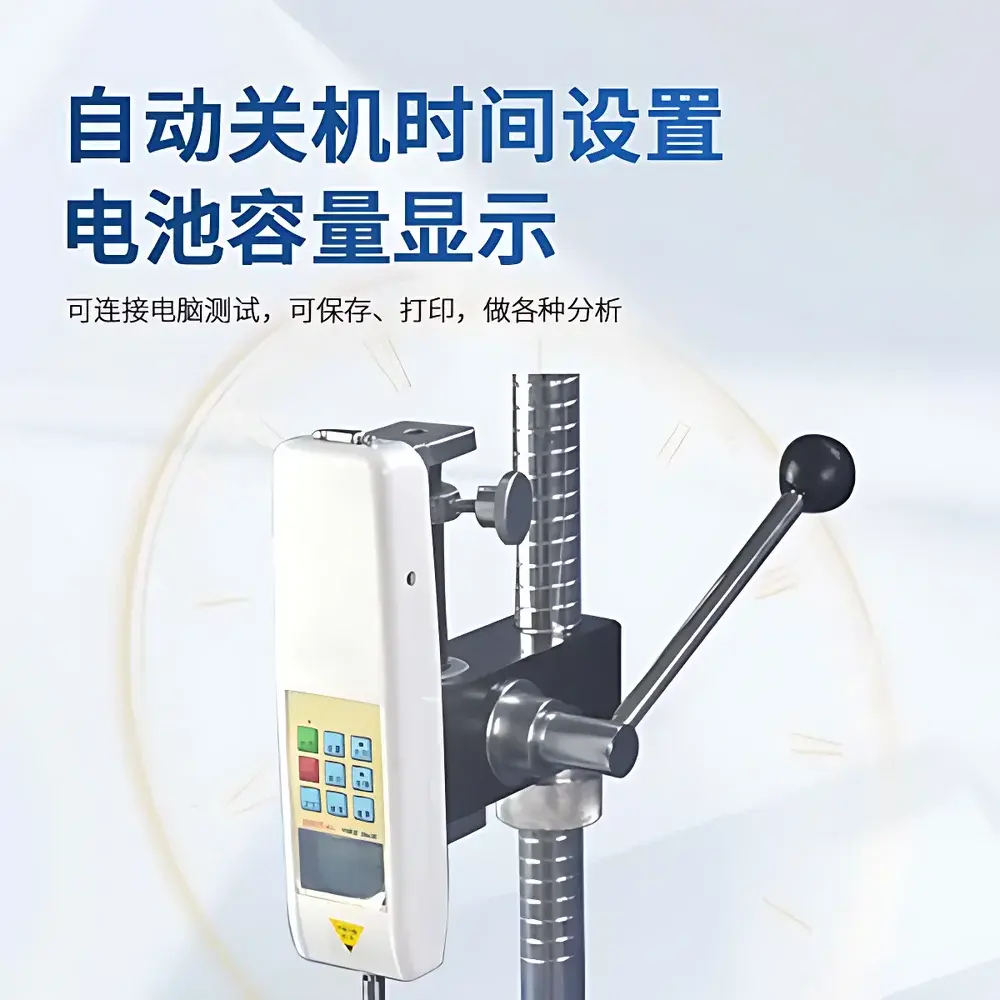
- Backlit LCD display with digit inversion mode—enables clear reading under variable field lighting conditions and accommodates operator visual preferences.
- Programmable auto-power-off (10–90 min), real-time battery level indicator, and low-voltage shutdown protection ensure operational continuity during extended field surveys.
Sample Compatibility & Compliance
The YT-JG1A/YT-JG2B is validated for use with intact, living stems of monocot and dicot crop species at vegetative, tasseling, silking, and grain-fill stages. Sample diameter range: 3–25 mm; minimum internode length: ≥80 mm for bending tests. Instrument design conforms to ISO 5725-2 (accuracy of measurement methods) for repeatability assessment and supports GLP-compliant data capture when connected to validated PC software. All mechanical interfaces meet IP54 ingress protection rating for dust and splash resistance. Calibration certificates are provided per unit, traceable to CNAS-accredited metrology labs in China. While not FDA-regulated, its output parameters align with USDA ARS and EU Horizon 2020 plant phenotyping infrastructure requirements for lodging-related trait quantification.
Software & Data Management
The tester supports USB-based communication with Windows-compatible acquisition software (included). Software features include real-time force–displacement curve plotting, batch statistical analysis (mean, SD, CV%, ANOVA-ready export), customizable report templates (PDF/CSV/XLSX), and audit-trail-enabled session logging. Data files embed instrument ID, calibration date, operator ID, environmental notes, and test mode metadata—facilitating traceability under ISO/IEC 17025 laboratory accreditation. Optional integration with BreedBase or FieldBook enables direct upload of stem strength phenotypes into breeding databases. No cloud storage or remote telemetry is implemented—ensuring full data sovereignty and compliance with institutional IT security policies.
Applications
- Evaluation of lodging resistance in breeding programs targeting improved stem rigidity and vascular bundle density.
- Field-based validation of QTLs or gene-editing outcomes affecting lignin biosynthesis, cellulose deposition, or cortical thickness.
- Monitoring diurnal or developmental changes in stem mechanical integrity under drought, nitrogen limitation, or growth regulator treatment.
- Correlation analysis between stem strength metrics and harvest index, grain moisture content, or combine harvester loss rates.
- Supporting FAO Crop Production Index modeling where lodging incidence contributes to regional yield gap estimation.
- Teaching laboratories for plant biomechanics, agronomy, and sustainable agriculture curricula requiring hands-on mechanical property measurement.
FAQ
What stem morphologies can be tested with this instrument?
It accommodates upright, non-lignified to semi-lignified stems from 3–25 mm in diameter, provided sufficient internode length (≥80 mm) is available for bending tests. Hollow-stemmed species (e.g., wheat, rice) require careful probe centering to avoid wall buckling artifacts.
Is calibration required before each use?
No—factory calibration remains stable for ≥6 months under normal field use. However, daily zero-check using the built-in tare function is recommended prior to sampling sessions.
Can displacement be measured simultaneously with force?
Yes—when used with the optional linear displacement sensor (LVDT or potentiometric type), the system captures synchronized force–displacement curves essential for calculating modulus of elasticity and energy absorption.
Does the instrument comply with international standards for phenotyping data submission?
Its output format (force in N, time-stamped metadata, unit-consistent values) meets MIAPPE v1.1 minimum information standards for plant phenotyping experiments and is accepted by Gramene and Crop Ontology repositories.
How is data integrity ensured during multi-user field deployments?
Each unit logs operator ID, GPS-tagged location (via connected tablet), and session start/end timestamps. Exported datasets include SHA-256 checksums for tamper detection in post-harvest analysis pipelines.