
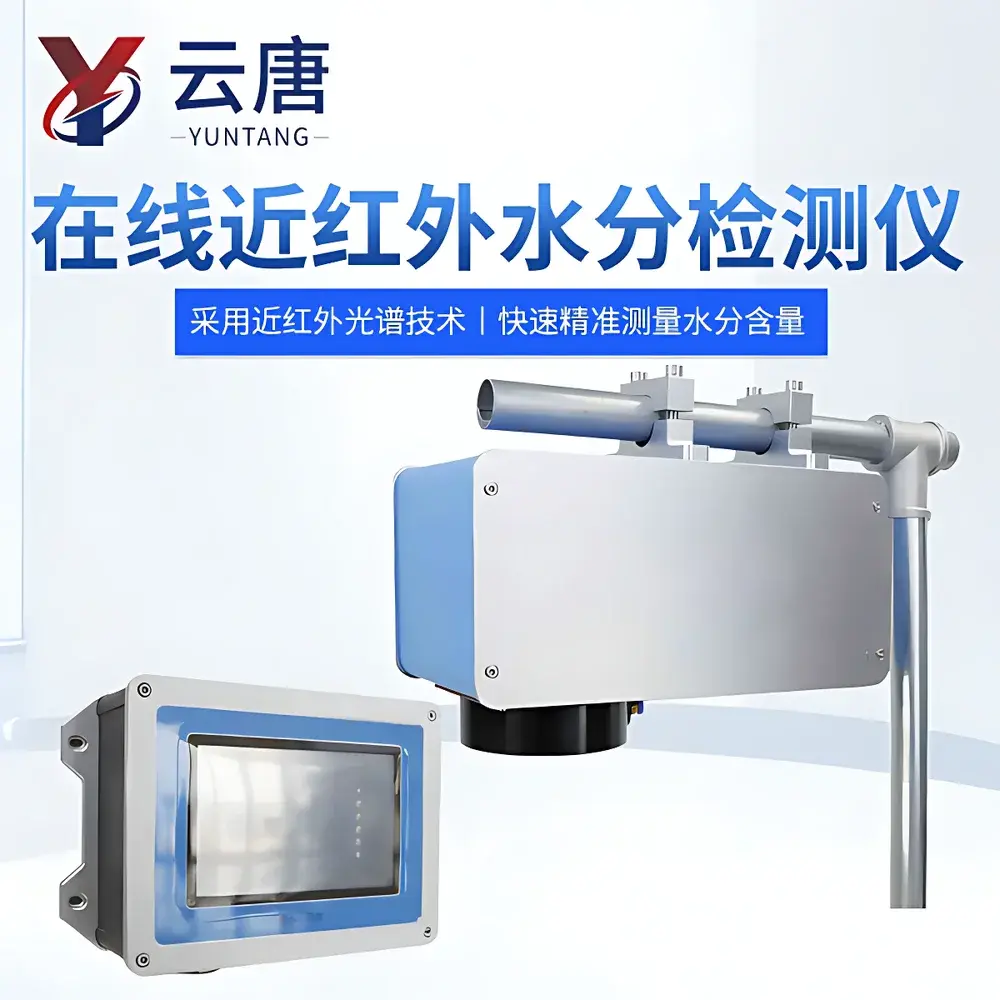

Yuntang YT-NIR-T Online Near-Infrared Moisture Analyzer (Universal Type)
| Brand | Yuntang |
|---|---|
| Origin | Jilin, China |
| Manufacturer Type | Manufacturer |
| Country of Origin | Domestic (China) |
| Model | YT-NIR-T |
| Heating Method | Infrared |
| Measurement Range | 0–100% w/w |
| Accuracy | ±0.2% w/w (subject to material composition variation) |
| Light Source | Imported high-efficiency NIR source |
| Filter Cycle | 1–60 s |
| Illumination Diameter | 60–75 mm |
| Working Height | 350 mm + 100 mm tolerance |
| Measurement Channels | 50 |
| Probe Window Material | High-borosilicate quartz glass |
| Operating Environment | −40 °C to +70 °C, 5–95% RH (non-condensing) |
| Power Supply | 220 VAC / 50 Hz |
| Communication Interfaces | RS485, 4–20 mA analog output, RS232, Ethernet (LAN), LoRa wireless |
| Enclosure Rating | IP65 |
| Display | Integrated industrial touchscreen |
| Probe Housing | High-strength aluminum alloy |
Overview
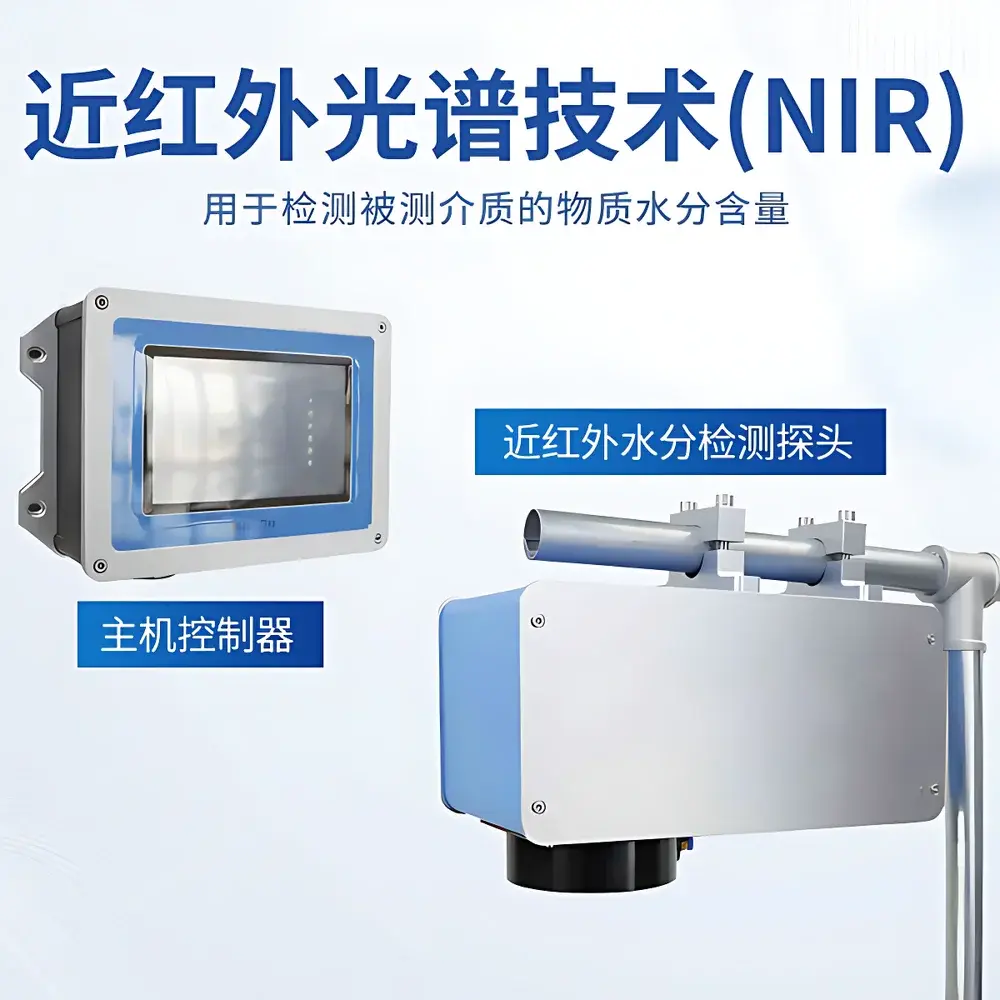
The Yuntang YT-NIR-T Online Near-Infrared Moisture Analyzer (Universal Type) is an industrial-grade, non-contact process analyzer engineered for real-time, continuous moisture quantification in bulk solid and granular materials. It operates on the fundamental principle of near-infrared (NIR) spectroscopy—specifically leveraging the characteristic absorption bands of water molecules in the 1,450 nm and 1,940 nm spectral regions. When broadband NIR radiation impinges on a moving or static sample surface, differential absorption occurs based on hydrogen-bonding states and molecular vibrational overtones. The instrument measures the intensity attenuation of reflected or transmitted light at these diagnostic wavelengths, then applies multivariate calibration models (e.g., partial least squares regression) to derive moisture concentration as mass percent (w/w). Unlike thermal gravimetric methods, this approach requires no sample contact, no consumables, and introduces zero process interruption—making it suitable for integration into high-throughput production lines governed by ISO 9001, GMP, or FDA 21 CFR Part 11-compliant quality systems.
Key Features
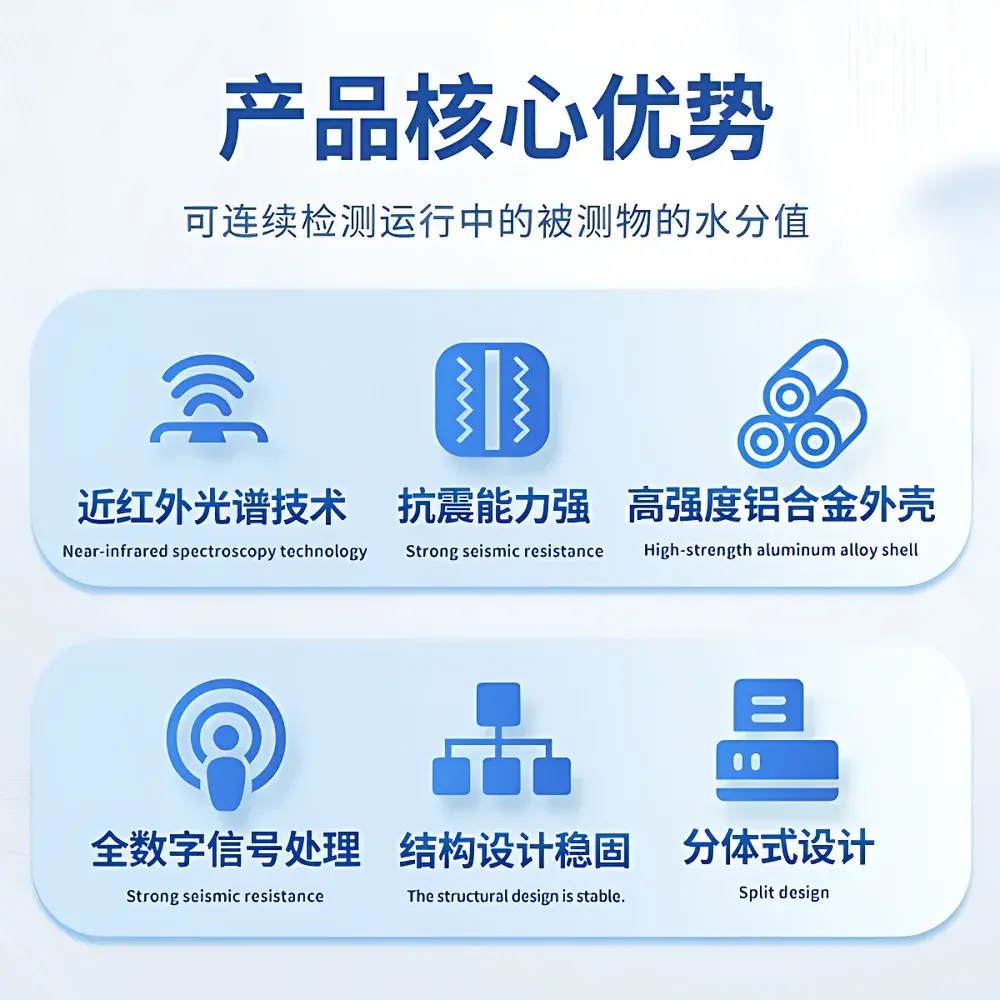
- Non-invasive, real-time monitoring: Enables continuous moisture tracking without physical sampling or conveyor stoppage—critical for closed-loop process control in feed mills, pellet plants, and pharmaceutical granulation suites.
- Dual-channel optical architecture: Incorporates reference and measurement channels with automatic baseline compensation, minimizing drift from ambient temperature fluctuations or lens contamination.
- High-borosilicate quartz probe window: Chemically inert, scratch-resistant, and hydrophobic-treated to resist dust adhesion and condensate formation—ensuring long-term optical stability in humid or dusty environments (IP65-rated housing).
- Modular, distributed topology: Supports one master controller interfacing up to four independent NIR probes via daisy-chained RS485, enabling synchronized multi-point monitoring across conveyors, hoppers, and pneumatic transfer lines.
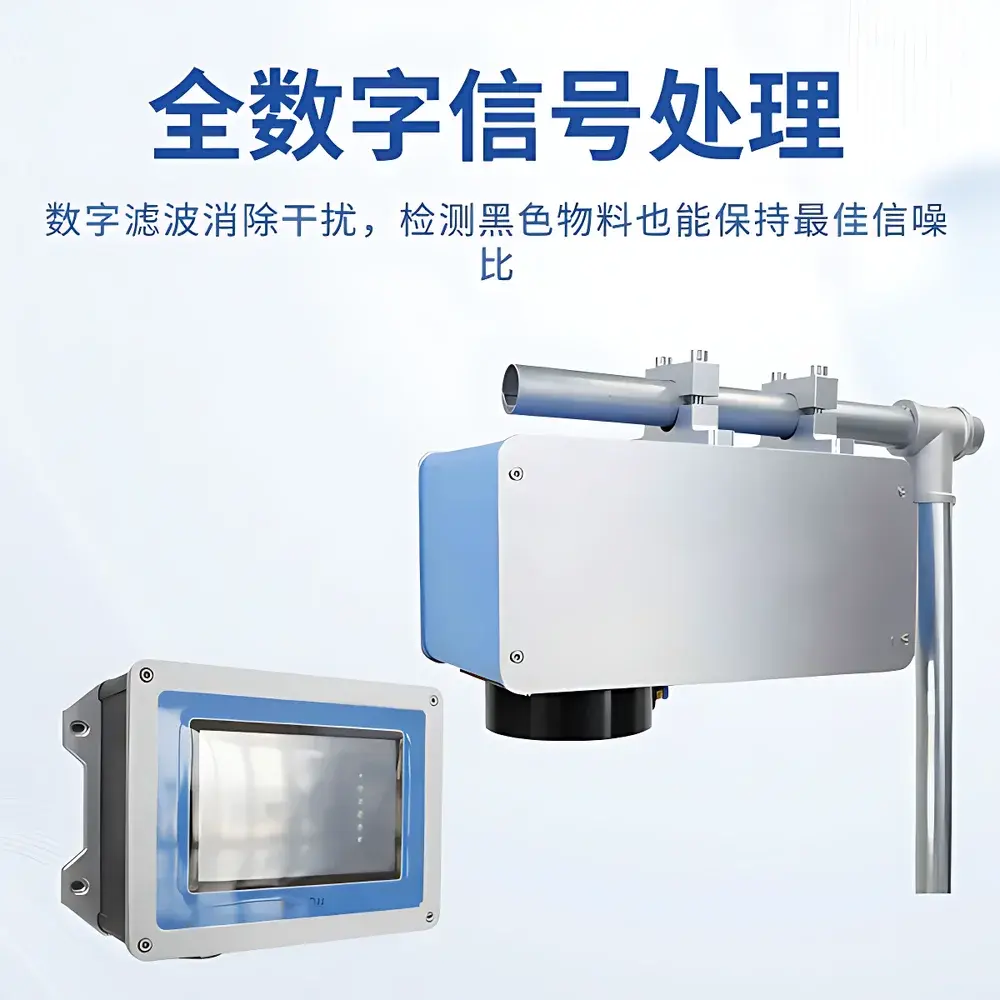
- Robust digital signal processing: Embedded FPGA-based filtering eliminates electromagnetic interference (EMI) and low-frequency noise—maintaining signal fidelity even when measuring dark, low-reflectance materials such as activated carbon or roasted coffee grounds.
- Configurable acquisition parameters: Adjustable filter cycle (1–60 s), dynamic range scaling, and channel-specific gain settings allow optimization for heterogeneous feedstocks including fibrous biomass, mineral ores, and hygroscopic powders.
Sample Compatibility & Compliance
The YT-NIR-T is validated for use with free-flowing and cohesive solids exhibiting particle sizes ranging from sub-100 µm fines to >10 mm granules. Its 60–75 mm illumination footprint ensures representative spatial averaging across typical belt widths (up to 1.2 m) and hopper discharge zones. Calibration transferability has been demonstrated across >30 material classes—including wood fiber, cereal grains, cement clinker, kaolin clay, and lactose monohydrate—using matrix-matched reference methods per ASTM D4017 (moisture in soil) and ISO 712 (cereals and cereal products). The system supports audit-ready data logging with timestamped raw spectra, calibration metadata, and operator annotations—fully traceable under GLP and GMP documentation requirements.
Software & Data Management
Embedded firmware includes a web-accessible configuration interface supporting remote parameter adjustment, spectral diagnostics, and alarm threshold management. All measurement data are timestamped and exported via Modbus TCP or OPC UA to MES/SCADA platforms (e.g., Siemens WinCC, Rockwell FactoryTalk). Optional cloud telemetry enables predictive maintenance alerts based on signal-to-noise ratio decay trends and window transmission loss. Audit trails comply with FDA 21 CFR Part 11 requirements through role-based access control, electronic signatures, and immutable data archiving—validated for use in regulated manufacturing environments.
Applications
- Real-time moisture feedback control in biomass pelletizing and briquetting lines
- In-line verification of drying endpoint in fluidized-bed dryers for pharmaceutical excipients
- Moisture uniformity monitoring during blending and milling of food powders (e.g., whey protein, cocoa powder)
- Quality gatekeeping for incoming raw materials in cement, fertilizer, and feedstock procurement
- Process validation support for ISO/IEC 17025-accredited testing laboratories
- Environmental compliance reporting for landfill cover soil moisture thresholds (EPA Method 9071A)
FAQ
Does the YT-NIR-T require periodic recalibration using reference standards?
Yes—calibration models must be updated when introducing new material types or significant formulation changes. A minimum of 20 representative samples spanning the expected moisture range are required for PLS model development; reference values must be obtained via primary methods (e.g., Karl Fischer titration or vacuum oven drying per AOAC 950.46).
Can the probe operate reliably in outdoor installations exposed to solar radiation?
The aluminum housing and quartz window provide UV resistance and thermal mass buffering; however, direct sunlight exposure on the optical path may induce thermal lensing. We recommend installation within shaded enclosures or with active air purge for ambient temperatures exceeding 60 °C.
Is the system compatible with hazardous area classifications (e.g., ATEX or IECEx)?
The standard YT-NIR-T is rated for Zone 2 / Class I Div 2 environments. Explosion-proof variants (ATEX II 2G Ex db IIB T4 Gb) are available upon request with modified housing and intrinsically safe barrier integration.
How does the instrument handle surface moisture versus bound water measurement?
NIR primarily detects free and loosely bound water (hydrogen-bonded OH groups); strongly bound water (e.g., crystalline hydrates) contributes minimally to the 1,450/1,940 nm absorbance. For total water quantification in hydrated salts, complementary techniques such as thermogravimetric analysis (TGA) are recommended.
What is the minimum detectable moisture change resolution?
Under stable operating conditions and optimal signal-to-noise ratio, the system resolves moisture differences ≥0.05% w/w—verified against NIST-traceable reference standards across three independent laboratories.
Related Products






