
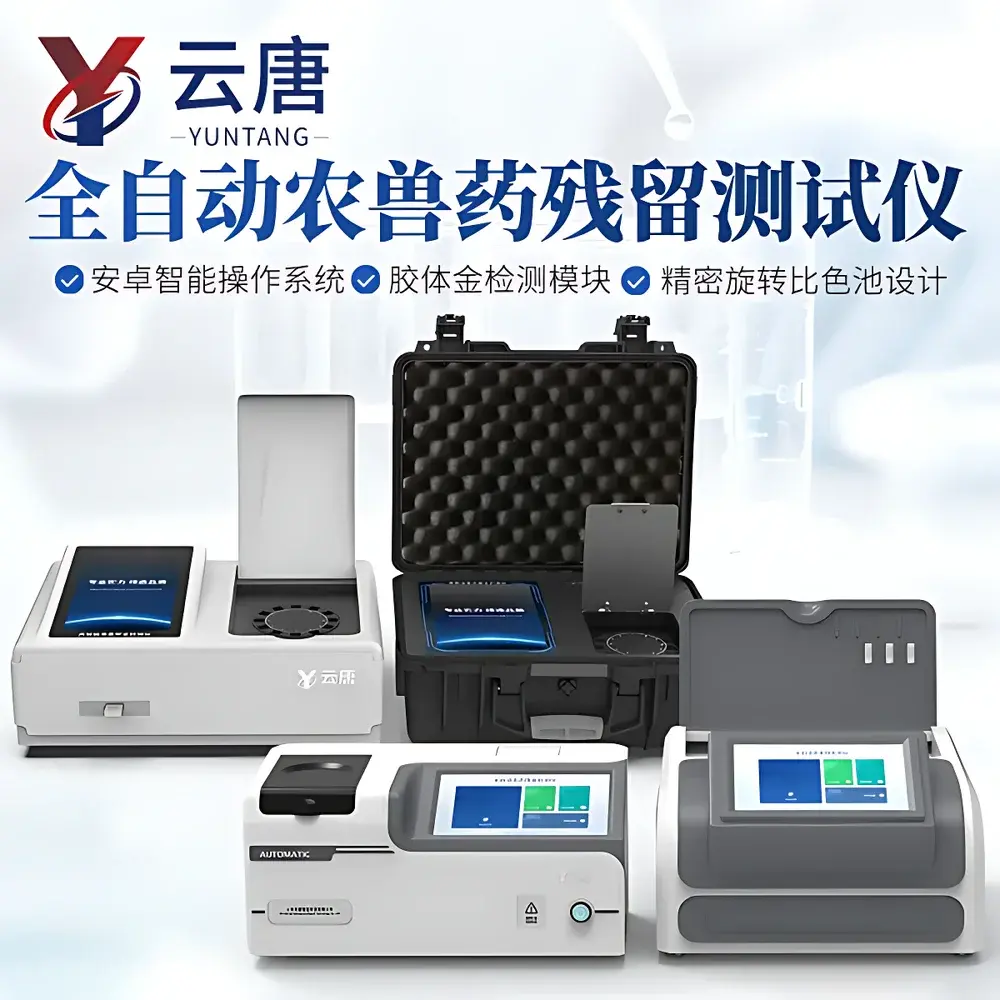
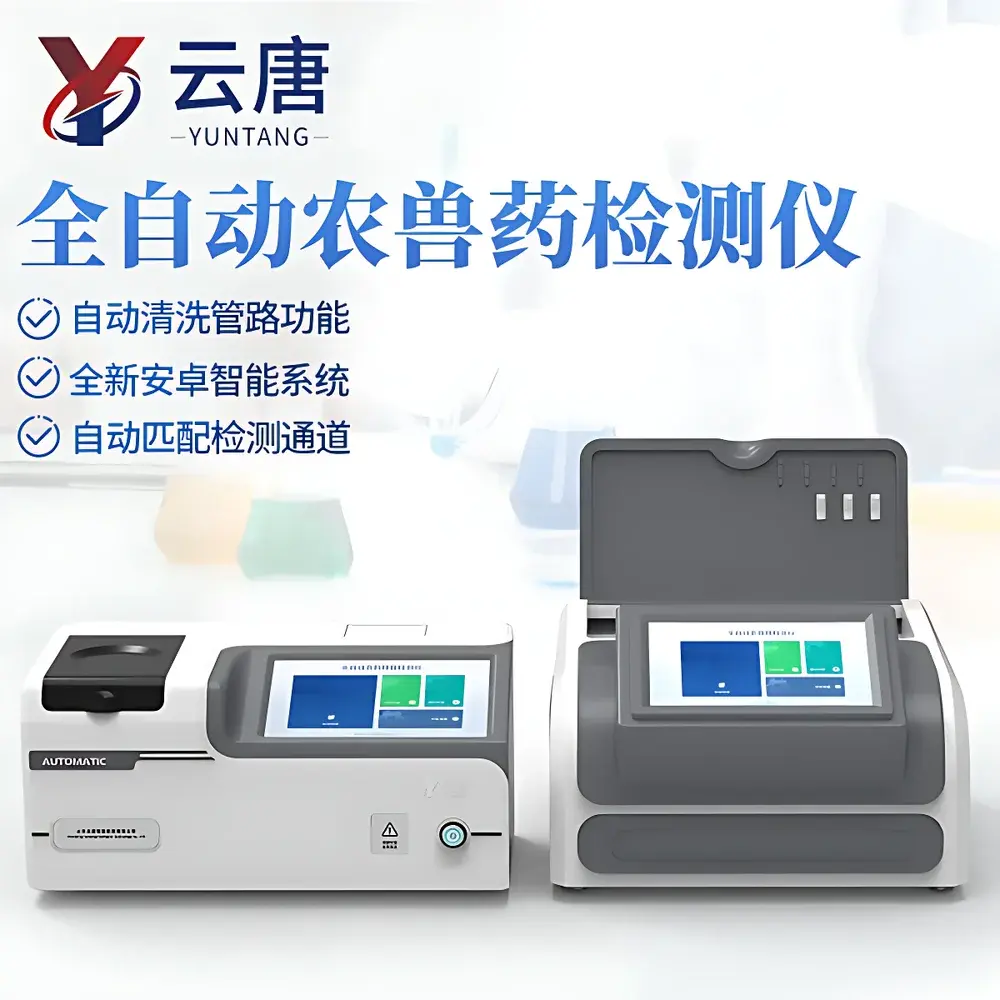
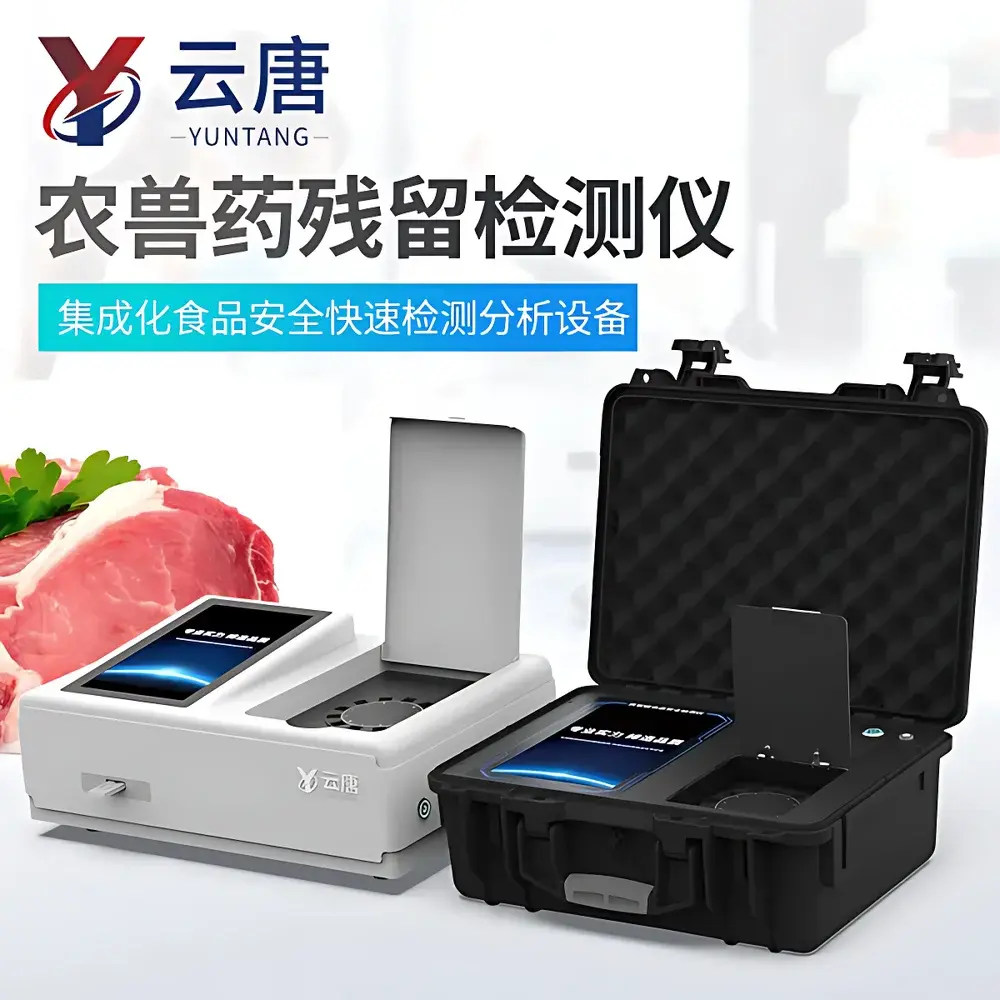
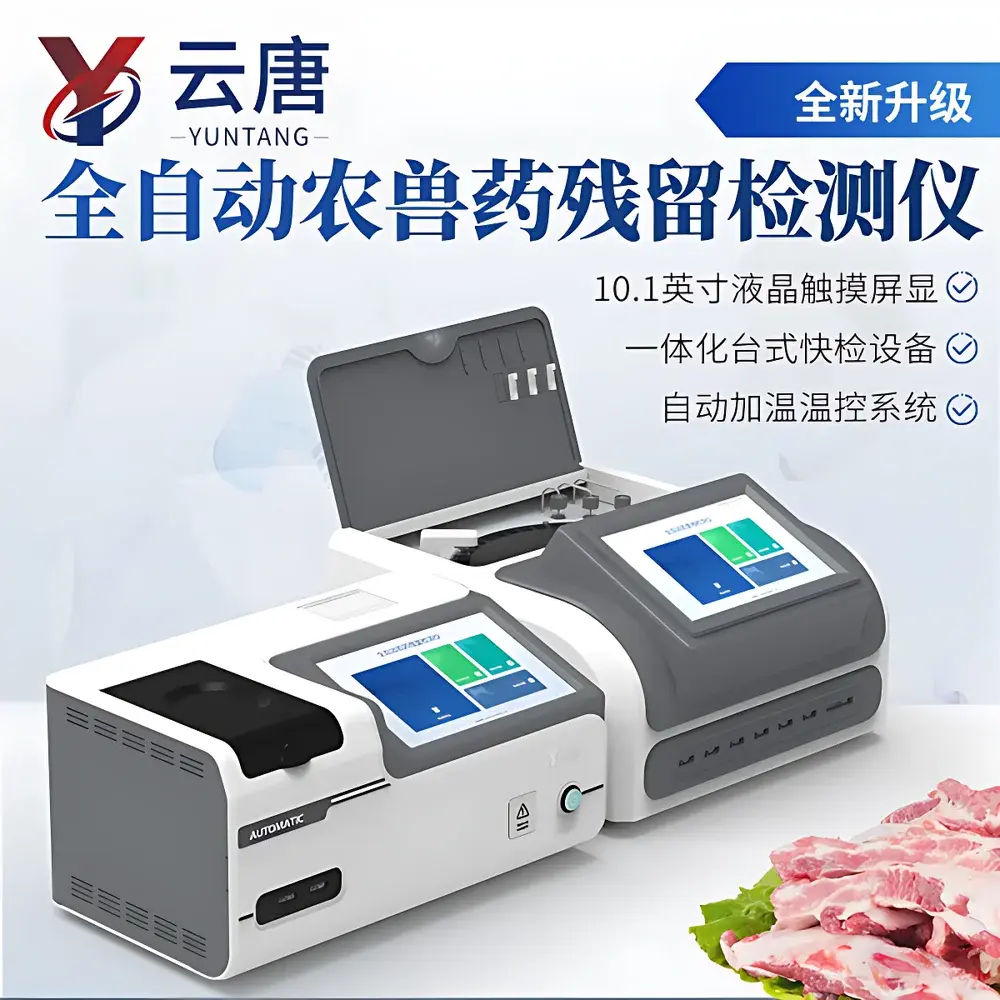
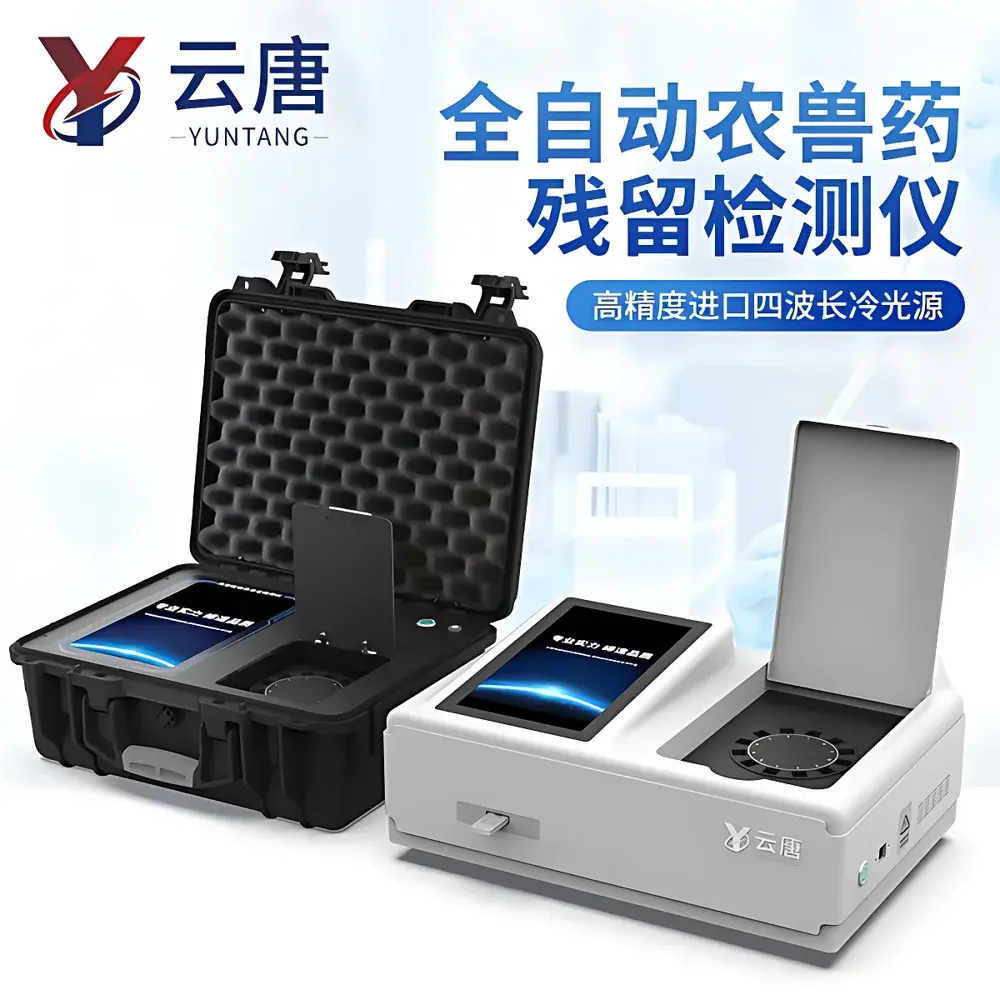
Yuntang YT-NSY / YT-QNS24 Veterinary and Pesticide Residue Rapid Detection System
| Brand | Yuntang |
|---|---|
| Origin | Shandong, China |
| Manufacturer Type | Manufacturer |
| Country of Origin | China |
| Model | YT-NSY / YT-QNS24 |
| Price | USD 5,100 (approx.) |
Overview
The Yuntang YT-NSY and YT-QNS24 Veterinary and Pesticide Residue Rapid Detection System is a benchtop analytical platform engineered for high-throughput, on-site screening of chemical residues in food matrices. It operates primarily on two complementary assay principles: enzyme inhibition (for organophosphorus and carbamate pesticide detection in fruits and vegetables) and lateral flow immunoassay (LFIA) with integrated colloidal gold strip reading (for veterinary drug residues including β-agonists, antibiotics, sulfonamides, quinolones, and nitrofurans in meat, aquaculture products, and dairy). Designed for compliance with national food safety surveillance protocols—including China’s GB/T 5009.199–2003 (organophosphate/carbamate screening) and GB/T 22338–2008 (clenbuterol), as well as reference methods aligned with AOAC Official Methods of Analysis and ISO/IEC 17025–accredited workflows—the system delivers qualitative and semi-quantitative results within 10–25 minutes per batch. Its architecture integrates optical detection, thermal control, fluidic automation, and embedded data governance to support decentralized testing in environments where laboratory infrastructure is limited.
Key Features
- Multi-modal detection architecture: 24-channel rotating photometric disc for enzyme inhibition assays + dual colloidal gold strip readers with auto-focus imaging and grayscale intensity quantification
- Precision temperature control: Peltier-based heating system maintaining 37.0 ± 0.1 °C across all reaction zones, critical for consistent enzymatic kinetics and antibody–antigen binding
- Automated liquid handling: Programmable reagent dispensing with real-time volume verification and error detection for mispositioned or insufficient samples
- Integrated cleaning protocol: Dual-stage fluidic circuit with backflow and rinse cycles using deionized water or ethanol-compatible wash buffer to prevent cross-contamination between runs
- ARM Cortex™-A7 quad-core processor (RK3288) with 1 GB RAM and 16 GB internal eMMC storage—capable of storing >5 million test records with full metadata (timestamp, operator ID, sample ID, assay parameters)
- 10.1-inch capacitive touchscreen (1280 × 800 resolution) running Android 7.1.1 OS with intuitive workflow navigation across modules: calibration, sample registration, assay setup, result interpretation, and report generation
- Comprehensive connectivity: Dual-band Wi-Fi (802.11 b/g/n), Bluetooth 4.2, 4G LTE (APN-configurable), USB 2.0 host/device, and Gigabit Ethernet (RJ45) for synchronized data upload to cloud-based food safety platforms
- Fully customizable reporting engine supporting A4-format PDF output with embedded QR codes—scannable to retrieve digital certificates compliant with China’s Ministry of Agriculture and Rural Affairs (MARA) standards for traceability and authenticity verification
Sample Compatibility & Compliance
The system accommodates homogenized extracts from fresh produce (lettuce, tomatoes, apples, etc.), muscle tissue (pork, beef, chicken), aquatic species (shrimp, tilapia, carp), milk, and egg samples following standardized pre-treatment protocols (e.g., QuEChERS extraction or buffer-based dilution). All assay kits are validated per GB/T 27404–2008 (Laboratory Quality Control Guidelines for Food Microbiology and Chemistry Testing) and referenced against EU Commission Decision 2002/657/EC criteria for screening methods. The instrument itself meets IEC 61000-4 electromagnetic compatibility requirements and is CE-marked for non-medical in vitro diagnostic use under Directive 2017/746 (IVDR) Annex XVI classification for food safety monitoring devices.
Software & Data Management
Embedded firmware supports GLP-compliant audit trails: every action—including calibration events, reagent lot entry, user logins, result modifications, and system updates—is time-stamped and cryptographically logged. Remote firmware updates occur over secure HTTPS channels without physical intervention, preserving continuity during regulatory inspections. Data export formats include CSV, XML, and MARA-compliant JSON schemas. Integration with national food safety information systems (e.g., China’s “Food Safety Traceability Platform”) is achieved via RESTful API or HL7 v2.5 messaging. Role-based access control (RBAC) allows configuration of operator, supervisor, and administrator privileges with password complexity enforcement and session timeout policies.
Applications
This system serves as a frontline screening tool in food supply chain nodes requiring rapid decision-making: wholesale vegetable markets, supermarket quality control labs, cold-chain distribution centers, municipal food and drug administration inspection stations, and third-party contract testing laboratories. Typical use cases include routine surveillance of pesticide residue levels prior to market entry; verification of withdrawal periods for veterinary drugs in livestock farms; post-harvest validation of organic certification claims; and emergency response testing during foodborne outbreak investigations. Its portability (≤12 kg), low power consumption (<30 W), and battery-backup-ready design enable deployment in mobile inspection vehicles or field laboratories.
FAQ
What types of residues can this system detect?
It detects organophosphorus and carbamate pesticides via acetylcholinesterase inhibition assays, and over 30 veterinary drug classes—including β-agonists (e.g., clenbuterol), tetracyclines, macrolides, fluoroquinolones, sulfonamides, nitrofurans, and chloramphenicol—using colloidal gold immunochromatographic strips.
Is the system compatible with international regulatory reporting standards?
Yes—it generates reports aligned with MARA requirements and supports structured data export formats suitable for integration into ISO/IEC 17025-accredited LIMS environments and EU RASFF notification workflows.
How is measurement accuracy maintained over time?
Through daily automated optical source calibration, temperature sensor self-diagnosis, and built-in reference channel normalization for both photometric and lateral flow modalities.
Can test results be audited retrospectively?
Yes—full system logs, including raw image captures of test strips, absorbance curves, and operator actions, are retained locally and synchronizable to centralized repositories with immutable timestamps.
Does the device require external PC software for operation?
No—all functions—including assay programming, result interpretation, report generation, and data transmission—are fully self-contained within the onboard Android interface.





