
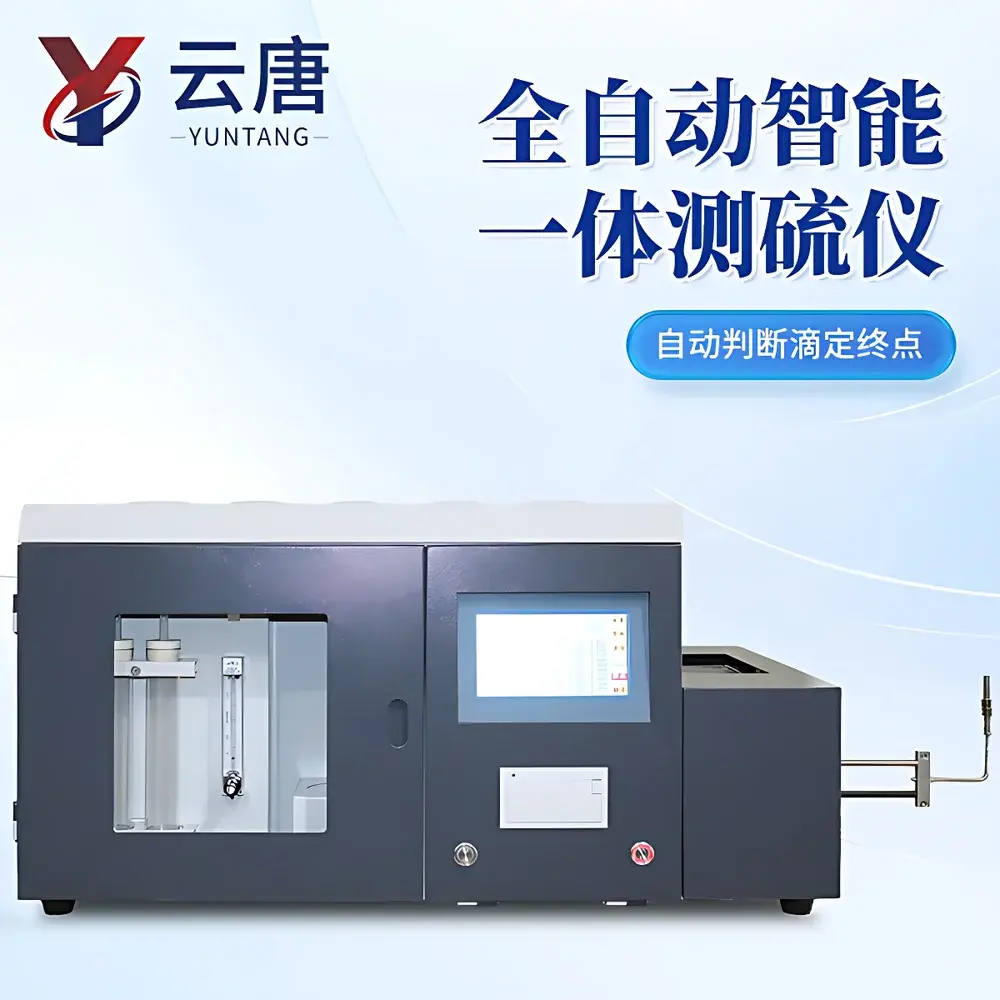
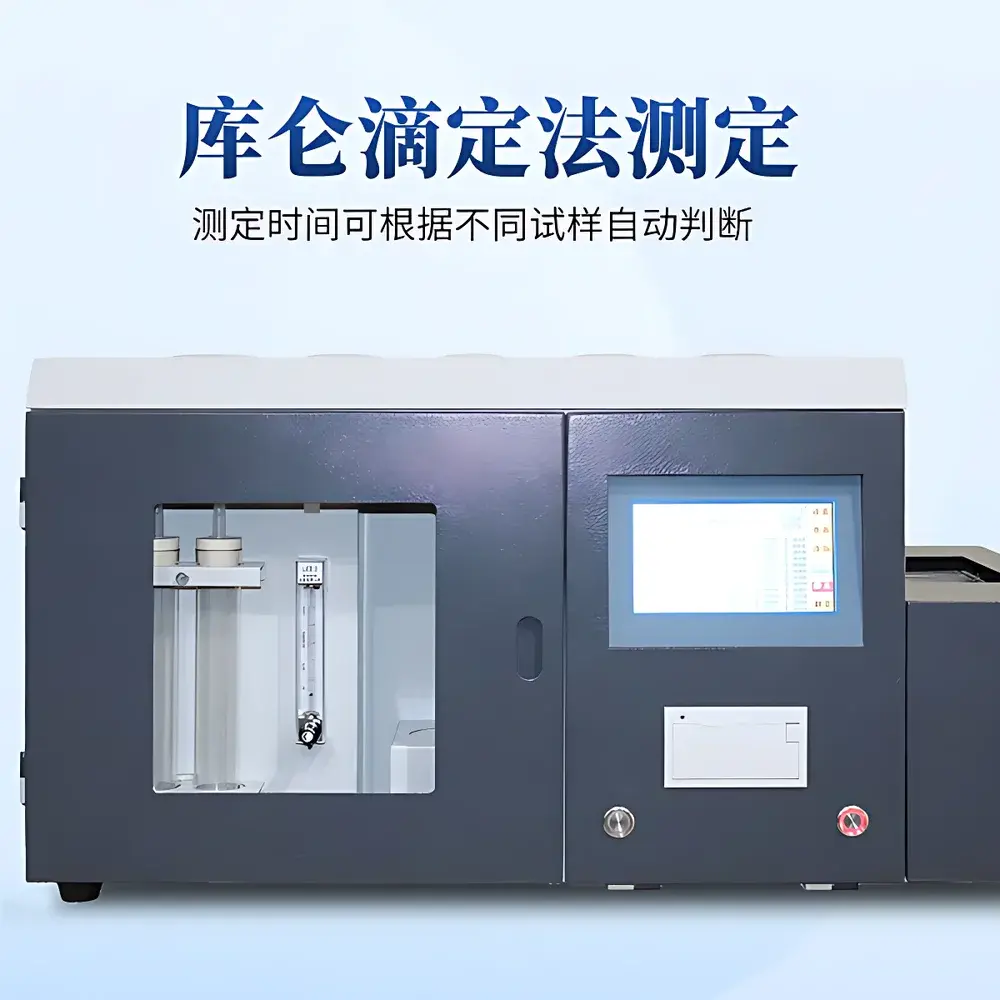
Yuntang YT-QLC Automated Intelligent Integrated Sulfur Determinator (Coulometric Method)
| Brand | Yuntang |
|---|---|
| Origin | Shandong, China |
| Manufacturer Type | Direct Manufacturer |
| Country of Origin | China |
| Model | YT-QLC |
| Detection Principle | Coulometric Titration |
| Sulfur Range | 0.01–100% |
| Resolution | 0.001% |
| Combustion Temperature | 1150 °C (coal/coke), 900 °C (petroleum) |
| Temperature Control Accuracy | ±2 °C |
| Sample Mass | 50±5 mg (coal/coke), 100±10 mg (petroleum) |
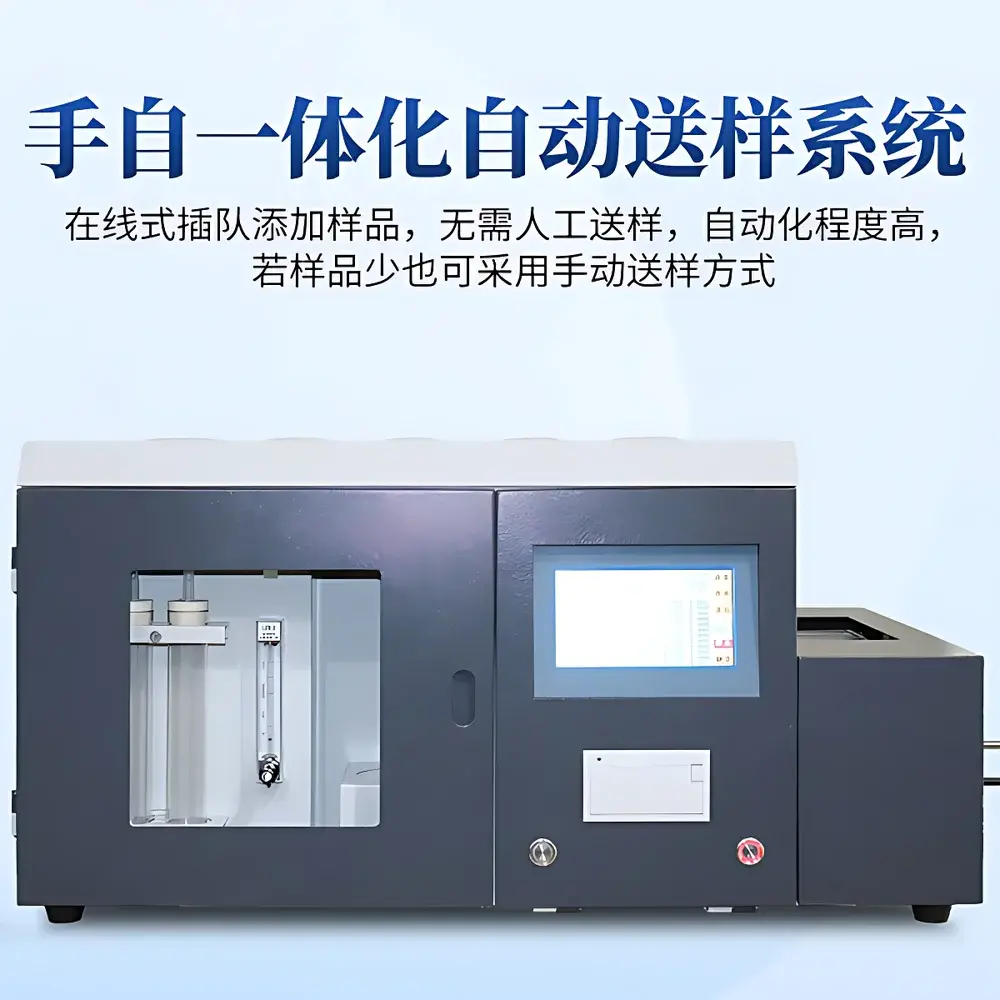
| Sample Capacity | 1–13 positions per batch, with online sample insertion capability |
| Analysis Time | ~4 min per sample |
| Compliance | GB/T 214–2007 |
Overview
The Yuntang YT-QLC Automated Intelligent Integrated Sulfur Determinator is a dedicated coulometric sulfur analyzer engineered for precise, high-throughput quantification of total sulfur in solid and liquid fuels—including coal, coke, petroleum products, solid hazardous waste, and cement raw materials. It operates on the fundamental principle of controlled high-temperature combustion followed by electrochemical detection: samples are combusted quantitatively at 1150 °C (or 900 °C for oil-based matrices) in a purified oxygen stream within a silicon carbide tube furnace. Liberated sulfur oxides (SO₂ and SO₃) are carried into a titration cell containing an iodide–triiodide redox electrolyte. The liberated SO₂ reduces I₃⁻ to I⁻, and the resulting current deficit is precisely compensated via controlled electrolysis at the platinum electrodes—yielding a coulometric charge proportional to sulfur mass. This method delivers trace-level sensitivity (0.001% resolution), robust linearity across 0.01–100% S, and full compliance with GB/T 214–2007, the Chinese national standard equivalent to ISO 4299 and ASTM D3177 for total sulfur determination in coal.
Key Features
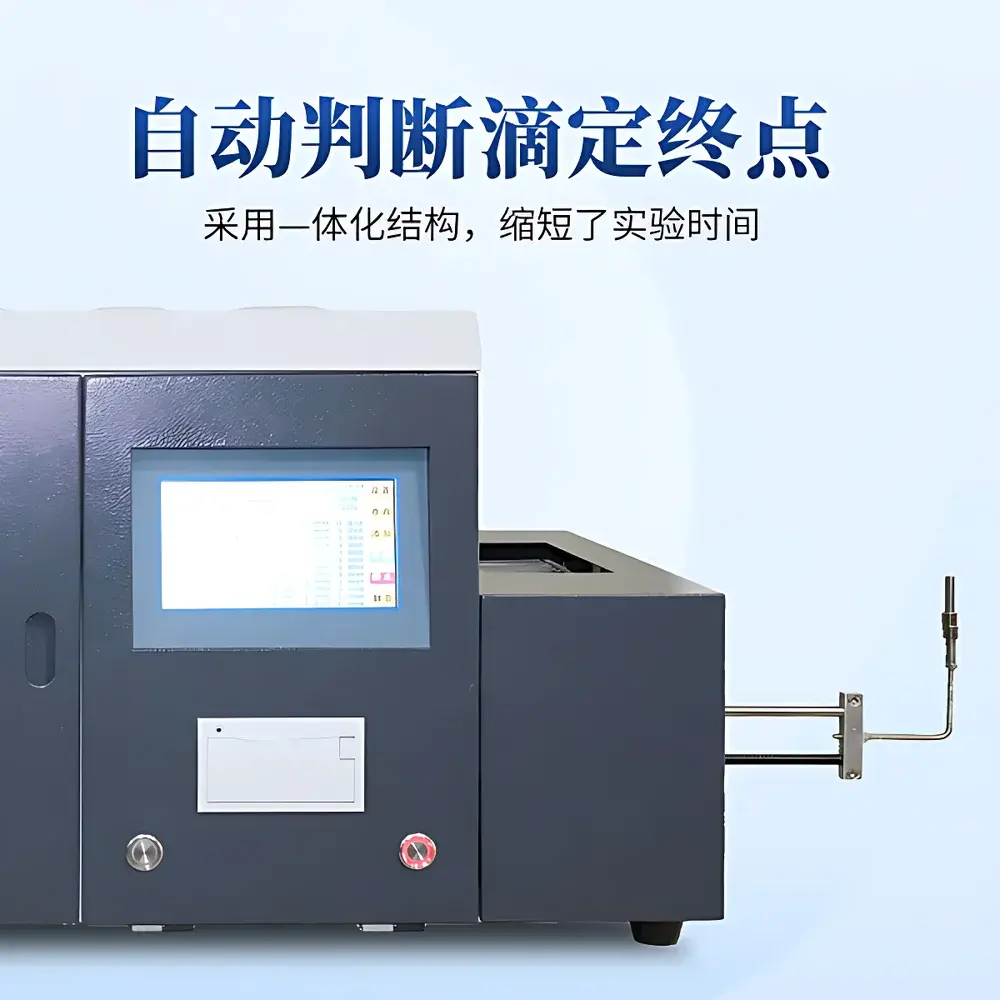
- Fully integrated mechanical architecture: Combines automated sample introduction, high-temperature pyrolysis furnace (1150 °C), coulometric titration cell, magnetic stirring system, gas purification train, and electronic endpoint detection in a single compact chassis.
- Intelligent dual-mode sample handling: Supports both fully automated batch processing (1–13 samples per run) and manual override; allows real-time online insertion or replacement of samples during active analysis without interrupting ongoing measurements.
- Stable thermal management: Precision temperature control (±2 °C) via imported K-type thermocouple feedback and programmable ramp profiles; rapid heating to operating temperature (<25 min from ambient).
- Robust coulometric detection: Electrolyte concentration monitored via proprietary electronic molecular sensing circuitry—eliminating over-titration and ensuring long-term baseline stability without daily recalibration.
- Vibration-isolated design: Equipped with a low-noise, imported diaphragm vacuum pump mounted on elastomeric dampers—preventing mechanical coupling into the titration cell and preserving measurement reproducibility.
- Flexible operational interface: USB and RS-232 serial connectivity; user-configurable parameters including pre-heating time, sample positioning (Hall-effect sensor feedback), and electrolyte volume thresholds.
Sample Compatibility & Compliance
The YT-QLC accommodates heterogeneous sample forms—including pulverized coal (≤0.2 mm), coke fines, petroleum distillates, and solid waste composites—using standardized ceramic crucibles (alumina boats) to minimize sticking and ensure complete ash-free combustion. Sample mass is strictly regulated: 50±5 mg for coal and coke, 100±10 mg for liquid hydrocarbons, aligned with GB/T 214–2007 procedural requirements. All hardware and software components meet electromagnetic compatibility (EMC) Class B standards per GB/T 18268.1. Data integrity protocols support audit-ready operation under GLP environments, with optional timestamped electronic logs compatible with 21 CFR Part 11–compliant LIMS integration when paired with external laboratory software.
Software & Data Management
The embedded microprocessor executes deterministic real-time control of furnace temperature, gas flow, titration current, and endpoint recognition using multi-stage adaptive algorithms. Measurement data—including peak current, integrated charge, sulfur percentage, and residual error—are automatically stored in non-volatile memory with UTC timestamps. Export formats include CSV and TXT for downstream statistical analysis (e.g., ANOVA, trend monitoring). Optional PC software provides graphical calibration curve management, QC charting (X-bar/R charts), outlier detection based on Grubbs’ test, and automated report generation compliant with ISO/IEC 17025 documentation requirements. Firmware updates are delivered via USB flash drive with cryptographic signature verification.
Applications
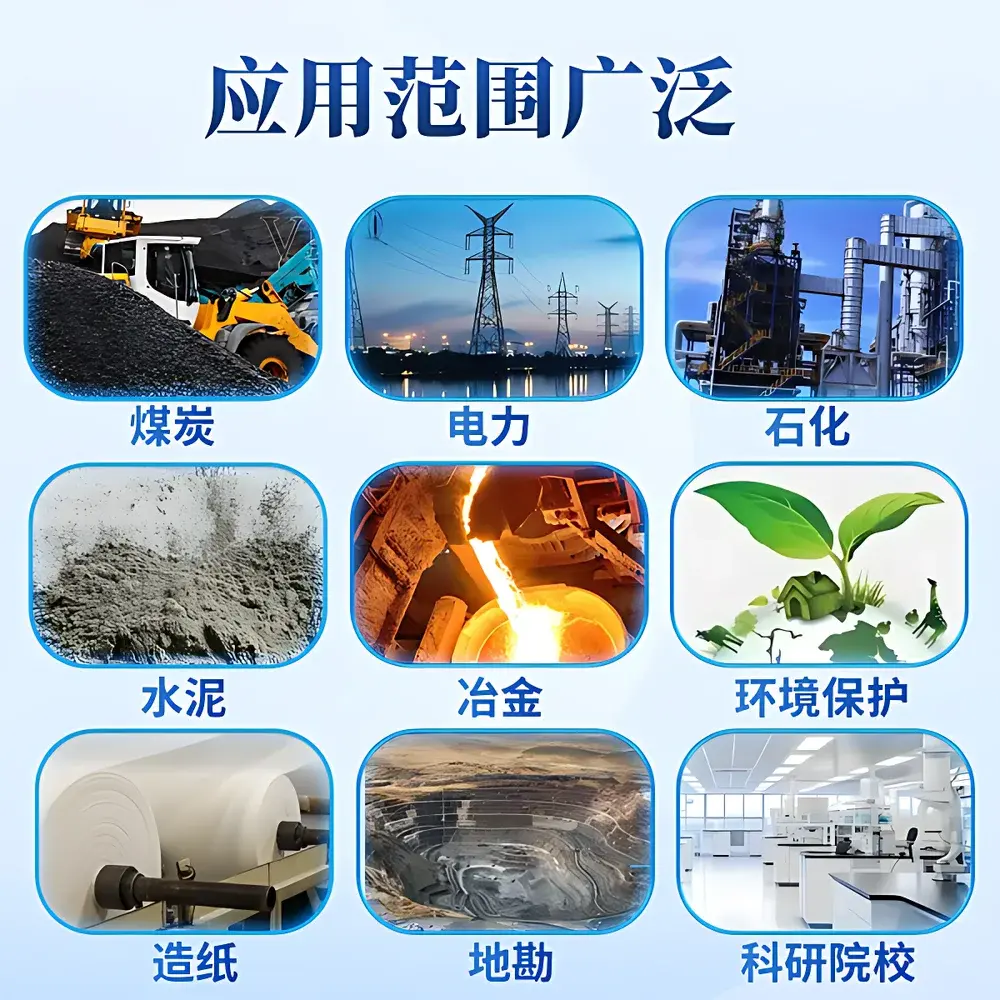
This instrument serves quality control laboratories in coal-fired power generation (fuel specification verification), coking plants (coke sulfur specification), petrochemical refineries (sulfur content in feedstocks and distillates), environmental testing labs (EPA Method 5D-equivalent solid waste screening), and cement manufacturing (raw mix homogeneity assessment). Its ability to quantify ultra-low sulfur levels (<0.1%) in clean coal blends and high-sulfur residues (>5%) in industrial slags ensures cross-range validity without dilution or method switching. Routine use supports ISO 5725-based precision studies and inter-laboratory comparison programs coordinated by CNAS-accredited reference material providers.
FAQ
What combustion temperature should be selected for petroleum samples?
For liquid petroleum products—including diesel, fuel oil, and crude fractions—the recommended combustion temperature is 900 °C to prevent incomplete oxidation and carbon deposit formation.
Is daily recalibration required?
No. Once calibrated with certified reference materials (CRM), the YT-QLC maintains stable performance for ≥72 hours under continuous operation due to its drift-compensated electrolyte monitoring circuit and thermal equilibrium design.
Can the instrument handle variable sample masses within a single batch?
No. For metrological consistency, all samples in one batch must adhere to the specified mass tolerance (50±5 mg or 100±10 mg); however, different batches may use distinct mass protocols.
What maintenance intervals are recommended for the silicon carbide tube?
Under normal coal analysis conditions (≤200 samples/week), inspect the SiC tube every 500 analyses; replace if visible pitting, discoloration, or dimensional deformation exceeds 0.5 mm.
Does the system support remote diagnostics?
Yes—when connected to a local network via optional Ethernet adapter, firmware-level diagnostic logs and real-time sensor status can be accessed via secure HTTPS API endpoints for predictive maintenance planning.






