
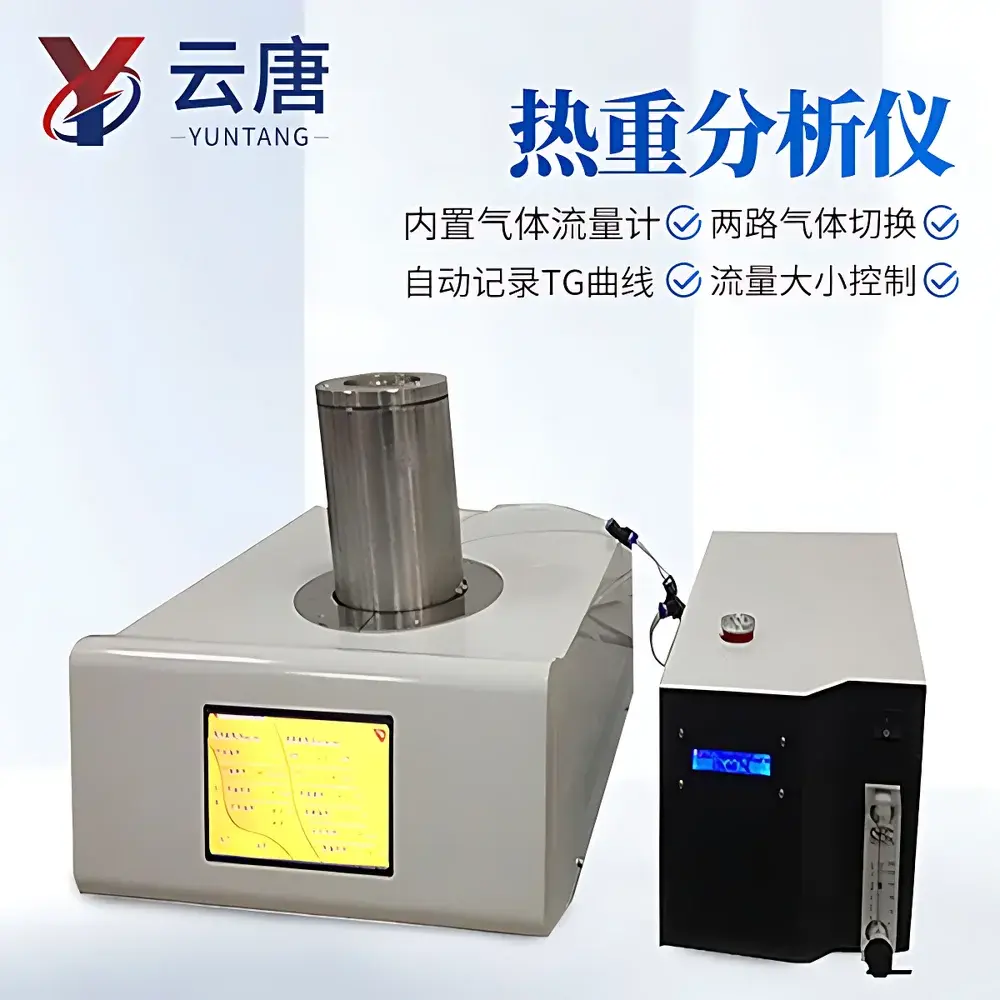
Yuntang YT-TCD-101 Thermogravimetric Analyzer
| Brand | Yuntang |
|---|---|
| Origin | Shandong, China |
| Manufacturer Type | Direct Manufacturer |
| Origin Category | Domestic (China) |
| Model | YT-TCD-101 |
| Temperature Range | Ambient to 1150 °C |
| Temperature Resolution | 0.1 °C |
| Temperature Stability | ±0.1 °C |
| Heating Rate | 1–80 °C/min |
| Cooling Time | 15 min (from 1000 °C to 100 °C) |
| Balance Capacity | 1 mg–2 g (extendable to 30 g) |
| Balance Resolution | 0.1 µg |
| Isothermal Hold Duration | 0–300 min (user-configurable) |
| Atmosphere Control | Dual-gas inlet with mass flow control (inert, oxidizing, reducing, static, dynamic) |
| Data Interface | RS-232 |
| Software | Integrated TGA analysis suite with automated curve recording, baseline correction, derivative (DTG) calculation, kinetic modeling (e.g., Kissinger, Ozawa), and GLP-compliant reporting |
| Power Supply | AC 220 V, 50 Hz |
Overview
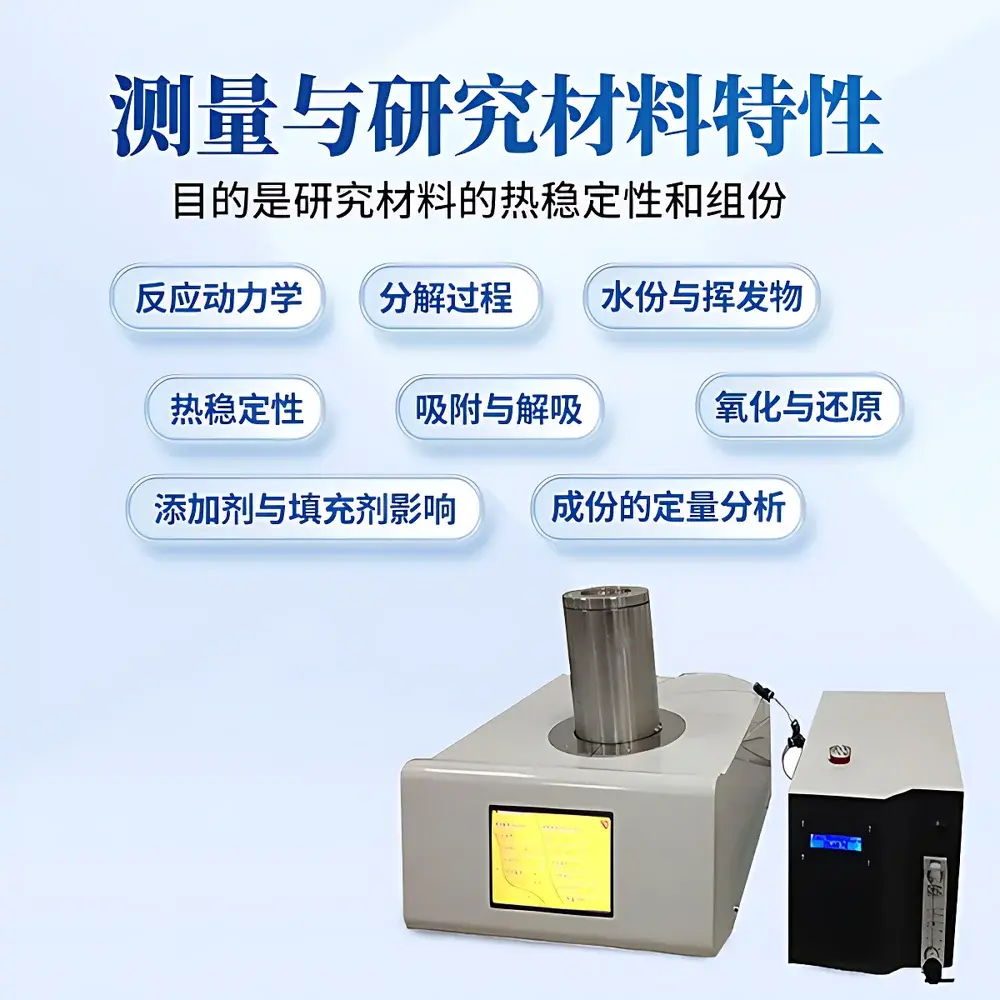
The Yuntang YT-TCD-101 Thermogravimetric Analyzer (TGA) is a precision-controlled thermal analysis instrument engineered for quantitative measurement of mass change in solid or liquid samples as a function of temperature or time under controlled atmospheric conditions. Operating on the fundamental principle of thermogravimetry—where sample mass is continuously monitored during programmed thermal cycles—the YT-TCD-101 enables rigorous characterization of thermal stability, decomposition kinetics, volatilization behavior, oxidative degradation, and compositional evolution. Its robust furnace architecture supports rapid, reproducible heating and cooling profiles up to 1150 °C, while the high-resolution microbalance (0.1 µg resolution, 2 g standard capacity) ensures detection of subtle mass transitions associated with dehydration, polymer chain scission, filler loss, or catalytic surface reactions. Designed for compliance with routine laboratory workflows, the system accommodates both single-sample and multi-sample sequential analysis protocols without hardware modification.
Key Features
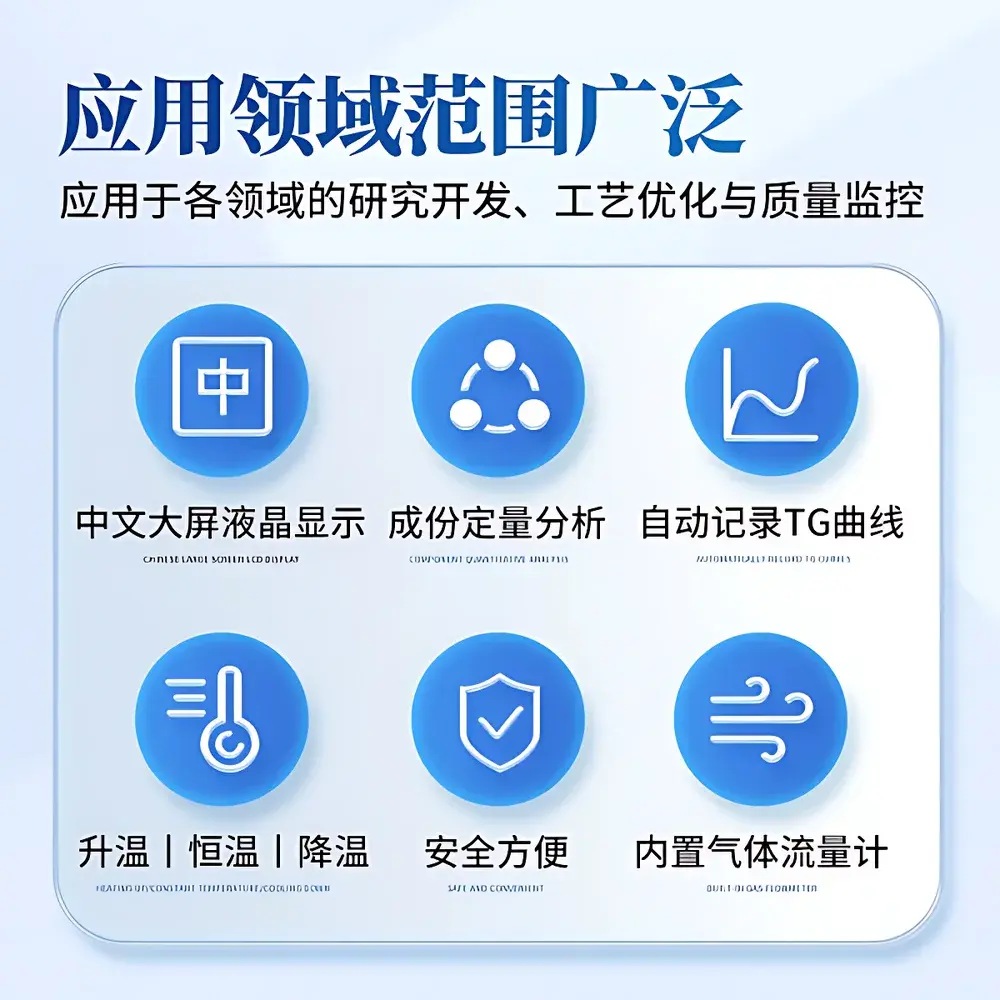
- Programmable thermal control: Linear heating (1–80 °C/min), isothermal holds (0–300 min), and active cooling (1000 °C → 100 °C in ≤15 min)
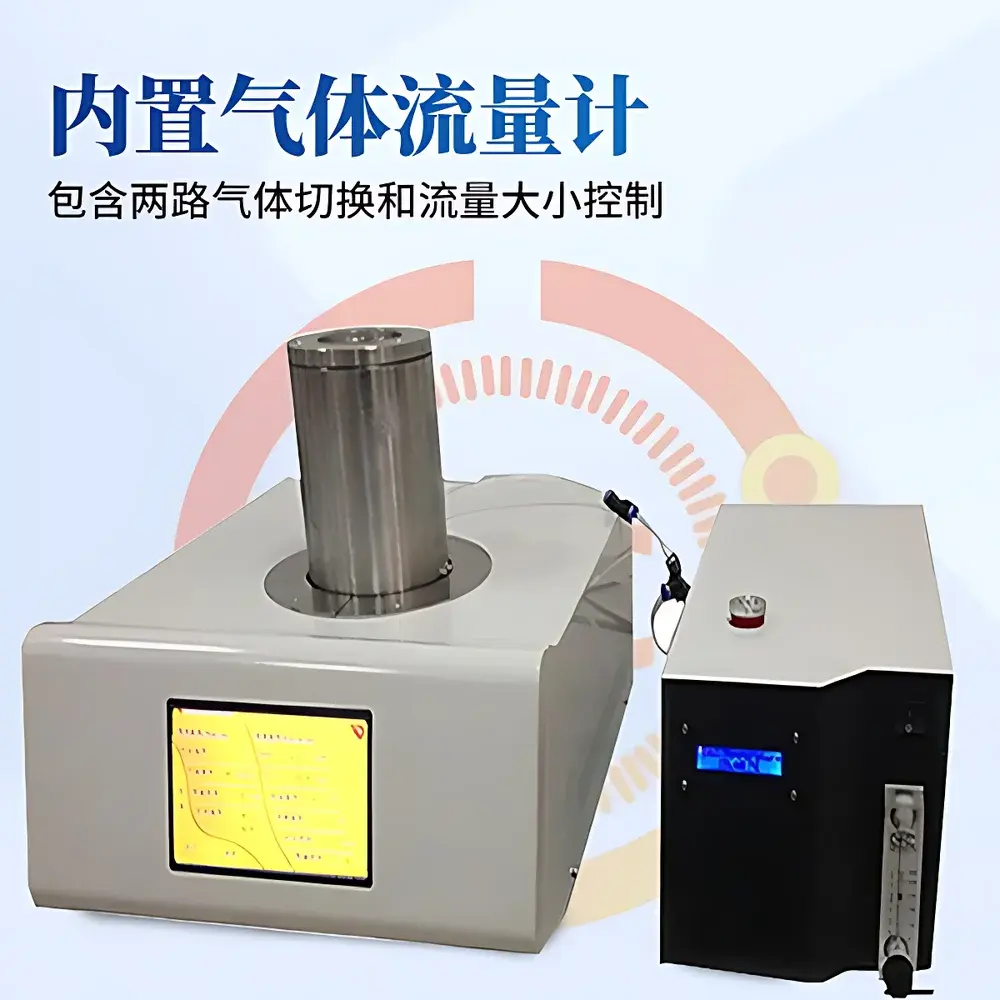
- Dual-atmosphere gas delivery system with integrated mass flow meters; supports inert (N₂, Ar), oxidizing (air, O₂), reducing (H₂, CO), static, and dynamic purge modes
- High-stability furnace with ±0.1 °C temperature uniformity and 0.1 °C resolution across the full 25–1150 °C operating range
- Electromagnetic force compensation balance with 0.1 µg sensitivity and <0.5 % linearity error over 1 mg–2 g range (optional 30 g extension available)
- RS-232 serial interface for direct instrument control and data acquisition; compatible with Windows-based TGA software
- Onboard LCD display with Chinese/English bilingual UI (configurable); real-time plotting of TG, DTG, and residual mass curves
- Modular design supporting future integration with evolved gas analysis (EGA) accessories such as FTIR or MS coupling
Sample Compatibility & Compliance
The YT-TCD-101 accepts standard platinum, alumina, or ceramic crucibles (typically 70–100 µL volume) and accommodates powders, granules, thin films, fibers, and small metallic specimens (≤20 mg recommended for kinetic studies). Sample loading is performed under ambient or purged conditions via front-access door with inert-gas lock. The system meets essential requirements for ISO 11358 (Plastics — Thermogravimetry), ASTM E1131 (Standard Test Method for Compositional Analysis by Thermogravimetry), and USP <467> (Residual Solvents) when operated with validated methods and calibrated reference materials (e.g., NiO, CaC₂O₄·H₂O). All software operations support audit trail generation, user access levels, and electronic signature capability—enabling alignment with FDA 21 CFR Part 11 and GLP/GMP documentation standards where configured per laboratory SOPs.
Software & Data Management
The bundled TGA analysis software provides full instrument control, real-time data visualization, and post-run processing including baseline subtraction, peak deconvolution, derivative (DTG) curve generation, and model-free kinetic analysis (e.g., Friedman, Flynn–Wall–Ozawa, Kissinger methods). Export formats include CSV, TXT, and XML for third-party statistical or modeling platforms (e.g., MATLAB, OriginLab, Thermo-Calc). Reports are customizable with embedded metadata (operator ID, date/time stamp, calibration status, gas flow logs) and support PDF/printer output. Software updates are distributed free-of-charge via secure download portal, with version history and release notes traceable for regulatory review.
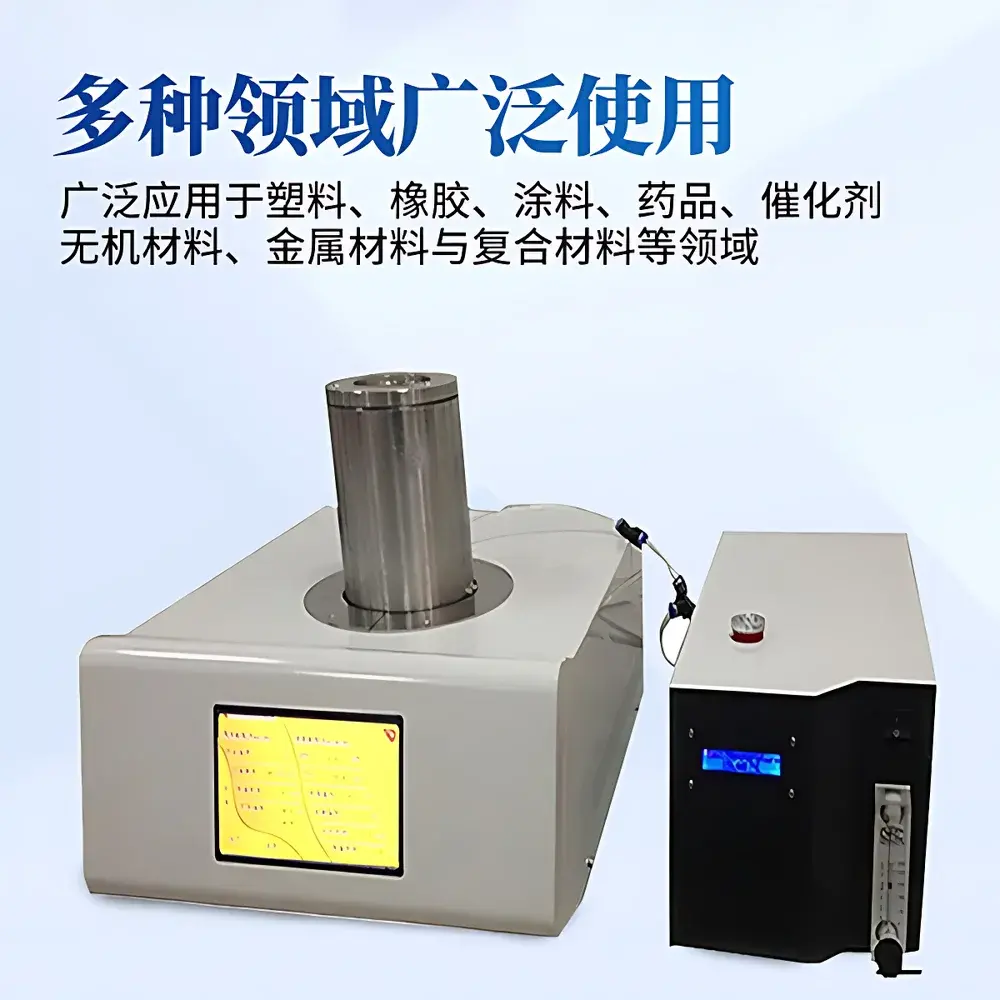
Applications
- Quantification of moisture, solvent residues, and volatile additives in pharmaceutical excipients and APIs
- Thermal degradation profiling of engineering polymers (e.g., polyolefins, polyesters, epoxies) under air vs. nitrogen
- Decomposition onset temperature and char yield assessment for flame-retardant composites
- Calcination behavior and stoichiometric oxide formation in catalyst precursors (e.g., Co₃O₄ → CoO → Co)
- Filler content determination (e.g., carbon black, silica) in rubber formulations via ash residue analysis
- Oxidation kinetics of metal alloys and corrosion product evolution under controlled pO₂
- Reaction enthalpy estimation via coupled DSC-TGA configurations (when interfaced)
FAQ
What is the maximum recommended sample mass for kinetic analysis?
For reliable activation energy calculation using model-free methods, samples should be ≤10 mg to minimize intra-particle heat/mass transfer limitations.
Can the YT-TCD-101 operate under vacuum?
No—vacuum operation is not supported. The system requires positive-pressure gas flow (minimum 20 mL/min) for atmosphere control and buoyancy compensation.
Is calibration traceable to NIST standards?
Yes—temperature calibration uses certified reference materials (e.g., high-purity metals with defined Curie points), and mass calibration employs Class S1 weights traceable to national metrology institutes.
Does the software support automated method validation per ICH Q2(R2)?
The platform provides raw data integrity, parameter locking, and report generation tools required for validation; however, method-specific protocol development and acceptance criteria must be established by the end user per ICH guidelines.
How is buoyancy correction applied during high-temperature runs?
The software applies Archimedean correction using user-input gas density values (or defaults based on selected atmosphere and temperature), ensuring mass accuracy remains within ±0.2 % across the operational range.



