
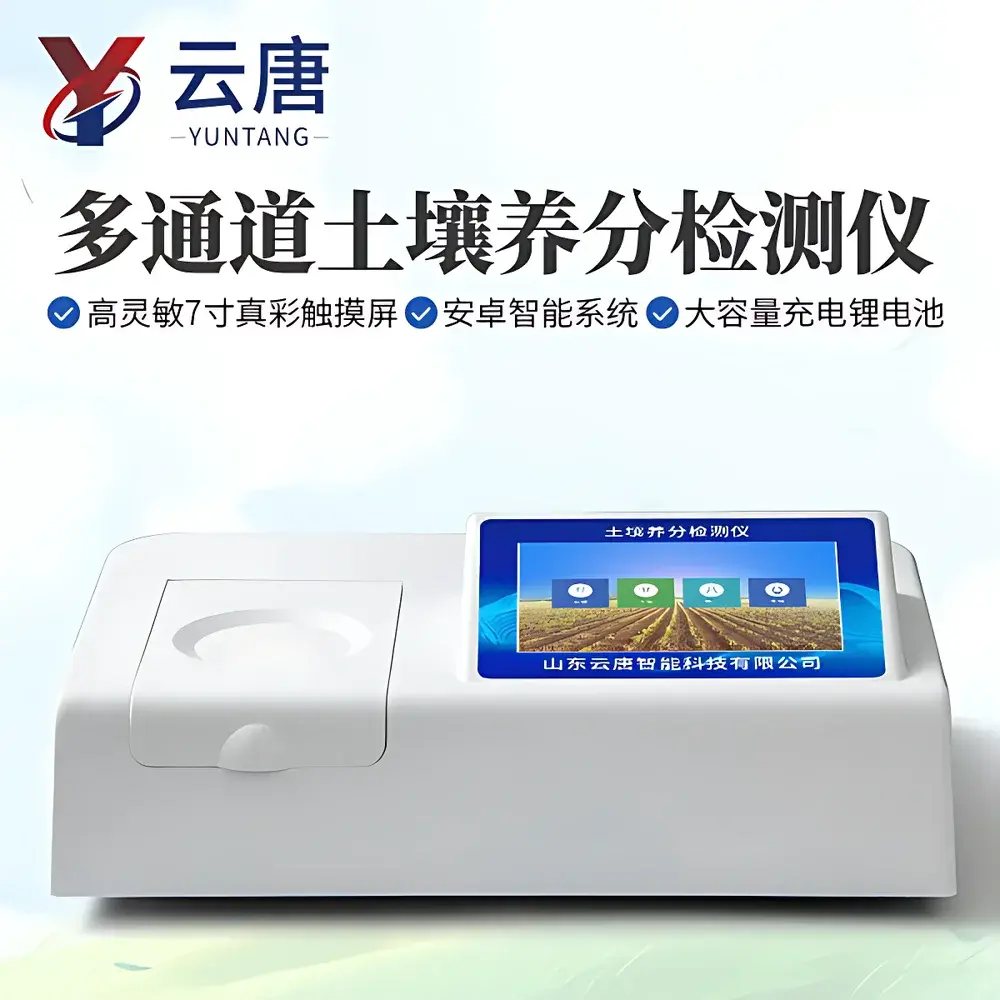
Yuntang YT-TRA / YT-TR2 Portable Soil & Fertilizer Nutrient Analyzer
| Brand | Yuntang |
|---|---|
| Origin | Shandong, China |
| Manufacturer Type | Direct Manufacturer |
| Country of Origin | China |
| Model | YT-TRA, YT-TR2 |
| Price Range | USD 215–720 (FOB) |
| Instrument Type | Portable |
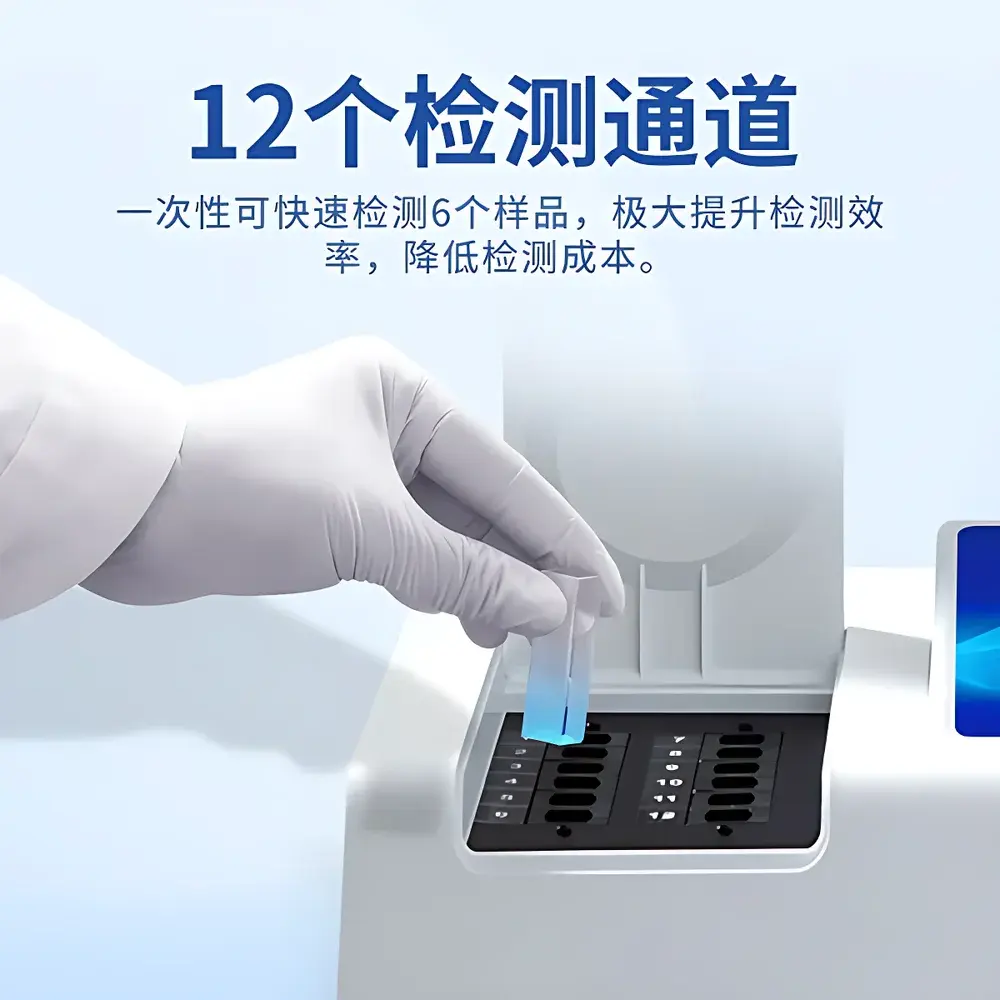
| Detection Channels | 12 |
| Test Scope | Soil nutrients, fertilizer composition, plant tissue, water quality, food safety, and environmental parameters |
Overview
The Yuntang YT-TRA/YT-TR2 is a field-deployable, multi-parameter spectrophotometric analyzer engineered for quantitative determination of macro- and micronutrients, heavy metals, organic matter, pH, salinity, and key environmental parameters in soil, fertilizers, plant tissues, water, and agricultural commodities. It operates on the principle of visible-light absorbance spectroscopy using four fixed-wavelength cold LED sources (680 nm red, 420 nm blue, 510 nm green, 590 nm orange), enabling simultaneous quantification of analytes via colorimetric reactions with standardized reagents. Designed to meet the operational requirements of extension services, agronomic laboratories, fertilizer quality control units, and regulatory field teams, the instrument complies with Chinese agricultural industry standards for rapid soil testing (e.g., NY/T 1121 series) and supports method adaptation aligned with ISO 11260 (soil phosphorus), ISO 14253-1 (measurement uncertainty), and ASTM D512 (chloride in water). Its integrated hardware architecture eliminates dependency on external calibration standards or blank reference preparation—enabling direct sample-to-result workflow without pre-assay standardization.
Key Features
- 12-position rotating cuvette carousel with precision optical alignment, enabling parallel analysis of up to 12 samples per batch without mechanical drift or positional error.
- Four-wavelength solid-state LED illumination system (680±2 nm, 420±2 nm, 510±2 nm, 590±4 nm) with thermal stability <0.001 absorbance unit/hour, certified lifetime >100,000 hours.
- Integrated sensor fusion: FDR-based tri-sensor probe (soil moisture %, temperature °C, EC mS/cm) and 6-in-1 environmental module (air temperature, relative humidity, dew point, atmospheric pressure, illuminance Lux, CO₂ ppm).
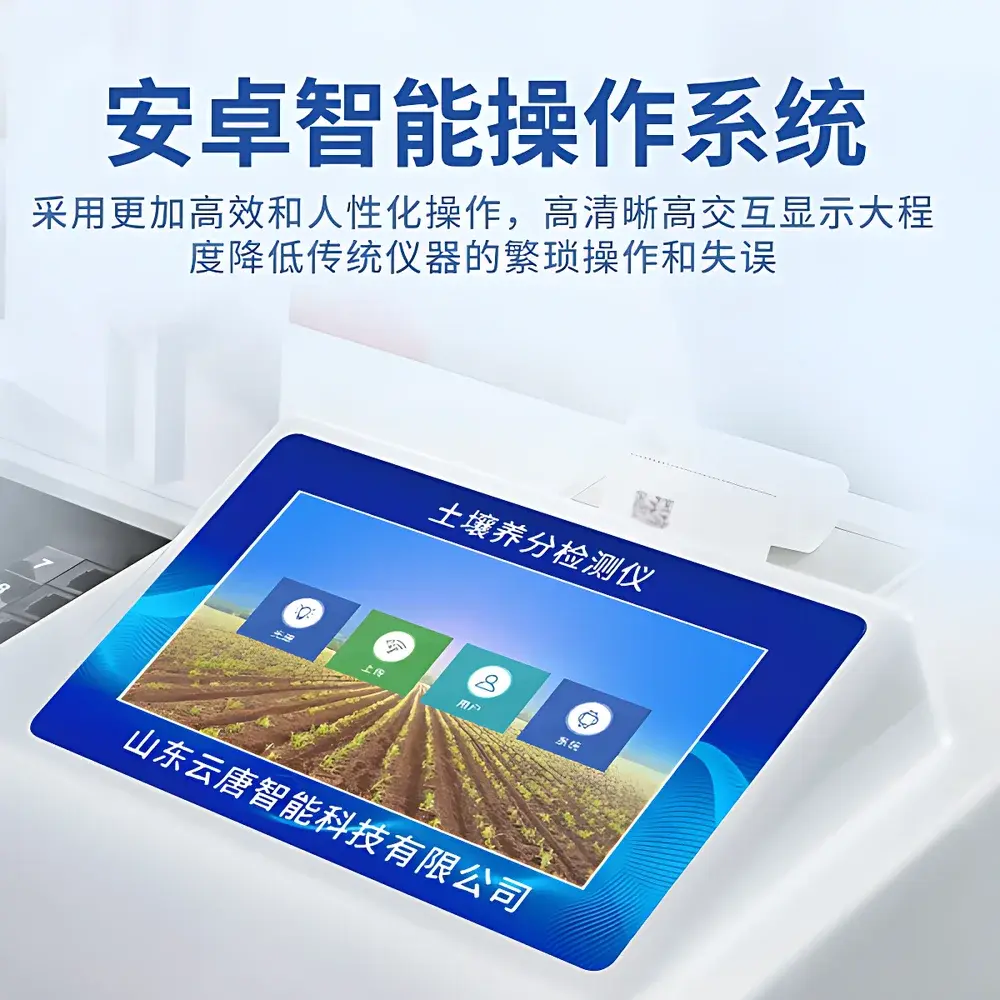
- ARM Cortex-A7 quad-core processor (RK3288, 1.88 GHz) running Android 7.1 OS with 7-inch capacitive touchscreen, onboard GPS geotagging, and dual-band Wi-Fi/4G/GPRS connectivity.
- On-device data management: 32 GB internal storage, USB 2.0 and Ethernet ports, thermal printer (no ribbon), QR-code-enabled report generation, and real-time cloud synchronization via Yuntang AgriCloud platform.
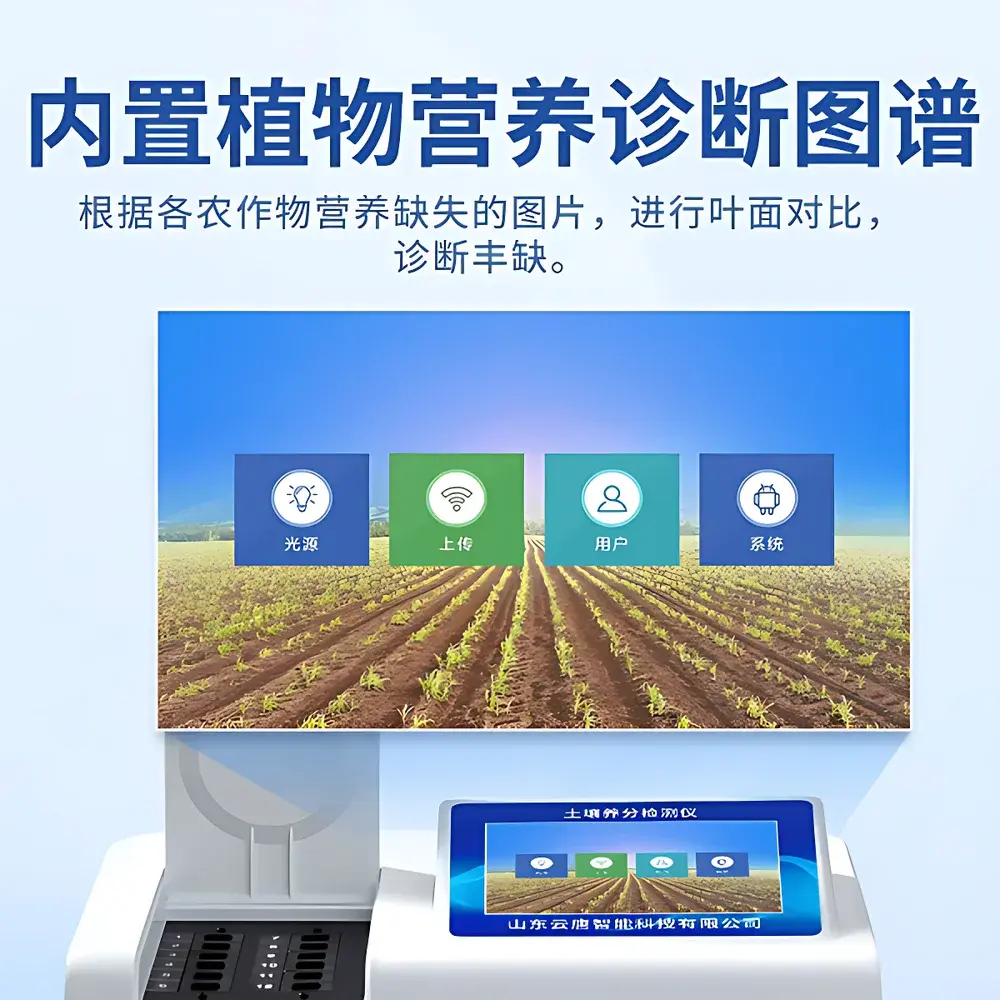
- Built-in expert systems: Crop-specific fertilizer recommendation engine (100+ species), visual nutrient deficiency atlas (leaf symptom comparison), and step-by-step video-guided sample preparation library.
- Power flexibility: Rechargeable Li-ion battery (≥10 h continuous operation), 12 V DC automotive input, and 220 V AC adapter; IP65-rated rugged housing with shock-absorbing PVC case (48 × 34.5 × 22 cm, 5.2 kg net weight).
Sample Compatibility & Compliance
The YT-TRA/YT-TR2 accommodates liquid extracts, digests, filtrates, and homogenized suspensions from diverse matrices including mineral and organic soils (A/B/C horizons), granular/liquid fertilizers (NPK, organics, humic substances), fresh/dried plant tissues, fruit/vegetable homogenates, and surface/groundwater samples. All test protocols are validated against national reference methods: soil NH₄⁺-N and NO₃⁻-N per NY/T 1121.24, available P by Olsen extraction (NY/T 1121.7), exchangeable K by ammonium acetate (NY/T 1121.15), organic matter by Tyurin oxidation (NY/T 1121.6), and heavy metals by HNO₃/H₂O₂ microwave digestion followed by colorimetry (GB/T 22105.2–2008). Instrument performance meets ISO/IEC 17025 traceability requirements for field instruments when used with NIM-calibrated photometric modules and certified reference materials (CRMs).
Software & Data Management
The embedded Android application provides role-based user access (multi-account login with facial recognition or PIN), audit-trail logging per GLP principles, and timestamped metadata capture (operator ID, GPS coordinates, ambient conditions). Data export supports CSV, PDF, and XML formats; cloud platform features include automated trend analytics, seasonal comparison dashboards, spatial mapping (via GIS integration), and customizable reporting templates compliant with FAO’s Soil Health Monitoring Framework. Remote firmware updates and method library expansion are delivered over-the-air. All data transmission adheres to TLS 1.2 encryption, and local storage implements AES-256 encryption at rest—supporting alignment with data integrity expectations under FDA 21 CFR Part 11 for regulated agricultural testing environments.
Applications
- On-farm soil fertility assessment for site-specific nutrient management (SSNM) and variable-rate application planning.
- Fertilizer quality assurance: verification of declared N-P-K content, detection of adulterants (e.g., urea dilution, phosphate rock substitution), and screening for heavy metal contaminants (Pb, Cd, As) per EU Fertilising Products Regulation (EU) 2019/1009.
- Crop nutrition diagnostics: rapid quantification of tissue nitrate, phosphorus, potassium, and micronutrients to guide foliar intervention timing.
- Environmental compliance monitoring: salinity and sodicity risk evaluation in irrigation districts; heavy metal screening in peri-urban agriculture.
- Food safety field screening: pesticide residue (organophosphates), nitrate/nitrite in leafy vegetables, and preservative adulteration (e.g., formaldehyde, borax) per Codex Alimentarius guidelines.
- Water quality triage: COD, ammonia-N, total phosphorus, and dissolved oxygen in farm drainage or aquaculture effluents.
FAQ
What sample preparation is required prior to analysis?
Soil samples require air-drying, grinding, and sieving to ≤2 mm; fertilizer powders are weighed directly; plant tissues are oven-dried and milled. Extraction protocols follow standardized acid or alkaline digestion (e.g., Mehlich-3 for P/K, Kjeldahl for total N), with all reagents supplied as ready-to-use kits.
Does the instrument require daily calibration with standards?
No. The system performs automatic photometric self-calibration before each measurement cycle using internal reference optics and stable LED output—eliminating need for external blanks or standard curves per test run.
Can test methods be modified or extended beyond factory presets?
Yes. Users may import custom calibration curves, define new analyte names, and assign wavelength/reagent combinations via the developer mode—subject to validation against reference methods.
Is the device suitable for ISO/IEC 17025-accredited laboratories?
While designed for field use, its metrological performance (photometric repeatability ≤0.02%, linearity ≤0.1%, NIM-certified calibration) supports inclusion in accredited scope when operated within defined environmental limits and maintained per manufacturer’s SOPs.
How is data integrity ensured during wireless transmission?
All cloud uploads are digitally signed, encrypted in transit (TLS 1.2), and assigned immutable UUIDs; platform logs record origin device, operator, timestamp, and geolocation—enabling full forensic traceability for audit purposes.
Related Products







