
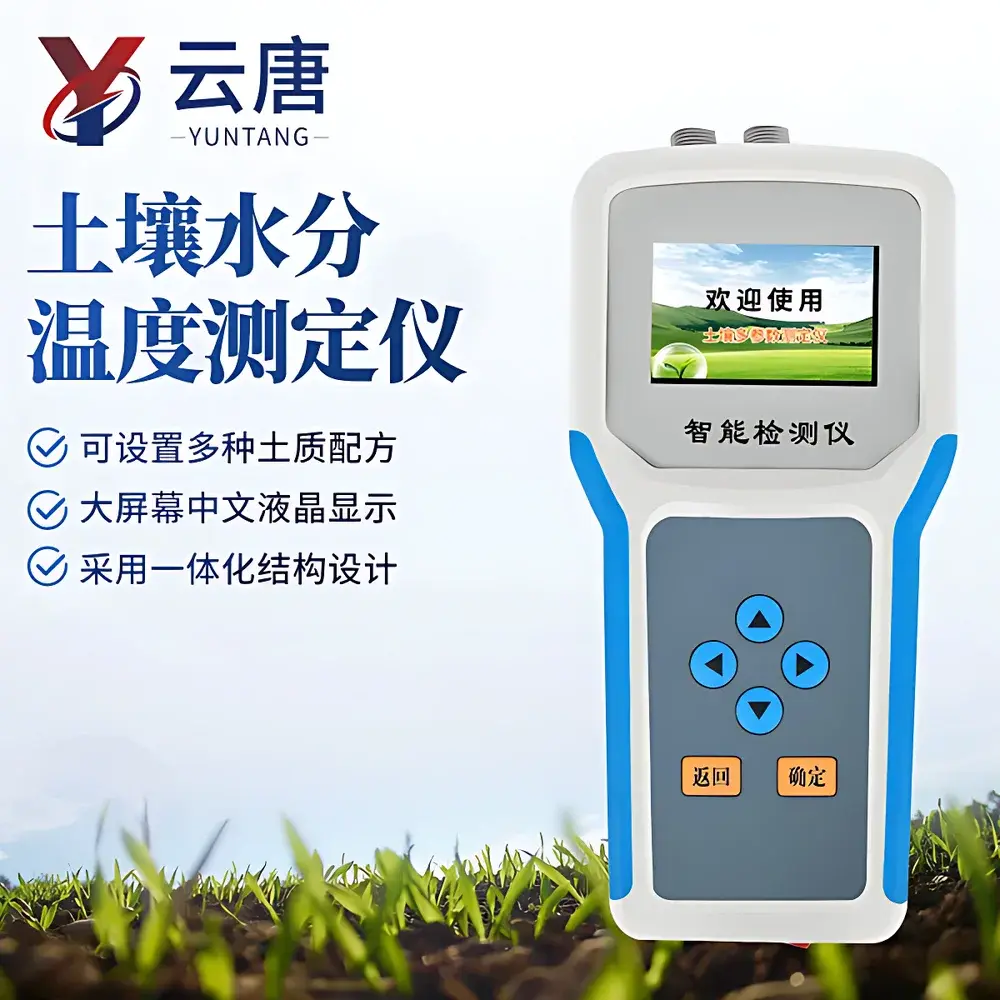
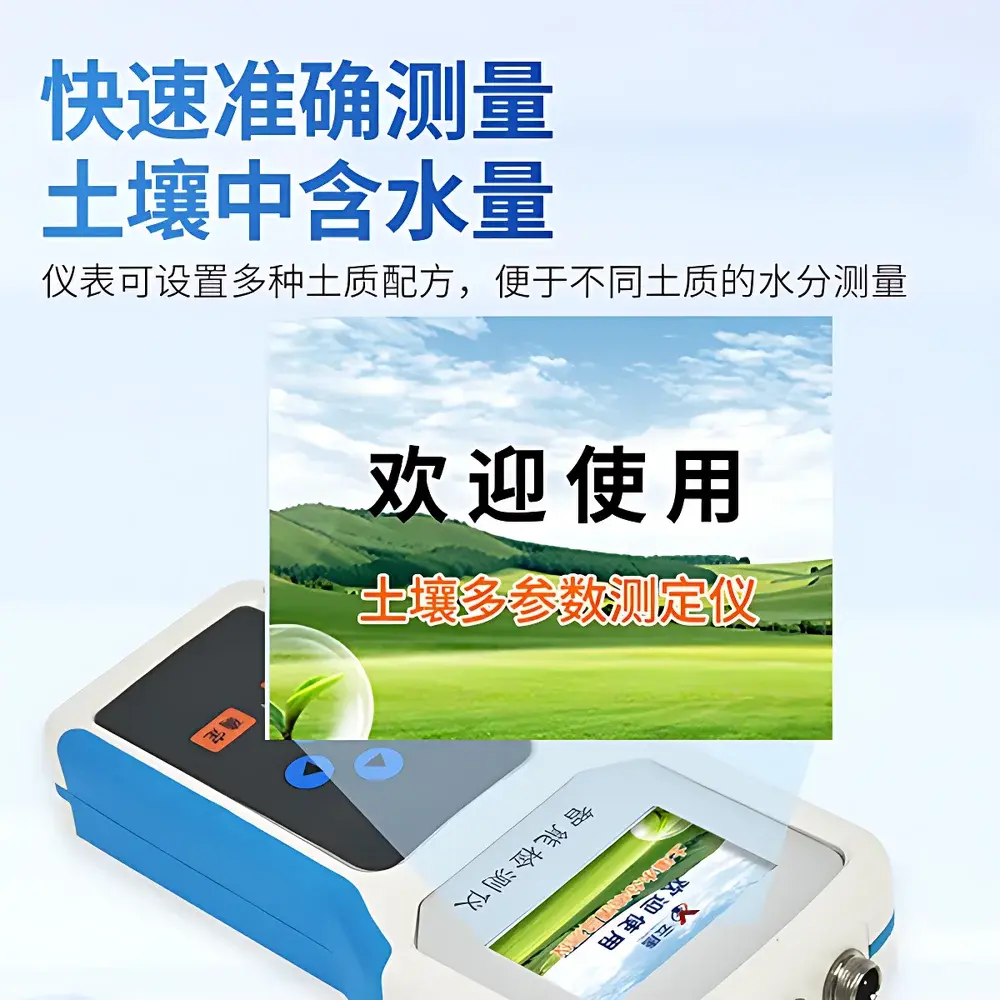
Yuntang YT-TY / YT-TY+ In-Situ Soil Salinity & EC Logger with Integrated Moisture, Temperature, pH, and Conductivity Sensing
| Brand | Yuntang |
|---|---|
| Origin | Shandong, China |
| Manufacturer Type | OEM/ODM Producer |
| Country of Origin | China |
| Model | YT-TY / YT-TY+ |
| Price Range | USD 280 – 420 (FOB) |
| Measurement Parameters | Volumetric Water Content (0–100% m³/m³, ±2% accuracy in 0–50%, ±3% in 50–100%), Soil Temperature (−40 to +120 °C, ±0.2 °C), Electrical Conductivity (0–20 mS/cm, ±2%), pH (0–14, ±0.2), Resolution: 0.1% (moisture), 0.1 °C (temp), 0.1 mS/cm (EC), 0.1 (pH) |
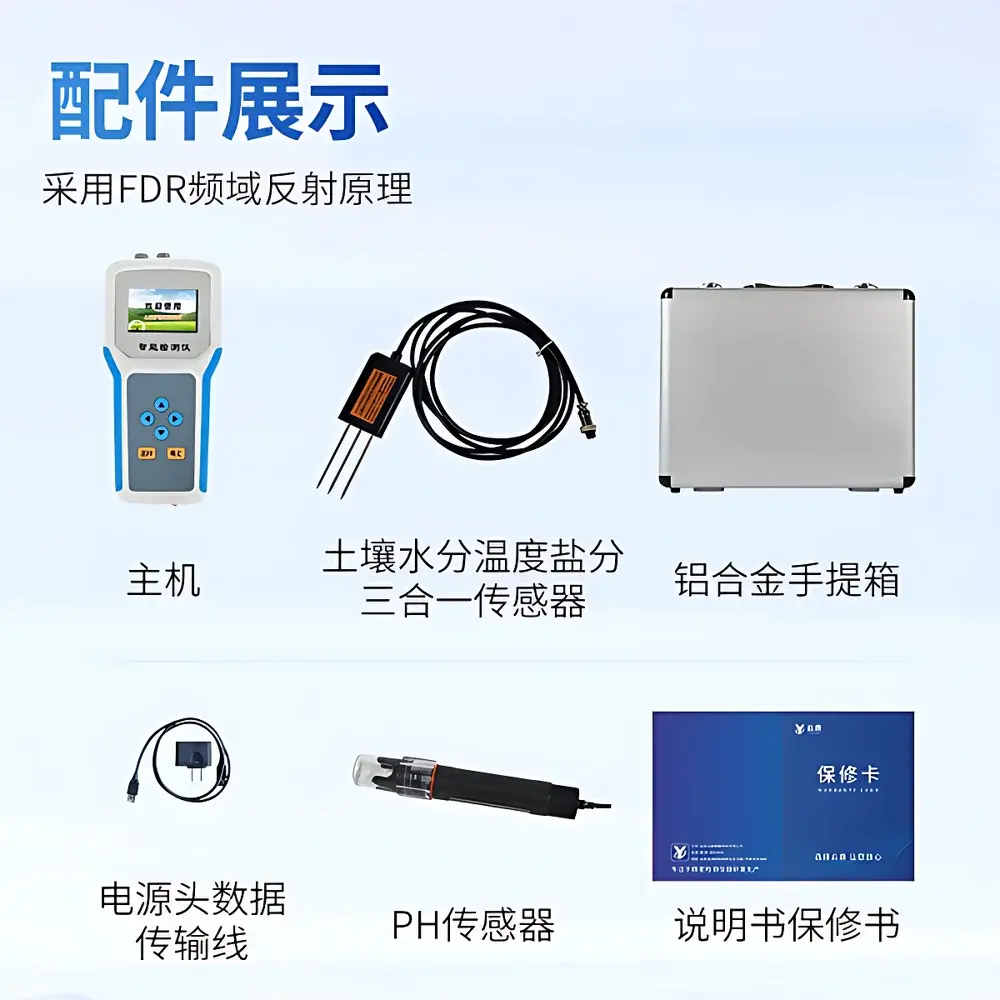
| Sensor Integration | Tri-functional probe (moisture/temperature/EC), separate pH composite electrode with ATC |
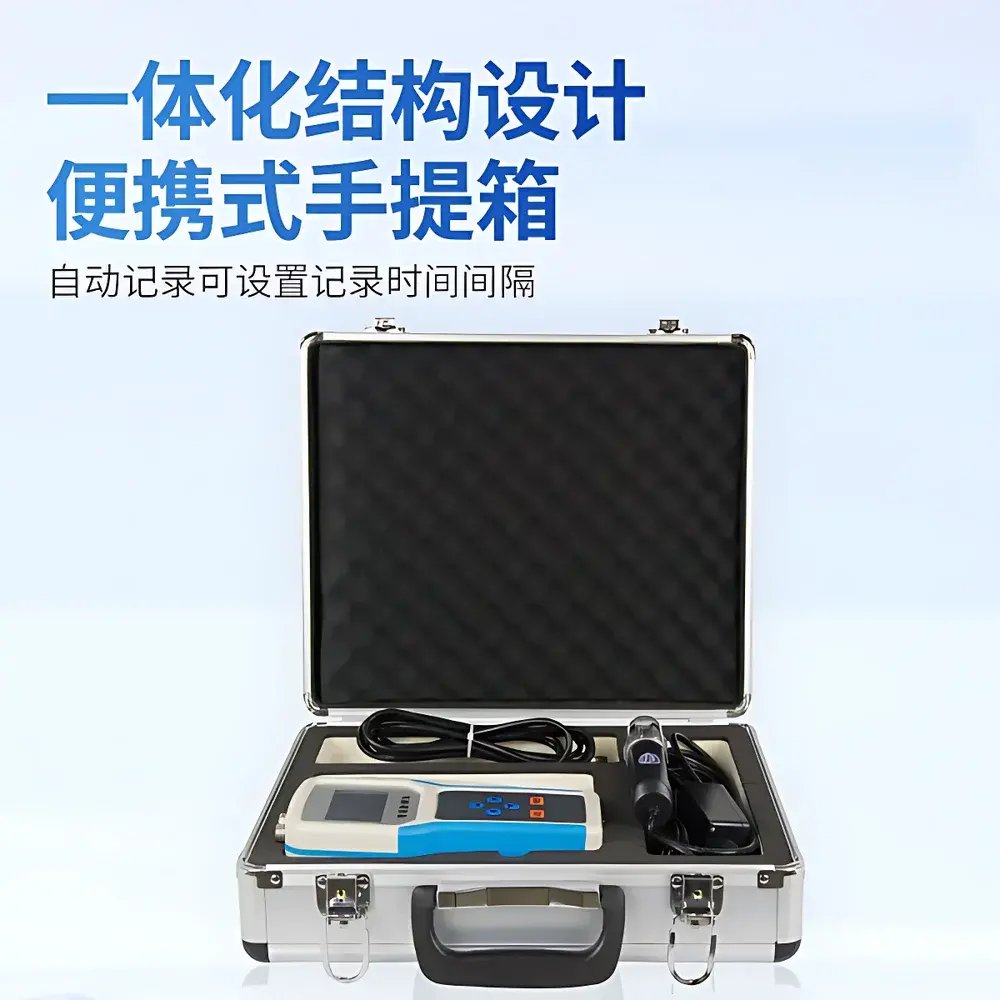
| Data Logging | Internal storage up to 300,000 records, user-configurable sampling interval, auto power-loss protection |
| Connectivity | USB data export, optional 4G LTE module for cloud upload to web-based agricultural analytics platform |
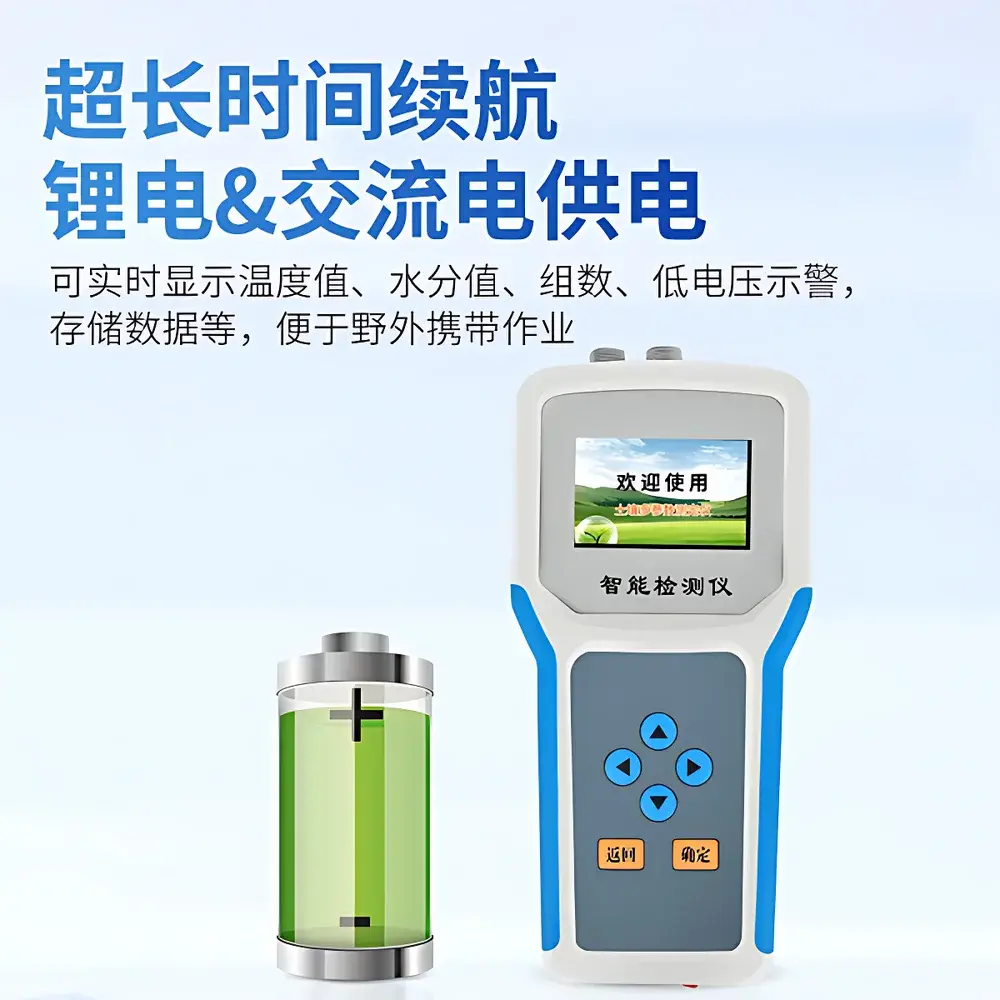
| Power | Rechargeable Li-ion battery + AC adapter |
| Dimensions | 100 × 210 × 35 mm |
| Compliance | Designed per ISO 11277 (soil physical analysis), ASTM D4959 (soil EC), and GLP-aligned data integrity practices (audit trail, timestamped records, user-defined metadata) |
Overview
The Yuntang YT-TY and YT-TY+ In-Situ Soil Salinity & EC Logger is an integrated field-deployable sensor system engineered for simultaneous, real-time measurement of four critical soil physical-chemical parameters: volumetric water content (θv), soil temperature, electrical conductivity (EC), and pH. Unlike conventional single-parameter probes or laboratory-based extractive methods, this instrument employs direct-contact dielectric sensing (TDR/FDR hybrid principle) for moisture and salinity, combined with precision thermistor-based temperature compensation and a glass-body pH composite electrode with automatic temperature compensation (ATC). The tri-functional probe enables co-located, depth-specific in-situ profiling without sample disturbance—critical for monitoring temporal dynamics in irrigation scheduling, salinity leaching studies, or phytoremediation validation. Its ruggedized housing, IP67-rated connector interface, and low-power embedded architecture support unattended operation across diverse agro-ecological zones—from arid-zone orchards to coastal saline soils—and align with FAO-recommended protocols for soil health monitoring under SDG Indicator 15.3.1.
Key Features
- Integrated multi-parameter probe: Simultaneous acquisition of θv, temperature, and EC from a single 12-cm stainless-steel rod with calibrated dielectric response and NTC thermistor.
- Dual-mode operation: Manual on-demand logging via intuitive menu-driven interface or programmable autonomous recording (sampling intervals from 1 min to 24 h).
- High-capacity non-volatile memory: Stores up to 300,000 timestamped records with built-in power-fail recovery—no data loss during battery replacement or voltage drop.
- Modular sensor architecture: Plug-and-play compatibility with optional pH, nitrate, or redox electrodes; automatic sensor ID recognition eliminates manual calibration mapping.
- Field-optimized display: 3.5-inch color LCD with backlight, real-time graphing of parameter trends, low-battery alert, and configurable threshold highlighting (e.g., EC > 4 mS/cm triggers amber background).
- Expandable channel support: Up to 8 analog/digital inputs for synchronized multi-point profiling (e.g., layered soil columns or plot-level network deployment).
Sample Compatibility & Compliance
The YT-TY series is validated for use in mineral soils (sand to clay loam), organic substrates (peat, compost), and amended growing media. It excludes highly conductive industrial sludges (>25 mS/cm) or frozen soils (< −5 °C), where dielectric assumptions degrade. All sensors meet IEC 60529 (IP67 ingress protection), ISO 11277 (soil texture and moisture standardization), and ASTM D4959-18 (standard test method for soil electrical conductivity). Data output conforms to FAO’s WaPOR metadata schema, and the firmware supports GLP-compliant audit trails—including operator ID, calibration timestamps, and sensor drift logs—enabling traceability in regulatory reporting (e.g., EU Nitrates Directive monitoring or USDA NRCS conservation practice verification).
Software & Data Management
The included PC software (Windows/macOS compatible, no license fee) enables full dataset interrogation: import via USB-C, export to CSV/Excel, generate time-series plots with dual-Y axes, and apply statistical filters (moving average, outlier removal). Cloud integration (optional 4G module) pushes encrypted JSON payloads to RESTful endpoints compliant with OGC SensorThings API v1.1, supporting interoperability with platforms such as FarmOS, CropX, or custom GIS dashboards. All uploads include SHA-256 hash signatures and UTC-synchronized timestamps. Audit logs record every configuration change, ensuring compliance with FDA 21 CFR Part 11 requirements for electronic records when used in GxP-aligned agronomic trials.
Applications
- Irrigation optimization: Correlate real-time θv and EC to determine leaching fractions and prevent secondary salinization in drip-irrigated vineyards.
- Soil health assessment: Track seasonal EC-pH-moisture coupling to identify sodic soil evolution (ESP > 15) or acidification trends in long-term no-till systems.
- Ecological restoration: Monitor rhizosphere micro-environments during halophyte establishment in reclaimed mine spoils or coastal dunes.
- Research-grade phenotyping: Deploy multi-depth probe arrays to quantify root-zone water uptake efficiency under controlled drought stress protocols.
- Regulatory compliance: Support EPA Region 9 groundwater vulnerability assessments by correlating surface EC anomalies with subsurface chloride plume migration.
FAQ
What is the recommended calibration frequency for field deployments?
For routine agricultural monitoring, perform two-point EC calibration (0.01 M KCl and 0.1 M KCl) and pH buffer verification (pH 4.01 and 7.00) before each seasonal campaign. Full recalibration is advised after 12 months of continuous use or exposure to extreme pH (<3.5 or >10.5) environments.
Can the tri-functional probe be inserted into rocky or compacted soils without damage?
The probe tip is hardened stainless steel (AISI 316) but requires pre-augering in soils with >30% gravel content or bulk density >1.6 g/cm³ to avoid bending. A dedicated installation sleeve kit (optional accessory) ensures consistent insertion depth and minimizes air-gap artifacts.
Does the device support MODBUS RTU or SDI-12 output for integration with third-party SCADA systems?
The base model outputs ASCII over USB virtual COM port only. An RS-485 expansion module (YT-IO485) enables MODBUS RTU slave mode and SDI-12 master polling—available upon request with firmware v2.3+.
How is temperature compensation applied to EC and pH measurements?
EC values are automatically compensated to 25 °C using the linear coefficient α = 0.019/°C per ISO 11265. pH compensation follows Nernst equation-based ATC using the integrated thermistor, eliminating manual correction tables.
Is raw sensor data accessible for algorithm development?
Yes. The USB interface exposes raw ADC counts, thermistor resistance, and electrode impedance diagnostics alongside processed values—enabling custom modeling of soil-specific dielectric permittivity or pH junction potential corrections.







